


Michelin, the world’s most influential restaurant guide, is coming to Dublin, but the State bodies responsible for tourism and food do not appear to be rolling out the red carpet.
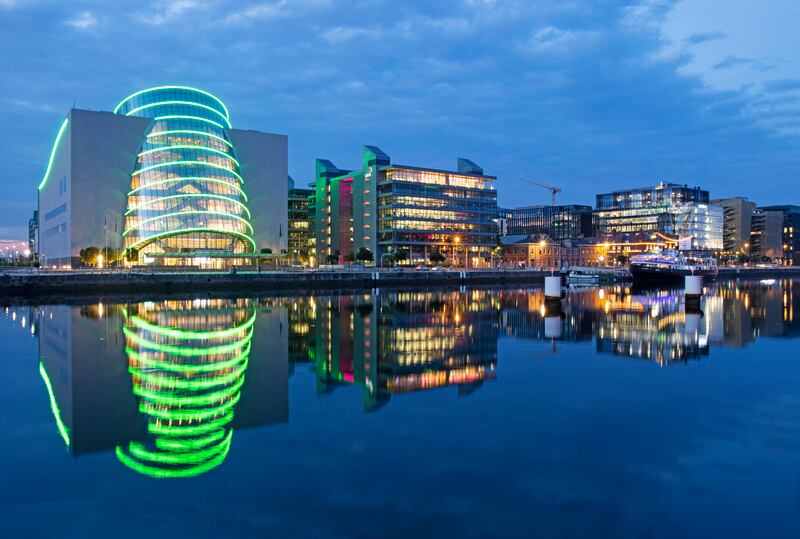
The 2026 Michelin Guide ceremony for Britain and Ireland will be held on February 9th at the Convention Centre Dublin – its first time on Irish soil. It will stream live, revealing Michelin stars across both islands.
While the Scottish government invested £140,000 to support the Glasgow launch of the 2025 guide, support from Ireland’s government bodies has so far been minimal.
Fáilte Ireland is the only State body that seems to be even vaguely at the table, focused on Dublin’s success as a global conference hub – deservedly – but not on its potential as a food destination. According to a spokeswoman, Fáilte Ireland has “offered financial support of €19,500 to the Michelin ceremony under its conference supports for international conferences and business events”. The spokeswoman said the tourism body has not discussed the event with any other State bodies or stakeholders, while Fáilte Ireland has since indicated that it is unlikely to support the event further.
READ MORE


Tourism Ireland and Bord Bia (Irish Food Board) are so far not contributing in any way.
Fáilte Ireland’s remit is to develop tourism within the State, while Tourism Ireland, under the North South Ministerial Council, markets the island of Ireland overseas as a holiday and business-events destination. Its role is external marketing – attracting visitors, not developing domestic tourism or restaurant promotion.
A spokeswoman for Tourism Ireland said the body learned about the Michelin opportunity through Bord Bia and indicated it would welcome a proposal from Michelin, but none arrived before the announcement of the ceremony in October. “We remain open to receiving a proposal for any incremental activity that would help shine a spotlight to consumers overseas on our exceptional food experiences off the back of the Michelin Guide Ceremony taking place in Dublin,” she said.
The Michelin Guide UK & Ireland did not respond to questions from The Irish Times.
A spokeswoman for Bord Bia, said the body has never been in contact with Michelin. “Bord Bia was approached by La Rousse Foods in May. A potential sponsorship was discussed internally and with La Rousse,” she said. “In May, one of my colleagues was in touch with Tourism Ireland to inquire if we were to proceed with a sponsorship; would this type of activity sit with their London office or Dublin? We didn’t follow up with Tourism Ireland because the sponsorship discussions didn’t progress with La Rousse.”
Musgrave-owned La Rousse Foods is the “official partner” to the 2026 Michelin ceremony and sole named sponsor. It is a welcome private investment from a Dublin-based premium distributor that supplies many of Ireland’s top restaurants. Its involvement is a natural fit for a company rooted in the trade, but it also serves to highlight the lack of State involvement.
[ 100 great restaurants, cafes and places to eat around Ireland for winter 2025Opens in new window ]
The Bord Bia spokeswoman said the agency asked La Rousse Foods about Michelin’s global sponsorships, ticketing, and ensuring local suppliers for all food and drink. “We followed up in July to see if there was any response from Michelin and were told any decision would follow their visit to Dublin at the end [of] August,” she said. “In mid-September we were informed an update would follow shortly, and we received a phone call from La Rousse a day before the launch PR was issued.”
In a statement, La Rousse Foods said the holding of the ceremony in Ireland was “a landmark moment that celebrates the strength of Ireland’s food culture and the exceptional calibre of chefs, restaurants, producers, and distributors across the island.”
The company’s focus, according to the statement, “has been on supporting an event that shines a spotlight on the culinary excellence in Ireland.”
“The partnership reflects our long-standing commitment to the hospitality sector and to championing the best of produce and talent.”
Bord Bia’s statutory role, under the Bord Bia Act 1994, is to “promote, assist and develop the marketing of Irish food, livestock and livestock products”, with its activities focused on exports and primary production. It supports producers through marketing, quality assurance and development across five areas – reputation, insight, growth, talent and sustainability – managing Ireland’s food reputation abroad through research and campaigns that position Irish produce as high quality, traceable and sustainable.
Between three agencies and the Department of Agriculture, Food and the Marine (DAFM), the restaurant sector fell through all the gaps.
This, however, is about to change. Minister for Enterprise and Trade Peter Burke, who took over the tourism brief on November 17th, unveiled the 90-page ‘A New Era for Irish Tourism National Tourism Policy Statement’ on December 1st. The plan extends Fáilte Ireland’s remit to restaurants, cafés and other food businesses. There are plans for a “national culinary tourism strategy” with food trails to be rolled out across the island. But there is no budget directly assigned to restaurants, and the word “restaurant” gets a mere three mentions in the document. It amounts to an appendage to the agency’s existing Destination Experience Development Plans, rather than a shift in priorities.
There are five two-Michelin-star and 18 one-Michelin-star restaurants on the island of Ireland, along with 25 Bib Gourmand restaurants, which the guide describes as “a restaurant that offers good quality, good value and good food at a reasonable price”. Given Tourism Ireland’s all-Ireland remit, and Fáilte Ireland’s newly announced remit, the Michelin ceremony offers scope for a joint North-South initiative.
Tourism NI’s 2025-26 operating plan allocates £23.9 million to regional growth, sustainability and visibility, embedding environmental and social goals in its food and tourism policy – a measurable approach so far absent south of the Border.
A Tourism NI spokesperson said: “At this stage, Tourism NI has not received any direct correspondence from Michelin or the event organisers, nor have we been approached to provide financial or promotional support. The Michelin ceremony would not be eligible for Tourism NI event funding, as the activity is taking place in Dublin.”
Scotland, by contrast, used its Michelin partnership to reinforce its national culinary identity. A joint press release issued by VisitScotland and the Michelin Guide in January 2025 described the event as “showcasing the strength and diversity of Scotland’s hospitality and the value of food tourism to our economy”. No such messaging exists in Ireland.
The Michelin Guide has become a global brand – and a tool of destination marketing. In many countries, including the United States, Canada, the Gulf states and South Korea, tourism boards pay for eligibility. Turkey turns each Michelin event into a weeklong campaign around sustainability, gastronomy and heritage, flying in journalists to visit organic farms and the Michelin-accredited restaurants they supply. The guest list is strategic – not just chefs and influencers, but international food writers and judges from The World’s 50 Best rankings, the only other system that shapes how a nation’s food is seen abroad.
This lack of cohesive responsibility is showing on the ground – the restaurant and pub sectors have contracted. According to Fáilte Ireland’s Tourism Barometer (September 2025), only 23 per cent of restaurants reported increased turnover compared with 2024, while 64 per cent recorded a decline; among overseas visitors – the most valuable market – 74 per cent of restaurants saw falling revenue. In pubs and bars, 34 per cent reported growth, 47 per cent decline (failteireland.ie). Furthermore, more than 90 per cent of restaurants and almost three-quarters of pubs cited rising payroll costs as a big concern.
Those figures make restaurants and pubs Irish tourism’s worst-performing sectors – a mix of falling revenue and rising costs.
[ Tourism strategy will aim to turn Ireland into a ‘foodie’ holiday destinationOpens in new window ]
The same barometer notes that positive reviews and word-of-mouth recommendations remain the main reasons for optimism among businesses, suggesting that food and hospitality are still central to how visitors experience Ireland. The State, it would appear, is just picking up on this now. Now that restaurants are considered SMEs and fall into the “enterprise” category, there are promises of grants. It is as yet unclear whether these are new grants specifically for restaurants or grants that are already available.
Bord Bia invests about €9 million (gross) a year in domestic marketing – including EU co-funded campaigns. It supports Irish producers in the food-service sector through events such as its annual Foodservice Seminar. Its Marketing Assistance Programme helps food businesses with marketing costs but is limited to firms turning over between €100,000 and €3.5 million – mid-sized processors and exporters rather than independent restaurants or the small organic farmers supplying them. There is no grant or co-funding scheme to help restaurants to promote local sourcing or menu development. Its next strategic campaign, launching in early 2026, is focused on the Bord Bia Quality Mark.
In contrast to Tourism NI, none of the Republic’s tourism or food agencies has a defined climate or sustainability remit linked to restaurant or food promotion. There is no cross-agency strategy to highlight low-impact food systems or the organic farmers supplying restaurants directly.
In the Department of Enterprise and Trade’s ‘A New Era for Irish Tourism National Tourism Policy Statement’, the word “organic” does not appear at all. Sustainability is everywhere, but in a thin, generic and non-robust way, and almost never in relation to food production, restaurant sourcing or low-impact supply chains. There is virtually no link to culinary sustainability – no farming methods, soil health, regenerative producers or food-system impact. It is climate-policy boilerplate, with no sustainable-sourcing commitments or targets.
Groups such as Talamh Beo – a grassroots organisation promoting regenerative agriculture and agroecology – operate entirely outside State policy. These are the producers most aligned with Ireland’s green image, yet they remain invisible in national tourism or food campaigns.
DAFM, which oversees Bord Bia and shapes State food policy, remains equally export-oriented. Its Food Vision 2030 plan focuses on efficiency, productivity and international market share. Restaurants barely register. The department’s subsidies, research grant and innovation funds all target production – not consumption, not culture. It is a strategy that counts tonnes shipped abroad but not meals served to tourists here.
[ Britons cool on Ireland as a ‘value for money’ holiday destinationOpens in new window ]
Tourism Ireland’s Overseas Performance 2024 report shows overseas visitors spent €7.3 billion in Ireland last year, almost half on food, drink and accommodation. The value of people eating in Irish restaurants is substantial but has only been captured in scattered, ad hoc estimates to date; structured monitoring is due to begin in 2026.
The Fáilte Ireland spokeswoman said: “We don’t have much recent research on tourists eating out or sentiment towards restaurants.”
The Department for Enterprise and Trade plans to introduce more key performance indicators for agencies as well, to monitor their performance and ensure that visitor numbers and tourism increase.
The Fáilte Ireland Consumer Planning and Insights Winter Report 2025 shows that roughly half (48 per cent) of visitors surveyed ate out during their winter city break, with little regional variation – dining was the most common and most memorable activity across all cities. Meanwhile, the Key Tourism Facts 2023 report states that 41 per cent of overseas visitors came for holiday leisure, with scenery, history and culture cited as top motivators, yet food and hospitality were among the most-remembered aspects of their trips. That gap between why visitors come and what they remember is the starting point for this new strategy.
The economic footprint of restaurants is equally clear. The Central Statistics Office’s Output-Input Tables 2023 attribute roughly €6.5 billion in gross value added to accommodation and food service activities, supporting about 177,000 jobs – around 7 per cent of State employment. Despite that, until now, there was no restaurant line-item in Fáilte Ireland’s or DAFM’s budget statements, no ministerial responsibility for restaurant policy, and no cross-departmental group addressing food tourism.
Each agency’s remit has historically left restaurants outside its scope. Despite overlapping responsibilities, no State body – Fáilte Ireland, Tourism Ireland, Bord Bia or DAFM – carried a direct mandate for restaurants. And even with Fáilte Ireland’s newly created remit, its budget is geared toward “strategy” – large, high-level campaigns, not restaurant-specific support. There is no allocation identified as “restaurants”.
The net result is an opportunity missed – a glaring one, in a country that markets itself on food while offering little real support to the people who prepare and serve it. Agencies have not been sufficiently proactive, with the occasion apparently regarded as a chance to show off our exhibition facilities, not our restaurants or food.
Chefs, restaurateurs and their small suppliers have built reputations money can’t buy – yet public agencies will be missing when the island’s 23 Michelin-starred restaurants take the stage.
Michelin is a global brand that has expanded its reach sharply in recent years. The arrival of the Michelin Guide ceremony with high-profile chefs and journalists from Britain and Ireland should have been an all-Ireland opportunity. Other countries pay large sums for this. Scotland recognised the value last year, using its sponsorship to promote regional produce and draw visitors in the off-season. Ireland has been handed the same opportunity – the kind others use to fill a room with influential journalists and take them on a culinary tour of the island. It is a ready-made platform to show the world our restaurants and our food culture. And the response? Very little.


