
Each time I visit Bondi I’m struck by its uniqueness – the rare confluence of factors that hold together, allowing this place to exist. There is the typically Australian respect for the commons, a shared understanding that the kilometre-long beach belongs to all. There is the quintessentially Australian high-trust culture. There is a liberalism to Bondi which protects (particularly women’s) freedom to wear little in public without harassment. The balance that enables this place to exist is fragile. Many Australians have taken it for granted until now.
While people all over the world know Bondi, fewer were aware that it is a thriving hub of Jewish community life in Sydney. Kosher shops sit alongside those selling beachwear; synagogues are tucked along residential streets. On Sunday December 14th, it was in this beachside enclave that 15 people were shot dead and others injured when two gunmen opened fire on a crowd gathered to celebrate the first night of Hanukkah. In the park by the beach – a public space where Jewish families had gathered to light candles and celebrate – a small community was targeted for its Jewishness, though non-Jews were also injured and killed.
Those killed include 87-year-old Alex Kleytman, a Holocaust survivor who had endured persecution in the Soviet Union and emigrated with his family to Sydney in 1992, and 10-year-old Matilda. A Bondi local who attended Matilda’s funeral tells me the experience was heartbreaking. “Someone turned to me and said “How do you eulogise a 10-year-old? They haven’t had a job or been travelling … there’s so much lost potential. Who they would have been is lost to everyone.”
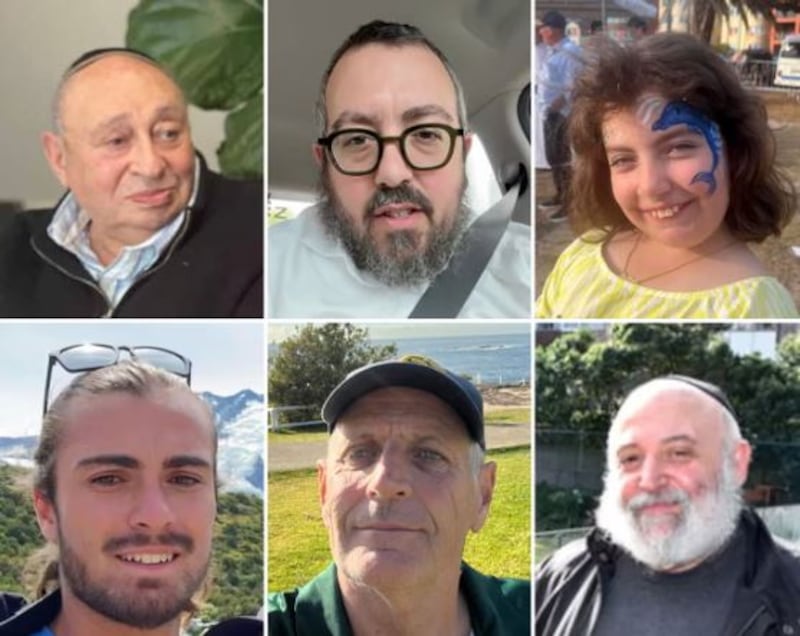
For many in Bondi’s Jewish community, this attack was the realisation of something long feared. Alexis and Fred, old friends who have lived within the community for more than two decades, tell me they have been warning authorities for over two years that violence against Jews in Australia was being seriously underestimated. They say lack of support from the Australian government left Jewish people both vilified and vulnerable. “We didn’t know it would be in Bondi, but we kept saying this would happen”, Alexis tells me. For her and for Fred as lifelong Labour supporters and leftists, the rupture is not merely political but deeply personal.
READ MORE


Alexis describes how the events of October 7th 2023, had already transformed her life. “I used to chair a small not-for-profit ... in Zimbabwe, and not one of the people on the board contacted me to find out if my husband was alive, if my friends and family in Israel were alive, or how I was. Not one. I resigned.” Alexis tells me that a Jewish person’s politics are not relevant to whether they constitute a target, even as far away as Australia. It is enough, she suggests, simply to be a Jew.
[ In Bondi, on the first night of Hanukkah, the intifada was truly globalisedOpens in new window ]
Others spoke about their fear and sadness. Annette, a member of the local Jewish community, agreed to talk to me but said she was afraid to give her surname in an Irish newspaper. “There is a lot of pain. We feel so hated by so many people across the world. The Irish … it’s painful. Putting politics aside, we feel vilified as Jews.” The 17,000km distance from Dublin did not soften Annette’s sense that Jewish suffering was met without compassion – a sense many here share, and find bewildering.
To pray behind bulletproof glass is a ridiculous reality
Benji (29) has lived in the area for four years. He speaks about being shaped by the integration of his Jewish and Australian identities, and of his great pride in being Australian. He says the events of Sunday, 14th, were expected, “but not necessarily at this magnitude. It shines a light on what Jews experience every day. It’s so normalised for us and I don’t think the non-Jewish community would even consider that, but it’s terrible that we’ve accepted it. To pray behind bulletproof glass is a ridiculous reality.” Though he says he feels safe, when he’s heard sirens this week, Benji says there is a moment of anxiety. What has helped him and his wife, whose first baby is due this summer, are small gestures of concern and care. “Just having someone message you and say, ‘I hope your friends and family are okay’, even if they’re not, means a lot.”
At the beachside memorial, Rabbi Yossi Friedman has arrived hourly in the days since the attack to read the names of the dead, share stories about them, offer prayers and speak with people who come to lay flowers or mourn. “We’ve had so much support from not just members of the Jewish community, but from the broader community”, he tells me.
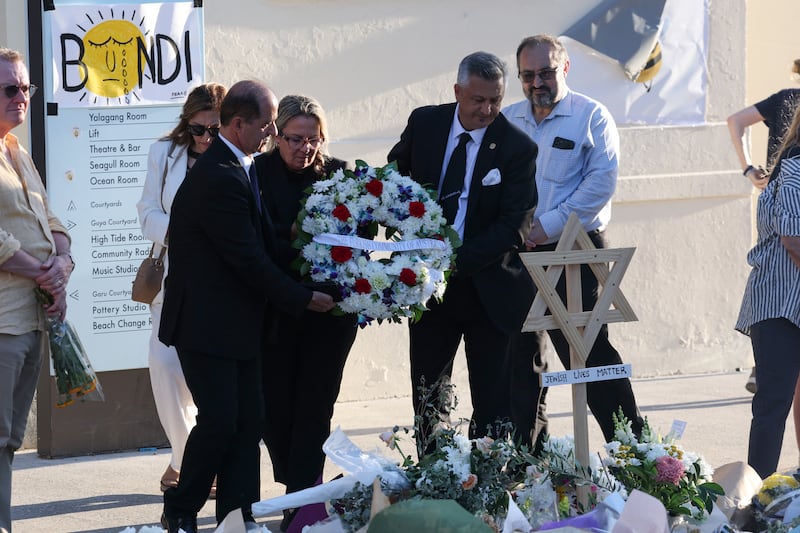
I ask him why he spends hours here at the memorial. “I don’t want to be alone right now, personally, and it’s beautiful to be around others and to witness the love,” he says. “I get up here now once every hour, on the hour, and I read out their names and we tell their stories so people will not forget, and so people can take away something – a personal connection with at least one of the victims.”
[ The Irish Times view on anti-Semitic violence: age-old hatred must be resistedOpens in new window ]
Rabbi Friedman is one of several Jewish people in Bondi this week who ask me to relay a message back home on hearing my accent. “We would love to feel some love from Ireland”, he says, adding that attacks on Jews reverberate far beyond national borders and that how we discuss both Jewish people and Israel merits serious care and nuance now more than ever. His emphasis remains on connection rather than blame. “We have one humanity,” he tells me, with an expression that suggests he wishes more people agreed. “We’re all the same”.
Earlier this week, seven men in Sydney’s southwest were detained by police based on information that a further violent attack may have been planned. There was some indication that Bondi was a potential target. According to the ABC, there have been several anti-Semitic incidents in Sydney over the last two years, including an arson attack that destroyed a Jewish business in Bondi.
Benji tells me he hopes what has happened in Bondi is never forgotten and never repeated, but he also hopes the area can return to the high-trust, safe community it once was. Proposed gun control legislation is fine, he suggests, but ultimately a distraction from the heart of the issue. “Guns were the how. The problem is the why.” It’s a problem that many are uncomfortable with looking at too closely, and not just in Australia. We have seen the terrible cost of that avoidance this week.