My decision to move to Morocco didn’t come quickly. Over time I had grown tired of living in France, where I spent six years teaching English between the cities of Tours and Montpellier.
My patience had worn thin for what seemed to be the blase nature of the French and the discontent that people loved to share. I began to think about where to go next. Having visited Morocco a number of times on holidays, I thought “why not?” And so here I am.
Arriving in the north Moroccan city of Tangier, I felt nothing but optimism about my choice. I woke each day to the sound of the call to prayer in the city’s old town (the old medina). Children hurried to the school across from my hotel (a temporary home while I searched for an apartment). Vegetable sellers shouted prices in Arabic. This felt like another planet, and inside I felt a childlike impatience to discover more.
It was early September and there was intense sunshine every day. But the breeze blowing in from the coast where the Mediterranean meets the Atlantic made it bearable. I tried new fruits I’d never heard of and had to learn their names in English and in Moroccan Arabic. I discovered new dishes and explored new corners of the city. I made friends with a taxi driver and played football on the beach. I had Friday couscous at a friend’s mother’s house.
READ MORE


Fast forward seven months. I’ve left the old medina for the new city of Tangier. My soundscape is still revving motorbikes and honking horns, but now it’s more banks and European-style restaurants rather than markets. I’ve swapped tradition for modernity.
The weather changed, too. This winter was wet and miserable, as it was in many parts of Europe. It was Morocco’s wettest winter in 25 years, and it essentially ended a seven-year drought. Whenever I chatted about the weather with my colleagues – I’m an English teacher in a language centre – they’d say Hamdulillah (thank God) and that we needed the rain. But the Hamdulillah remarks stopped relatively quickly as the rainy season persisted, leading to significant flooding in nearby towns. Most people, including myself, had to cope with leaks and mould. The buildings here are not made for such intense rainfall.
One coworker joked that I had brought the rain over with me from Ireland. I apologised, and though she reminded me that it was a blessing, she suggested I take a trip home soon to give them a reprieve.
The kindness and openness of Moroccans is what has struck me most. The willingness to help you, a colleague, as if you were a brother. When I arrived, people I had just met offered to let me stay with them while I house-hunted. They patiently explained cultural norms and important language terms that would come in useful. The accountant at work taught me that inshallah (God willing) can mean many different things depending on the context. For example, if I invited someone for lunch, and their response was inshallah, they were politely saying they had no intention to follow through. That one came in useful.
Despite big cultural differences, we have much in common. Like Irish people, Moroccans care deeply about their perception around the world. They are warm and polite, but still intensely private. They are nosy, but respectful of how you live your life as long as you show kindness and grace to others. Even devout Moroccan Muslims generally don’t care whether you drink alcohol, or at least they won’t let their opposition be known. As an atheist, I still have devout Muslim friends who like to hear my opinions and remain respectful of them, as I am of theirs.
What I’ve really learned from my time in this corner of North Africa has little to do with Morocco. I’ve begun to feel the pangs of longing for home even more. I’ve been longing to see a double-decker Dublin bus, in all of its horrible yellow and blue glory (whoever thought of that as a good combination?), to feel the bustle of Grafton Street on a Saturday afternoon, to smell the salty Liffey as I walk over the Ha’penny Bridge or to hear the squawk of seagulls early in the morning.
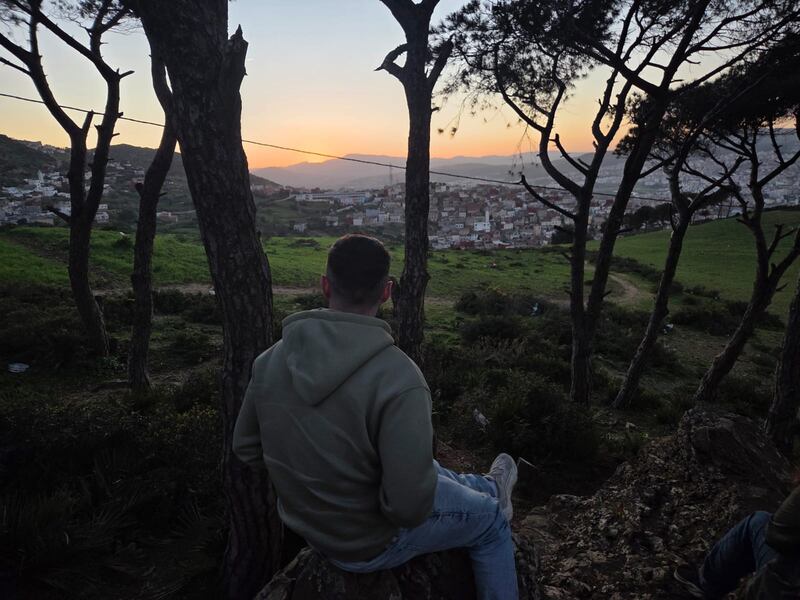
The world seems so much smaller than I once imagined it to be, culturally and geographically. Yet as I sit in Tangier looking out over the marina, the soothing sound of the call to prayer ringing out, the smell of piping hot mint tea; home couldn’t feel further away. I miss it intensely. There’s a strange paradox in having moved further away from Ireland to realise it is time to finally come home.
Niall O’Sullivan is from Co Dublin and is in Morocco where he works as an English language teacher.
- Are you Irish and living in another country? Would you like to share your experience in writing or by interview? You can use the form below, or email abroad@irishtimes.com. Irish Times Abroad submission guidelines here.
- Follow us on Instagram to keep up with the latest
- Sign up to The Irish Times Abroad newsletter for Irish-connected people around the world.