A series of leading retailers in Ireland are being impersonated online by fraudsters in social media advertisements during the busy Christmas shopping season.
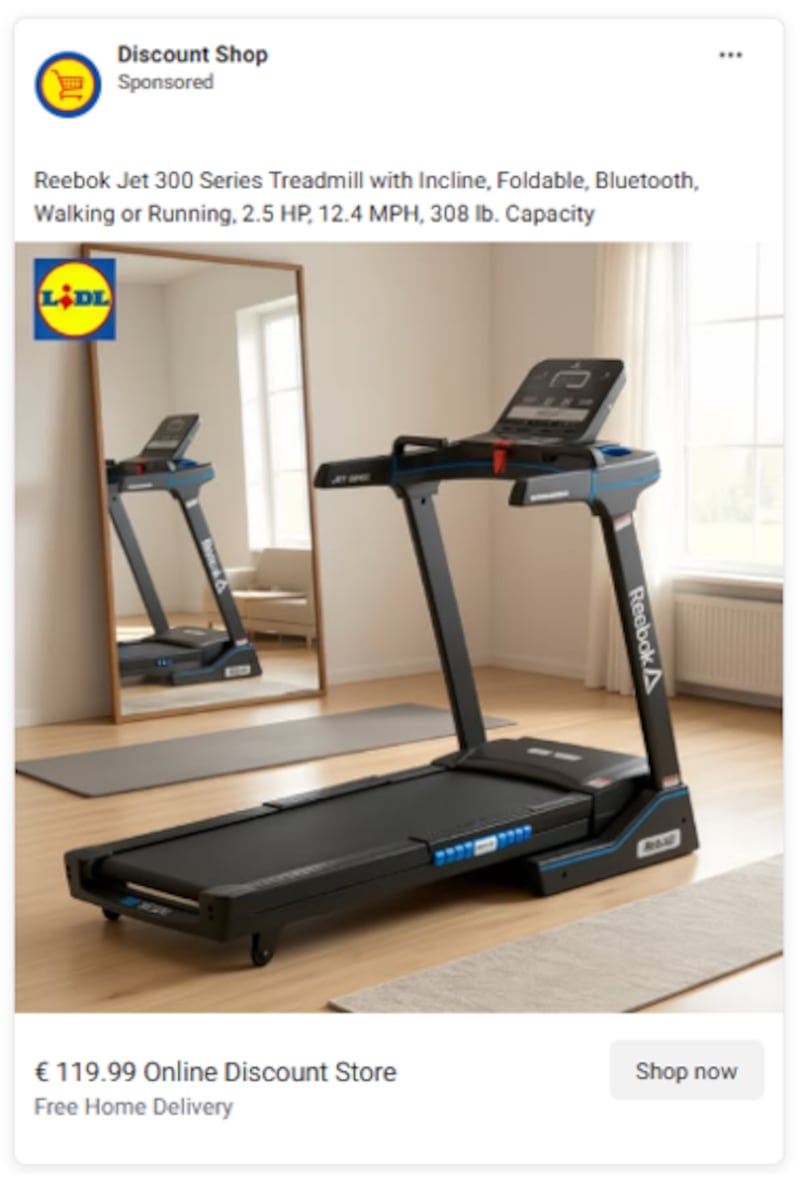
Bank of Ireland’s fraud team has identified a series of social media ads in which fraudsters are posing as reputable brands. The impersonations come during one of the busiest shopping periods of the year, targeting social media users.
The surge in shopping provides an “opportunity” to fraudsters, with more than 10,000 calls made to the Bank of Ireland fraud prevention team during the festive period last year.
“We’re seeing many fake adverts currently which are impersonating well-known retailers,” said Nicola Sadlier, the head of fraud at Bank of Ireland.
READ MORE


Retailers such as Lidl and Tesco were being impersonated in social media ads spotted by the bank.
“Christmas should be a time of joy, not worry,” she said, but noted that “unfortunately, fraudsters see this season as an opportunity to exploit consumers.”
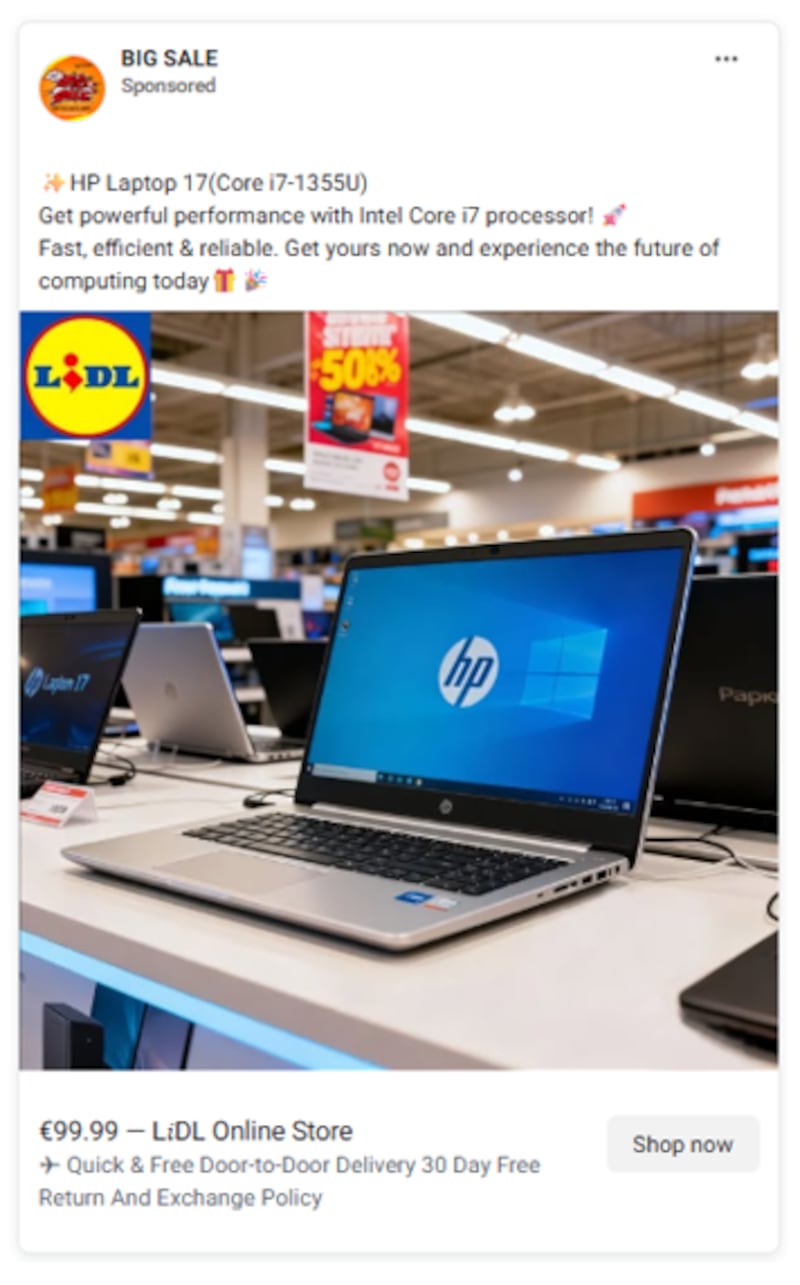
The bank has urged consumers to be cautious of social media ads that “look too good to be true” and to verify that you are shopping on the official website of a retailer. It recommended you avoid clicking on links in unsolicited messages or posts, instead you should navigate directly to retailers’ websites to verify and avail of offers.
If you suspect you have fallen victim to fraud, financial institutions recommend you contact them as soon as possible.
Research published by AIB, meanwhile, has revealed the most common scams leading to money being stolen this year started with text messages sent to phones.
These see fraudsters send convincing texts impersonating banks, delivery services or Government agencies, and urging recipients to click links, call numbers or share codes.
AIB’s head of financial crime Mary McHale has urged consumers to check before you buy online.
“You may be busy this festive season, but always take the time to check. It could save you tens of thousands of euro, and could be the difference between a merry Christmas and a broke one.
“The best defence is awareness – knowing what to look for. Taking a moment to double check before acting can make all the difference. Ask yourself could this be a scam.”
In 2024, the Bank of Ireland fraud prevention team received more than 10,000 calls over the Christmas period, which it said was “relatively typical” for the period.
Some 2,800 calls were received by the bank on December 23rd, the busiest day of the period. A further 1,734 calls were received on December 27th, the second busiest day for inquiries. Christmas Day itself saw 550 calls made to the line.
Bank of Ireland customers can call their fraud team at 1800 946 764. AIB customers can contact their fraud support line on 1800 24 22 27.