
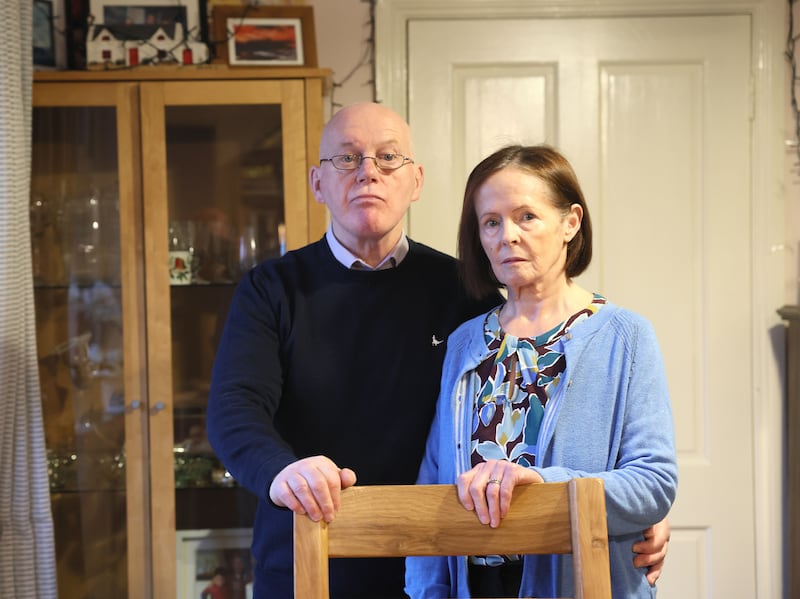
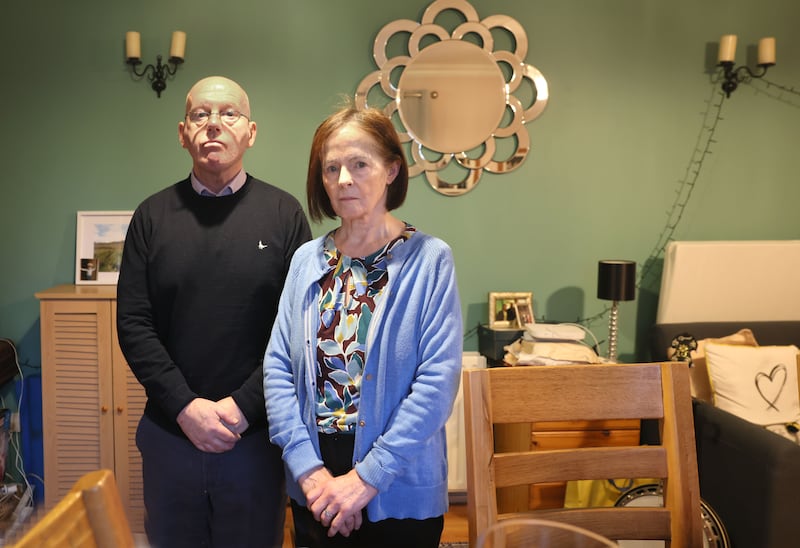
Belfast couple Ann and Paul O’Neill had finished their Christmas shopping and were about to prepare an evening meal at home one Friday evening, just over a year ago, when there was a knock at their door.
It was Friday, December 13th, 2024. Their daughter Kristine was accompanied by two Police Service of Northern Ireland (PSNI) officers.
The three had come to break tragic news: the body of their son, James O’Neill – or Jim, as they knew him – had been found in the Phoenix Park in Dublin.
The O’Neills – Ann, Paul, their daughter Kristine and their son Conor – had not heard from Jim, a father in his early 40s, for some time.
READ MORE



[ Man found dead in Phoenix Park was unidentified for a year, despite ID in pocketOpens in new window ]
But that was not unusual. Jim travelled frequently, living an “off-grid” lifestyle – often camping outdoors. He didn’t own a phone.
“The only way you could contact Jim is if he contacted you,” says Paul.
On a previous occasion in 2022 when he was out of touch, a missing-person report was filed with the PSNI. Then Jim, like he always did, just showed up.
This time was different.
The police also delivered a confounding detail: Jim’s body had not been found then, on December 13th, 2024, but more than a year before, on November 17th, 2023. For almost 13 months, his remains had rested in a Dublin morgue, his family unaware for all that time that he had died.
Despite James O’Neill’s name appearing on a CV in a backpack alongside a bicycle recovered near where his body was found, his remains were “unidentified”. The Garda had discounted the CV as a false ID following inquiries.
There are other sources of confusion for the O’Neill family. They are troubled over why no public appeal was ever issued by the Garda.
They are confused too that an initial postmortem missed various forms of identification that were inside Jim’s clothing when his body was discovered.
The identifying documents were only found more than a year later by a forensic anthropologist who was instructed to examine the remains to assess age, gender and “distinguishing skeletal features” that might help identify the body.
The unusual circumstances around the discovery of his remains were outlined in detail to the O’Neill family in a February 2025 letter to their Belfast solicitor Pádraig Ó Muirigh from Dr Myra Cullinane, the Dublin District senior coroner.
Dr Cullinane described in the letter – seen by The Irish Times – how the identifying documents were missed in the initial November 2023 postmortem examination as an “oversight” by the Coroner’s Service of the Dublin District.
[ State investigation follows long struggle by Shane Tuohey’s familyOpens in new window ]
“These documents had not been revealed by any prior examination of the clothing either by An Garda Síochána or the anatomical pathology technicians of the Dublin District Mortuary,” she wrote in her letter of February 14th, 2025.
She acknowledged this “oversight” by the service had “caused undue delay and distress to your clients for which I sincerely apologise”.
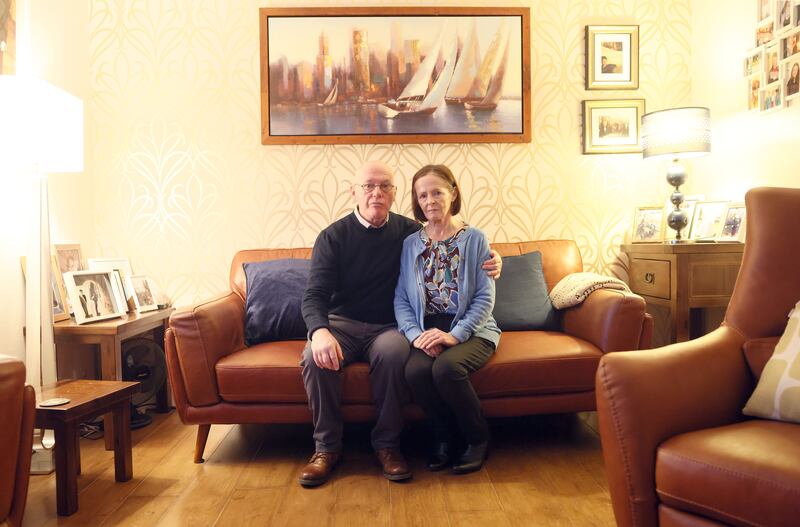
Now, sitting at their kitchen table in Belfast a year after learning their son had died – and more than two years since his body was found – Ann looks through photographs. In some of them, Jim is smiling with friends on camping trips.
Paul and Ann have raised concerns about the Garda’s handling of the case and submitted a complaint to Fiosrú, the Office of the Police Ombudsman.
Speaking to The Irish Times, almost every sentence starts with either “How?” or “Why?”. They hope their complaint will bring them answers.
Jim’s parents say he was a highly intelligent man who wanted to live life his way. They point to his achievements: he once ran a biodiesel business which he established as a workers’ co-operative; his excellent grasp of mathematics helped him find work as an accountant. He had a wide circle of friends in Belfast, and previously worked for not-for-profit organisation Tools For Solidarity, and the charity Help the Aged.
Paul says his son was “always thinking in a profound and deep way”.
He says Jim was rarely without his bicycle, which he named after adventurer Don Quixote’s horse, Rocinante, from the Spanish novel by Miguel de Cervantes.
“That was one of his favourite books. That, in many ways, summed Jim up – Jim wanted his reality to be what he lived by, regardless of what conventions were,” Paul says.
Although Jim travelled around Ireland and though Europe – Italy, Scandinavia, France, the Netherlands – he returned to Belfast regularly for the birthdays of his two teenage children and for Christmas. Jim was separated from his partner.
His parents last saw him in mid-October 2023 when he briefly called to their home. A month later, he was dead.
‘There are many rudimentary steps that could have been taken to identify James, and weren’t taken’
— Belfast solicitor Pádraig Ó Muirigh
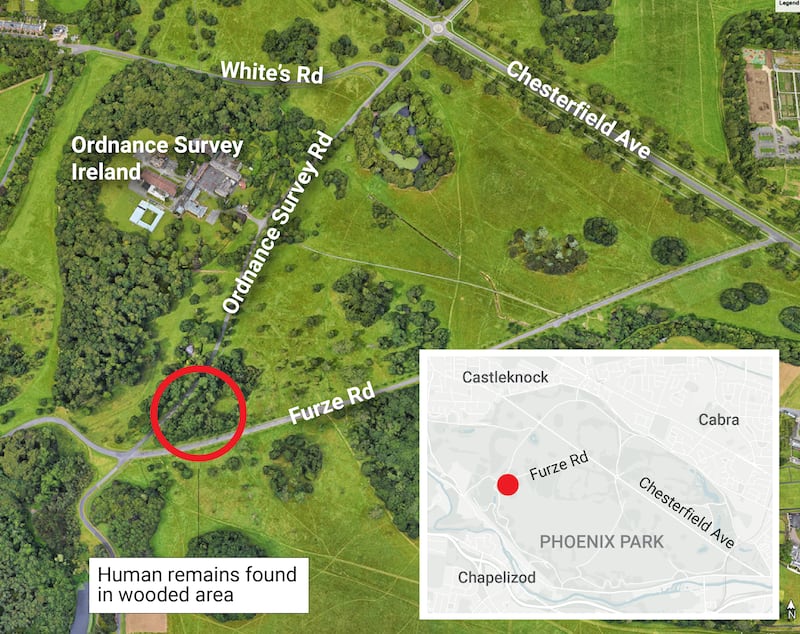
His body was discovered on November 17th on the ground in a densely wooded area of the Phoenix Park, close to the intersection of Furze Road and Ordinance Survey Road, in the western part of the large Dublin amenity.
On November 21st, four days after his body was found, a postmortem was carried out. The report, seen by The Irish Times, barely fills a page. The section detailing the external examination is just 48 words long. No cause of death is given.
“No identification has been possible,” reads the autopsy report, which cites the dead man’s name as “James O’Neill”.
His remains were then stored at the Dublin City Mortuary. It would be more than a year until another examination was undertaken.
On October 14th, 2024, almost a year after Jim’s body was discovered, the coroner’s office asked a forensic anthropologist, Laureen Buckley, to examine the remains with the objective of trying to identify them.
Before she examined them, Buckley – who has extensive expertise in the analysis of ancient skeletal remains – contacted the coroner’s office inquiring as to why this was not designated a case similar to those of other remains held by the State, where the remains are listed as unidentified.
Buckley carried out her examination on December 5th, 2024, with her report – seen by The Irish Times – running to five pages.
According to her report, the pathology technician assisting Buckley, Emma Salcidos, was instructed to check the clothing Jim was wearing when he died.
Salcidos checked the left side pocket of Jim’s raincoat. It was zipped and had to be cut open. Inside were nine forms of identification: a public service card, a UK driving licence, an Ulster Bank card, a credit union statement, a construction skills register card, a business card, a European health insurance card, a Northern Ireland libraries card, and a Dublin City Council library card.
Two documents carried his date of birth: 5/11/1980. One had a Dublin address, one a Belfast address. Almost all of them bore a name: James, Jim or J O’Neill.
On the night they learned of the discovery of their son’s remains from the PSNI, Paul and Ann O’Neill spoke to the investigating garda over the phone. Following the call – and given the extraordinary circumstances of the case – they contacted Ó Muirigh, who has worked on multiple highly sensitive cases related to the Troubles.
Five days after the PSNI contacted the O’Neills, they visited the location in the Phoenix Park where their son’s remains had been discovered.
Part of their complaint to Fiosrú relates to the Garda’s handling of its interactions with them during their visit to Dublin, in which the family criticised “the distinct lack of professionalism, sensitivity and compassion” shown to them.
The family have also raised questions about how the various forms of identification were missed in initial searches of the body in November 2023, why there was no Garda appeal, and why the discovery of unidentified remains was not published on the Garda website or circulated to media.
A Garda investigation report, dated December 24th, 2024, said a named garda “conducted a cursory search of the outer garments of the body. No identifying documents were found.”
Later, the same report says the same garda carried out a cursory search of the clothing, “but due to no proper personal protective equipment, it was decided to let the clothes be searched in a proper environment during the postmortem”.
In a statement given by that garda – dated May 22nd, 2024, and included in the investigation report, he says he “searched the pockets of the deceased” but that he “did not find anything of evidential value in them”.
[ The death of Joe Deacy: A five-year blur of grief and unanswered questionsOpens in new window ]
The Garda report states the investigating garda called to the Dublin 1 address on the CV “on numerous occasions and at different times and there was no persons present at his address”. It states that the garda also “conducted enquiries” in relation to the companies listed on the CV, but those “had no information regarding a James O’Neill working for them or on record as working for them”.
The Garda report concluded that nothing was found at the scene in Phoenix Park to suggest that the death was suspicious.
However, as part of their complaint to Fiosrú, the family say the investigation “has not adequately investigated other possibilities relating to the cause of their son’s death”, their written complaint states.
Jim’s parents said they were “not in denial” about the possibility that he may have taken his own life.
However, they are concerned about the long delay in learning their son had died, and the delay in them learning other information about the scene and postmortem.
The handling of the case has shaken the O’Neill family’s confidence in the investigation.
The O’Neills only learned about the backpack found with their son’s remains and the CV inside it bearing his name when they received the Garda investigation report in February 2025.
The report detailed another item found in the backpack: a newspaper dated October 27th, 2023, potentially indicating that Jim was still alive on that date – three weeks before his body was discovered, and shortly before what would have been his 43rd birthday, on November 5th.
When Ó Muirigh received the postmortem report, he says he was so “astonished” he queried it with the coroner’s office.
“I said: ‘Are we missing pages?’ The answer I received was ‘No’; that was the totality of it. Quite frankly, I’ve dealt with many, many postmortems – probably in the hundreds. I’d never seen anything quite like it,” he says.
‘Nobody – it doesn’t matter who it is – should be dumped in a morgue and left that length of time without every effort being made to try and identify this person’
— Paul O'Neill
The O’Neills enlisted another pathologist, Prof John Crane, the former state pathologist of Northern Ireland, who conducted another autopsy on May 12th, 2025. Given the state of decomposition in the body, Prof Crane was unable to ascertain the cause of death.
The family buried their son later that month. At his requiem Mass in St Agnes’ Church on Anderstownstown Road in west Belfast, an old schoolfriend read a passage from the poem The Stolen Child by WB Yeats. He was interred afterwards in Milltown Cemetery on the Falls Road.
Ó Muirigh describes the case as “baffling”.
“There are many rudimentary steps that could have been taken to identify James, and weren’t taken,” he says.
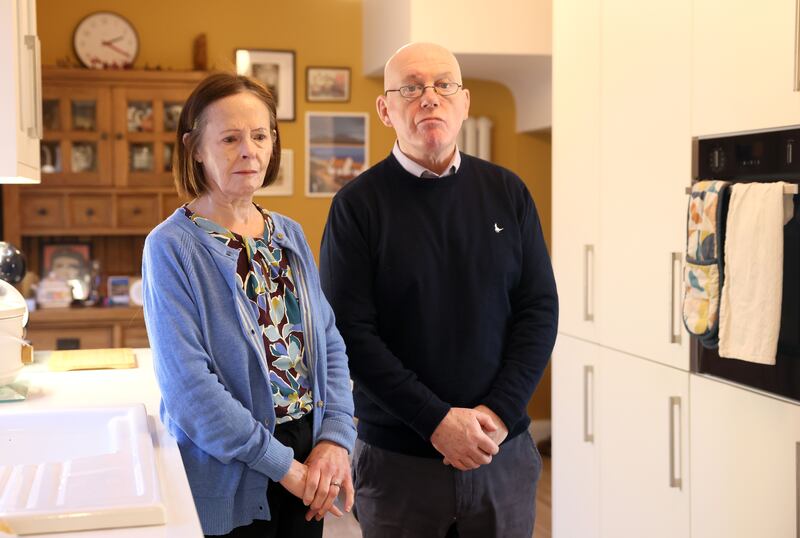
The 13-month delay in the O’Neill family being notified of Jim’s death compounded their grief, he says.
In September, Ann and Paul wrote to Dublin TDs asking for assistance.
Fine Gael’s Emer Currie wrote to Minister for Justice Jim O’Callaghan. On October 21st, she forwarded his office’s response to the O’Neills.
O’Callaghan’s office extended sympathies to the family, but said he could not intervene given that they had lodged a complaint with Fiosrú and that the ombudsman was “best place to assist them in this regard”.
In February, Dr Cullinane, the senior Dublin coroner, outlined the sequence of events from the discovery of Jim’s remains in November 2023 to the eventual identification of his body in December 2024.
She noted how the remains were initially believed to be those of a James O’Neill – the name attached to the initial postmortem examination report in November 2023 – but that following Garda inquiries, this identification ”could not be confirmed and therefore it was no longer thought that the remains were those of a James O’Neill”.
It was not until after the forensic anthropologist’s examination in December 2024 and the discovery of the various forms of identification that the remains were confirmed as those of Paul and Ann’s son.
Responding to queries from The Irish Times, a spokesperson for the Dublin District’s Coroner’s Office said Mr O’Neill’s death was “the subject of an ongoing coroner’s inquiry”.
“An inquest is yet to be heard and, in view of this, the coroner cannot comment on the case at this time,” the spokesperson said.
Last week, Ó Muirigh was told the case will come before the coroner’s court next month, but the family requested more time as they await a full report from Prof Crane, the pathologist.
In response to queries, the Garda said: “As this matter is being investigated by Fiosrú, An Garda Síochána is not in a position to comment.”
Fiosrú said it “does not have any comment to make on this matter”.
The Department of Justice said it did “not comment on individual cases and inquiries which are matters for An Garda Síochána and the relevant coroner”.
The O’Neills don’t want another family to go through what they have experienced over the past year.
“If this helps this not happening to anyone else, and it makes the guards actually review the practices and procedures to make sure it doesn’t happen to anyone else, then we have achieved something. We may never even find out how Jim actually died,” says Paul.
“That’s why we’re trying to push as much as we can,” says Ann.
“There’s just days where you just break down crying,” Paul says.
“Nobody – it doesn’t matter who it is – should be dumped in a morgue and left that length of time without every effort being made to try and identify this person to see if he had anybody that loved him.”