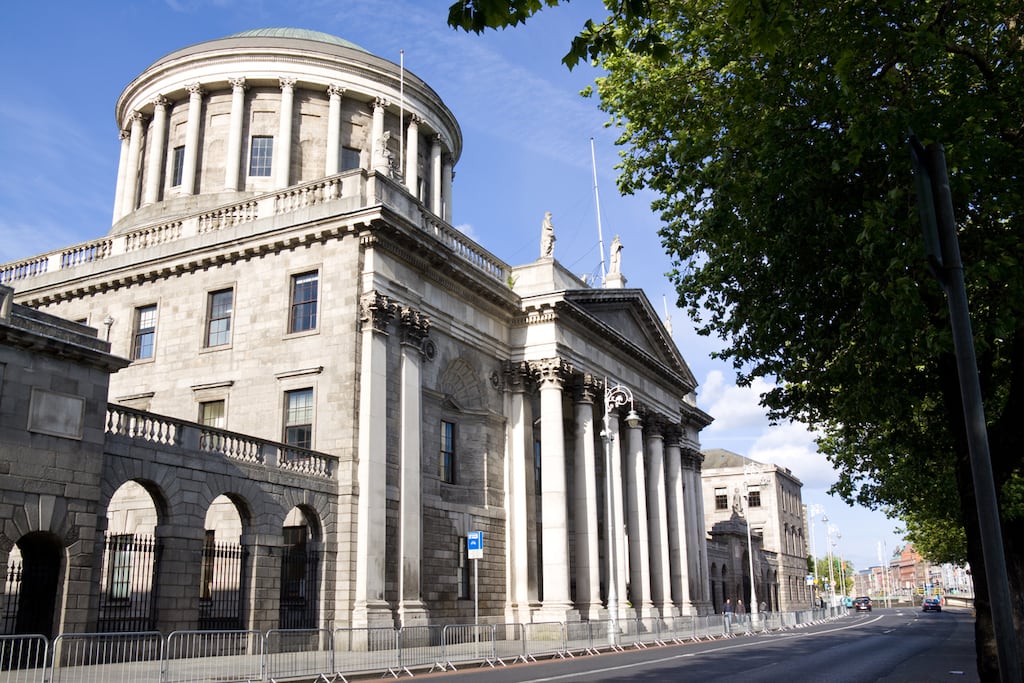
The High Court will give judgment later this month on similar cases by two Opposition TDs alleging the attendance of superjunior ministers at meetings of Government is unconstitutional.
The ruling of the three-judge court, due to be delivered on December 19th, has potentially significant implications for the Government.
Attorney General Rossa Fanning led the State’s defence to the first action, taken by Sinn Féin TD Pa Daly, which was followed by the action by People Before Profit-Solidarity TD Paul Murphy.
Mr Fanning described Mr Daly’s proceedings as a “political challenge to the integrity of Government”. Because there is no constitutional regulation of who attends Cabinet meetings, that was an issue exclusively for the Government, Mr Fanning argued.
READ MORE


Lawyers for both TDs argued article 28 of Bunreacht na hÉireann limits the number of Government members to 15, including the Taoiseach, and provides they meet and act as a collective authority.
Senior Government Ministers are appointed by the President of Ireland on the advice of the Taoiseach and with prior approval of Dáil Éireann.
“Ministers of State attending Cabinet”, or superjunior ministers, are appointed by the Government on the nomination of the Taoiseach. Superjunior ministers participate in Government meetings, but do not vote.
Four superjunior ministers are attending Cabinet: Fianna Fáil’s Mary Butler (who is also Chief Whip), Hildegarde Naughton of Fine Gael, and Noel Grealish and Seán Canney of the Regional Independent Group. They are not parties to the actions.
In his case, Mr Murphy sought injunctions to stop the attendance of the superjunior minister at Cabinet. Mr Daly also challenged the legislation permitting the payment of an allowance to the super-juniors for their attendance.
In evidence during the hearing, former superjunior minister Finian McGrath, who served as Minister of State for Disability in 2016-2020, said he was treated as a “full minister” while attending government meetings and sometimes succeeded in blocking or amending Cabinet decisions.
After the hearing of both cases concluded on July 11th last, High Court president Mr Justice David Barniville, presiding over the divisional court, said it was reserving judgment.


