A divided, strained and acrimonious group of senior managers; a staff who had their concerns ignored and a board where “nobody shouted stop”.
These were among the findings revealed in an expert review of the Arts Council, the most powerful arts organisation in Ireland.
An eagerly awaited report, which was finally published this week, described how the senior managers in the Arts Council were a “divided group of people”.
Acrimony at the highest levels of the council is laid bare in the review ordered in the wake of a disastrous and now defunct €6.7 million IT project.
READ MORE


Over the last number of years, relations were so sour between some of the most senior people at the council that meetings would sometimes descend into verbal rows in raised voices. Senior staff argued with each other in front of their senior colleagues, in front of more junior staff and even in front of external parties.
The independent review, commissioned by Minister for Culture Patrick O’Donovan and led by Prof Niamh Brennan, was set up to scrutinise the governance and culture within the council.
The scandalous IT project has long been abandoned and has already claimed one senior casualty. The council’s director Maureen Kennelly left last year in the wake of the controversy. The Minister would not give his consent to Kennelly serving a second five-year term as she had sought, she told an Oireachtas committee last year.
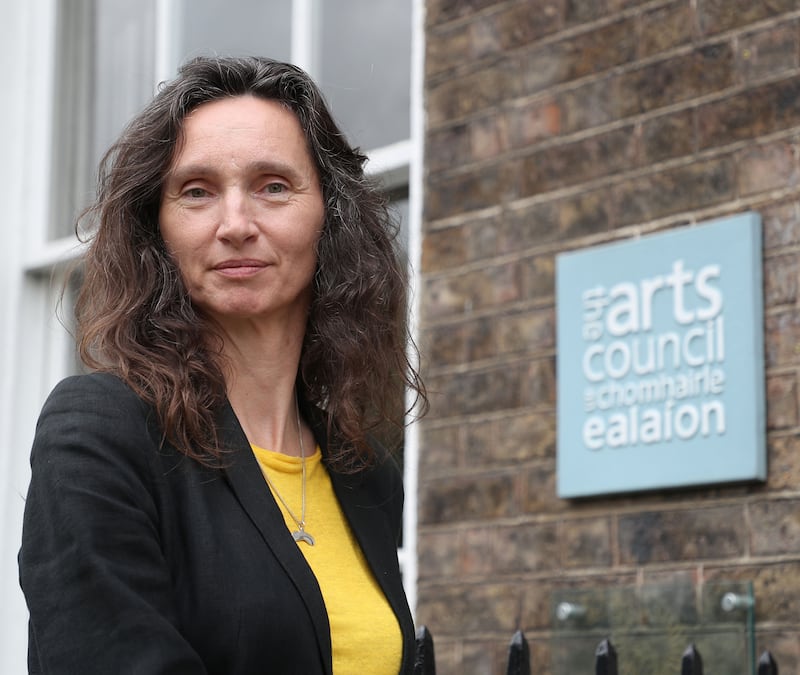
The question for the State agency now is if the problematic aspects of the governance and culture within the council, which were sharply criticised in the external review, still remain.
Mr O’Donovan has said he is giving the organisation – now led by management consultant Dr Moling Ryan who was installed as interim executive director in September – six weeks to devise a plan for how it plans to reform itself.
As the costs of the IT project ballooned – in private – beyond all control, the Arts Council was – in public – enjoying record levels of increased funding from the Government.
[ Arts Council ‘deeply regrets’ Minister’s decision on director’s contractOpens in new window ]
In 2021, the Government increased its funding from €80 million to €130 million – it remained at that record high for three years before increasing again to a new record of €134 million in 2024.
Between 2018 and 2024, staff numbers at the council more than tripled from 47 to 146. The expert review said there was “unplanned rapid growth” in Arts Council staff and budget in 2020 coinciding with the start of the IT project and this “would have put Arts Council staff under considerable pressure to cope with the expansion, contributing to an unstable environment”.
Those familiar with the workings of the Arts Council said it came back after the Covid-19 pandemic as a much different and much bigger organisation. This was a particular challenge for an organisation which, in a number of interviews with staff, was described as being resistant to change.
Of the 63 staff surveyed as part of the review, more than half tended to disagree or strongly disagree with the statement that “organisational change is managed well across the Arts Council”.
Even before the IT project had even been conceived of, there were “strained” relationships between senior people at the Arts Council. These strained relations would endure, even after some people left roles and were replaced.
Though there were some aspects of the expert review report contested by those familiar with the state agency, this description of the organisation was a familiar one which rang true.

One former veteran of the Arts Council described the organisation to The Irish Times as “the most toxic” they had ever been involved in.
Arts Council staff complained to the review group about “factions” and “embarrassing behaviour” by some senior managers in front of other staff and third parties.
A lack of a shared vision among senior staff about what the new IT system should be and do was partly blamed by the review group for the failure of the project. They described it as being “architected and re-engineered to fail”.
The existing, creaking system for processing millions of euro worth of grants to hundreds of artists, which is technically obsolete and said to be maddeningly difficult to use, remains in use today.
The independent review found out that staff at the Arts Council had raised concerns about the project, but “these concerns were not addressed or escalated to the board by senior management”.
So what has changed within the Arts Council?
The council did not respond to a question from The Irish Times about what changes, if any, it has made to the roles and responsibilities of those who remain within its senior management ranks in the aftermath of the controversy.
In a statement after the review was published on Tuesday, the Arts Council said it had made changes to its senior management team and that “the areas of ICT, finance, procurement, risk and reporting have all been, and continue to be, strengthened with new processes, procedures and expertise”.
“A new chair and many new board members are in place and an interim director was appointed last year,” it said, referring to Dr Ryan.

The Arts Council, in its defence, argued to the review group that it did have mechanisms in place to try to scrutinise the IT project.
In 2020, the Arts Council set up a group called a stakeholder board to monitor the IT project that included six senior Arts Council managers.
While it was set up with the intention of including an independent expert and a representative from the contractor building the new IT system, it never did. The expert review described the stakeholder board as a forum comprising “senior managers with vested interests concerning the project”.
Instead of a governance forum, the expert review said it was more of a “needs-and-wants committee.” This was presented as just one example of what the review found to be an “immature” risk culture at the most senior levels of the Arts Council.
There are a number of references in the report where the expert review flat out refuses to accept that the Arts Council’s board was aware what was happening with the IT project.
The report claims that the Arts Council’s board “delegated” its responsibilities and had “blind” acceptance of the advice it was getting from the Arts Council and from third party suppliers.
The review claimed that by the time the board was “substantively” engaged, “decisions that ultimately dictated the fate of the project had already been made”. The review did identify moments in time where, had the board been more “rigorous and questioning” in its approach, it could have maybe rescued some of the project.
“But no one shouted stop,” it said.
The review also flatly rejects a claim by the Arts Council that its audit and risk was “across this project”.
In one withering observation of the Arts Council’s business and finance committee, the review points out that it had at one stage received a “highly technical” briefing on the project that was “not written in plain English”.
“We wonder how many business and finance committee members would have understood this briefing,” it said.
Three sources familiar with the Arts Council’s board over the years when the project was failing have privately challenged the way it is depicted in the report, and do not agree that it was a passive forum.
One even suggested that they were not sure if the board would have done anything differently, if it had its time over.
There is a view that had the project been abandoned at an earlier stage, when the board was still being advised that it could be salvaged, the issue still would have become a public controversy.
It is viewed within the Arts Council and among its board that the Department of Tourism, Culture, Arts, Gaeltacht, Sport and Media (renamed Department of Culture, Communications and Sport in June 2025), which is also criticised for its oversight in the review, has escaped lightly in the review.
In its critique of the board, the review points out that the Arts Council needs a more “fit-for-purpose board” with skills in governance, human resources and law – and “not just knowledge of the arts”. Appointments to the board are the responsibility of the Department of Culture.
In her first public comments since the publication of the report, Kennelly, the council’s former director, told The Irish Times in a statement: “A careful reading of the full report shows that it substantively addresses critical factors which led to the project’s failure, including weak and faulty foundations, legacy issues within senior management and inadequate in-house expertise. I would encourage people to read the full substance of the report.”
The Arts Council said that it “fully acknowledges the findings of the expert advisory committee’s review and accepts its conclusions.”
“The shortcomings identified should not have occurred, and we regret the impact this has had,” it said.
“We are taking responsibility for putting this right and look forward to working closely with the Department to implement all of the recommendations.”