From archaeology and geology to folklore and camogie, the final book in the Irish county History and Society series – Co Antrim – is, like its 31 predecessors, a tour d’horizon across numerous time periods.
The series was initiated as an ambitious venture in 1985 under the editorship of Prof William Nolan.
He has continued to mastermind each of the books which capture historical, cultural and societal life from all 32 counties.
In the multiauthored newly released volume, 31 writers contribute essays, marshalling a range of information on the Antrim’s sociopolitical past. Dip into the lives of medieval chieftains and then jump to topics such as industrialisation, science, language, poetry and placenames.
READ MORE


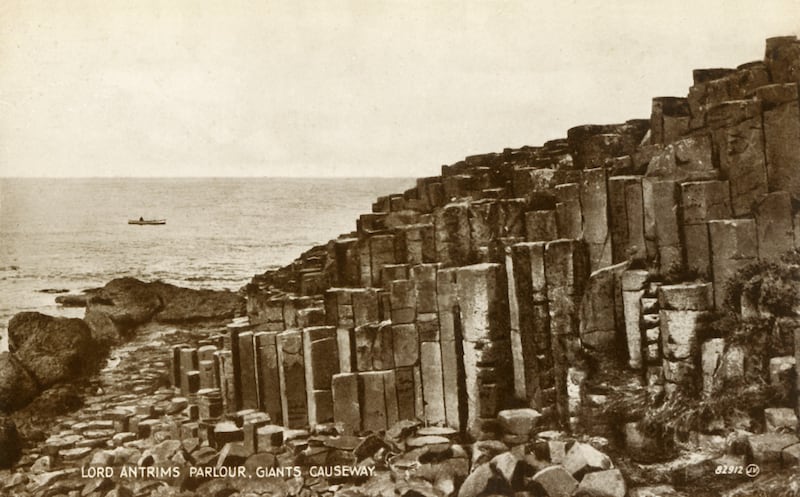
The story of how landscape has shaped the county is considered in the first chapter featuring the Giant’s Causeway and the hard, dense rock of Tievebulliagh porcellanite mines near Cushendall, a source of high-quality flint tools such as polished stone axes traded prehistorically with Britain and the Continent.
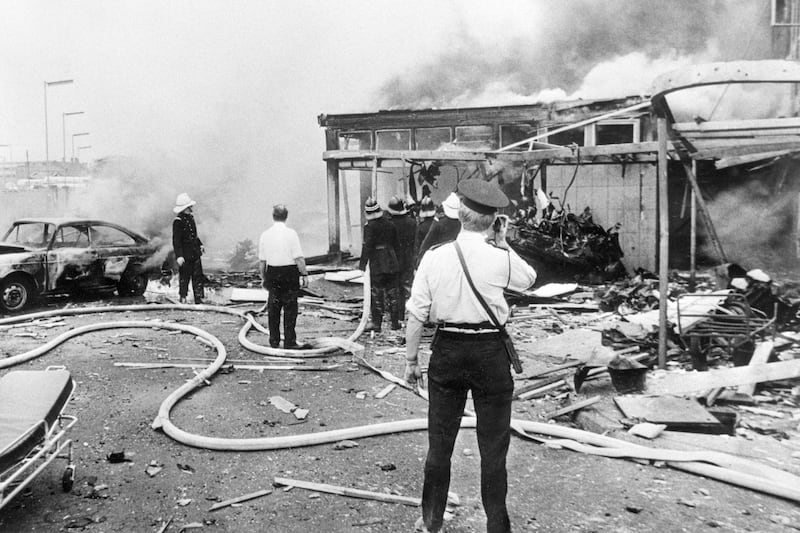
Unsurprisingly, nine chapters focus on Belfast, by far the biggest urban settlement in the county straddling the border with Co Down, although the largest portion of the city is in Co Antrim. Among the subjects surveyed are the Famine, the growth of Catholicism, Victorian middle class, the first World War, and Marcus Patton’s engaging essay Caught between the Planners and the Bombers.
He outlines 19th and 20th century urban developments including Victorian architecture involving the work of Charles Lanyon who designed Queen’s University, Crumlin Road Courthouse and the Custom House. But his survey also includes the demolition of large parts of the historic city by bombers – first in the 1941 German Blitz and then in the Troubles.
In the 19th century, the Belfast Natural History and Philosophical Society (founded in 1821) and the Belfast Naturalists’ Field Club (founded in 1863) attracted lovers of the outdoors. Both nurtured an environment of intellectual and scientific inquiry and are still active today. The Belfast Literary Society, which also valued science, has an even longer pedigree dating from 1801, and the society continues to thrive.
A fascinating first in this series in a county noted for its hurling, is a study of camogie. In the early decades of the 20th century there was a prejudice against women taking part in sport. Pope Pius XI had commented that it was extremely unbecoming for women to display themselves before the public gaze.
In 1928 The Irish Times ran an editorial on the topic: “In France, Germany and even in England many girls are devoting themselves to public sports which demand violent exertion and sometimes, it would seem, a notable scantiness of clothing ... These performances are done before crowds of male spectators. His Holiness is surely in the right when he says that they are ‘irreconcilable with women’s reserve’.”
In a pastoral letter in 1950, Archbishop John Charles McQuaid expressed his “grave disapproval of the practice which had begun to show itself of permitting young women to compete in cycling and athletics in mixed public sports”. However, as the author of this chapter, Séamas McAleenan states, camogie managed to circumvent these challenges to the public perception of women’s modesty by initially wearing long dresses.
Given Co Antrim’s geographical position in the northeast of the country, the recurrent movement of people back and forth to Scotland is often a leitmotif. This connection, stretching from prehistory to the 17th century, is explored through religious diversity, social structure, an analysis of surnames, as well as the invasion of Ireland by the Scottish forces led by Robert the Bruce and his brother Edward (1315-18).
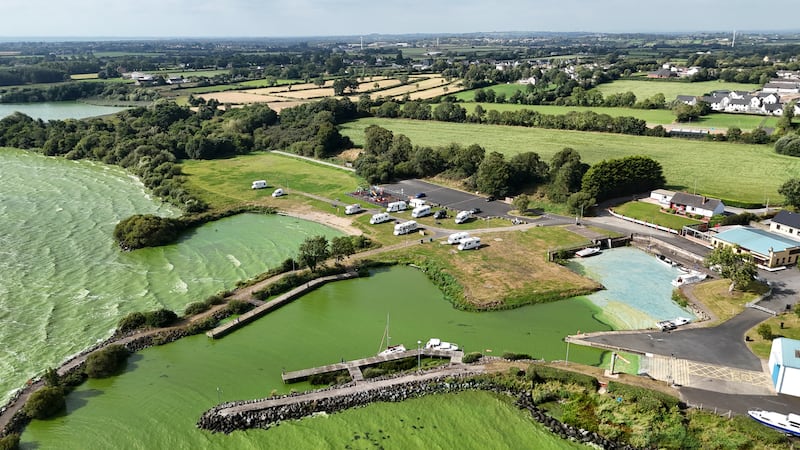
The publication of Antrim: History and Society means that each county has now been documented with volumes running to more than 800 pages and in several cases up to 1,000. Four decades ago, the first chapter of the first volume on Tipperary by Nicholas Mansergh concentrated on the importance of the local in historical studies; the 32nd and final volume of the last chapter, written by Liam Campbell, profiles Lough Neagh and its Antrim shoreline.
Lough Neagh is sometimes described as the “liquid heart” of Ulster, and his essay delves into the lough’s natural and human origins up to the present. Lough Neagh is rarely out of today’s headlines with questions over its future, the significant decline in water quality and loss of biodiversity because of the blue-green algae blooms.
In 1999, Seamus Heaney, a former colleague of Prof Nolan in Our Lady of Mercy College of Education, Carysford Park, Dublin, contributed the preface to the Derry/Londonderry volume, the 12th in the series.
The books, Heaney noted “were marked by a unique combination of local interest and scholarly rigour and already they constitute a monument to the vision, learning and sheer stamina of Willie Nolan, their “onlie begetter”.
Heaney concluded with a comment equally applicable to every volume: “This book widens and deepens and keeps opening knowledge into further knowledge, heritage into heritage, language into language, land into lore into learning. It should be in every house in the country.”
Many other writers have championed specific books. Plaudits for the series came from Edna O’Brien in her preface to the Clare volume, while Cathal Ó Searcaigh wrote an evocative réamhrá to Donegal, and John Waters introduced his home county of Roscommon.
In his foreword to the Tyrone book, John Montague, who had lived in both Cork and Tyrone, stated: “I moved from one to the other, without forming a full picture of either, whether you use the lens of archaeology, geography or politics. An Irish county can be a dense thicket of associations and jagged deprivations, rough but beautiful as a whin bush.”
Tipperary was the first county to be published and was a small volume of 493 pages
Montague described the little-known Tyrone towns as “a miasma of local loyalties ... with layer upon layer of partly forgotten history, with the people peering out, partly modern, partly wild as woodkerne, like their landscape, bisected by a Broad Road.”
Politics and religion feature prominently. The then taoiseach, Enda Kenny, TD, introduced Mayo, saying the book “defines our personality and enriches each person’s understanding of who we are,” while Archbishops Robin Eames and Seán Brady contributed a joint foreword for the Armagh volume.
The numerical data relating to the series reflects the monumental scale of the undertaking. William Roulston, who co-edited Fermanagh, has worked out the collective statistics behind the complete works: 32 volumes, 940 chapters, 26,500 pages running to an estimated 12,000,000 words.
The Antrim book was co-edited by husband and wife team Prof Eileen Murphy and Dr Colm Donnelly. Murphy, who co-edited the Fermanagh volume, said it had a rural flavour while Antrim presented a fresh challenge.
“We were also keen to devote space in Antrim to the study of women – so often neglected in academic research – and in order to reflect their stories we have chapters on a variety of topics. Each volume is an invaluable resource for anyone interested in county heritage, whatever their cultural background or identity, and it’s wonderful to see Willie Nolan’s vision of 40 years coming to fruition.”
Reflecting as the general editor of the multidisciplinary nature of the series, Nolan, who is from Tipperary, explained where the initial impetus came from: “In 1982 we established a historical society for Co Tipperary, and because the GAA was founded in Hayes Hotel in Thurles in 1884 we decided it would be opportune to mark the occasion by publishing a book of essays to coincide with the commemoration.”
Tipperary was the first county to be published and was a small volume of 493 pages compared to later county books with twice that number. However, it provided a solid foundation and was the trigger that led to the inauguration of the project in 1985. A third-level lecturer in geography, Nolan believed there was an appetite for other books.
“I was aware of the great number of research theses on various aspects of the past lying dormant in university departments and wanted a vehicle to disseminate their findings to the wider public. I was also conscious of the dedicated researchers working outside educational institutions but producing valuable work based on their native place. Hence, the pattern since the beginning of incorporating the perspectives of insider and outsider in the various volumes.”
Alongside Nolan’s heroic work, specialist contributors and individual editors have triumphantly succeeded in producing what many deem as one of the most stimulating regional historical projects ever undertaken in Ireland.
The Clogher Valley historian, Jack Johnston, is a contributor to four volumes – Tyrone, Fermanagh, Cavan and Sligo – and a regular user of the books. He said Nolan brought together a range of local experts and historians to supplement those writing from universities: “This was in many ways a riposte to the formal revisionism of the 1980s and ’90s. It meant he was able to build up the national picture in carefully crafted county studies that often had a greater reach than the main general histories of the country, and for this he deserves national recognition.”
A strength of this sustained publishing enterprise has been its digressive nature, introducing new ways of thinking that had not previously been examined in Irish local history studies. There is no doubt that the project has transformed understanding of the past on many levels.
It is worth reflecting on Heaney’s view of the lasting value of the series: “The books will always be cherished as a treasure trove of existing knowledge and new research, and they will never be out of date.”
Antrim: History and Society: Interdisciplinary essays on the history of an Irish County is edited by Eileen Murphy and Colm Donnelly, series editor William Nolan (Geography Publications) geographypublications.com
Paul Clements is president of the Belfast Literary Society. His recent books include A Year in the Woods: Montalto through the Seasons, and Jan Morris: Life from Both Sides.