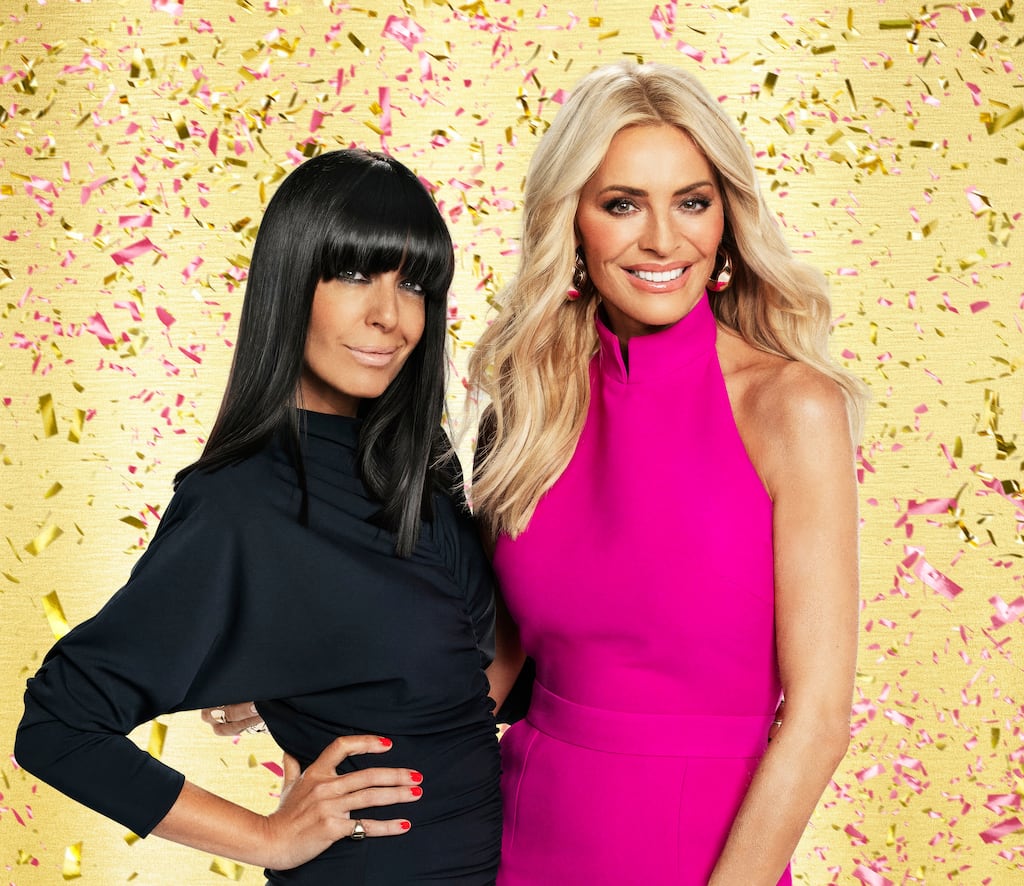

Are live shiny-floor television shows supposed to move you? It seems like a category error to deem these well-honed schmaltz machines capable of sparking genuine feeling, but if anyone on screen cries during tonight’s Strictly Come Dancing final, the last to be hosted by Tess Daly and Claudia Winkleman, I fully expect to weep along.
There’s a fine line between a dance that elicits an emotional response and one that’s merely bodies throwing shapes. There’s an absolute gulf between a Saturday-night entertainment show that connects with a mass audience and one that curls in on itself, attracting indifference at best.
As the BBC’s content boss, Kate Phillips, put it, Daly and Winkleman have “sparkly high heels that are going to be hard to fill” after they exit tonight. (The pre-recorded Christmas special doesn’t count.) I often think Strictly could sink entirely if Craig Revel Horwood ever left the judging panel. But the show isn’t about the presenters or the judges or even the celebrities. The clue is in the title. It’s about the dancing.
My highlights reel of the show since its debut, in 2004, would devote more time to two dances than any of the others put together: one features Sophie Ellis-Bextor, the other the late Caroline Flack. It’s no coincidence that both are Charlestons. Introduced in the seventh season, this dance galvanised the show from the first swivel.
READ MORE


Peaking a century ago in the age of freeing short hemlines and single-girl spirit, the Charleston was once a charmingly frivolous showcase for the kind of exuberant rebellion that borrows from trampled-upon cultures and leans in to scandal. Of the two I adore most, Ellis-Bextor’s is so impeccably cool that it almost spoiled the show forever for me, while Flack’s is a triumph of showbiz gaiety that, for obvious reasons, makes a sad playback now.
Indeed, both dances seem infused in retrospect with the heaviness of light entertainment that has, at various points, swirled around Strictly without ever unravelling the enterprise.
When Ellis-Bextor wrote about Strictly in Spinning Plates, her candid memoir from 2021, she quoted A Tale of Two Cities. It was a far, far better thing that she did, than she had ever done? No, it was the best of times, it was the worst of times.
The singer’s week-two Charleston with Brendan Cole, her professional partner, was the pinnacle for her, too. (Years later, YouTube commenters remain irked that a format flaw meant she didn’t get to repeat it in the final, after placing fourth.) The pair watched vintage clips together, then Cole, who she got along with, choreographed their dance out of their favourite bits.
Her persona in the routine is aloof, arch, classy and playful. He’s the pro, she’s the star. She did a backflip and “felt kind of fearless”.
But this exhilaration was juxtaposed with a discomfiting intensity to the experience of being on the show. She depicts it in her memoir – written two years before complaints rolled in from other participants, prompting an internal investigation – as boundary-pushing and cult-like, with the potential to be “cruel”.
With its Turkish-bazaar theme, Flack’s Charleston with Pasha Kovalev, a year later, in 2014, is a dafter pleasure. There’s so much vivacity in her perfectly in-sync kicks, so much joy and talent in her performance, that it’s tough to square it with the fact that, even during this series, the Love Island presenter appeared visibly vulnerable and anxious on screen.
This was attributed to both a fresh heartbreak and negative press stories, emanating from tabloids hostile to the BBC, about her stage-school training (which can be seen as conferring an unfair advantage).
Notwithstanding the sniping, Flack and Kovalev were popular with the public. She died by suicide in 2020, aged 40, and the moment they won the glitterball trophy now appears in documentary montages of her life.
Strictly Come Dancing does move people – literally. It inspires them to take up dance classes. It’s like glitter, in the sense that exposed homes can take some time to banish the last shard from their lives.
But I can’t help thinking that “peak” Strictly was back in those Ellis-Bextor and Flack years, that the law of diminishing returns now applies, and that when Daly and Winkleman shimmy off into the night, it might be a wise idea to follow.
The show will almost certainly be back next September with new presenters, as it’s too much of a ratings magnet to be axed. Still, there’s only so long I can watch other people spinning around in circles for 13 consecutive Saturday nights without feeling as if I’m going around in them too.
The presenting duo predict that tonight will be “emotional”. I’ve invested too much time in the series, just by sticking it on, to be dry-eyed at the end. But I won’t mind at all if the BBC chooses replacements I dislike. It would be nice to leave this party mid-waltz, knowing that I had a fun time.