Main points
- Met Éireann issued rain warnings for 13 counties on Thursday. In Dublin, Louth, Wicklow and Waterford orange warnings are in effect, while yellow warnings are in place for Carlow, Cavan, Kildare, Kilkenny, Laois, Meath, Wexford, Monaghan and Tipperary
- Taoiseach Micheál Martin said it has been “a very challenging week on the flooding front” and “the next two days will be critical”
- Flood defences for Clontarf in north Dublin, not expected to be built until 2033, must be fast-tracked, local TD Barry Heneghan has said.
- Irish Rail services have been disrupted by flooding with the Dart line between Dún Laoghaire and Lansdowne Road and the Rosslare line between Enniscorthy and Wexford still closed
- People in Dublin, Louth, Wicklow and Waterford have been urged to work from home on Friday
- Antrim, Armagh, Down, Tyrone and Derry are also under Status Yellow rain warnings issued by the UK Met Office
- Join The Irish Times on WhatsApp and stay up to date
Key reads
- Why is it raining so much?
- Nearly €14m for flood warning service not spent
- How to stay up to date with river levels, flood risk and forecasts
- Tánaiste and Doherty warned to ‘behave’ over Dáil flooding row
That’s it for tonight - coverage resumes in the morning and across the day, with further heavy rain and potential flooding in store.
The statue of revolutionary Roger Casement in Dún Laoghaire captured earlier during rough seas by Patsy McGarry.
Rain warnings now cover almost the entire eastern half of the island, and will until morning.
Along with Met Éireann orange warnings for Dublin, Wicklow, Waterford and Louth, there are yellow warnings for Carlow, Kilkenny, Laois, Kildare, Wexford and Tipperary, as well as later ones for Cavan, Monaghan and Meath, and a set by the UK Met Office for five counties of the North.
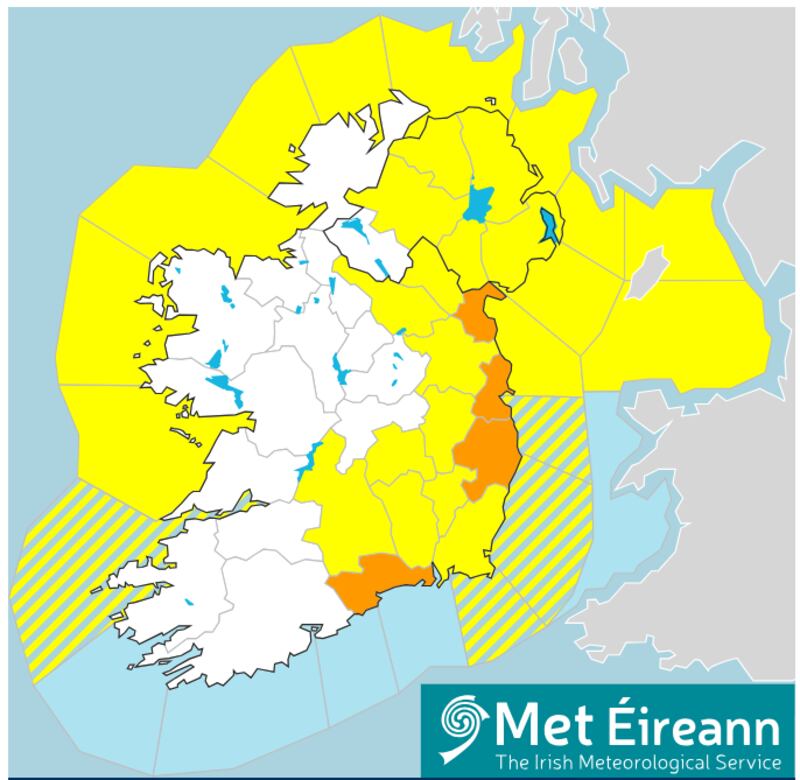
Timings, as a reminder, are as follows:
Orange
- Dublin, Wicklow: 12pm Thursday to 3pm Friday
- Waterford: 9am Thursday to 9am Friday
- Louth: 12pm Thursday to 6pm Friday
Yellow
- Carlow, Kildare, Kilkenny, Laois, Wexford, Tipperary: 9am Thursday to 9am Friday
- Cavan, Monaghan, Meath: 12pm Thursday to 6pm Friday
- Antrim, Armagh, Down, Tyrone, Derry: 12pm Thursday to midnight Friday
The Department of Social Protection has announced an extension to application deadlines for the emergency response payment.
The payment is designed to help those living in properties that have been directly affected by recent flooding.
The new deadline is Wednesday, February 18th.
It will provide “income-tested financial support to people whose homes are damaged from flooding and severe weather events and who are unable to meet emergency costs for essential needs, household items and structural repair,” the department said in a statement.
More information can be found on gov.ie.
Several ferry services across the Irish Sea have been cancelled or delayed by Thursday’s weather.
Check your ferry company directly if you are due to sail tonight or on Friday.
Nearly €14m for flood warning service not spent
Martin Wall reports: Almost €14 million earmarked for a national flood forecasting warning service over recent years was not spent, the Dáil Public Accounts Committee has been told.
Committee chairman John Brady (Sinn Féin) said it was “scandalous” that money allocated for such a system was handed back to the exchequer.
The State’s spending watchdog, Comptroller and Auditor General Seamus McCarthy, said on Thursday that there was an ambition as part of a strategy going back to 2019 for dealing with climate change risks to develop a flood warning service.
He said funding was provided to the Department of Housing for such an initiative. However, he said that in the last number of years, the funds allocated had not been spent.
Read the full story.
Flooding worries in Wexford recede
Tim O’Brien reports: Fears of flooding at the quays in Wexford town are receding in advance of the next high tide which is expected at 9.25pm on Thursday.
The morning’s high tide came and went without serious incident, although high winds did cause some waves to overtop the harbour, with more waves blown up on the promenade.
Thursday night’s high tide is expected to be about one third of metre less high than the morning one, due to tidal conditions. While the morning high tide at 2.2m high, the predicted high tide for Thursday night is expected to be lower, peaking at 1.9m.
Because of the receding danger, mobile aquadams were removed from the seafront on Thursday afternoon and sent Enniscorthy, where there is still concern that run off from the Wicklow Mountains, the Slaney’s catchment area, could cause the river to burst its banks.
Many homes at Island Road and businesses in the Templeshannon, Shannon Quay and Abbey Quay areas are still cleaning up after Storm Chandra, which flooded the area last week.
Eddie Taaffe chief executive of Wexford County Council said the defences put up “yesterday and over the last number of years” in Wexford town appeared to have worked well.
But he said the focus was now turning to Enniscorthy where over the next 36 hours much rainfall was predicted for the Wicklow Mountains and which the council were monitoring “very very closely”.
Taaffe appealed to motorists to take special care as roads may be damaged and flooded.
Emergency co-ordination group ‘vigilant’ of rising river levels and tides
The National Emergency Coordination Group will remain “vigilant” to rising river levels and high tides in the coming days of forecasted heavy rainfall, its chairman Keith Leonard has said.
“With the levels of rainfall we’ve seen and with the saturated ground that we have we’re going to have road flooding, surface flooding, and then we’ll see if any premises are affected over the next 24 to 48 hours,” Leonard told The Irish Times on Thursday.
Leonard said water from the recent heavy rainfall will begin to flow down from the Wicklow and Dublin mountains over the weekend and into the Liffey and south Dublin river catchment areas, likely leading to further increases in water levels.
The group will meet at noon on Friday to discuss the latest Government responses to the continuing downpour as 13 weather warnings remain in place across the State.
Leonard identified several areas that the group is closely monitoring including the rivers Liffey, Dodder and Slaney and coastal areas “from Louth right down to Waterford ... you could get flooding across any of those areas with the high tides”.
Irish Rail’s Dart services between Dún Laoghaire and Lansdowne Road will not resume this evening due to ongoing flooding. Trains between Enniscorthy and Wexford will also not run for the rest of the day.
A selection of images from today’s downpour from Irish Times staff members Chris Maddaloni, Dara Mac Donaill and Emmet Malone.




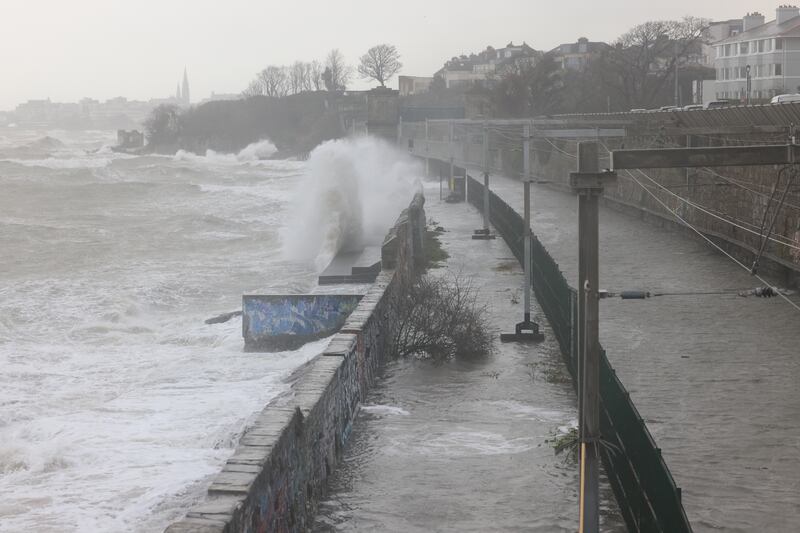

Fears of further flooding in Enniscorthy
Walls of sandbags have been erected along the banks of the river Slaney in Enniscorthy as flooding fears emerge again in the town.
Measures are being taken to prepare for further flooding after the Slaney burst its banks last week.
A yellow rain warning is in place for Co Wexford until 9am on Friday with fears flooding will repeat once rainwater flows down from the Wicklow Mountains.
With waters in the town having receded, dams have been removed and transferred to Enniscorthy.
Cllr Aidan Browne explained a large swell is expected in the river on Thursdays night and are currently attempting to build a wall of one tonne sand bags along the river from Molly’s Florist to L & M Motors to protect “vulnerable” businesses and residents on Island Road who are still in the process of cleaning up their premises.
This is the first step of the introduction of these interim measure being taken by Wexford County Council, while further interim measures are currently being discussed between council staff and the Office of Public Works.
Between Storm Claudia in November and Storm Chandra last month, a total of 652.5mm of rainfall was recorded at Johnstown Castle weather station, the highest level of rainfall for 85 years.
Wexford County Council have said that the flooding situation in Wexford Harbour, which was feared to be potentially devastating is “not as bad as expected”.

Cork hospital emergency department closed due to flooding
Olivia Kelleher reports: The emergency department at Mercy University Hospital in Cork city has been temporarily closed due to flooding.
The hospital is situated on Grenville Place close to Bachelor’s Quay on the outskirts of the city centre.
The department has been closed for essential maintenance and to ensure the safety of patients and staff.
In a statement the hospital says that individuals requiring urgent medical attention should consider alternative care options such as their out of hours GP service, local chemists and injury units. Details of area injury units can be found on the HSE website.
In the event of an emergency or life-threatening condition, members of the public can contact emergency services by phoning 112 or 999.
MUH indicate that they are “working diligently” to restore full functionality as quickly as possible.
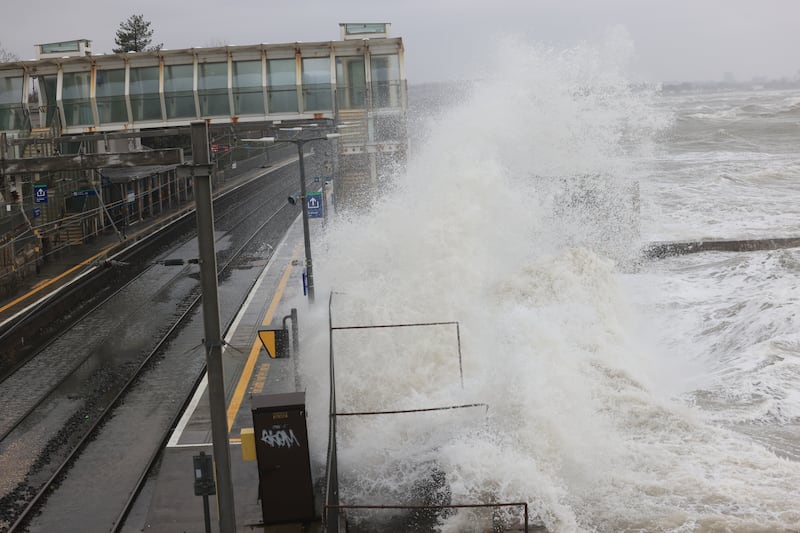
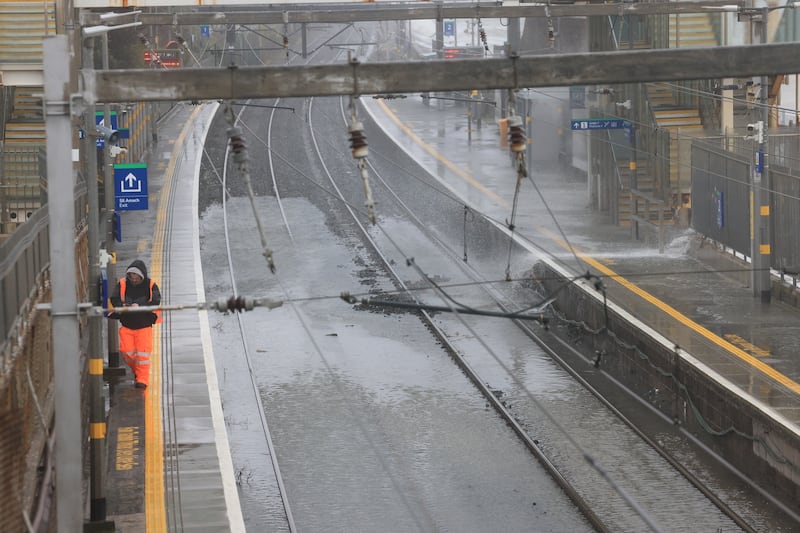
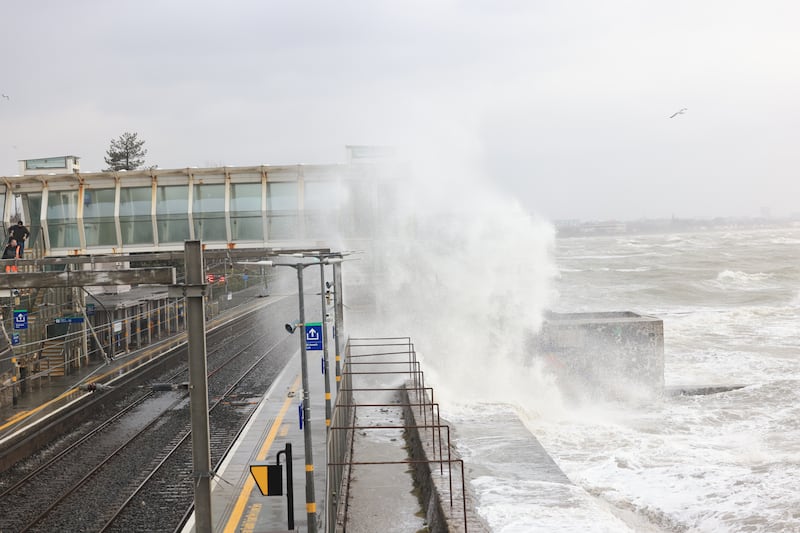
Emmet Malone captured these scenes at Blackrock station on Thursday afternoon.
More rail services have been affected
The Dublin to Rosslare line is closed between Greystones and Kilcoole, Co Wicklow, due to debris on line. The earlier closure between Enniscorthy and Wexford due to flooding remains in place.
Bus transfers are in place to accommodate the evening rush hour services.
The Dart line between Lansdowne Road and Dún Laoghaire are still closed with delays affecting other parts of the electrified network.
A video posted to Irish Rail’s X account on showed flood waters at Salthill reaching up to platform height earlier today.
Some Wicklow river levels recede, but others remain near full
Wicklow County Council has advised the public that some rivers remain close to or above bank-full levels.
Many have, however, begun to recede from such high levels.
In a statement on Thursday evening, the council warned “further heavy rainfall is likely to trigger additional flooding due to saturated ground conditions”.
“Spring high tides, combined with strong winds and coastal surge have resulted in wave overtopping in the Wicklow Town Promenade, Bray Seafront and at Arklow’s North Beach revetment [retaining wall]. Coastal flooding could also occur in exposed areas. Members of the public are urged to stay away from these areas for their own safety.”
Harris and Doherty clash in Dáil over flooding
Marie O’Halloran reports: Tánaiste Simon Harris and Sinn Féin finance spokesman Pearse Doherty have been asked to behave with “a bit of decorum” after a heated row about flooding.
Following testy exchanges between the two, with repeated interruptions and heckling, Leas-Cheann Comhairle John McGuinness remonstrated with both men.
He said such behaviour was happening every Thursday morning and while TDs could make their point robustly, he reminded them that people were watching “and suffering” because of the floods, and were seeking and entitled to information.
During ill-tempered exchanges, the Tánaiste said that, to date, 14 businesses had applied for the newly increased flood financial support scheme worth up to €100,000 to individual firms, while 100 claims from homeowners for emergency assistance had been processed.
Read the full story.
‘Very challenging week on the flooding front’, Taoiseach says
Cormac McQuinn reports: It has been “a very challenging week on the flooding front” and “the next two days will be critical and crucial for quite a number of locations”, Taoiseach Micheál Martin has said.
Speaking to reporters at the opening of new social homes in Ballinasloe, Co Galway, Martin said he appreciated the work and co-operation of county councils in ensuring that “those that are in the front line of flooding are getting supports and getting assistance to make sure that they can deal with what are very, very elevated levels of rainfall across the country, particularly in the southeast”.
He said they were rainfall levels “that we haven’t experienced for quite, quite some time”.
On the response by Government and local authorities, Martin mentioned “positives” and areas where “we can improve”.
He said changing weather patterns in recent years were “clearly caused by climate change” and described Storm Éowyn last year as “the worst on record”.
According to the Taoiseach, there had been “discernible progress” since then on legislation to provide for clearing corridors near electricity infrastructure, the purchase of electricity generators and identifying community hubs to help in the response to future storms.

Separately, Martin said 56 flood relief schemes had been completed around the country and “we have about a hundred in different stages of development”.
He said such schemes were “particularly complex” and “we need to do more in terms of interim solutions” and he spoke about “interim protections for areas that are low-lying or that are vulnerable to rivers bursting their banks”.
“There are certain areas where we can improve, of that there is no doubt and I’ve discussed this with local authorities,” Martin said.
He also said it had to be acknowledged that local authority workers had “been out in the middle of the night” doing “extraordinary work”.
Martin said that in Carlow town council workers protected a “huge” housing estate.
“So a lot of positives, but yes of course we can improve in certain areas,” he said.
Some weather related power faults have been reported in Dublin and other areas, ESB has said.
“Crews are responding locally as and where these have occurred – and are working to restore power to any impacted customers as soon as possible,” press officer Graham King said.
He said such disruption was not unusual for this time of year. The public can find updates on powercheck.ie.


Images and videos posted online this afternoon have shown high water levels in multiple areas across Dublin, including the seafront in Clontarf.
Olivia Kelly wrote late last month: Flood defences were planned for Clontarf after a previous inundation in 2002, but local objections stalled that project. The latest proposal for defences will not be built until 2033 “if all goes well”.
Dart services are now operating between Bray/Greystones and Dún Laoghaire and between Lansdowne Road and Howth/Malahide due to ongoing flooding of the tracks.
Services to Rosslare are operating with bus transfers between Dublin Connolly and Bray to Enniscorthy.
Irish Rail spokeswoman Jane Cregan said the operator’s teams are on-site along the southeast monitoring water levels.
Wicklow County Council has advised members of the public to avoid several areas in Bray due to strong winds and high tides.
‘The entire garden was like a river’
Ronan McGreevy reports: Residents in the Woodside estate in Rathfarnham woke up on Tuesday morning last week to find a river of water flowing down their street.
Torrential rain, which fell on the previous Sunday and Monday, led to a blockage in a culvert adjacent to a stream which backs on to the Grange Golf Course.
Megan Scully, who lives in the house at the top of the estate and has part of the culvert in their back garden, witnessed the torrential rainfall. “We were in total shock. The entire garden was like a river, it was wild. The water flowed down the street for seven hours from early in the morning until midday. On the morning of the flood, there was no resources to give to us.
“We have been in constant contact with South Dublin County Council, they own the culvert. They have done a great job of coming out and checking to make sure the access is clear. There are seven houses and all the residents were trapped and couldn’t get out.”
Philip McDonagh, who lives near a council depot that was inundated with water, said two houses next to him were flooded. The water came up to their door, but went no further.
“It was a constant flow. I woke up and I heard white noise and it wasn’t wind. Some of the houses were inundated. I’m hoping that the culverts have been cleared. If they are cleared, I’m hoping that will be enough. This estate was built in the 1990s and nobody had seen flooding like that before.”
Many of the homes now have sandbags outside them to prevent a repeat of last week’s flooding with Dublin now on an orange level alert for rain.
At the bottom of Woodside is Dodder Park Road which also flooded and inundated homes in the area. The water from the Woodside estate flowed left into homes at the top of that road and caused significant flooding and damage to cars.
In Enniscorthy, Fianna Fáil councillor Aidan Browne said: “One of the interim measures for flood relief is currently being installed at the Island Road.
“This is a wall of one tonne of sand bags which is placed at back of the vulnerable houses to create a line of defence against flood waters [from the river Slaney].”
Sarah Slater reports: Wicklow County Council says sandbags are available for collection across all municipal districts. Stocks will be replenished throughout the day.
Continuing rainfall will likely trigger more flooding, Waterford County Council says
Waterford City and County Council said its severe weather management team met on Thursday morning.
The National Emergency Co-Ordination Group said while rivers had receded from peak levels, levels remained close to or above bank-full conditions.
The continuing rainfall would likely trigger more flooding, it said.
The council is advising the public to stay away from the coast and follow the messaging of the Irish Coast Guard as there were concerns about coastal flooding and wave overtopping.
Flood defence barriers will be activated in the following areas on Thursday evening:
- Waterford City – flood defence barriers will remain closed until after high tide passes on Friday morning
- Passage East – flood defence barriers will close this evening and will remain closed until high tide passes on Friday morning, with ground crews on site to monitor the situation
The following car parks in Dungarvan will close from 7pm on Thursday until 10am on Friday due to flood risk:
- Davitt’s Quay
- The Pond
- The Lookout
- Castle Street Carpark
Sandbags are available at Waterford City and County Council depots in Dungarvan, Carrickphierish, Tramore and Leperstown.
Some striking images from Irish Times photographer Dara Mac Dónaill in Blackrock, south Dublin, on Thursday.

Much discussion around the current floods focused on predicting what rain was coming and where, but that still left the question of why it has been unrelentingly wet in the usually drier eastern half of the country.
Caroline O’Doherty writes: For an answer to that, we have to look far above and beyond the clouds overhead.
It’s about “clashes” and “battlegrounds” says Paul Moore, climatologist with Met Éireann, as the many forces that shape our weather collide and get knocked out of shape.
People in Dublin, Louth, Wicklow and Waterford urged to work from home on Friday if they can
Vivienne Clarke reports: The National Emergency Coordination Group is urging people in Dublin, Louth, Wicklow and Waterford to work from home on Friday if they can.
Keith Leonard, chairperson of the group, said he expected roads would be “heavily disrupted” and there would be flooding.
Speaking on RTÉ Radio’s News at One, Leonard said there would be difficult conditions in the coming days due to persistent, prolonged rainfall and high tides.
The National Emergency Coordination Group met at noon on Thursday, he said, where they heard from local authorities in the affected areas about the preparations they had in place with temporary flood defences and sand bags and about their concerns about rising river water levels.

More rain to come next week, Met Éireann says
Vivienne Clarke writes: Gerry Murphy, forecaster with Met Éireann, says there is more rain to come next week, but it should be on a different track across the county coming from the southwest across counties Cork, Kerry and Clare with less impact on south Leinster and the east coast.
Speaking on RTÉ Radio’s News at One, Murphy said rainfall had spread to all of the country, but it was heaviest in the east on Thursday.
The problem was this rainfall would be prolonged and there was a concern about the levels that could fall on the Wicklow Mountains where there are no gauges, he said.
Fortunately any rise in river levels this time will be gradual over 36 hours, rather than six hours as happened last week.
“In the short term the worst will be behind us by tomorrow,” he said.
There will be sunny spells and scattered showers over the weekend with more rain pushing in from the southwest next week.
‘I hope we’re better prepared this time’, south Dublin resident says
Ronan McGreevy reports: Residents on Dodder Park Road in south Dublin are bracing themselves for further potential flooding this evening.
An orange weather alert for rain is in place for Dublin from midday on Thursday until 3pm on Friday.
Last week, the river Dodder flooded and caused considerable damage to homes and cars in the area.
Dublin City Council has now provided sandbags to local homes.
Aoife Mulhern and Cathal Tracey woke up after the flooding on the night of January 26th and 27th to find their cars submerged in water. The cars have been taken away for insurance assessment.
Like many residents in the Riverbank apartments they now have sandbags outside the door of their bottom floor apartment.
A pallet of sandbags have been left out for residents.
“I’m assuming that they have done a better job on the drains in anticipation of what is to come given what happened last week,” Cathal Tracey says.
Another resident, who asked not to be named, said “we are all dreading” the rains that is forecast.
The water came in the threshold of his home and his front door now has sandbags covering it.
“I hope we are better prepared this time.”
Rail services suspended at some Dublin and Wexford stations
Irish Rail says services are suspended between Lansdowne Road and Bray until further notice due to flooding at various locations.
“Staff are on site monitoring. Dublin Bus & Go Ahead will honour valid rail tickets in the affected areas,” it says.
Services are also not operating between Enniscorthy and Wexford until further notice due to flooding.
How to get information on flooding risks
So how do I know that?
Martin Wall reports: The chairman of the Public Accounts Committee John Brady said in some years up to €7 million was allocated by the Exchequer to the Department of Housing, OPW and Met Éireann for the planned national flood warning service.
However, he said in some years only about €1m had been spent.
Brady said the committee would seek details on the issue from the agencies concerned at a hearing scheduled for next month.
Some bus services may experience delays or disruptions due to weather
Dublin Bus has said due to current weather conditions, some services may experience delays or disruptions.
“Customer safety remains our priority and services will operate subject to conditions,” it said.
“Please allow extra travel time and check for updates before travelling.”
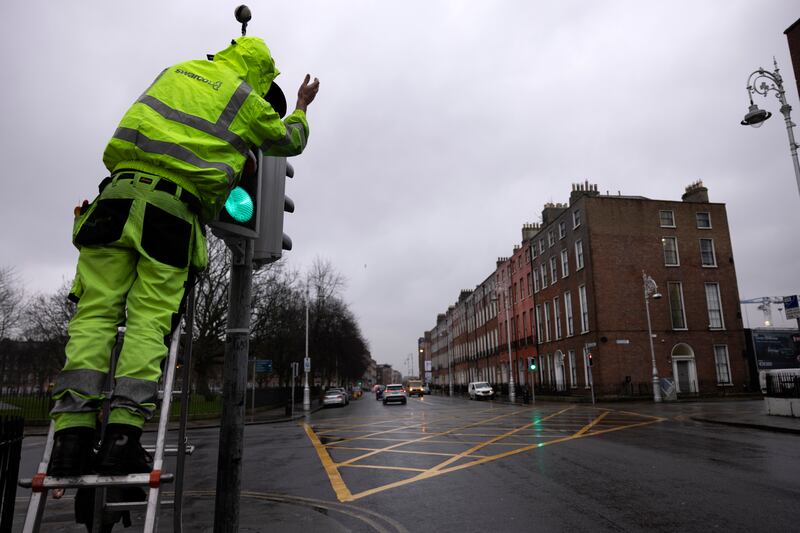

Parts of Newbridge and Clane remain at increased risk of flooding, says Kildare County Council
Kildare County Council has warned that parts of Newbridge and Clane remain at an increased risk of flooding due to their proximity to the river Liffey.
The county is under a status yellow rain warning until 9am tomorrow.
In a statement on local radio station Kfm, the county council said: “This additional expected rainfall on already saturated ground, combined with high river levels and high tides increases the risk of localised flooding, river flooding and difficult travel conditions.
“However, many rivers remain close to or above bank-full conditions and additional rainfall in the coming days could trigger localised flooding, in flood prone areas, given current ground and river conditions.”
The council added that its severe weather assessment team is meeting daily and is working with other agencies through the National Emergency Coordination Group.
“Kildare County Council crews are working hard on the ground, monitoring conditions on a 24-hour basis, carrying out all necessary flood preparation works and have already deployed sandbags to a number of areas, as a precaution,” it added.
“Additional sandbags will be deployed to any at-risk areas, as required. However, no properties have been affected or deemed to be at immediate risk.”
A yellow rain warning has also been issued for Meath, which runs from noon on Thursday until 6pm on Friday.
The orange rain warning for Dublin and Wicklow has been extended until 3pm on Friday.
The UK Met Office has issued a yellow rain warning for Antrim, Armagh, Down, Tyrone and Derry from noon on Thursday until midnight on Friday.
Orange rain warning issued for Louth
An orange rain warning has just been issued for Louth by Met Éireann. The warning runs from noon on Thursday until 6pm on Friday.
Council optimistic Wexford town will avoid ‘extensive’ flooding
Brendan Furlong reports: High tide in Wexford has passed and because the wind has swung northeast, it appears the worst has passed in the town.
High tide passed at 9.18am and Wexford County Council is “optimistic” Wexford town will avoid “extensive flooding”.
The council’s chief executive Eddie Taaffe said the river levels in Enniscorthy have dropped steadily over the last number of days.
“We are concerned, given the level of rainfall that’s predicted in the Wicklow Mountains over the next 24 hours,” he said.
“So we do remain on alert in Enniscorthy and we have additional temporary defences that we can bring into Enniscorthy and establish quite quickly.”
He added that they have ‘aquadams’ ready to deploy if required.
“An ‘aquadam’ is essentially, a long, thin balloon that you pump up with water quickly and it protects from about a metre of water and they can be put up very quickly along areas prone to flooding,” he said.
“We won’t deploy them until later on, until we see what happens to the river level in the Slaney over the next 24 to 48 hours.”
Sarah Slater reports: In Co Wexford, burst water mains in Kilmore are affecting the village, nearby Bridgetown, Tomhaggart and surrounding areas.
“Works are [expected] to be completed this evening. Pressure should return soon after,” said local Aontú councillor Jim Codd.
Waterford Sinn Féin TD David Cullinane said that financial resources made available for Waterford shows the town and county lags way behind Cork, Limerick, Galway, Kilkenny and many more counties over the last five years.
“Likewise in funding for harbours and piers where Waterford received the lowest allocation,” he added.
Cullinane said that Waterford ranks 22nd out of 24 counties for Office of Public Works (OPW) major flood relief funding.
Over six years, Waterford received just €240,000, the Sinn Féin TD claimed.
Cork received €115 million, Limerick €37m, Galway €13m, Kilkenny €4m, 17 times more than Waterford.
“This neglect is unacceptable. Waterford deserves fair funding and real flood protection,” he said.
RSA says people in Dublin, Wicklow and Waterford should avoid driving today
David Martin, senior public relations manager with the Road Safety Authority (RSA), has called on people in the Dublin, Wicklow and Waterford areas to avoid driving today if they can.
Speaking on RTÉ Radio’s Today with David McCullagh show, Martin added: “If you have to do your journey, give yourself some extra time, it’s going to take a little bit longer. I suppose the most important message is for drivers to slow down and allow greater braking distance between themselves and the vehicle in front in these very wet weather conditions.
“It can take more than twice as long to stop your car in these wet conditions, so give yourself twice as much space between yourself and the car in front, that’s our advice. It’s very important to do so on high speed roads such as dual carriageways or motorways where there is an increased danger of aquaplaning.
“Then of course take special care when you’re driving behind vehicles, heavy goods vehicles as they generate a huge amount of spray and that reduces your visibility, so to hold back on that and give yourself the extra bit of space.”
Martin’s advice for drivers on flooded roads was not to attempt to drive through the water.
“Flooded roads can frequently appear shallow, but they’re more often than not deeper than you might think. So as well as that the grass verge may have subsided, there may also be trees, branches and other debris in there and that they wouldn’t be visible. So you just need to take extreme care, turn around, use your satellite GPS, use your phone, find another route and avoid those flooded roads.
“Motorists should also obey instructions from any local authority staff on the roads. If there are signs saying to avoid a route, then do that and find an alternative route.”
His advice for cyclists and pedestrians was to make sure to be visible.
“Visibility is very much reduced at the moment, so wear your high viz. clothing if you have it and if you’re a cyclist, use your lights front and back all day today, it’s gonna be difficult,” he added.

Funding for national flood forecasting warning service was not spent, TDs told
Martin Wall reports: Funding allocated over recent years for a National Flood Forecasting Warning Service was not spent, the Comptroller and Auditor General Seamus McCarthy has told the Dáil Public Accounts Committee.
Committee chairman John Brady of Sinn Féin said millions of euro for such a project had been handed back to the Exchequer.
The committee is to seek details from the Department of Housing and the Office of Public Works.
The Department of Housing has been approached for comment.
Significant rain anticipated in Enniscorthy, says council chief
Vivienne Clarke reports: Wexford County Council’s chief executive Eddie Taaffe has given an update on the situation in Wexford on RTÉ Radio’s David McCullagh show.
The aqua dam in Wexford Harbour contained the morning’s high tide.
“We escaped, but only just. Another 100mm and it could have been bad.”
Thursday evening’s high tide will be slightly lower, he said. The focus will now turn to Enniscorthy where significant rain is anticipated, he added.
“It’s unrelenting at this stage ... It’s never ending, we’re building temporary defences in Enniscorthy.”
Where water levels are now three metres lower than they were at peak flooding last week but the anticipated rain on the WicklWicklow Mountainsld have a significant impact” on Enniscorthy, he warned.
Sarah Slater reports: In Waterford, high tide has passed in the city and county, and the flood defence barriers have been effective.
Council ground crews remain on site monitoring the situation.
With a tidal surge forecast which will result in tide levels higher than the natural tide levels, flood defence barriers have been activated in Waterford city and will remain closed until after high tide passes on Friday at 8.30am.
In Passage East the council also activated flood barriers on Wednesday night and will remain closed until high tide passes on Thursday.
An Aqua Dam has been put in place in Wexford town along the quay area which is aimed to protect other towns and villages such as Enniscorthy which was badly flooded last week as was Bridgetown.
In Wexford town Labour TD George Lawlor said that the flooding situation “looks bad with just under one hour to go to high tide but we should be okay from the point of view of flooding”.
In Kilkenny, the council has made sandbags available at various locations across the county including Graiguenamanagh, Inistioge, Thomastown, Callan, Freshford, Castlecomer, Gowran, Johnstown and Ballyragget.
At the Newrath, Rathkieran, The Sweep and Gaol road depots in Kilkenny city.
Laois County Council is monitoring rising water levels in the river Barrow which runs through the towns of Portarlington and Mountmellick.
In St Mullins, Co Carlow which was badly flooded last Friday, Martin O’Brien who owns the local Mullichain cafe said he is “sitting here again this morning watching the rising tides and thinking about [those who have objected] and blocked all maintenance of the river Barrow. It is about time that the Government put a stop to their antics.”
The river Barrow has not been dredged in the area due to a rare whorly snail having its habitat located there.
Last month second wettest January on record in Dublin
Met Éireann have said that last month was the second wettest January on record in Co Dublin, behind 1948.
The forecaster’s monthly climate statement said 141mm rainfall was recorded at the Phoenix Park, some 225 per cent of the long-term average (LTA), and 137.7mm was recorded at Dublin Airport, 223 per cent of the LTA.
Nationally, the report notes, it was the wettest January since 2018 and 18th wettest on record, with the average amount of rain recorded representing 123 per cent of the LTA.
Johnstown Castle in Co Wexford was the wettest station this month, with 232.7mm of rain (230 per cent of its LTA) recorded, making it the wettest January since 1996. A total of 37.3mm of rain fell at Johnstown Castle last Friday, the wettest January day there since 1979.

Irish Rail has said some services through Connolly station in Dublin may experience delays of around 10 minutes this morning due to congestion on the network through the city centre.
Waterford County Council says it has concerns about road flooding
Gabriel Hines, director of services at Waterford City and County Council, said there are barriers in place at Passage East and Waterford City which are “working effectively”.
“In Dungarvan, in our coastal car parks, some flooding there but we had closed them overnight so we’ve no significant issues there either,” he said.
“Later in the day our difficulty will be similar to Wicklow. We’re going to get significant rainfall, particularly in the Comeragh Mountains. Again, saturated ground, swollen rivers. Again similar to Wicklow, we’re expecting localised spot flooding on our road network.
“We could get some streams overflowing and some river flooding. We would have significant concern in relation to road flooding, in the rivers in particular, feeding off the Comeragh mountains, where we predicted very high intensity rainfall. I think the rivers that are coming from the Comeragh Mountains will be the ones that we could get spot flooding on the local network today.
“Having said that, given the saturated grounds, anywhere we get a high rainfall intensity today, there’s a possibility of the small streams overflowing causing localised spot flooding on the road network. When you’re driving, slow down, expect water on the road network, allow extra time for your journey, extra stopping site distance.”
Wicklow County Council says it is preparing for flooding
Michael Flynn, senior engineer with Wicklow County Council, said its crews are all “on alert” and preparing for flooding.
“They’ve been working over the last number of days clearing debris from the last flood event and getting in place measures such as deploying sandbags to areas prone to flooding,” he said.
“We’ve got all our crews ready and available to assist as and where necessary. The areas that traditionally have been prone to flooding have been Aughrim, which had the flooding event last week. Arklow again with the combination of river flooding but we also have high tides and significant onshore winds so the entire coastal regions again we have crews on standby in those locations.
“There’s been very significant damage to our road network, structural damage. So we have road closures in place across the county and we would urge people, if they are making journeys, to check the weather conditions and also check on our social media platforms for notifications of those closures. Above all, we would ask people to heed the warning signs. Those road closures are in place to protect the public from the hazards that exist on those sections.”
Dublin City Council monitoring river levels and coastal conditions closely
Dublin City Council said its flood management team is continuing to respond to “ongoing adverse weather conditions and related impacts”.
The local authority is monitoring river levels and coastal conditions closely, to ensure appropriate responses as required, it said.
“Dublin City Council are in regular contact with the National Emergency Coordination Group on all aspects of recent weather events.”
Car parks along coasts at Sandymount and Clontarf remain closed to protect against possible wave overtopping. The cycle lane at Clontarf will remain closed as a precautionary measure.
Eden Quay boardwalk will also remain closed as a precautionary measure. The flood gates along the river Dodder will remain closed until further notice.
“Our crews remain active across the city, making arrangements for possible events and responding to issues as they arise,” it added.
“Crews removal of debris at rivers racks and blockage clearing is ongoing to minimise negative impacts.”
The council said it maintains a limited supply of sandbags at strategic locations for use in response to identified flooding risks.
“These resources are deployed by the council where required, with priority given to critical infrastructure and locations assessed as being at immediate risk.”

Parts of Dublin will be most at risk of flooding, says forecaster
Vivienne Clarke reports: Weather warnings for Dublin will be yellow from 9am to noon on Thursday after which they will be orange until midday on Friday, senior Met Éireann forecaster Gerry Murphy has said.
“This is because the higher impacts will occur from noon onwards,” he told RTÉ Radio’s Morning Ireland.
“Now the reason Dublin has been added in is because with Wicklow it was always considered that there would be very high totals in the mountainous higher levels which would then activate responses in quick responding rivers, which would then have a knock-on effect further at lower levels.
“But it does look like those higher totals are going to extend not only to Wicklow, but also into South Dublin as well. So the higher regions, the Dublin Mountains and parts of Dublin that have flooded recently will also be the most at risk of flooding over the next 24 to 36 hours.
“It’s really the southern half of Dublin that this orange warning refers to simply because the higher ground is in South Dublin in conjunction with the Wicklow Mountains so those impacts that may occur with Wicklow, South Dublin mountains may have a knock-on effect at lower levels over the southern half of Dublin.”
Murphy acknowledged that not all the areas impacted last week will experience the same conditions on Thursday and Friday.
“It may not affect all of them in the same way but nonetheless those are the areas that will be most at risk of flooding and I must say as well people should be aware that this is actually going to be a lot of consistent persistent rain.
“The rain will start off around midmorning and it’s really going to continue right the way through the rest of today, right the way through tonight and right up until tomorrow afternoon. So it’s going to be very wet really. It may not be raining heavily all of the time but it will be very wet really from mid- morning right the way through to tomorrow afternoon.
“It will be steady rain, sometimes light, sometimes heavy, but at the higher levels in the Wicklow Mountains, Dublin Mountains, where the rainfall amounts will be higher.”
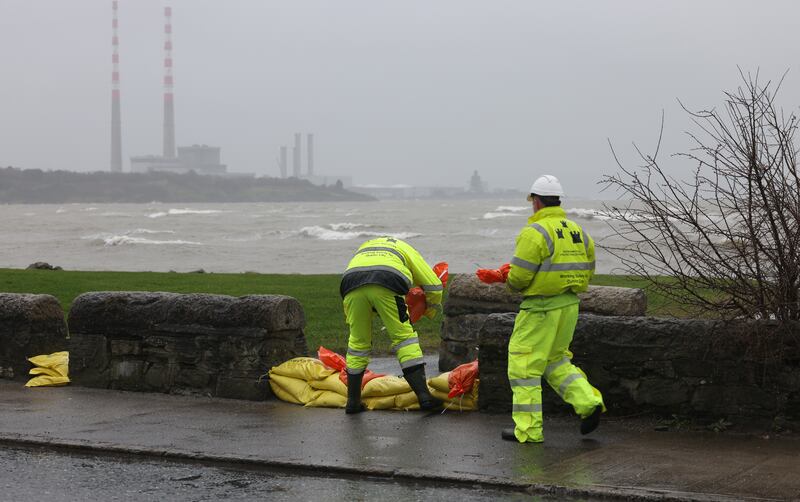
Wexford County Council says it has been monitoring the tide throughout the night
The chief executive of Wexford County Council, Eddie Taaffe, has spoken of preparations by the local authority for the severe weather warnings for the east coast of the country.
“We’re still about 2½ hours away from a high tide in Wexford harbour,” he told RTÉ’s Morning Ireland, Vivienne Clarke reports.
“We’ve been monitoring the tide throughout the night and the indications are at the moment that while we’ll have a very, very high tide around nine o’clock with a gale force eight, easterly wind pushing it into the harbour.
“I suppose our estimate at this stage is that while we will have limited wave overtopping, that our defences will be able to cope with that.
“We’re optimistic that we won’t have extensive flooding in Wexford Town. So, it’s looking reasonably good at this stage in the harbour.
“River levels in Enniscorthy have dropped steadily over the last number of days, but I suppose we are concerned given the level of rainfall that’s predicted in the Wicklow Mountains over the next 24 hours. So we do remain on alert in Enniscorthy and we have additional temporary defences that we can bring into Enniscorthy and establish quite quickly.”
Taaffe explained that an aqua dam is available, which is “essentially a long, thin balloon that you pump up with water quite quickly and it protects from about a metre of water and they can be put up very quickly along areas that are prone to flooding”.
“So we do have those available to us and we can roll those out quite quickly. We won’t deploy them until later on until we see what happens to the river level in the Slaney over the next 24 to 48 hours,” he added.

‘It is going to be a very, very wet day,’ says Met Éireann
Vivienne Clarke reports: Senior forecaster with Met Éireann Gerry Murphy has warned Thursday “is going to be a very, very wet day”, with rain continuing to fall until midafternoon on Friday.
“This is going to be a lot of consistent, persistent rain” he added, but the rain will arrive more slowly than anticipated.
Speaking on both Newstalk Breakfast and RTÉ Radio’s Morning Ireland, Murphy also cautioned that the rain, particularly in the Dublin mountains, is going to have a “knock-on” effect at lower levels in areas such as Shankill and Rathfarnham and other parts of south Co Dublin.
This weather regime is going to continue on Thursday, Friday and over the weekend, with a further band next week, he added.
“Once this rain does get started this morning it’s actually going to continue right the way through the rest of the day overnight and through tomorrow morning as well. So there’s going to be rain where basically it’s just going to continue raining from once it starts midmorning and then basically it’s just rain, rain until maybe midafternoon tomorrow.”
Murphy also pointed out that the timings of the warnings have been pushed back as the rain front is moving more slowly.
“People should check Met.ie for exact timings on the warnings as they all have been pushed back by a few hours,” he said.
Rainfall in the Wicklow Mountains will have the effect of “activating some very responsive rivers and streams in the mountains, which then will have a knock-on effect as it flows down to lower levels. But it does look like those heavier, those more significant high rainfall totals will also encroach into the Dublin mountains and parts of South Dublin.
“Because as has been well documented at this stage the river levels are very high, the tides are high, the ground is saturated so moderate amounts of rainfall can and probably will cause flooding in some places, but this is actually going to be a very wet day.
“Once this rain does get started this morning, it’s actually going to continue right the way through the rest of the day overnight and through tomorrow morning as well. So there’s going to be rain where basically it’s just going to continue raining from once it starts midmorning and then basically it’s just rain, rain until maybe midafternoon tomorrow.
“Then it’s a question of how much damage that causes with regard to flooding of rivers of local areas, really across the east and southeast of the country, but those look like there will be the highest amounts pushing in over Co Waterford from about 9am that’s why Waterford is in an orange warning as well. As I said, Wicklow and Dublin especially the higher ground but with the knock-on effects to lower levels across Wicklow, and especially the southern half of and then yellow level warnings extending on up then into Louth, Monaghan and Cavan as well.”

A number of status orange and yellow rainfall warnings have been issued for counties across the State, with heavy rain and flooding likely in parts, according to Met Éireann.
The national forecaster issued a status orange alert for Waterford, where spells of heavy rain falling on saturated ground, combined with high river levels and tides, will lead to localised flooding, river flooding and difficult travel conditions. That alert is valid from 9am on Thursday for 24 hours.
A second status orange alert affects counties Dublin and Wicklow, where heavy rain is also predicted to cause flooding and difficult travel conditions, is valid from noon on Thursday until noon on Friday. These counties are also under a status yellow weather warning, from 9am on Thursday until noon, when the orange alert begins.
Status yellow rain warnings have been issued for counties Carlow, Kildare, Kilkenny, Laois, Wexford and Tipperary, lasting for 24 hours from 9am on Thursday.
Another status yellow warning, beginning at noon on Thursday, affects counties Cavan, Monaghan and Louth, and is in place until noon on Friday.
Follow irishtimes.com for updates throughout the day.


