
Dozens of big flood-protection works deemed critical to protect thousands of homes and properties eight years ago have yet to progress to planning.
Out of 54 large projects where some work has begun since they were prioritised for development in 2018, the majority, 31, remain at preliminary design stage.
Target completion times for many of them run well into the 2030s.
Thirteen others are at planning or detailed-design phase and will also take years to complete, while just ten are under construction.
READ MORE


An additional 12 projects deemed necessary in 2018 are at an early stage of “consideration” and have yet to reach preliminary design.
Dozens more deemed important but less urgent are on a “future” list to be considered further down the line.
The slow progress in delivering flood schemes comes to light amid growing frustration in communities experiencing recurring flooding, with long-promised protection works nowhere in sight.
Numerous politicians have blamed planning delays, judicial reviews and environmental legislation.
Minister for Public Expenditure Jack Chambers said “paralysis” caused by a “culture of judicial reviews” was a significant issue in delivering some schemes.
However, most of the priority schemes are not yet in the planning system. And the Office of Public Works (OPW) said just three had been subject to judicial review.
Work has resumed on those three. No projects are subject to judicial review at present.
The OPW said one earlier project that predated the current priority list and is now complete was initially challenged by a judicial review. The challenge was subsequently withdrawn.
One other project, categorised under a separate minor-works scheme, has been halted by judicial review.
Minister of State for Heritage Christopher O’Sullivan defended environmental legislation against blame for delays, saying he was “getting sick of the finger being pointed at nature and biodiversity”.
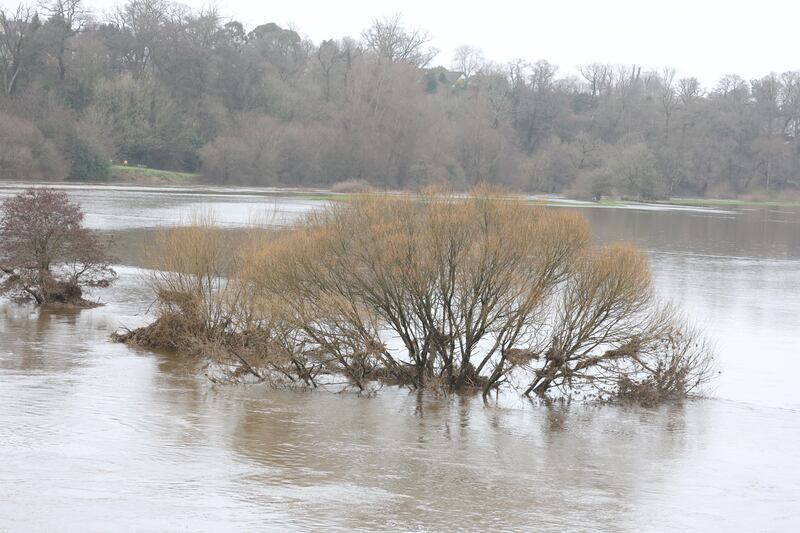
Asked for the main causes of delays with large projects, the OPW cited the scale and complexity of the works involved and high demand for specialist skills.
Other factors cited were requirements for “extensive public consultation” and “extensive environmental assessments and mitigation measures”.
Projects on the 2018 priority list aim to protect 23,000 properties at a cost of €1.3 billion – an average of €56,521 each.
A Voluntary Homeowners Relocation Scheme opened in 2017 has provided €7 million to 25 repeatedly flooded homeowners to relocate or rebuild – an average of €280,000 each.
Meanwhile, Dublin City Council said it was querying the “timelines” of weather warnings after the capital experienced “exceptionally heavy rainfall” on Thursday night.
Met Éireann issued a status-yellow rainfall warning at 2.36am on Friday. This was done “to increase public awareness, taking account of expected intense rainfall during the morning commuting period”, said the meteorological service.
It noted the rain was heavier than forecast earlier on Thursday.
In a statement on Friday, the council said that 46mm of rain had been recorded at the Mellowes Road rain gauge overnight, with 9.6mm falling in a single hour.
“Combined with already saturated ground conditions, this resulted in significant surface water runoff and a number of flooding incidents across the city.
“A full review of the event has commenced in parallel with ongoing responses, including the timeliness of weather warnings/forecasts,” said the council.


