
I was in my garden with my camera when three crows started to attack a buzzard. Is the mobbing behaviour territorial, or are there other reasons for this behaviour? Shane Oakley, Co Tipperary
Birds of prey are often mobbed by a group of smaller birds who hope to harry them out of their territory by this communal activity. The hooded crows carrying out this attack may have young in the area and the buzzard is seen by them as a threat.

I saw this unusual little bird (about 20cm tall) wandering around our estate in Dundalk on July 20th. It didn’t make a sound or fly while I observed, so I’m not sure if it’s a corncrake or a quail or something entirely different. Any help identifying it would be appreciated. Gerry Kerley (and my daughter Ellis, aged 11)
The bird is definitely neither a corncrake nor a quail, though the similarity to both is clear. The shape and plumage patterns aren’t right for either species. Both are also so notoriously shy that they simply wouldn’t walk around in the open like that. It is a juvenile grey partridge, presumably either escaped or deliberately released from somewhere nearby. Its tameness definitely suggests a captive origin.
READ MORE


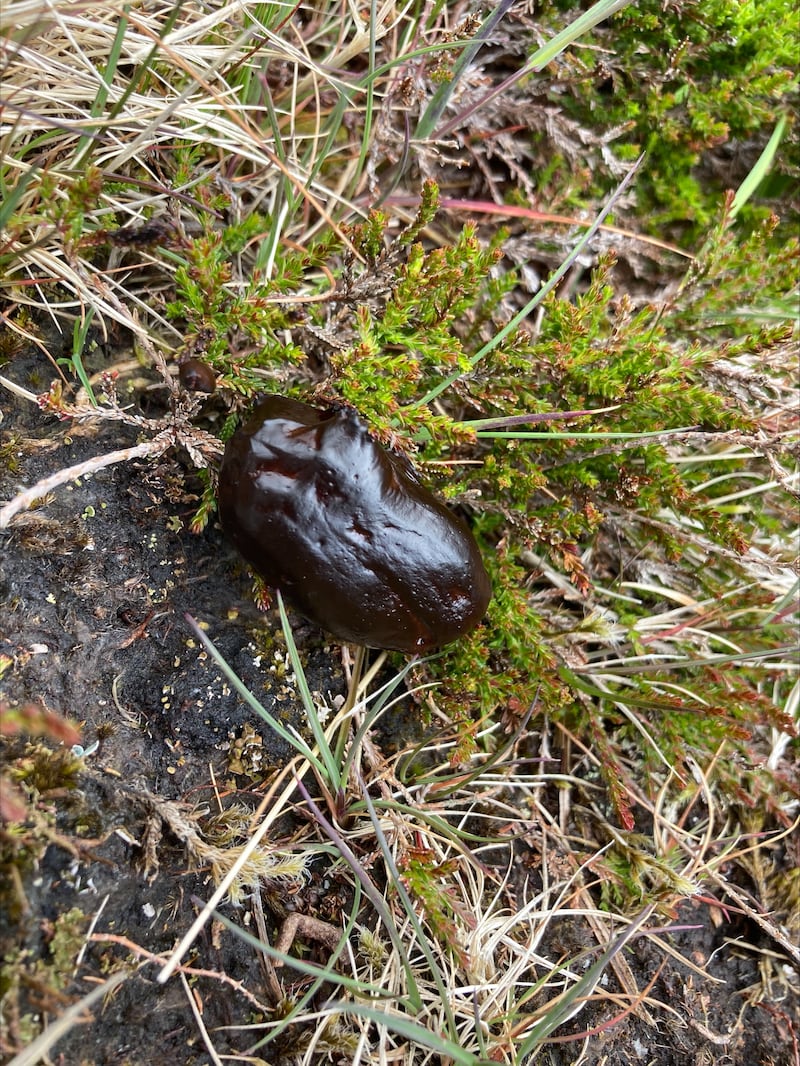
Could you help me identify these gelatinous objects I came across on Muckish in June? I have more pictures if that would help. Senan Glynn, Glasnevin
One picture of this is quite enough, thank you. This is a picture of the dropping of a red grouse. Because the diet of this bird consists mainly of heather, a huge amount of fibre passes through its intestines. Digesting this requires two different processes. Finer, more nutritious particles and fluids are diverted into the caeca (we call it an appendix in our systems), where specialised bacteria ferment and break down hard-to-digest plant cellulose. This produces the soft, dark dropping which is deposited in the morning. The main bulk goes through directly and the woody coarse plant material forms paler coloured, firm, fibrous, cigar-shaped droppings which are deposited very frequently indeed and can accumulate into quite a large pile while the bird is roosting overnight.

This perfect wasp’s nest is in a buddleia tree beside the road and footpath outside our house, which I maintain. It looks as if a football is stuck there. It is a perfect shape and very soft in texture. Unusual to see it in such a busy place with traffic and footfall. Hazel Murphy, Blackrock, Co Dublin
Two of our native wasp species make their nests in trees. This one was made by the Norwegian wasp Vespula norwegica. Its nest is distinguished from that of V. sylvestris – the tree wasp – by the beautiful colours (green, various greys and browns) in the paper of which it is constructed. Their patterns are lovely. The worker wasp, seen on the nest, has the rufus patches on either side of the first abdominal segment that are typical of this species, albeit in your picture they are out of focus.
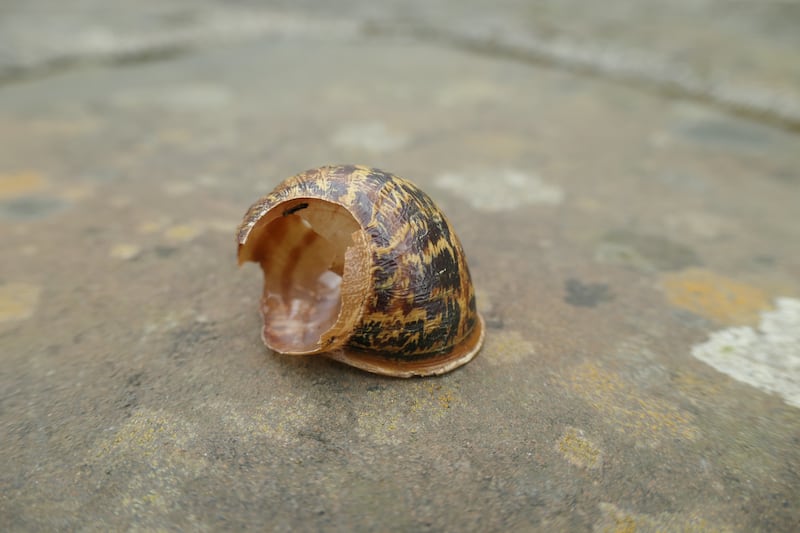
We are seeing more broken snail shells on our patio and paths. Is it song thrushes taking more snails because the ground is dry and it is not so easy to get earthworms? Helen Lawless, Wicklow
Conn Lucey, a nine-year-old reader in Dunlavin, was wondering the very same thing. During all the dry weather we had in July, garden snails entered a state of dormancy called aestivation. They sealed off the opening to the shell and remained in position. As a result, many of them were sitting ducks for sharp-eyed thrushes. These are the only garden birds that can whack them off a stone or hard path, break the shell and eat the contents.
Please submit your nature query or observation, ideally with a photo and location, via irishtimes.com/eyeonnature or by email to weekend@irishtimes.com


