Often the Loughlinstown river seems to be fighting for its title.
On stretches of the meandering waterway in south Dublin, it appears no more than an ornamental stream – puny, pretty and harmless.
As Johan Keating dragged sodden possessions from the downstairs of his home this week, the little river that trickled uneventfully through his entire life had left scars he couldn’t previously have imagined.
“It flooded before, in 2011, but it wasn’t bad. Maybe an inch of water,” he recalls of the first time the site on family land in Kilternan where he built in 2010 was hit.
READ MORE


“The skirting warped but I hammered it back in place. I did eventually replace the floorboards with tiles but it wasn’t a big deal.
“This time, everything’s destroyed. Seven inches of water at least. All the furniture, the washing machine, the kitchen. I don’t even know the extent of the damage yet – if it got under the tiles or how far down the sockets.”
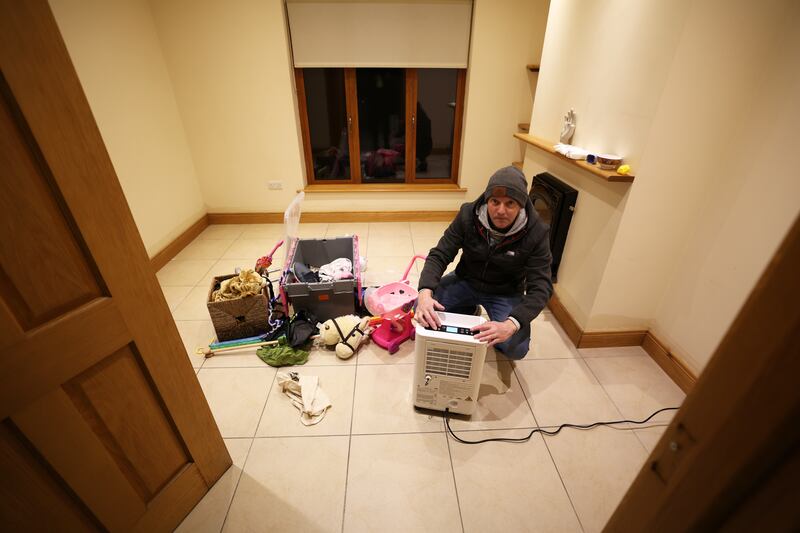
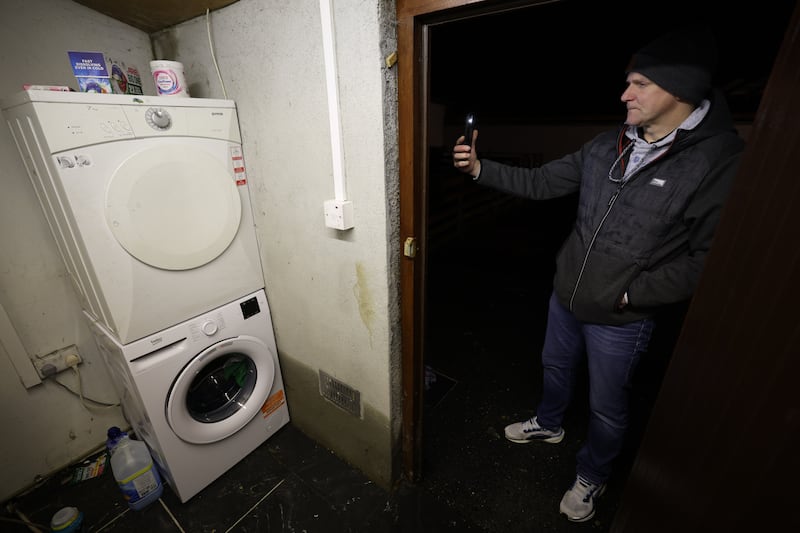
Keating’s story is similar to many told by householders affected by Storm Chandra along the east coast this week, and countrywide in recent years.
[ ‘No one was pumping the water’: Rathfarnham deals with Storm Chandra aftermathOpens in new window ]
Bigger rivers are known for their floods but all around the island there are smaller pockets of homes in rural clusters and suburban streets where trickling streams are becoming torrents as climate change brings more rain in increasingly intense downpours.
Of the 100 flood relief schemes currently in design, planning or construction, many are labelled minor works, intended to protect on average a few dozen properties. At least 50 more are on a longer-term list.
As pressure to build new houses increases, there are concerns that the proximity between homes and these waterways may decrease.
Conor Murphy knows rivers. He’s studied them, measured them, tracked the evolution of their flow and levels and analysed the drivers of what’s changing them.
In all sorts of ways he’s immersed in them. But would the Maynooth University geography professor live beside one?
Adamantly, no, he says. He doesn’t want to end up physically immersed in one.
He’s not the only one.
A senior hydrologist working for a State agency who spoke on condition of anonymity also immediately answered no when asked if they would set up home near a river.
It’s a sensitive issue because there is a fear of appearing smug when many people have little choice about where they live or defeatist when so many are pinning their hopes on experts finding flooding solutions for them.
“It can be really difficult to predict floods in urban locations; there are so many factors that influence them,” says Murphy is who part of the Icarus climate research centre at Maynooth University.
[ In the absence of urgency, only thing changing is our weatherOpens in new window ]
“We need to take a more holistic view of river catchments. That means everything upstream where the river comes from, the upland areas at the upper reaches and what’s happening there.
“How the land is drained for agriculture, how it’s deforested – all this has an impact on river flow downstream,” he says.
“Yes, there is the need for infrastructure investment at the point where inundation happens but we also need to think what’s happening further up and find ways to slow the flow and decrease the flood peak.”
Slowing the flow is also the passion of Mary Bourke, a professor in geomorphology at Trinity College Dublin who studies natural hazards and flood management.
She advocates restoring natural flood plains upstream and paying farmers to allow their land to be permanently or periodically set aside as flood defences.
The same principle can also apply to urban areas where green spaces that acted as sponges are built on and concrete plazas and driveways replace gardens.
“If you have your own home, don’t pave over your garden, put in a rain butt to catch the runoff from your roof, even planters will catch rain if you don’t have much space,” she says.
“We’re all in this together and we must work together to help ourselves.”
Too late, sighs Keating, who points to recent development in the field beside his home as the main cause of his problems.

“It used to soak up the water when the river got high but there’s nowhere for the water to go now,” he says.
“And those new houses got flooded too so it’s not just me I feel bad for – they’ve been left with this situation too.”
Murphy empathises: “The most powerful tool we have at our disposal is planning,” he says.
“It’s really important in a housing crisis when we’re facing into increased building that we don’t put new builds in flood plains and that we take account of how current pressures will play out with ongoing climate change.”
If the planners aren’t looking at this, insurers certainly are.
A Central Bank report in 2024 found one in 20 buildings was uninsurable for flood risk because flood cover was denied or was too expensive.
The Department of Finance has since set up a working group with the Office of Public Works and industry body, Insurance Ireland, which is examining this “flood protection gap”.
“It is acknowledged at an EU level that this gap may widen in the light of the increasing frequency and severity of weather events due to climate change,” a department spokesperson said.
“Work is under way to consider potential solutions, specific to Ireland, to increase the availability and affordability flood insurance.”
Neither the department or Insurance Ireland would say whether State-provided flood insurance was being considered.
“There is a gap but it’s 5 per cent which is low by international standards and there are a few components to reducing it,” said Insurance Ireland spokesman Michael Moran.
“Not building on flood plains, building flood defences, making homes more flood resilient with tiled floors and raising electrical sockets – all those will help.”
Property owners often hold the anecdotal belief that they will not get flood insurance within 100 metres of a waterway but Moran was coy.
“Insurance companies make their own individual underwriting decisions,” he says. “There is no generic kind of rule like that.”
Keating is not keen to find out. “I have flood insurance but I don’t know if I’ll claim off it,” he says.
“I didn’t the last time and if I claim, my premium will go way up – if they even agree to insure me again.”
The issues Storm Chandra brought to the fore have been well flagged with extreme rainfall previously considered a one-in-100 year probability now happening much more frequently.
The National Climate Change Risk Assessment published by the Environmental Protection Agency last summer warns Ireland will see “an increase in the frequency and severity of river, surface water, and groundwater flooding events”.
“Due to the prevalence of hard surfaces which exacerbate flood risk, the built environment is considered particularly exposed to flood-related impacts, with transport infrastructure and buildings highly exposed.”
Alarmingly, it sees these risks “increasing to critical by mid-century, with potential to reach catastrophic levels of consequence by the end of the century”.
“I don’t really know what way to think about all of this,” says Keating.
“It was a no-brainer for us to build here because we had the site and it’s beside family but would I advise anyone else?
“I don’t know. We have rivers and streams everywhere. Unless you’re going to live on a mountaintop I don’t know is anyone completely safe.”