
Ireland is preparing to take on a significant role in international climate diplomacy from July until December during our presidency of the Council of the EU.
Within this six month time frame, EU member states will negotiate their individual greenhouse gas emissions reduction targets for the period to 2040, distributing the effort and opportunity associated with the previously agreed ambition to reduce total EU emissions by 90 per cent by 2040.
Ireland will also be lead EU negotiator on global responses to climate change in November during the United Nations Cop31 climate change summit that will take place in Turkey.
This is against the backdrop of the deep concern expressed by Climate Minister Darragh O’Brien at the end of Cop30 last November that the agreed text failed to “include a credible roadmap for the phase-out of fossil fuels”.
READ MORE


As Ireland encourages others to do more and champions fossil fuel phase out, it is timely to take stock of what we have achieved, or not, on climate action.
So, what are Ireland’s climate ambitions? Our ambitions have come a long way since former taoiseach Leo Varadkar acknowledged publicly Ireland’s position as a “laggard” in 2018 with respect to climate action.
[ Ireland falling well short of its retrofit targets, ESRI report findsOpens in new window ]

In 2021 Ireland enacted ambitious climate legislation that included new governance arrangements, which have been positively assessed internationally for their robustness.
A key feature of the new mechanisms introduced was the establishment of statutory limits on total cumulative greenhouse gas emissions over periods of five years, known as carbon budgets.
The Climate Change Advisory Council was tasked with advising on appropriate carbon budget levels, with the Oireachtas having the ultimate decision making power.
Ireland’s first two five-yearly carbon budgets were agreed by the Oireachtas in 2022 without the need for a vote, pointing to an unusually high level of cross-party political buy-in.
This established 295 million tonnes of carbon dioxide equivalent as the maximum greenhouse gas emissions allowable in Ireland during the period of the first carbon budget for the period 2021-2025.
There were voices then and now stating clearly that this was too ambitious, despite the clear evidence from climate science, coupled with the strong push from climate youth activists and the cross-party political consensus.
With 2025 now behind us, how did we do?
It will likely come as a surprise to many to learn that Ireland has succeeded in closing the gap in meeting the first statutory carbon budget.
The official emissions data for 2025 will not be finalised until Spring 2027 but my current estimates, drawing on Environmental Protection Agency published data and projections, indicate we’re likely to end up below 300 million tonnes, ie at most 5 million tonnes (or 1.6 per cent) above the 295 million tonnes carbon budget.
This result is important for a number of reasons, in particular as it demonstrates that Ireland can remain within carbon budgets, despite the upward pressure on emissions from a growing economy and population and the many challenges in delivering on some climate action policies.
Since 2018, Ireland’s total annual emissions reduced by approximately 13 per cent, while at the same time our economy grew by over one third and our population grew by 12 per cent.
In addition to climate action policies, there were of course other factors that contributed to the emissions reductions, including the Covid-19 pandemic and the increase in energy prices.
To understand how we can build on this success and accelerate climate action going forward, it is important to assess how individual sectors did in meeting their allocated emissions ceilings.
Here again there is good news, as Ireland has met up to five of the seven sectoral emissions ceilings, including in buildings, agriculture and electricity, which together account for more than half of Ireland’s total emissions.
The electricity sector closed the gap to meet its emissions ceiling of 40 million tonnes of carbon dioxide.
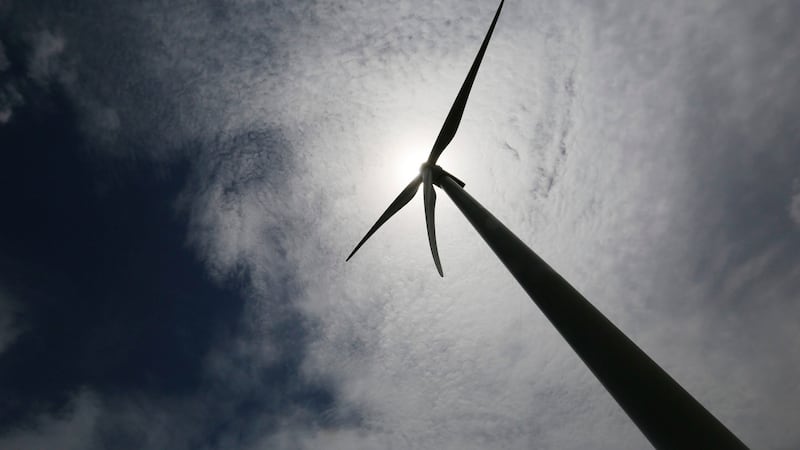
We have now phased out peat and coal fired electricity generation in Ireland and achieved a 40 per cent reduction in annual emissions by 2025 compared with 2018 levels, despite a 26 per cent growth in annual electricity use over this same period.
Annual electricity generated from wind and solar energy increased by nearly 5 terawatt hours since 2018, which is equivalent to twice the electricity generated from the Moneypoint coal-fired power station in 2021 and compares with total electricity demand of 30 terawatt hours.
This helped improve energy security and energy affordability, by reducing our dependence on imported natural gas for electricity generation and resulting in a dampening effect on very high electricity prices.
Annual electricity demand increased by over 7 terawatt hours however, meaning the emissions gains made by renewable electricity were offset by electricity demand growth.
Ireland also expanded electricity interconnection that increased our security of supply, enabling a 6 terawatt hours increase in annual electricity imports that contributed to emissions reductions.
Accelerating wind and solar energy projects while limiting electricity demand growth are the key challenges for electricity during the second carbon budget period from 2026 to 2030.
A more surprising success story was that of agriculture.
Estimates indicate that emissions from agriculture during the period 2021 – 2025 were less than the 106 million tonnes of carbon dioxide equivalent emissions ceiling.
Similar to the case for electricity, there were a number of factors behind this.
There was a 4 per cent reduction in annual emissions compared to 2018 levels despite an increase in agricultural output, including milk production increasing from 7.6 billion litres in 2018 to nearly 9 billion litres in 2025.
Cattle numbers reduced overall during this period, due to a reduction in the number of beef cattle that outpaced the increase in dairy cows.
There was a notable reduced use of fertiliser nitrogen due to the increased use of mitigation methods to offset urea usage that was underpinned by high fertiliser prices after Russia invaded Ukraine.
A key reason that the sectoral emissions ceiling was met despite just a 4 per cent reduction in emissions since 2018 was the improvement in the data robustness related to agricultural emissions, which resulted in changes in Ireland’s emissions inventory resulting in a reduction in agriculture emissions of around 8 million tonnes over the period of the first carbon budget.
Moving to buildings (residential, public and commercial), estimates for this sector also indicate that limiting emissions to the 36 million tonnes carbon dioxide ceiling was achieved during the period 2021-2025.
Key to this success has been the more than 200,00 home energy retrofits delivered during the five year carbon budget period, in addition to the update to Building Regulations in 2019 requiring new homes built to be Nearly Zero Energy Buildings standards.
In addition to the climate benefits, it also means significantly that 200,000 homes are now more comfortable, more healthy and more affordable.
So what does this all point to?
Ireland’s improved emissions performance coupled with our imminent leadership role in climate diplomacy can act as a much needed prompt for us to increase our efforts and further accelerate climate action, as we strive to do more to remain within the second carbon budget limits during the period from 2026 to 2030.
In this way we can legitimately and proudly preside over the EU member state negotiations on 2040 targets and lead the EU negotiations on fossil fuel phase out at Cop31.
Professor Brian Ó Gallachóir is director of the Sustainability Institute at University College Cork


