Have you heard about zebra striping? It’s sober-curious lingo for alternating alcoholic and nonalcoholic drinks, and something more and more of us (including myself) are investigating, as moderation becomes a growing buzzword when it comes to drinking. As a nation we’re drinking less than ever before. Alcohol consumption by adults in the Republic fell by 4.5 per cent in 2024, continuing a steady decline seen over the past 25 years.
It’s a shift that has sparked a gorgeous boom in quality low- and no-alcohol (NA) drinks, and, perhaps surprisingly, pubs have been leading the charge. A large driver here is Guinness 0.0, a pint so close to the original, it has convinced even the most cynical fans to swap when needed.
NA beers such as this do a great job of making you feel that if you’re not drinking, you’re still part of the action. It means more bums on seats and maybe an extra round. Perfect for the pubs, but when it comes to restaurants, it’s not as straightforward, particularly in fine dining, where wine has always been an important component of a restaurant’s experience and revenue. Swapping our favourite vintages for NA versions is not the same. Alcohol-free wines often disappoint because they’re made by removing alcohol from regular wine, which dulls the delicate aromas we love. It doesn’t make sense to strip good wine of its character, so the wines chosen for de-alcoholisation tend to be the cheaper, commercial ones that don’t really belong in fine dining. There are a few exceptions, such as Hollow Leg, an Irish brand from Winelab and Spanish winemaker Pablo Martinez, which appears on plenty of restaurant menus around the country, but there are simply not enough good-quality alcohol-free wines to cobble together any sort of decent pairing.
[ Go alcohol-free with John Wilson’s pick of wines, beers and moreOpens in new window ]
Instead, we’ve seen sommeliers and restaurant teams come up with much more inventive strategies than simply swapping out fine wines for nonalcoholic alternatives. More innovative options for “soft pairings” can feature juice- or tea-based alternatives designed specifically for fine dining multi-course tasting menus, for example. These are not the token mocktails of old but carefully considered drinks lists that match flavour, texture and seasonality with precision equal to a sommelier’s wine list. It feels like another quiet revolution and, as happens so often in hospitality, what starts in Michelin-starred restaurants eventually trickles down.
READ MORE


Internationally, Germany’s Jörg Geiger has set a high bar, pioneering chef-led drinks made from heritage fruits and regenerative farming – his creations now appear in 85 per cent of Germany’s Michelin-starred restaurants. And Denmark has long had famous spots such as Geranium and Noma offering hyper‑seasonal soft drinks, teas and ferments that have inspired restaurants worldwide. In Ireland, The Oak Room at Adare Manor offers a full nonalcoholic pairing with its tasting menu, as do Ox in Belfast and D’Olier Street in Dublin, while two-star Terre at Castlemartyr in Cork has a tea pairing menu.
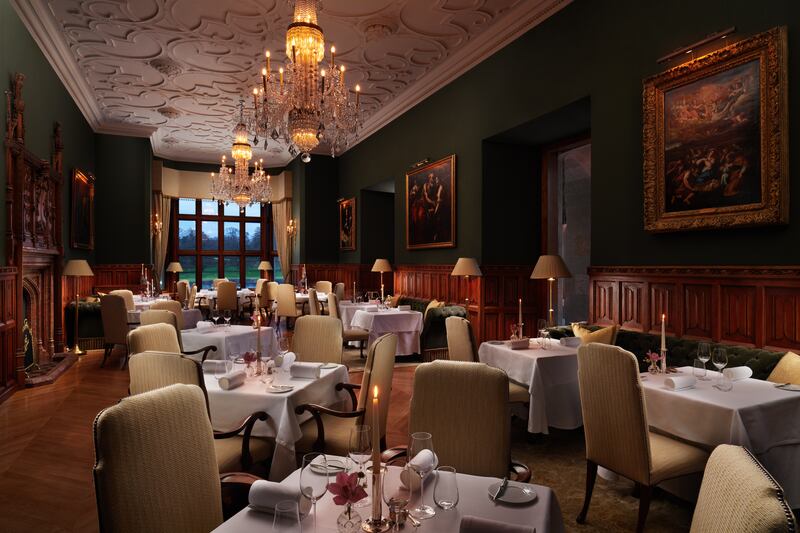
Curious to try a soft pairing for myself, I snapped up an invitation to try out what The Oak Room in Adare Manor has on offer. Eating at this Michelin-starred restaurant is a grand affair , with impressive interiors and skilled cooking from chef Michael Tweedie and his team. While I was looking forward to delving into the winter tasting menu, I was also acutely aware that, usually, part of the thrill of a dining experience like this is the wine pairing. I love being poured glass after glass of matching wines, when the sommelier tells me why each was chosen, how it should complement the dish, and even hearing the details about time “sur lie” or the terroir that I don’t always fully grasp. I nod along and sniff and sip and soak it all up, aware I’m paying for their knowledge as much as for the drink. This was my first time opting not to drink wine with a tasting menu, and I wondered whether the experience would match my hopes, although I did ease myself into it with a glass of Champagne to start. Zebra striping at its finest.
The first drink of the NA pairing was a Rose, Yuzu & Butterfly Blue Pea Tea – rose petal jelly with yuzu juice, topped up at the table with the blue tea poured from a pot. It was a nice touch for a bit of show, and I could see other tables are wondering what we were drinking. It was balanced and refreshing alongside the caviar and crab starter, but as the last zing of my Champagne faded, it became clear that I’d need a mindset shift. The thing is that these drinks can’t and shouldn’t be compared directly with wine; that’s not the point. The idea is to create a pairing that emulates the experience, storytelling and rituals of a wine pairing, rather than the wine itself.
Michelin-starred D’Olier Street in Dublin has offered a nonalcoholic cocktail pairing with its tasting menus since it opened in 2022. It’s led by general manager Scott White and restaurant manager Konrad Czlonka, who both previously worked at the two-Michelin-starred Aimsir restaurant in Kildare, which had a more than impressive nonalcoholic drinks menu. Czlonka says the drinks are important, of course, but really, it’s more about the experience. “A lot of people come here to celebrate occasions, and with the nonalcoholic pairings, they feel like they are not left out, they feel looked after because they have options. People who aren’t drinking don’t expect something like this.”
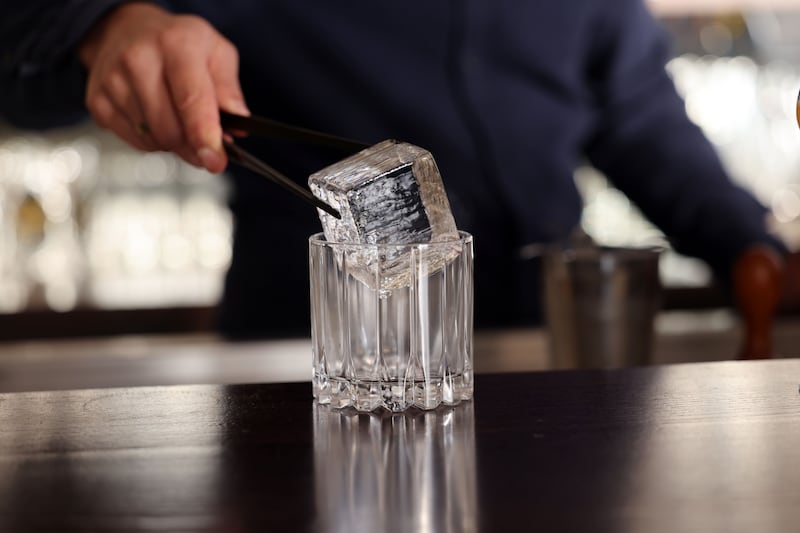

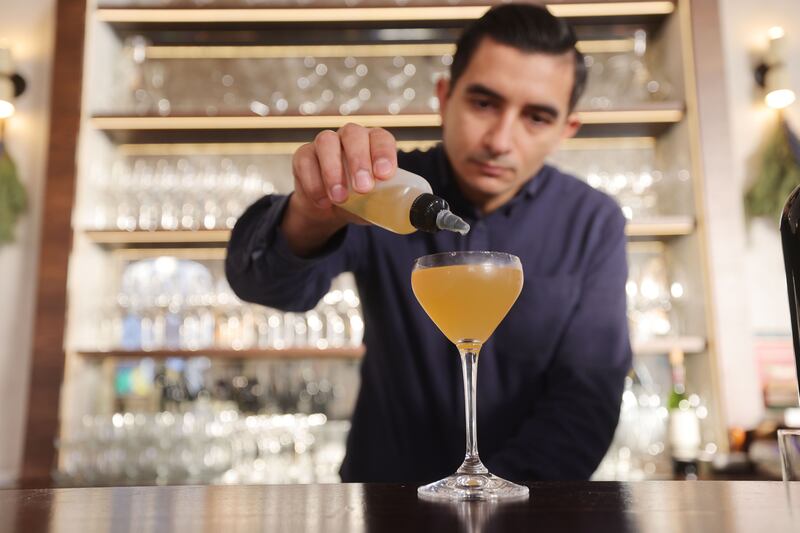

The D’Olier Street menu features drinks such as like a pine and sorrel “Champagne” or a quince and bay leaf “Mai Tai” that the team develops from a cellar full of home-made preserves, vinegars and syrups inspired in part by working with Majken Bech Bailey at Aimsir, whose pioneering juice programme used all manner of innovative flavours. I tasted the Aimsir juice pairings early on and was blown away by savoury, mind-bending flavours that more than held their own beside two-Michelin-star cooking. Aimsir may be gone, but Majken has continued shaping the space. In 2024 she launched BÆK, a range of nonalcoholic wine alternatives specifically crafted for food pairing.
Back at The Oak Room, the next pairing, Apple, Celery & Fennel, accompanied a divine dish of veal sweetbread, duck liver, hazelnuts and leek velouté. This dish was so gorgeously unctuous and earthy, I couldn’t help but think about how a glass of full-bodied white wine would taste with it. The juice leaned a bit towards breakfast for my taste, but then my pescatarian dining companion raved about this pairing. I told myself to shut off my wine mind and that, like wine pairings, NA drinks are going to be subjective; they won’t suit everyone equally.
The next drink, however, worked brilliantly – an Oolong Coconut Tea, brewed as a concentrated infusion and enriched through a coconut oil fat-wash. The team said it should mimic the round mouthfeel of a Chardonnay, just when I was trying so hard to shut off my mental wine comparisons! But it did, and it worked; it was delicious alongside my fish dish – brill with celeriac and truffle.
Another rich dish followed, aged Irish Wagyu with oxtail, ramsons and madeira jus. Of course, the minute someone mentions beef, my taste buds are automatically on alert and looking for a juicy red wine, but instead, I sipped on a glass of Beetroot, Blackberry, Gooseberry, Lovage juice. This had a nice herbal acidity to it that worked with the wintry dish. Desserts came with a cold-brew hibiscus tea, home-made raspberry syrup, and raspberry kombucha made with tea from Clement & Pekoe. That was fun to drink and serve. All the drinks were.
Teas are often a base of choice for NA pairings. Ox in Belfast serves a Kenyan Green Tea & Elderflower Kombucha with its celeriac, lardo and truffle dish, and Lemon Talonmore, Strawberry, Verbena with its venison dish. Sommelier and co-owner Alain Kerloc’h says the aim is to make sure it’s always a curated selection, not just substitute drinks. “We can match every dish now in the same way we create wine pairings,” he says. “And the team are just as passionate about finding the best non-alcoholic pairings as they are about the wine.”
At two-Michelin-starred Terre at Castlemartyr, the restaurant’s sommelier team has developed a menu in collaboration with Taiwanese tea specialist Jayme Chang. The restaurant says the cold extraction process adds an “aromatic complexity and mouthfeel, allowing the pairing to echo the structure and elegance of wine”. The team also often works with BKultured, a local producer of sparkling kefir water, to create seasonal NA alternatives to Champagne.


By the time the cheese trolley rolled out in Adare, I was ready to zebra stripe again, ordering a glass of Sandhi Rita Hills Chardonnay to finish, perfect with a plate of Irish cheeses. At D’Olier Street, they told me this is common now: diners mixing and matching, a few glasses of wine or bubbles alongside the nonalcoholic pairings. And uptake for NA options keeps climbing – 2025 was the restaurant’s busiest year for it yet.
I can certainly see where the appeal lies. What struck me most after my Oak Room dinner was how alert I felt. Usually, by the end of a wine-paired tasting menu, the edges start to blur, and not always in a good way. This time I left just as content with the experience, the taste and the flavours, only clearer. Apart from a few pangs of wine envy during the courses, I didn’t feel I’d missed out at all. The experience was still top-notch, and that’s exactly the point. The best bonus? Waking up the next morning feeling sprightly, smug and ever-so-slightly converted. I won’t be giving up wine pairings altogether, but you can bet I’ll be seeking out more soft options in the future.


