
Halloween has become a gargantuan celebration. In September, October and sometimes even August, shops fill with orange plastic pumpkins and themed food, and houses are decorated with giant cobwebs and blow-up ghouls.
“I wonder what exactly we are celebrating when we buy this stuff?” asks Dr Marion McGarry, historian and author of Irish Customs and Rituals. “In Ireland, we have the most splendid set of customs and rituals to tap into. We should be really proud of them.” McGarry wishes we would forgo the “future landfill” in our shops and lean back into Irish traditions stretching back thousands of years, many of which centred around food.
In ancient Ireland, the year turned on four major seasonal festivals: Imbolc in spring, Bealtaine in summer, Lughnasa in autumn and Samhain. Marking the start of winter, Samhain was the rural end of the year, and with the harvest gathered and animals slaughtered, it was naturally a time of feasting.
The changing season, and the shift from light to dark, also carried the belief that the veil between the living world and the otherworld grew thin, allowing fairies, spirits and púcaí (shape-shifting tricksters) to walk among us. Many of the Halloween traditions we still celebrate today grew from Samhain: storytelling, food and divination rituals.
READ MORE


These traditions travelled with the Irish as we emigrated around the world, particularly to America. The irony, McGarry says, is that we brought them back in a much more Americanised form. “We exported our customs, and we’ve imported them back with a big American flavour. Lots of pumpkins, and dressing up in themed costumes.”
The Samhain tradition was to carve a face into a turnip, place a lump of burning coal or a sod of turf inside it, and leave it outside to ward off ghouls. When the Irish brought the custom to North America, pumpkins, which were much easier to carve, were substituted for turnips. McGarry also mentions the folk tale of Jack O’Lantern, which inspires many spooky pumpkins to this day. “The story goes that Jack was so stingy and mean that he was refused entry to both heaven and hell. Instead, the Devil gave him a lantern to light his way as he wandered through the darkness for eternity.”
Spooking evil spirits was a big part of the festivities. Food writer Margaret Hickey explores this in her book Ireland’s Green Larder: The Story of Food and Drink in Ireland, describing how people feared that children might be taken by fairies or other spirits, and used food-related charms to protect them. One involved rubbing salt and oatmeal on the crown of a child’s head, while babies might be given a spoonful of oatmeal or a small lump of butter slipped into their mouths.

Children also dressed up in masks and costumes, using whatever they could find. Terrifying disguises were preferred, a far cry from today’s Disneyfication. They went from door to door, knocking at neighbours’ houses, where they were given some of the harvest bounty – treats such as apples, hazelnuts and blackberries. This eventually evolved into trick-or-treating, although today’s version owes much to US depictions of Halloween on our screens over the past few decades.
[ Why Halloween pumpkins are smaller this year, and three viral hacks to carve themOpens in new window ]
Long before we turned to scary movies for a Halloween fix, parlour games were a big deal and apples featured heavily. In snap apple, an apple is hung from a string while blindfolded players try to catch it with their teeth. With bobbing for apples, you fill a basin with water, add a few apples and try to eat them with your hands behind your back. There was one where you hid a coin in a pile of flour and tried to dig it out with your mouth – no hands allowed. Many are still played at Halloween, though thankfully the games are less focused now on who young women might marry, which was a bit of an obsession.
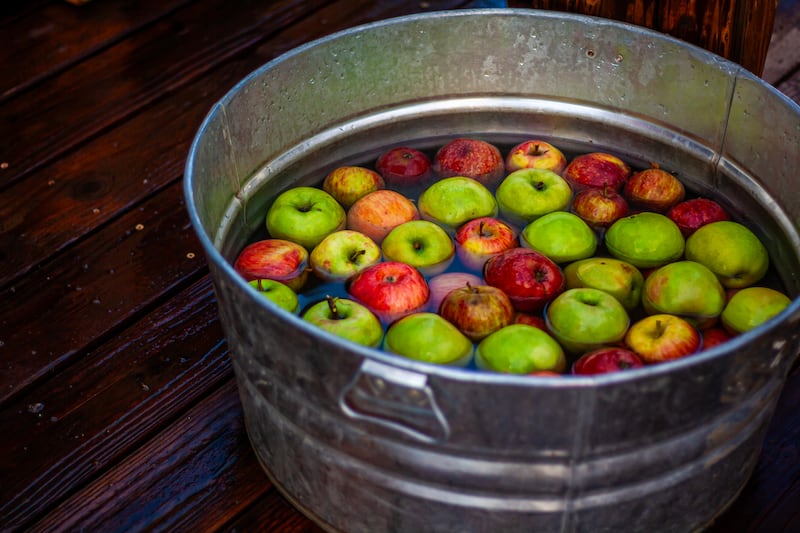
Another game involved peeling an apple in a single strip, then throwing the peel over your shoulder to see what letter it formed. That would be the initial of your future partner. To find out more, you could head to the cabbage patch blindfolded and pull a cabbage. In her book, Hickey explains: “The size and shape of the root would indicate if her future husband would be strong and straight, or wizened and crooked. He would be rich if a good lump of clay came up with the root, but a poor man if it came out of the ground bare.”
[ Two Halloween treat recipes perfect for baking with the kidsOpens in new window ]
If you named two nuts, one for someone you had your eye on and the other for yourself, and placed them on the hob, it was considered a good sign if they hopped off the fire together. Or you could try eating an apple in front of a mirror at midnight while combing your hair. When the clock struck 12, you would see the face of your future husband looking over your shoulder. McGarry adds that a young girl could eat something salty, like a herring, before bed and the man who appeared in her dreams with a glass of water could be her future husband.
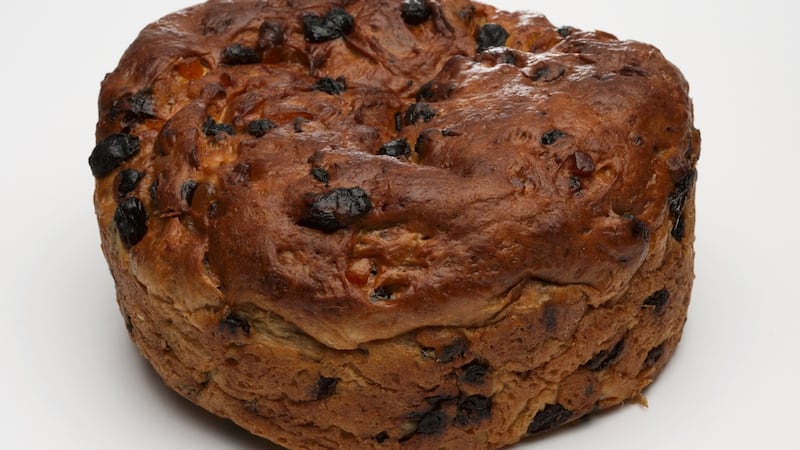
You wouldn’t have to worry about any of this, however, if you had already found a button or thimble in your barmbrack, the traditional fruit loaf with charms baked into it. Hickey writes that the button or thimble symbolised becoming an old bachelor or an old maid. A pea meant you would not marry that year; a stick meant an unhappy marriage; a rag meant poverty; and a coin promised wealth and good fortune. Barmbrack is still very much a Halloween tradition, although the fortunetelling choking hazards have been severely pared back. These days, a wrapped plastic or cheap metal ring is the most you can hope for – or the thing you might prefer to avoid.
There are many stories about potato dishes such as colcannon, champ and boxty, eaten as a celebratory meal, with items such as a coin, stick or rag also hidden inside to predict the future. Spuds could help with the husband hunt, too. Hickey writes that in many parts of Ireland the first and last spoonfuls of Halloween colcannon were put into a marriageable girl’s stocking, then hung from a nail in the door. The belief was that her future husband would be the first man to enter the house.
She also writes about the tradition of setting two portions of colcannon on the flat pier of a gate “for the good people to take or else at the foot of the nearest fairy thorn (hawthorn or whitethorn)”. Another variation involved leaving bread and water on the kitchen table at midnight for the return of the dead. The door was left open, chairs were set around the fire, and sowans (oats) were left ready for the spirits.
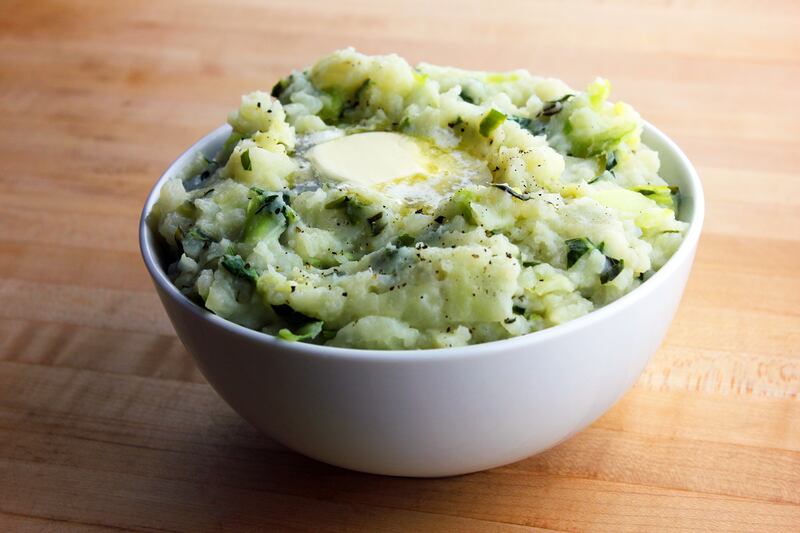
McGarry believes this is something we should not overlook in modern Ireland. “It’s the nicest Halloween tradition: to remember your dead ancestors, stoke up the fire, arrange chairs around it, leave out some food so that people who have passed on know they are welcome back into the home. It’s a fond remembrance and a lovely tradition, and it’s great for anyone who’s grieving.”
[ How to celebrate Halloween: Remember the dead and embrace the change of seasonsOpens in new window ]
So this Halloween, why not put down the plastic and pick up a cabbage? Make some colcannon and leave out a chair. Beyond the sweets and superhero costumes is a whole world of ancient Irish traditions rooted in food and remembrance. Perhaps it’s time we looked back to where it all began.


