
In 1812, Bloomfield Hospital was set up by the Quakers in Ireland to provide a humane and supportive environment for people with “disorders of the mind”.
More than two centuries later, an independent report commissioned by senior management of the hospital has highlighted serious concerns about the care given to some of its patients.
The independent Trust in Care investigation, carried out by occupational health and safety consultants Tom Beegan & Associates, was commissioned on foot of allegations made by a whistleblower last July about the mistreatment of residents in the south Dublin hospital.
The report was completed in November and has been seen by The Irish Times. It found a majority of the complaints centred around incontinence care such as changing patients and pads in a timely and respectful manner.
READ MORE


Some allegations involved patients being left soiled for an “unacceptable period”, being “slapped” on the leg, cursed at and being threatened with an injection to improve co-operation with staff.
No member of staff interviewed as part of the investigation denied the allegations. The investigation concluded that “on the balance of probabilities”, the issues reported did occur.
The Rathfarnham-based facility cares for those with enduring mental illnesses as well as neuropsychiatric conditions, including Huntington’s disease, Alzheimer’s disease, dementia, schizophrenia and Parkinson’s.
The hospital is primarily funded by the Health Service Executive (HSE) and recorded a net surplus of just over €2.1 million last year, according to its most recent financial accounts.
While the investigator primarily examined the authenticity of the allegations made during the summer, he also looked at wider policies and practices that allowed for these issues to arise. He interviewed 17 staff members and reviewed a number of documents provided to him during his work.
Culture was an area in which significant concerns were raised throughout the investigation.
The healthcare assistant (HCA) who made the protected disclosures alleged there was a “culture of silence” in the hospital, which the investigator said was backed up by other staff members.
Due to this culture, the investigator said, feedback on performance was rare; there was a reluctance in some instances to speak up to raise issues of concern. Additionally, “in some circumstances where concerns were raised, they remain unresolved”.
“Staff spoke about a combative attitude between medical and senior nursing staff and a lack of willingness to share information,” the report said.
“In the absence of clear direction in the allocation of duties to staff at unit level, from the nurse in charge, conflicts do arise which in turn has led to some poor staff behaviour. This has negatively affected the delivery of safe patient-centred care.”
The report outlined how some interviewed staff had a “lack of confidence” in the approach used by senior staff to deal with concerns appropriately or to “take action to deal with low standards of care or performance”.
The investigator found that “policies and procedures do exist” within the hospital.
“However, common practice by some staff is to develop workarounds or their own individual methods which may not always be in the best interests of patients,” the report added.
It observed “gaps between the theory as expressed in policy documents and the practice by which such policy is made an integral and consistence [sic] aspect of the delivery of care”.
The report highlighted one example in which a patient suffered a grade three (full skin loss) pressure sore in 2023, which was subjected to “intense review” and subsequent recommendations on improvements. However, the same patient suffered another pressure sore in 2025, the report noted.
In another example, the hospital conducted an investigation in 2023 into the death of a resident . However, the report said there were some actions recommended in that review that are still outstanding.
“In the opinion of this investigation, an underperforming system of clinical leadership and supervision nurtures an unreliable process of care and treatment in which incidents of delayed treatments and episodes of unacceptable care to patients has occurred,” the report said.
The review found there were some days in which there was no clinical nurse manager rostered to work. Concerns were also raised about the devising of rosters and how it detracted from available time for clinical supervision and oversight.
While the report stresses that the majority of staff in the hospital endeavoured to deliver optimal care to patients, it also highlighted inherent risks with agency staff.
Some of these risks include being unfamiliar with patients and hospital policies.
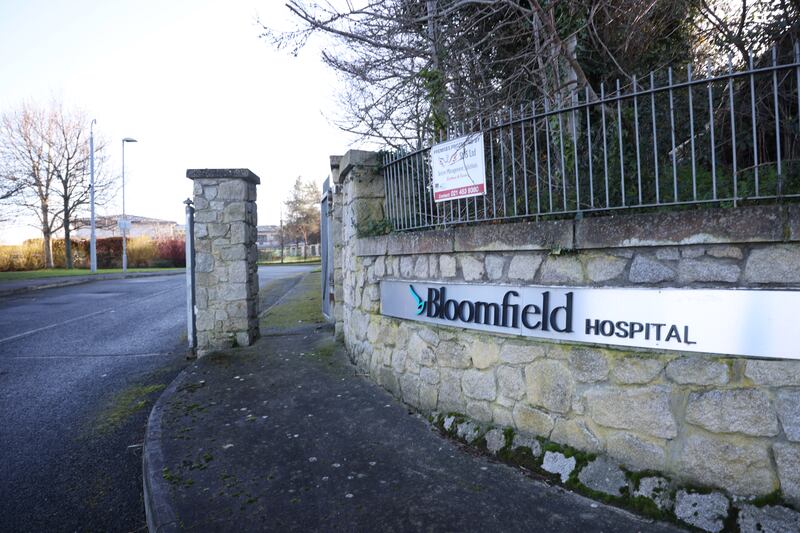
The facility is regulated by the Mental Health Commission. Its most recent inspection of the facility, published in September, identified 94 per cent compliance with the rules and regulations.
However, the commission has consistently raised concerns around the lack of personal care plans for patients, an issue the investigation report also highlighted.
The report made a number of findings, including that the level of clinical supervision required to meet the needs of patients was “not adequately supervised by nursing staff”. It described concerns highlighted as “professional practice issues” and added that the shift handover process is “less than adequate”.
“This has contributed to fragmented communication, unclear direction to staff nurses and HCAs, and less than adequate induction to agency staff assigned to the unit,” the report said.
In response to queries from The Irish Times about the issues raised in the investigation report, Bloomfield’s senior management said it takes any reports of misconduct “very seriously” and “always investigates any such matters”.
“In July of this year, a complaint was made by one healthcare provider to management regarding the practices of some other staff members. This alleged misconduct was then investigated over a two-month period under the guidelines of the HSE Trust in Care policy,” the hospital’s management said in a statement.
“During the investigation, it is important to point out that various changes were made to ensure that the staff members in question did not have any opportunity to continue with any possible alleged misconduct.”
The senior management team said the two-month internal review of the complaint was “thorough and extensive”.
“At the end, some of the allegations were upheld, staff members in question faced disciplinary proceedings, some resigned and some were dismissed,” the hospital said.
“The families of the patients were informed at this time and were fully briefed on our remedies and future safeguarding, and they received an apology.”
The hospital added that it followed all required steps under the HSE’s Trust in Care policy and internal recommendations from its internal report were implemented.
“However, while it was not a HSE requirement, in addition to its own review, Bloomfield Hospital decided to commission a confidential, private and independent report to seek any possible additional recommendations to safeguard for the future,” it said.
Further recommendations “have been incorporated into the hospital’s policies going forward”, the hospital said.
“The hospital apologises for this distress that has been caused to some patients and their families and reassures them that the management has never, and will not, tolerate any misconduct amongst its staff.”
A spokeswoman for HSE Dublin and Midlands, the health area under which Bloomfield lies, said it was made aware of these issues on Tuesday and it is engaging with the hospital “to ensure that any issues identified are addressed appropriately”.