
“No one buys a Christmas tree in bad humour. It’s all great fun,” says retired builder Pat Anderson in Bohernabreena in the Dublin mountains who sells around 600 Christmas trees to families every December.
“I have four children and seven grandchildren and they all come and help for these three weeks of the year,” he adds. “My granddaughter Isabelle owns the shop and my grandson Alex, who is 17, drives the truck.”
With an old hazel tree grove on the farm, families arriving to pick their own Christmas tree might spot the peregrine falcon – the world’s fastest bird – diving for prey, or red kites swirling overhead, while hedgehogs, foxes, badgers and deer all live nearby too.
“We have a llama called Dali where all the children come up and feed him, so they get to feed the ‘Dali llama’,” Mr Anderson (65) says.
READ MORE


Picking a Christmas tree in the mountains is now a decades-old tradition for many families, says Glencullen landowner Jimmy Fitzachary (67), whose family has lived in the area for over 400 years.
“People seem to come once, and then love coming back. We get kids who are 16 or 17 who have been coming since they were born and they love the whole tradition of coming up the mountain to get their tree. ”

A donations bucket for the LauraLynn children’s hospice has raised thousands of euro in the last seven years, Fitzachary estimates, and returning customers often share personal stories of grief and loss.
“We had a person two years ago coming to buy a tree. Their sister had been diagnosed with cancer and only had two months to live so they knew it was going to be their last Christmas with her. I said ‘just take the tree, I don’t want any money for it’.”
“They came back the next year and they told me that the girl had died after Christmas and they brought me a bottle of whiskey and just said ‘you’ve no idea what that meant to us’.”
Karen Morton, from Kilakee Christmas trees near the Hell Fire Club in Rathfarnham, Co Dublin, says many friendships have been built up with customers over the years.
“People come when they’re first married, then they come back and they’ve a bump, and then you meet their kids, and also maybe a parent who used to come with them is no longer with them.”
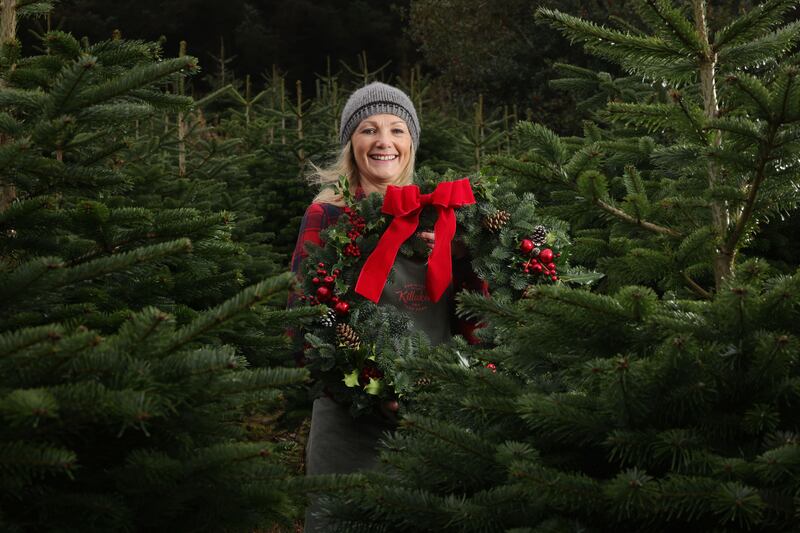
“We have the time to talk to people. You often don’t get that with a retail environment. ”
Growing trends of smaller potted Christmas trees, and more exotic varieties that are less likely to dry out for those who like to buy their trees earlier in November, are emerging, the tree sellers say.
“We find that people still want the nice big tree so the potted tree can tend to be an additional tree, maybe for outside the front door, or for people who live in apartments or who want to replant their tree,” Morton says.
[ What’s better for the environment – a real or a fake Christmas tree?Opens in new window ]
“We sold about 70 or 80 potted trees, and the amount of people inquiring about them is increasing year on year. It’s the sustainability of growing it year on year, but we do also say that they’re difficult to grow, the root networks of a Christmas tree are complex, and we always say that when they get to a certain size they will need to put in the ground.”
Meanwhile, Fitzachary, whose farm is beside Johnny Foxes pub, says there is an increased demand for a Korean fir which is oily in its make-up so it won’t dry out for people who want to buy their tree earlier than December.

There are currently no grants or environmental stipulations in the Christmas tree trade, but since every tree cut is replaced with a new young tree, the farmers estimate that their businesses are carbon neutral.
Anderson says: “The trees we grow are sucking carbon from the atmosphere all of the time so it’s environmentally friendly.”

He muses: “I’m never moving anywhere else. I think I’m privileged.”


