

With Netflix and Paramount both vying to buy Warner Bros Discovery, the suits of the entertainment industry are on manoeuvres in Washington, seeking a kindly nod from US president Donald Trump for their billion-dollar proposals.
An Irish person is involved. Gail Slater, the assistant attorney general for the antitrust division of the all-powerful US Department of Justice is, conveniently for this column, from Dalkey, south Co Dublin. The UCD law graduate retains dual citizenship and is generating increased attention in the US as she wrestles with a slate of high-profile mergers.

It’s a mixed picture for corporate bigwigs under Trump 2: some of the tough love dispensed by Joe Biden’s then-32-year-old anti-monopoly watchdog Lina Khan has dissipated and companies have resumed eating each other in pursuit of economies of scale.
But that’s not necessarily popular among the meat-and-potatoes Maga masses. Slater is married to a former chief of staff to a Republican congressman from Idaho and worked as an adviser on big tech in the first Trump White House. She cuts a relatively hardline figure and has made clear that she believes in “America First antitrust”, which means standing up for “Main Street not Wall Street”, as Trump has put it in the past.
READ MORE


The job is made harder, as the New York Times has pointed out, by the fact that Trump himself keeps taking positions on matters before the court, including saying he would be “involved” in the decision on the proposed Netflix-Warner merger.
“I think a big challenge for Gail is, how impulsive will the president be?” William Kovacic, a former mergers watchdog, told Politico in a profile of Slater. “You can’t say, ‘My God, shut up,’ because then you’re fired. So you cross your fingers and hope you’re not a target.”
Another Stephen Rea makes waves
Another person making waves abroad is author Stephen Rea – not the actor, though equally from Belfast – who has just published Ozzy & Me, a memoir of his relationship with Ozzy Osbourne.
Rea grew up during the height of the Troubles and amid the chaos, including an incident during which his house was shot at by gunmen, he found refuge in music. Controversial Irish-language electro-rap troupes had not yet been invented at that stage, so he turned to the next best thing: heavy metal.
Aged 15, he noticed a music magazine write-up of Rock in Rio, a giant metal festival featuring Ozzy, AC/DC and Queen set to take place in Brazil. His father, in the most magnanimous decision ever made by the father of a teenager, said they should go. Perplexed as to how to go about this, his mother wrote to Osbourne’s secretary, who promptly responded with VIP passes. Rea went, met Osbourne and struck up a 40-year friendship with the family.
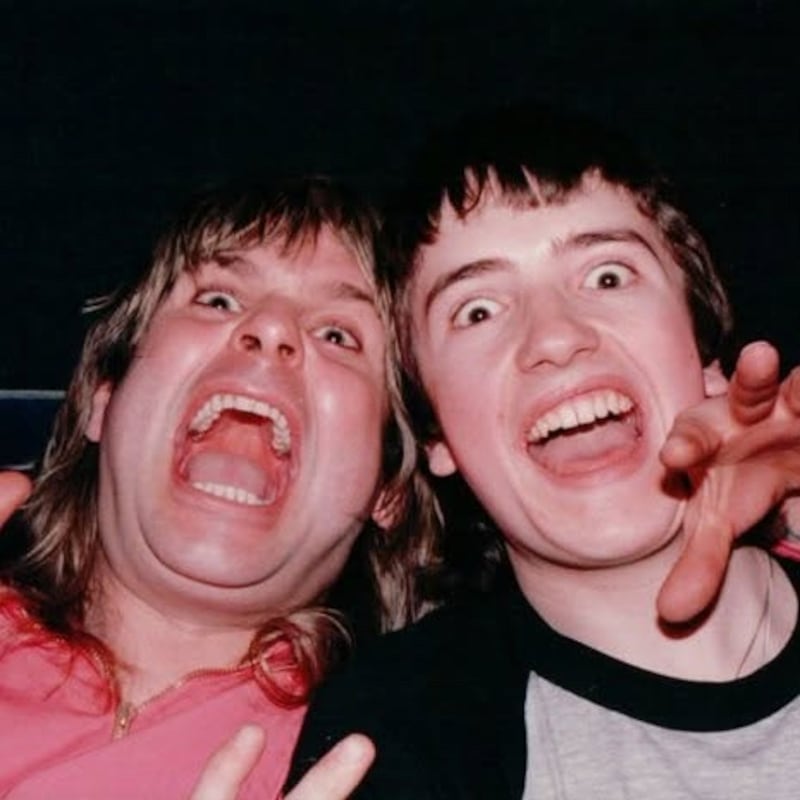
Rea, whose demonstrable ability to take a leap of faith has most recently taken him to New Orleans, secured a foreword from Jack Osbourne, who watchers of early 2000s MTV reality show The Osbournes will remember as Ozzy’s son, though watchers of a more recent reality TV show, I’m a Celebrity... Get Me Out of Here!, might know him better from that.
Through decades of the metal hero’s career, Rea is in the room where it happens. At one point, in 1980s Glasgow, he recounts: “By 4am we were down to Randy [Rhoads, the bombastic lead guitarist], Geezer [Butler, bassist for both Black Sabbath and Ozzy’s solo material] , Ozzy, and me,” with “Randy throwing glasses against the wall and Geezer belting out Irish Catholic rebel tunes, Ozzy joining in though he didn’t know them.”
Ozzy promises to write one for Rea. “That would have gone down well with my Protestant friends and family,” he muses.
The black stuff makes it to ‘Spoons
Good news for the groups of English men who often descend on Dublin to drink pints and shout at each other: JD Wetherspoon has cut a deal to supply Guinness to its Irish outlets.
The divisive UK pub group, which trades on its low prices and impressive locations, has served the black stuff in Britain for a long time alongside its various curry deals and halves of Old Peculier (correct). But early in its foray into the Irish market in 2014, it decided that St James’s Gate was charging too much for its stout and struck it from the menu at the Three Tun Tavern in Blackrock, south Dublin. Almost 12 years later, the deal has finally been done for its six outlets.
Overheard rarely seeks refreshment at such establishments. But Guinness has been on a dramatic upsurge in popularity at home and abroad in recent years, with the Guardian even recently predicting that it will soon lose its cool in the UK – a sure sign it’s on a high.
It must be surprising to stag party attendees and lost locals, therefore, to show up to Wetherspoons establishments only to be told they can’t have it, mere miles from its birthplace. A press release promises it’ll be on the menu imminently – although, of course, there are 6,000 other places you could get it all along.
When Catherine met Greta – and the painting behind them
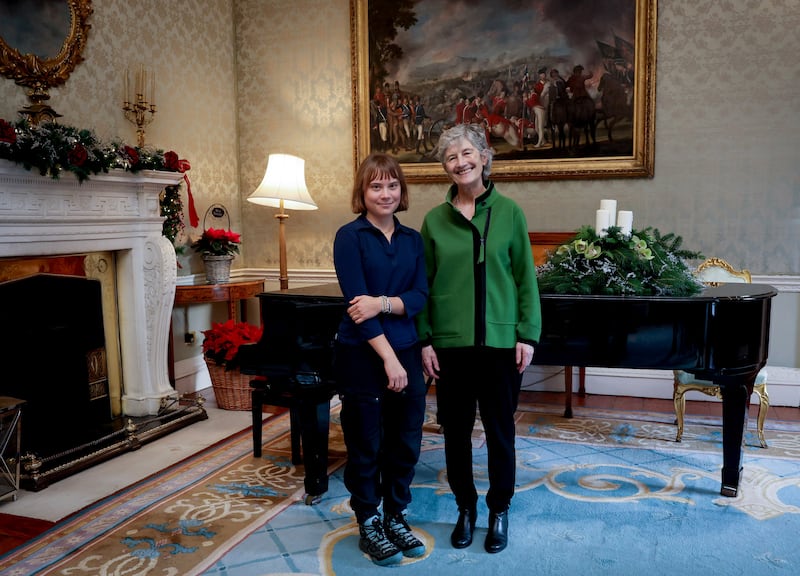
One tourist to Dublin this week was Greta Thunberg, the globally famous Swedish climate-and-Gaza activist who visited Áras an Uachtaráin and got up to various other activities related to her Palestinian solidarity activities.
Thunberg has had a busy year, having sailed on a flotilla towards Gaza, near which she was intercepted and detained by Israel, alleging harsh treatment.
A broad smile and a warm welcome from the President, therefore, given their similar interests.
Overheard’s eye was caught by a striking battle scene in a painting behind Catherine Connolly and her activist visitor at Áras an Uachtaráin as they posed together. It depicts the Battle of Ballinahinch, an engagement in the 1798 rebellion.
Painted by Thomas Robinson, its original title is Combat Between the King’s Troops and the Peasantry at Ballinahinch, and it is a contemporary depiction of the engagement, which saw the Presbyterian-led Co Down rebels take on the crown.
Some 4,000 United Irishmen under Henry Munro lost the battle (and ultimately the war). Robinson – an English painter of Irish subjects who wowed the critics in Belfast and Dublin before dying in Jervis Street in 1810 – painted it up and it was raffled off. The Marquess of Hertford won it, but ultimately it came to the Office of Public Works (OPW) – and to the Áras, where the Lord Lieutentant Marquess Cornwallis might have mulled his troop movements many years ago.
Still, despite early defeats the rebels, like President Connolly after her knockback in the Galway Labour Party, claimed victory in the end to some degree. Thunberg, aged just 22, has time yet.


