
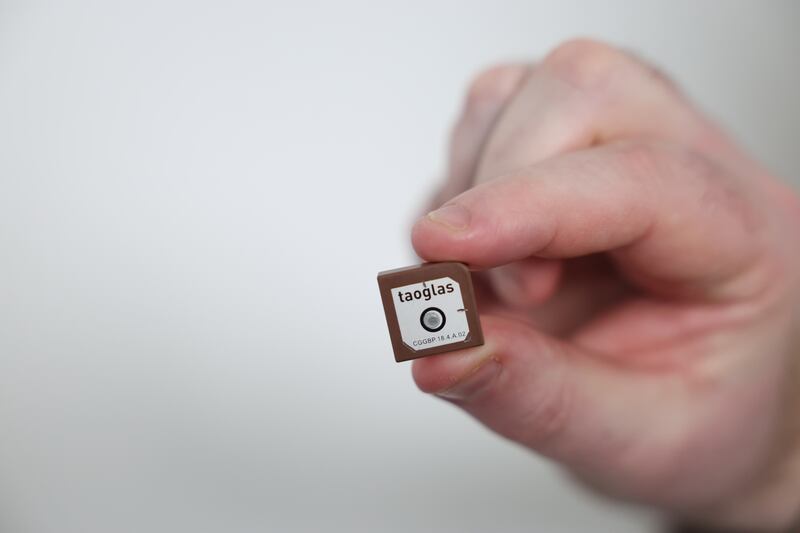
The signal receiver made by the Irish company Taoglas is tiny, cheap and almost weightless.
It is a mass-produced ceramic antenna designed to be fitted to a circuit board which allows it to receive GPS signals. The chip is not very advanced and has long been superseded by newer models.
In fact, the company, which is headquartered in Enniscorthy, Co Wexford, stopped manufacturing this particular version more than a decade ago.
But in the last two years, this chip – and others like it – has become a vital part of the Geran-2 kamikaze drone which is being deployed in vast numbers by the Russian military in its war on Ukraine.
READ MORE


The Geran-2 is a central pillar of the Russian strategy of gradually wearing down Ukraine’s will to fight by targeting civilian and energy infrastructure.
The drone’s low cost and basic design means it can be mass produced, allowing Russia to launch swarms of the weapons at a time. They have killed hundreds of people and are responsible for plunging much of Ukraine into freezing darkness this winter.
It should not be possible for Russia to use Taoglas chips in its drones. Shortly after the war began in February 2022, the EU introduced rules, adopted by Ireland, banning the export to Russia of “high priority” dual-use technology that can have both civilian and military applications. This includes the type of antennas made by the Irish company.
However, according to an investigation by The Irish Times, in partnership with the Organised Crime and Corruption Reporting Project (OCCRP) as well as De Tijd, Paper Trail Media, Standard, InfoLibre and the Kyiv Independent, technology from EU companies is making its way into Russia in vast quantities, where it is used in weapons such as the Geran-2. This includes various components manufactured by Taoglas and another Irish-based company, TE Connectivity.
The investigation obtained data from Ukrainian intelligence that analysed the exact make-up of Geran-2 drones that had been recovered intact after failing to detonate.
They revealed that the Geran-2 contains about 300 parts produced outside Russia – far more than had been previously known.
Most foreign parts originate from US and Chinese companies, but about 100 components were made by 19 European companies, including the two Irish firms.
“Sending many key parts for the [Geran-2] is not that different from sending lethal weapons”, Vladyslav Vlasiuk, Ukraine’s presidential commissioner for sanctions policy, told the Kyiv Independent, a member of the reporting project.
“Without western technologies, Russia can’t produce the Geran-2.”
There is a complicated system of international sanctions targeting the importation of these dual-use technologies. In many cases, the manufacturers themselves also try to prevent their products being sold to Russia.
“We do not, and will not, sell to any entity identified as facilitating the diversion of technology to Russia,” Taoglas said in a detailed statement to The Irish Times in response to queries.
Taoglas said it was not previously aware its components were being used in the Geran-2, and that it took extensive measures to prevent the resale of its products to Russian companies.
A spokesman for TE Connectivity, which is headquartered in Galway, said in response to queries from The Irish Times that it complies with all export controls and “is firmly committed to its policy of no direct or indirect shipments of its products to Russia or to any sanctioned country, and will continue to communicate this policy with distribution partners, and expect them to comply”.
Wholesalers
Despite these efforts, large amounts of components from Irish companies are still making their way into Russia, an analysis of customs data by The Irish Times shows.
This is happening through a complex network of wholesalers and resellers based in China, Taiwan and Turkey. Components are bought and sold repeatedly before eventually being exported to Russia, making it extremely difficult for manufacturers and regulators to keep track of them.
Many of these exporters have themselves been subject to international sanctions. But the trade still continues.
During the 15 months between January 2024 and March 2025, more than 1.3 tonnes of various types of Taoglas antennas were imported by Russian companies in five consignments. Four of the five consignments consisted of parts listed in the EU’s export ban list.
These components can weigh as little as nine grams each, meaning the shipments could potentially have consisted of approximately 144,000 individual chips, enough for about 36,000 Geran-2 drones.

The shipments included one 490kg consignment of Taoglas dual-use antennas that arrived in St Petersburg on January 15th, 2024.
They were exported by the Yusha Group, a fabric company based in Hubei, China, and received by a company called Quasar, which a year previously had been placed under US sanctions targeting the “harmful foreign activities” of the Russian government.
A year after the shipment, the Yusha Group was placed under EU sanctions designed to prevent the export of dual-use technology to Russia.
Also in early 2024, Grant Instrument, a St Petersburg-based company, imported a consignment of Taoglas chips labelled “antennas for civilian use” from the Chinese company Hy Sensei Tech Limited. A short time later, Grant Instrument was hit with US, Ukrainian and Swiss sanctions.
The Chinese and Russian companies were approached for comment by The Irish Times but did not respond to queries.
Taoglas told The Irish Times that neither it nor its distributors have ever sold components to the companies named in the trade data. Those subject to international sanctions “were already flagged and blocked across our global sales systems following their designation on relevant sanctions and restricted party lists, demonstrating that our compliance controls are functioning as intended”.
[ Kremlin says sanctions will never force Russia to change course on UkraineOpens in new window ]
During the same period, there were 140 shipments of TE Connectivity-manufactured products that are subject to EU dual-use restrictions. These components weighed a total of 8.5 tonnes.
Many shipments involved companies subject to international sanctions. They include a 450kg shipment of electrical connectors of the type used in Geran-2 drones. The connectors were imported in April 2024 by Rigel, a St Peterburg-based battery manufacturer which had been sanctioned by the EU a year previously.
A spokesman for TE Connectivity said it “complies with all export controls and sanctions that apply to its business globally, and has fully complied with all sanctions imposed on Russia following the Russian invasion of Ukraine. Additionally, TE has not shipped any product from any TE location to Russia since the sanctions were imposed, beginning in March 2022.”
Komet-M
“It’s so cold in the apartment that when I wake up, I wish it were evening, so I could fall asleep and forget,” said Tetiana Kavinova, who lives on the East Bank in Kyiv.
“Yesterday, I was lying in bed, thinking about putting on gloves. You lie under two or three blankets and don’t get up.”

Like most of the people in the Ukrainian capital, Kavinova has spent much of the winter living in the freezing cold due to daily attacks on energy infrastructure from Russian Geran-2 drones.
“The water is just ice cold. It’s impossible even to wash a cup. There has been no hot water since the beginning of January after another large-scale attack,” she said.
“After power engineers repair damage, Russia launches a new strike, or breakdowns occur because the power grid is overloaded.”
In 2025, Russia attacked Ukrainian cities with Geran-2 drones on 357 nights out of 365. It launched a total of 54,000 long-range drones, of which about 34,000 were Geran-2s.
Strikes from long-range weapons, including missiles and drones, killed at least 682 civilians.
Known as the “poor man’s cruise missile”, the Geran-2 can be manufactured for as little as €50,000. It is based on the Iranian-designed Shahed 136 unmanned aerial vehicle, which has been supplied by Tehran to Russia in large numbers since 2022.
The Russian variant, which is 3.5m in length, is mostly produced in the Alabuga Special Economic Zone, in the Russian autonomous republic of Tatarstan. Western intelligence believes Russia produces almost 200 of these per day, with plans to greatly increase that number this year.
The Geran-2, which can carry up to 90kg of explosive, is slow and easily detectable on radar. But Russia usually launches dozens or even hundreds of them at a time, overwhelming Ukrainian air defences and ensuring at least some of the weapons get through.
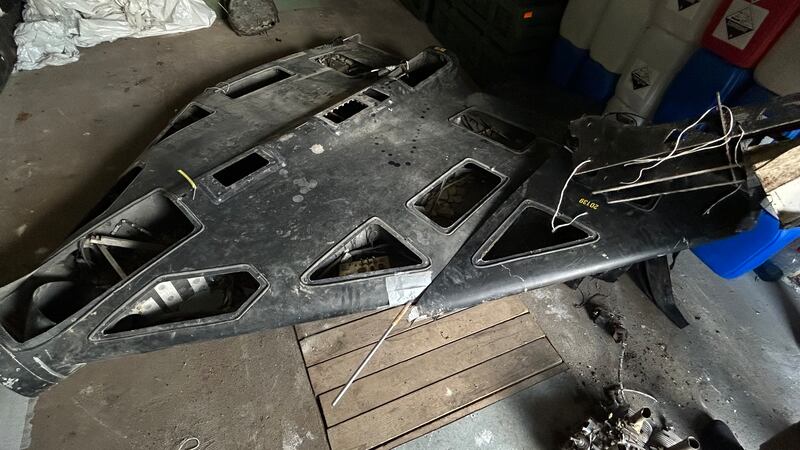
In other instances, unarmed Geran-2s are used as decoys to deplete air defence missiles, allowing the much more expensive cruise missiles such as the Iskander-M to reach its target.
Key to the success of the drones is a basic-looking component called the Komet-M, which was first produced by the VNIIR Progress, a Russian military research institute based in St Petersburg. This is a smart antenna used to guide missiles, drones and glide bombs to their targets while filtering out Ukrainian jamming signals.
Each Komet-M uses between four and eight Taoglas antennas, or similar components from other manufacturers. According to NAKO, a Ukrainian anti-corruption organisation, so many Komets were being fired at Ukraine last year that soldiers and civilians were selling Taoglas antennas online after recovering them from unexploded weapons.

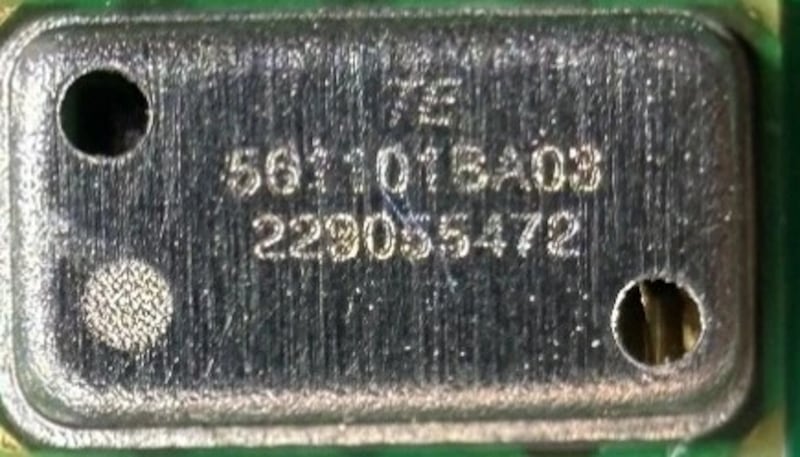
The Geran-2 also often uses pressure and height sensors made by TE Connectivity in its guidance system.
Taoglas and TE Connectivity products can also be found in at least a dozen other Russian weapons, including missiles, surveillance drones and artillery systems.
It is the Geran-2, however, that is causing the most damage to Ukrainian cities.
The device’s low cost and 2,000km range also makes it a concern for EU countries, especially those on Russia’s border.
“The Geran-2 drone is of great strategic importance to the European Union, partly because of its range,” said an official from an European intelligence agency who pointed out that there have already been several incidents involving Russian drones crossing into Romania.
He said Russia has recently started publicly promoting its Geran-2 production facilities as a form of “strategic communication”, to intimidate western countries and show off its ability to manufacture the weapon in vast numbers.
Companies
In some ways, it is no surprise that parts from TE Connectivity and Taoglas are ending up in Russian weapons. Both are major international manufacturers of electrical components, with factories around the world.
TE Connectivity is by far the bigger of the two: it employs almost 100,000 people in 130 countries, including about 1,300 in Galway. It was originally a US company called Tyco Electronics, before it rebranded in 2011.
In 2024, the company moved its headquarters from Switzerland to Ireland, where it has had a manufacturing presence since 1979. Last year, it brought in revenue of more than €15 billion, a 14 per cent increase on the previous year.

Taoglas has firmer roots in Ireland. It was founded in 2004 in Enniscorthy by Dermot O’Shea and Ronan Quinlan. It maintains headquarters in Wexford and San Diego, and has seven facilities worldwide, employing more than 300 people.
It offers a vast array of antennas, connectors, cable assemblies and other devices, with the company saying it develops more than 200 new products a year. This includes components for military drones, missiles and aircraft, according to its website.
In 2023, the US-based private equity firm Graham Partners acquired a majority stake in the firm, with O’Shea staying on as chief executive.
This is not the first time Taoglas products have been found in Russian weapons.
Last year, The Irish Times reported the presence of its chips in the guidance system of Russian glide bombs. The company traced the component to a shipment of thousands of chips sold to a Chinese customer in 2017.
The company said “downstream diversion of electronic components is an industry-wide problem affecting global supply chains”, and that it maintained “robust systems and controls” to mitigate this, which “in many cases go above and beyond legal requirements and established industry norms”.
This includes automatic screening of online customers before products are shipped and measures to prevent customers “linked to higher‑risk jurisdictions” from purchasing components.
Solutions
Preventing the downstream sale of electrical components into Russia is “a game of whack-a-mole”, said British human rights and criminal lawyer Alex Prezanti.
“You can keep chasing corporate entities, but like you’re always a step behind because they can open 10 new companies every day.”
There were measures the EU can take to tighten the rules, but these require unanimous agreement from all member states, he said. Some countries, such as Hungary, may not support such a move.
The main route for western technology into Russia is through China. Prezanti said the EU could prevent the export of dual-use technology to China. However, such a step is unlikely, “because the EU has a really important trade relationship with China, and this would be tantamount to a trade war”.
Others are calling for stricter enforcement of the sanctions which already exist. Sanctions work when they are enforced properly, said Vlasiuk, the Ukrainian sanctions commissioner.
“Look at cruise missiles; Russia would love to scale up production, but they can’t. Why is that? Because they couldn’t get the required western parts. Why? Because of sanctions,” he said.
Vlasiuk said further action was needed by those making the components.
“We think the manufacturers, plus the big distributors they work with, should be doing more. A simple answer like ‘Well, we sell a lot of these tiny parts, those are dual-use, we cannot control thousands of tiny cheap parts’ – that is no good any more. I mean this has been almost four years, and that answer does not cut it any more,” Vlasiuk said.
While this debate in ongoing, Russia is stepping up its Geran-2 attacks on Kyiv even further. So far this year it has launched Geran-2s at civilian targets every single night, a total of more than 4,600 of the drones this year.
In the east of Kyiv, Tetiana Kavinova continues to deal with their consequences. Her electricity came back for a few days, only for the heating to suddenly stop working again.
“I thought the beginning of the war was terrible,” she said. “But now I think that probably it was easier than now.”


