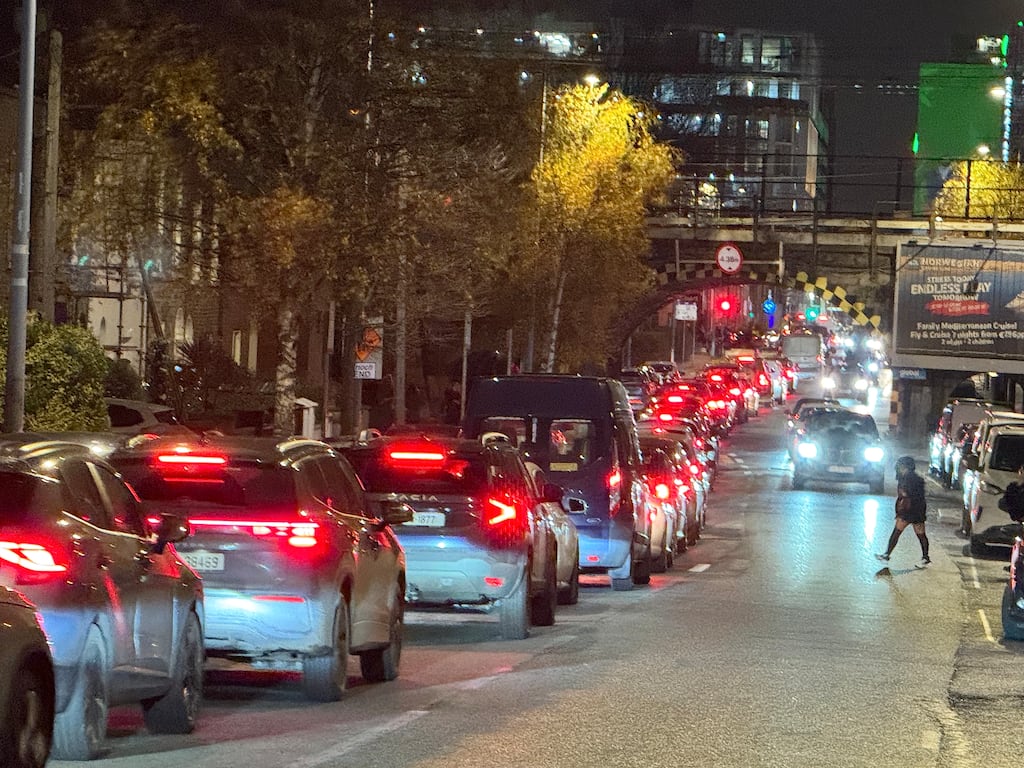
Congestion charges to “discourage” motorists from driving in Dublin city centre should be introduced to improve bus services, as average speeds in the capital are now slower than London, according to a Dublin Bus official.
Gwen Morgan, director of service operations at Dublin Bus, said congestion is increasing year-on-year and significantly affecting average speeds during peak times.
Speaking to The Irish Times this week, she said the average speed in the city centre was 13.4km/h during peak morning times in October, compared with an average of 14km/h in London.
“That’s slow. We’re operating some parts of our day slower than the average speed in London,” she said.
READ MORE


According to a study published earlier this year, the English capital is the most congested city in Europe, with Dublin ranking third.
While Dublin Bus works alongside the National Transport Authority (NTA) to mitigate “unnecessary” delays to buses, “there is only so much you can do until something else has to be done”, Ms Morgan said.
She said congestion charges could be introduced “zonally” or near certain “pinch points” in the city centre, such as Church Street, Dame Street and Pearse Street, where services “suffer greatly from congestion”.
[ ‘The congestion is killing us at times’: Inside the Dublin Bus control roomOpens in new window ]
Citing the Port Tunnel - which charges motorists a higher toll during peak traffic hours - as an example, she said the charges would “discourage” motorists from driving into the city centre, as it could make it “too costly”.
“I think what we need to be looking at, as a country, is giving genuine priority to public transport, all modes of public transport over the private car.”
Increasing congestion in the city centre means that consistently meeting standards set out under Dublin Bus’s contract with the NTA is a “challenge”, particularly alongside a lack of enforcement of bus lanes, she said.
Non-compliance over bus lanes is a “big problem” with private car users “getting away with using them” and “breaking the law”, she said, leading to further delays and congestion for buses.
Ms Morgan would like to see cameras installed at the front and rear of buses to capture registration plates of private cars using the lanes, which could then be shared with gardaí to issue fines.
“They have been proven to work, and things like that give public transport a better chance to succeed,” she said.
Noting that the Greater Dublin Area Transport Strategy 2022-2042 mentions potential congestion charges, a NTA spokeswoman said “more detailed analysis is required to assess the impacts and requirements of how such measures would be applied and work in practice”.
She added that a national strategy on the use of cameras for traffic enforcement is currently being finalised by the Department of Transport.
*This article was amended on December 20th 2025 to reflect the fact that the comments on congestion charging were made by Ms Morgan rather than Dublin Bus


