Screens get the blame for many things – from problematic content, to depriving teenagers of “real-life” experiences, to curtailing social development. Ask most adults and parents what they think about young people and their screen use, and the reply will probably be negative.
A new project is looking to change that. Rather than distancing young people from their peers, Foróige GoVirtual seeks to connect vulnerable and isolated young people through virtual reality.
The project has received support under the Scaling Education Fund from ReThink Ireland. Alternate Spacers groups meet every Thursday evening and are, in essence, virtual youth clubs.
Noreen O’Donnell’s three children used the GoVirtual services over the past number of years, when they were between the ages of 13 and 16. The family live on Arranmore Island in Donegal, which has relatively few young people, she says. Her daughter Fiona has only very recently finished up with the service.
READ MORE



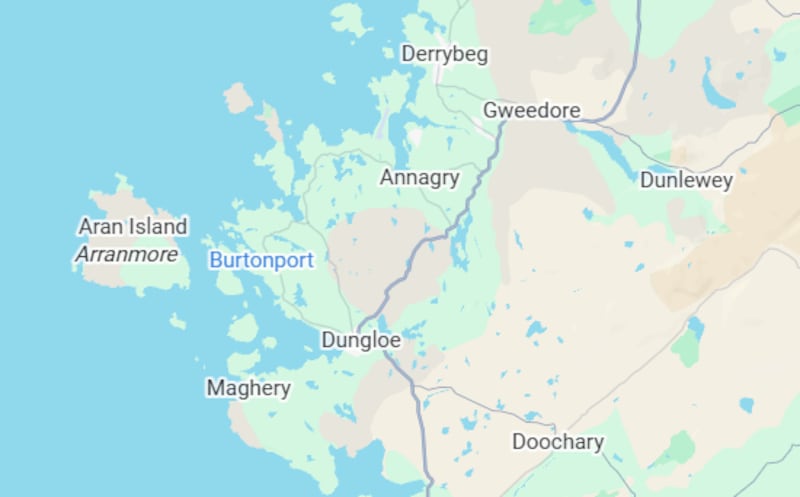
O’Donnell’s children “absolutely loved it”, she says. “It’s like youth club from a virtual perspective and you make your little avatar and you play games with people from all around. It started off with meeting [people on] different islands, from Scotland and around Ireland.
“It’s a safe environment ... You’re not chatting to the public. There’s no outside interference. Nobody else is coming in. You have to be approved to join it.”
Within the sessions, “they were doing paintballing. They were doing hide-and-go seek, basketball. And it was great fun. They played cards. And mindfulness and treasure hunts and different things like that.
“There wasn’t a lot for the children to do” on the island, O’Donnell explains. “Anything at all would be a help. Anything to broaden their mind. Anything to help them move forward, meet other people. From that perspective the VR was good. The opportunities they got with that, it was brilliant. They even got to meet Heather Humphreys online.
“The supervisors send me an email and they tell me exactly who’s going to be on. They don’t see each other at all. You create an avatar and that is you.”
Fiona shares her mother’s enthusiasm for the project. “VR let me do things I can’t do in real life, practise skills in a more engaging way.”
It helped her to make new friends too. “Because you naturally meet people who share the same interests while doing activities together. They’re people I’d never have met in real life.”
Tania Potter’s son Ryan Minagh has been involved with the VR Alternate Spacers group since the beginning. He now serves as a junior volunteer member. Ryan is a wheelchair user, and Potters says it has been incredibly important in allowing him to connect with other young people.
He is 20 now and first became involved when he was about 15. “He’s loving it the same as he did from the start. He’s becoming a volunteer. He’s training in or helping new people and showing them the ropes. And he enjoys that.”
Potter had been concerned about the risk of her son becoming isolated. “Any youth clubs or stuff like that he’d partake in, generally we have to make sure obviously it’s wheelchair accessible, and that he can do the majority of what they’re doing, which rules out some things for him, just by nature of his physical disability.”
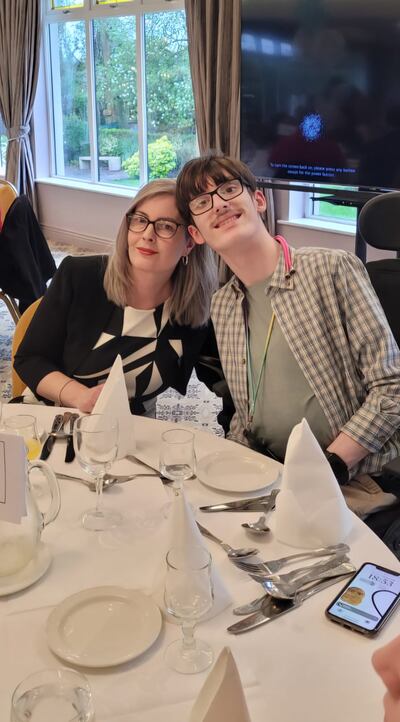
Joining GoVirtual was suggested to them by the Irish Wheelchair Association. “It was ideal for our situation. We also live out the country, so we would need to get transport to wherever he needs to go, and obviously because he’s a wheelchair user, that’s specialised too. So for all those reasons, and the fact that he loves VR, it was a great solution. I was really impressed that they thought of this as a way to include everyone who possibly might not get included for other reasons.”
Potter is “always open to any idea. We tried the physical in person. And it worked too to a certain extent, but obviously if you have a physical disability ... not every venue and not every activity and not everything is suitable. But when he goes on to that VR he’s just the same as everyone else ... It means he can partake the very same as everyone else.”
Potter has seen her son’s confidence grow. “It’s brought him out of his shell a lot.”
Ryan says every Thursday he enjoys joining the space for an hour. He spends that time “playing games, chatting” and says he would “definitely” encourage other people to use it.
“Anybody can use it,” he says. His favourite game to play in the Alternate Spacers room is “snipers versus runners”. If there’s one thing he feels could improve it’s down to the equipment rather than the project itself. “Some people with bad hands or poor circulation can’t use the controllers,” he says. Except for that, it’s “mostly amazing” and he’s planning to continue his involvement.
“It’s engaging young people who can’t access face-to-face youth services,” says Tom Rickard, development officer with VR Development, Foróige. “That can be for a variety of reasons ... We’re looking at young people who are socially isolated. Maybe it’s somebody from the LGBT community where there might be challenges in accessing youth work services, or young people who are rurally isolated. You might have a young person whose disability actually means for them to attend a youth club might actually take two hours. It’s giving that young person agency to be able to put on a headset and meet their youth worker”.
The young people connected through the service come with “varying degrees of vulnerability”, Rickard says. “We might think a young person is isolated because they’re living in a rural area, but actually there’s a lot of peer-isolated young people in urban settings as well.”
It can be difficult to identify young people in need of access to the support, so the group have run a number of pilots.
The virtual spaces used by the young people to meet, while on a public app, are completely private, Rickard says. No one can enter the space without approval. “It’s a youth work facilitated space so all the adults in there are vetted ... Even though we’re working in that virtual environment, all the safeguarding procedures and policies apply.”
Rickard says, where appropriate, they try to provide opportunities for the young people who have engaged with the virtual service to meet in real life. He speaks of one group of autistic young people who came together to go bowling at the end of one pilot programme. “That particular pilot was about building those social skills parents particularly wanted the young people to practise.”
Another pilot, Music-making in Virtual Worlds, involved young people identified by Tusla. “Young people took part in music making in VR, and out of that, one of those young people transitioned on to a face-to-face musical group in Galway. One young person transitioned on to another VR group that we have ... because he needed that ongoing support. And another young person actually pathwayed on to an employment programme.”
Because young people can take their headset with them they’re able to stay involved and connected when they’re away, or even if they had a spell in hospital, Rickard says. “The more support we provide, the more that young person will want to engage in face-to-face services, if it’s appropriate to do.
“You’re taking VR and you’re using it as a tool, but you’re looking for that external support if it’s needed,” he says, explaining how one youth worker recognised a young person had dyslexia.
“For some young people it’s the social. It’s just bopping in every week.”