
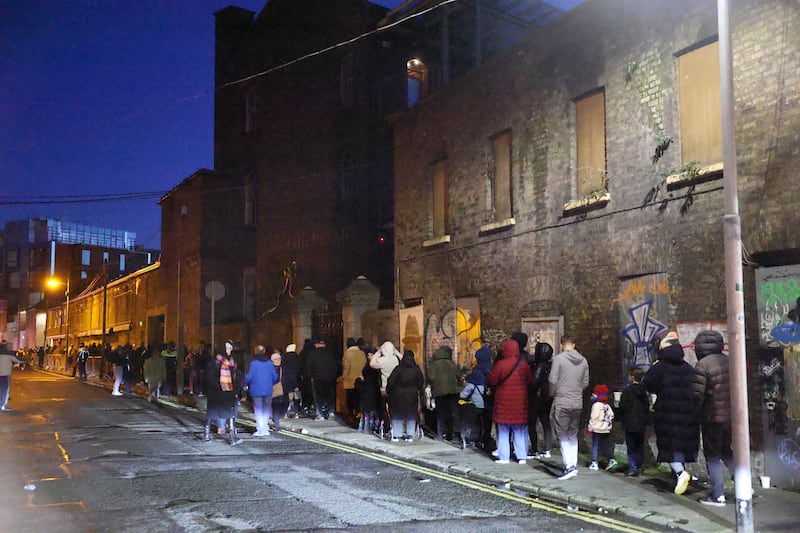
A bitter wind blows up Bow Street in Dublin’s North Inner City, buffeting the hundreds queuing outside the Capuchin Day Centre.
It’s 6.30am but some have been here for half an hour already, waiting for the doors to open and the special Christmas vouchers to be passed out.
Fr Kevin Kiernan and his team distribute soup to those huddling against the cold, helped by volunteers including “Cliff from Zambia”, a visiting young priest. Most of those waiting are patient and good-humoured, but not all.
A verbal row breaks out between a woman in the queue and a man on the opposite footpath.
READ MORE


“Mind your own f**king business,” she tells him. “Mind your f**king business,” he replies, adding: “F**k off back to Tallaght or wherever you’re from. You’re not from around here.”
Elsewhere, a woman loudly orders someone out of the queue, to no apparent effect, then moves to another part of it herself.
Seven Garda officers monitor the operation, keeping the street clear and occasionally reminding people – including reporters – that the terraced side streets here are residential and that residents may be still in bed, “so keep the noise down”.
Shortly before 7am, a door opens and the first of the vouchers are passed out, in return for tickets secured in another queue last week.
It used to be Christmas hampers but, as Alan Bailey, an ex-garda who now volunteers at the centre explains, that ended with Covid. Now it’s €50 vouchers for Dunnes Stores, whose own discount voucher system, Bailey says, effectively adds another tenner to the total.
But Francis, a 71-year-old wheelchair user from Islandbridge who is one of the first to emerge with his envelope, tells The Irish Times he preferred the old hampers. “You got a lot more in them.”
Not that he complains. He’s been coming to the Capuchins for 20 years and is very grateful for their work, which also includes a regular weekly food parcel.
Struck with polio from the age of two, Francis is now diabetic and gradually “degenerating”, as he says with a smile. But he gets around in a motorised wheelchair (“my nifty fifty”) and is sustained by a “firm belief in God”.
Of the day centre, he says: “So long as these people are here, we’ll never starve.”
Bill, an 82-year-old from Tallaght, is grateful too. He is also, however, angry at the size of the queues in recent years and says he may not come again.
There was a time, not so long ago, when he couldn’t have imagined himself here. Although he spent part of his childhood in the Morning Star hostel (“My father was a busker, playing music for cinema queues – we were poor”), he went on to found his own taxi business and once had a fleet of “111 cars”.
“I done well for 40 years – 40 great years,” he recalls. Then divorce and other misfortunes intervened. Now on his third marriage, he and his wife live in a small, one-bedroom apartment, which for him sums up his reduced circumstances.
Noting that his voucher ticket is number 3,027, he believes there are too many immigrants in the queue these days.
Asked what he’ll use the voucher for, he says: “I buy clothes, usually. Or maybe a pair of shoes.”
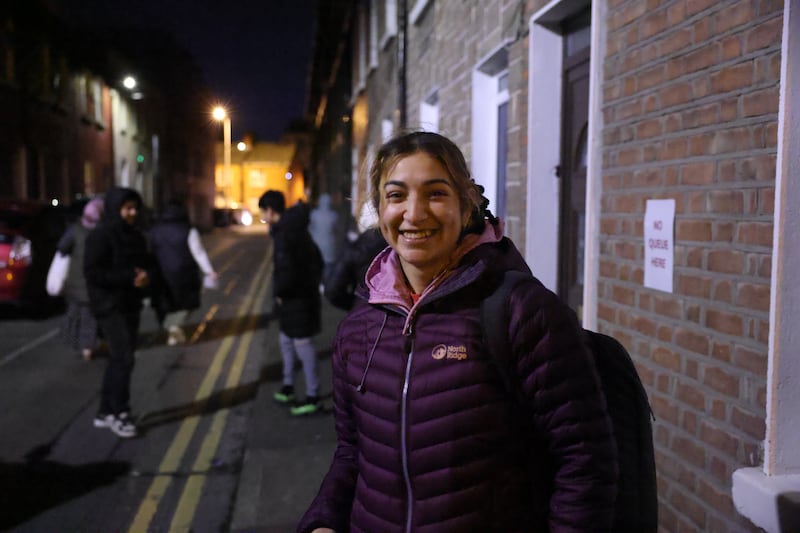
A friendly young Romanian nearby, who gives her name as Baronita Kostas, tells us she will use the money for food, especially milk formula for her baby.
A single mother, she has three children, aged between two and four, and pays €160 a week for a place in Dublin 3.
While chatting with her and her mother, we’re joined by Martin Cuffe, a local man who knows them and many others in the queue.
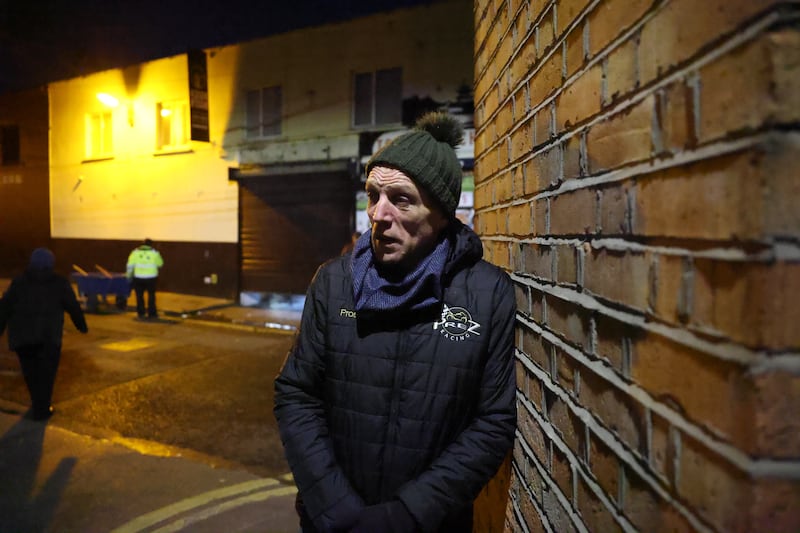
He too had a sudden reversal in life. He worked for years as a plasterer. Then, a few years ago, his marriage broke up, he got prostate cancer and developed a gambling addiction, from all of which he is now recovering while living in a hostel for the homeless.
He knows everyone at the Capuchin centre and is still “not the better of Br Kevin dying”. That was Kevin Crowley, who founded the centre in 1969 and died aged 90 earlier this year.
Martin plans to buy small presents for “the girls” who work there. He also wants to “give something back” to the other charity services on which he now depends, including the Lighthouse mission, where he’ll have Christmas dinner.
If a hoped-for return to work “in scaffolding” allows, he will volunteer to help the Lighthouse’s outreach project in the new year.