On Darragh O’Brien’s first day as Minister for Climate, his officials and advisers gathered remotely for an inaugural briefing they couldn’t deliver in person.
Storm Éowyn was still giving some last kicks and blows and travel was inadvisable, so the minister sat at home tuning in online.
It was dark and cold. He had no power. Éowyn had shredded the electricity network across much of the west of the country but O’Brien’s neighbourhood in Malahide, Dublin, was also caught by the fiercest storm in the country’s record books.
If there was ever a prognostic start to a climate minister’s portfolio, this was it.
READ MORE


Éowyn, which struck at the end of January, cast a shadow over 2025.
Its effect on farmers, foresters, homeowners, businesses and energy infrastructure was bruising and costly.
But public confidence in the utilities, communications and connectivity that a rich, developed country takes for granted was also shaken.
The words of Rachel Connolly when she confronted Taoiseach Micheál Martin in a community hall in Castlerea came to epitomise the problem.
It was five days on from the storm, she and her neighbours had no electricity or water, no prospect of electricity for another week, and she had just dumped the contents of her fridge and freezer for the third time in 12 months because of power cuts.
“Why didn’t you have something in place? You knew this was coming,” she asked.
Mr Martin tried to assure her that plans were put in place for the storm but she wasn’t having it.
“Those plans didn’t work,” she said.
Across the country, scientists who worked on the Climate Change Advisory Council’s annual adaptation reports may well have fought the instinct to blurt out: we told you so.
They knew what was coming and advised the Government year after year that the country needed to be better prepared.
After Éowyn, for the first time, the term “climate adaptation” began to be used by politicians in a way that suggested they finally recognised its necessity rather than rattling it off in tick-box style.
[ Storm Éowyn and how to pronounce it tops 2025 Google searchesOpens in new window ]
The Taoiseach, speaking at the Cop30 climate summit in November, recalled Éowyn and emphasised the need for Ireland to adapt to extreme events by speeding up the building of flood defences and reinforcing power systems.
Before, such works might have been carried out piecemeal and after the event, labelled as repairs.
Now it seemed we were beginning to realise they need to be planned and executed in advance of worsening conditions.
Worsening climate change impacts were fully in evidence the world over in 2025.
An intense drought gripped Syria, Iraq and Iran, forcing authorities in Tehran to warn that residents of the parched city may need to evacuate.
Iceland and Greenland experienced record heat and Scandinavia had an unprecedented two weeks of temperatures above 30 degrees.
Lethal floods swamped Texas. Terrifying fires hit Spain. Hurricane Melissa tore through Jamaica with a ferocity that swept record books aside.
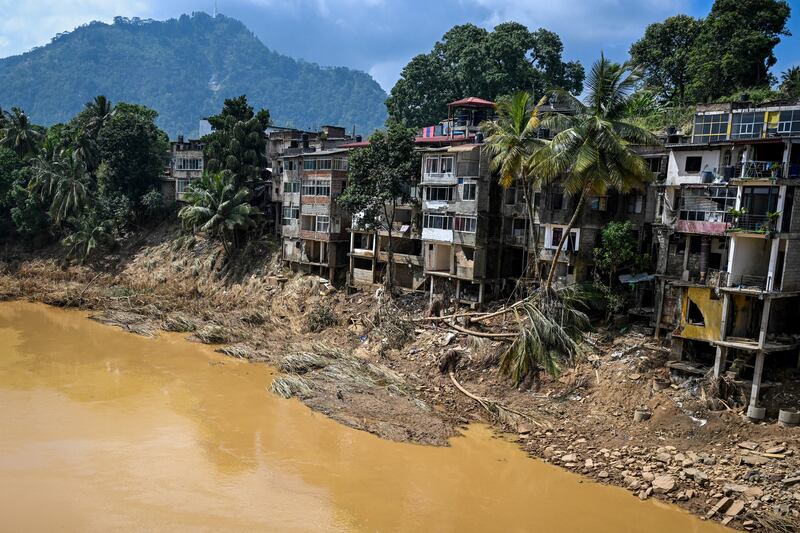
In Indonesia, Sri Lanka, Maylasia and Thailand, hundreds were killed and millions displaced by after torrential late November rain pounded southeast Asia for days.
In Ireland, stifling nights when the heat of the day clung on led to the summer being the warmest since data collection began even though no daytime temperatures broke records.
“Most houses in Ireland are not built with these rising temperatures in mind so preparing and adapting houses now will be important for the increasing regularity of future warm summers,” Dr Claire Bergin of Maynooth University warned.
“In particular for those warm summer nights which are set to become more regular.”
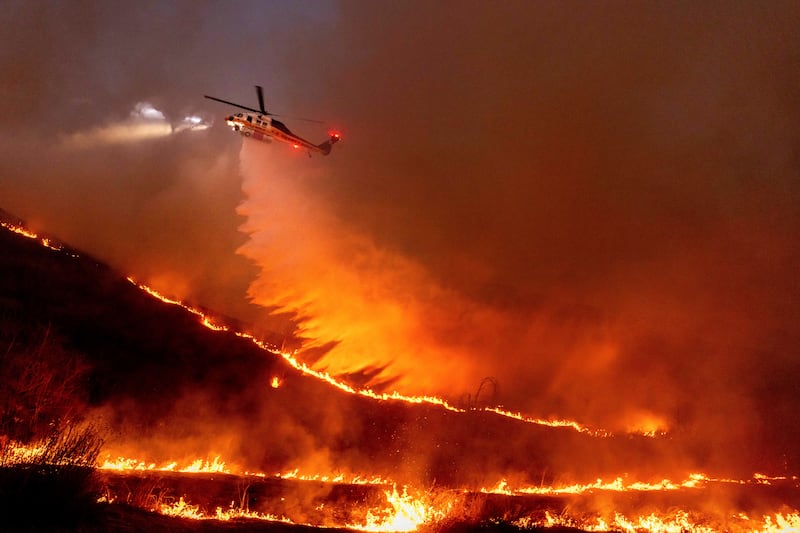
In California, places that were movie sets made real – Malibu, Santa Monica and the Pacific Palisades – were destroyed by fires.
Large parts remain in ruins with residents yet to return.
Political brawling over the cause and management of the fires ensued but although a man was charged with deliberately setting one blaze, extreme hot, dry conditions had left the landscape parched and unable to slow the spread of the flames.
US president Donald Trump wasn’t interested in the science, only in political point scoring.
He told the United Nations General Assembly during New York Climate Week later in the year that climate change was “the greatest con job ever perpetrated on the world”.
The notion of a carbon footprint was “a hoax made up by people with evil intentions,” he continued.
“If you don’t get away from this green scam, your country is going to fail.”
At least it was clear where he stood.
Clarity on the climate crisis also came from the International Court of Justice (ICJ), however.
A landmark advisory opinion was published after a movement begun six years earlier by a group of south Pacific island students got the issue in front of the world’s highest court.
The ICJ was asked to clarify, taking into account all the international conventions and agreements signed over the previous years, what exactly the obligations of states were in relation to climate change.
It ruled that climate change treaties were not merely statements of optional intent but binding obligations, and that the 1.5 degree temperature target was not merely aspirational but a duty to meet.
It established that countries were responsible for climate harms caused by private entities they failed to regulate – such as fossil fuel companies.
And it said the richest countries that were the biggest carbon emitters and climate polluters owed poor countries for the harms caused.
It took the chair of the panel of judges almost two hours to read out the full judgment and former president of Ireland and climate champion Mary Robinson said it was “the sweetest judgment I’ve ever listened to”.
“I was cheering every minute,” she said.
The opinion is expected to be cited in a whole new wave of climate litigation as citizens around the world go to court to demand the action they don’t get when they go to the ballot box.
Not enough countries showing anywhere near enough ambition, and even less evidence of actual action, on emissions reductions
The results of inaction was made very clear this year in a slew of reports and analysis released in November for the Cop30 climate summit.
The last 10 years, including 2025, have been the warmest in human existence.
The goal of preventing global temperature rise exceeding 1.5 degrees is now unachievable, with scientists saying the aim must be to minimise the overshoot and its duration
But the climate action plans that countries have adopted, if implemented, would continue to put so much extra greenhouse gas emissions into the atmosphere that the planet would warm by around 2.6 degrees over the lifetime of a child born today.
Halting and then reversing that overshoot will take effort of a scale, speed and co-ordination that the world has yet to show it is capable of.
Cop30 succeeded in keeping efforts alive but not injecting them with the urgency required.
For every indicator of progress, there was evidence of business as usual.
The International Energy Agency said investment in clean energy was exceeding investment in fossil fuels by two to one but the clean energy figure includes nuclear.
The amount of wind and solar generated electricity is growing all the time but the amount of power generated by burning oil, gas and coal is also rising as the overall demand for electricity surges.
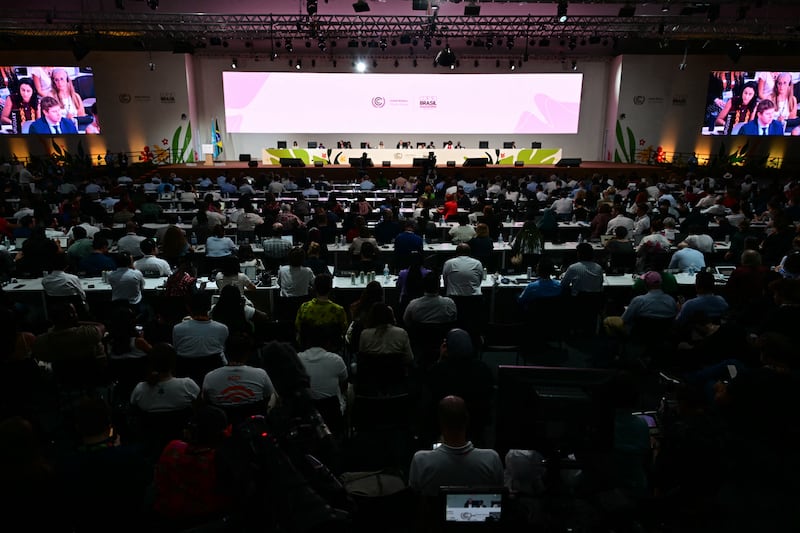
Prof Peter Thorne, director of the Icarus research centre at Maynooth University, had a “tells it straight” analysis of the outcome of Cop30.
“Not enough countries showing anywhere near enough ambition, and even less evidence of actual action, on emissions reductions to keep warming well below two degrees above pre-industrial levels [at this juncture keeping warming below 1.5 is a pipe dream],” he wrote.
“Nowhere near enough financial assistance is being given by countries from the global north [those most responsible] to aid the global south [those most vulnerable].
“There is still a reluctance to move off our addiction to fossil fuels [globally we still subsidise fossil fuel use more than moving to alternatives].
“No amount of window dressing will do more than present a mirage in front of these broader issues.”
Ireland backed a move by a coalition of countries at Cop30 to push for faster action on fossil fuel phase-out, and will take part in an international summit aimed at developing a “roadmap” on the issue next April.
Meanwhile, there was good news when the country’s most carbon-polluting power station, Moneypoint, stopped burning coal and was converted to a standby generator for times when electricity supply struggles to meet demand.
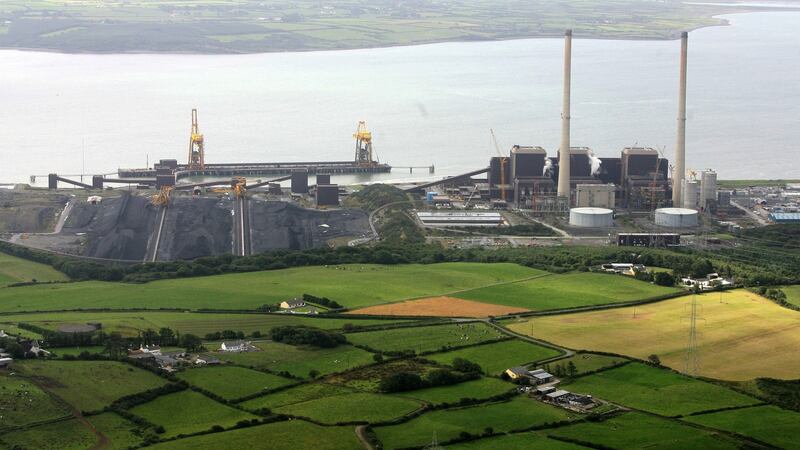
However, if it is called upon to supply power, it will do so by burning oil – as will temporary emergency generators installed in Dublin and the Midlands while we await further investment in wind and solar.
The Government also dropped the ban on fracked gas and approved plans for a “strategic reserve” of liquefied natural gas (LNG) – which most often comes from fracking fields.
It is to be located on the Co Clare coast, will costs hundreds of millions of euros and will tie the country into new fossil fuel investment for years to come whether or not it is called into use.
Just as the idea of adaptation beds in, so too does the feeling of resignation.
O’Brien stated repeatedly this year that Ireland will not meet its 2030 renewable energy targets or overall emission reduction targets.
That is now the accepted position in Government and there are no signs of an extra push to accelerate climate action to try to get on track.
Joint analysis by the Irish Fiscal Advisory Council and Climate Change Advisory Council concluded that failing to meet those targets could result in fines, penalties and other compliance costs of up to €26 billion post-2030.
O’Brien dismissed their work as “back of the envelope stuff”.
In summary, it was a year when different versions of realism emerged.
Politicians called for realistic expectations and pushed for realistic decarbonisation targets.
The science said the reality is, the world is in trouble and heading for so much more that only radical changes will shift the trajectory.
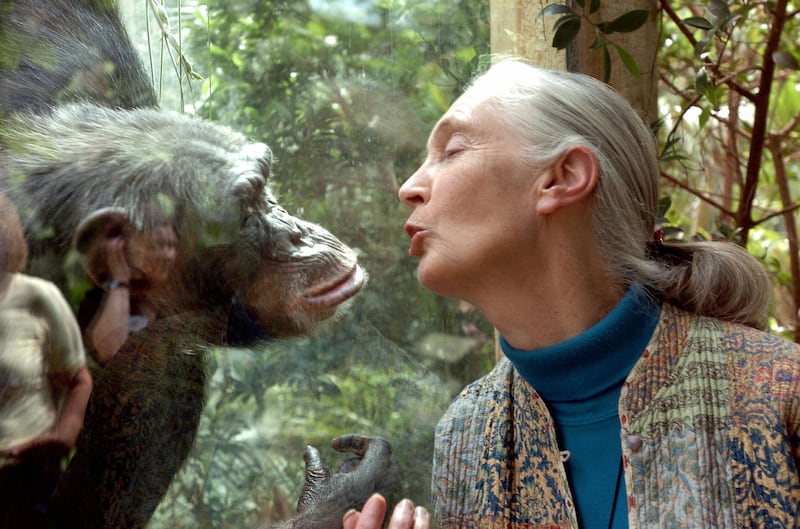
In October, Jane Goodall died. After decades of pioneering research among the chimpanzees of Tanzania, she had become a passionate defender of the natural world and an eloquent communicator on the intertwined biodiversity and climate crises.
She left a final message on film that spoke to troubled hearts.
“Even today, when the planet is dark, there still is hope,” she said.
“Don’t lose hope. If you lose hope, you become apathetic and do nothing.
“And if you want to save what is still beautiful in this world – if you want to save the planet for the future generations, your grandchildren, their grandchildren – then think about the actions you take each day.
“Because, multiplied a million, a billion times, even small actions will make for great change.”