The presidential election revealed something simple and devastating about us: we love morality, but only when it costs nothing.
Faced with a ceremonial vote, the country swung toward passion and protest as represented by Catherine Connolly – a vote cast with the heart.
But when the ballot carries real consequence, when it decides housing, taxes, and governance, we revert to caution and familiarity, returning the same centrist or centre-right coalition that has ruled for nearly two decades.
We tell ourselves we want change, but we vote for equilibrium.
READ MORE



That contradiction runs through every part of Irish life. The same electorate that celebrates symbolic virtue on Palestine, on climate, on human rights, cannot stomach the trade-offs of courage at home. We admire boldness, but only provided someone else exercises it.
That is why John Collison’s essay for The Irish Times about Ireland’s inability to build landed so well and was so widely shared.
Ironically, even Tánaiste Simon Harris, whose party has directed this very dysfunction, agreed, saying it was time for the “pendulum to swing back” while Taoiseach Micheál Martin’s spokesman said Collison’s comments were “food for thought”.
[ John Collison of Stripe: Ireland is going backwards. Here’s how to get it movingOpens in new window ]
There was a sense that, finally, someone clever had diagnosed the rot. But nothing in the essay was new. It struck a nerve because it let us feel clever about our own paralysis.
It was perhaps natural that Collison would reach his conclusion that Ireland’s progress is held back by over-regulation. He’s an engineer, a builder, a technocrat. To him, dysfunction looks like bad design: too many interfaces, not enough authority. And he’s right, in a way.
Harris’s comment was meant as self-awareness, but it only proves the point: those in power can name the problem fluently yet remain unwilling to bear the cost of fixing it.
In Ireland, even contrition has become performative; another gesture in the national theatre of insight without action.
So perhaps the issue is not that Ireland lacks the intellect to understand the stasis we face, but that it lacks courage.
It’s a fundamental part of the Irish psyche that we prefer to display virtue in ways that carry no cost.
We are proudly pro-Palestine, a position that carries minimal risks to our trade, energy or security interests. We have been debating the Occupied Territories Bill since 2017, yet we condemn countries that hesitate, even when their stakes are real.
[ Ireland is turning into chief ‘finger wagger’ on the world stage ]
And when it comes to our own moral questions, like functioning as one of the world’s most sophisticated tax havens, we are strangely silent.
The same state that brands itself as the humanitarian conscience of Europe quietly shelters the profits of companies that drain poorer nations’ budgets.
That’s not principle. It’s moral theatre.
At home, the same logic prevails. We want global start-ups to be founded in Dublin, but the collective fear of failure still outweighs the desire to win.
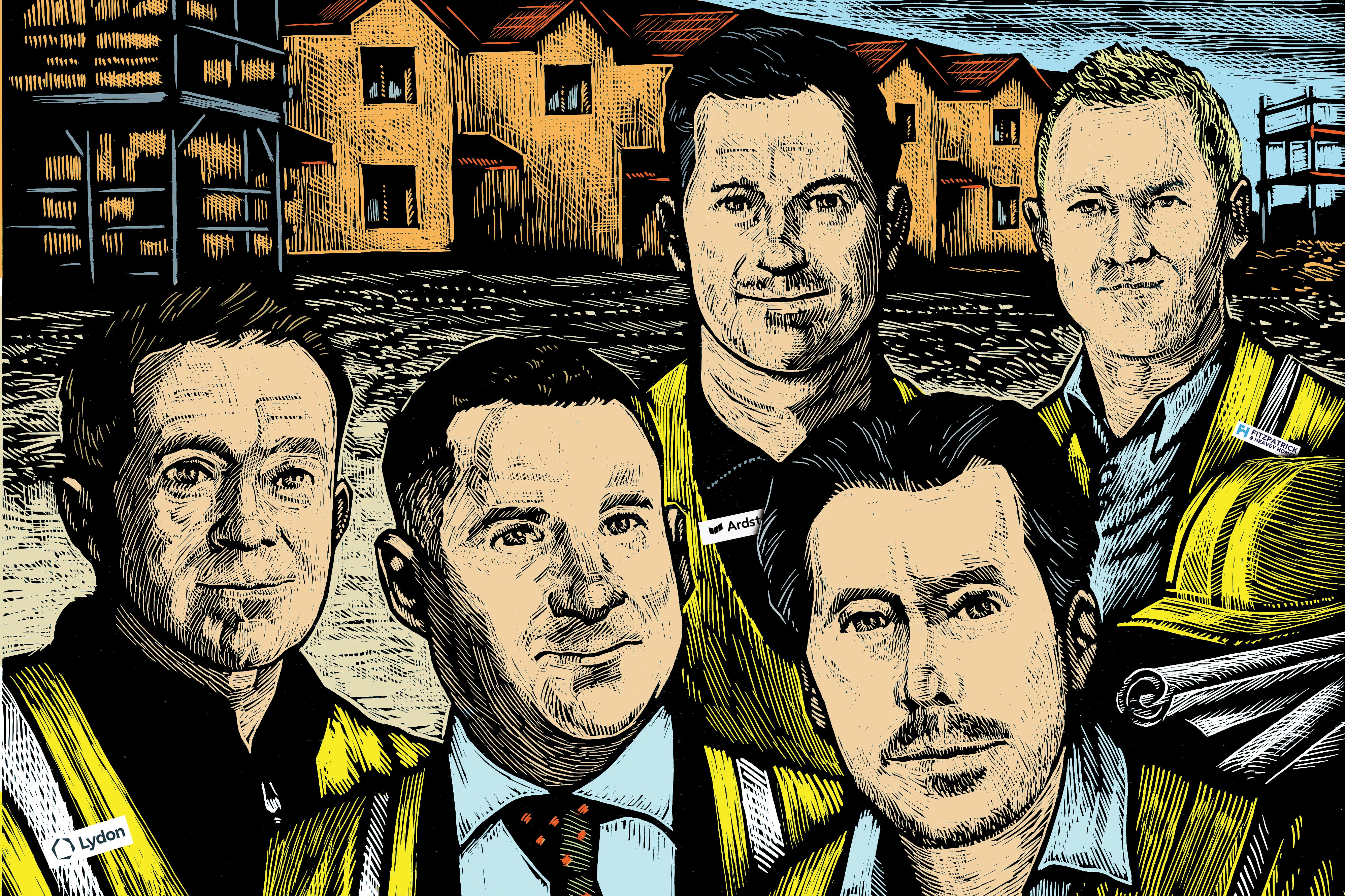
We decry the housing crisis, but invariably communities and the politicians who represent them vote to oppose density or take judicial reviews against every new development.
We call for infrastructure, but resist any form of disruption – see the recent outcry over the MetroLink’s impact on St Stephen’s Green, Dublin. Or read Cliff Taylor’s recent piece on the long series of challenges facing a vital drainage scheme for Dublin in a system weighted heavily towards objectors.
We want leadership, but opt for leaders on whom we can rely to maintain the status quo. We intellectualise the problem, dissecting it committee by committee, always seeing ourselves as the victim but never as the cause.
The true blockage Ireland faces isn’t procedural, it’s psychological.
Our institutions mirror our inner life. A country that distrusts power can only build a bureaucracy that fears decision. And a people afraid of shame design processes that guarantee no one can be blamed. Then we call our hesitation integrity.
We have built a political culture that prizes survival over impact. The goal is not to succeed, but to stay unsullied and to emerge from every controversy untouched, even if nothing improves.
Ireland inherited from Britain both our bureaucracy and our fear of it. Centuries of rule taught us that power was something to be resisted, not exercised; that safety lay in procedure and indecision.
Even after independence, that reflex has survived. The Civil Service has simultaneously become our conscience, process and our protection. It seems that we still distrust authority, even when it’s our own.
Ireland’s problem is not how we plan, but how we feel about power itself. For good historical reasons, we treat it as something shameful, something that corrupts us by contact. And so we build systems designed not to wield power, but to diffuse it. In doing so, to ensure no one person, no one office, can ever move too boldly.
Our structures persist because they protect us from consequence entirely. The overlapping agencies, the judicial reviews, the 1,000-page planning documents – these all exist because we, the public, vote over and over to preserve the systems we have and in doing so have rewarded caution over courage.
Earlier generations, corrupt and imperfect as they were, at least accepted the cost of movement: they built things. We cannot.
The irony is Ireland now has everything it needs to lead again: money, talent, trust. But to cross the threshold into action demands something rarer: courage, the willingness to be blamed, to be wrong, to accept that mistakes will be made, to move on from the culture of blame paralysing political decision-making and to build anyway.
Real courage would mean electing leaders who cut through the procedural fog and accept the anger that follows. It would mean ending our addiction to cost-free virtue and moral spectacle. It would mean recognising that morality is not a branding exercise, but a burden to be carried, with a price to be paid.
Ireland’s paralysis is not a great mystery waiting for another intellectual to decode. We already know what must be done. We just haven’t chosen to bear the discomfort of doing it.
Sinéad O’Sullivan is a business economist, formerly at Harvard Business School where she served as the head of strategy of the HBS Institute for Strategy