
The 1997 satire Wag the Dog may be worth a repeat viewing. Starring Robert de Niro and Dustin Hoffman, it sees the president of the US caught in a pre-election “sex scandal” – ie making advances on an underage girl inside the Oval Office. To deflect media and public outrage, his aide creates a fictional war against Albania.
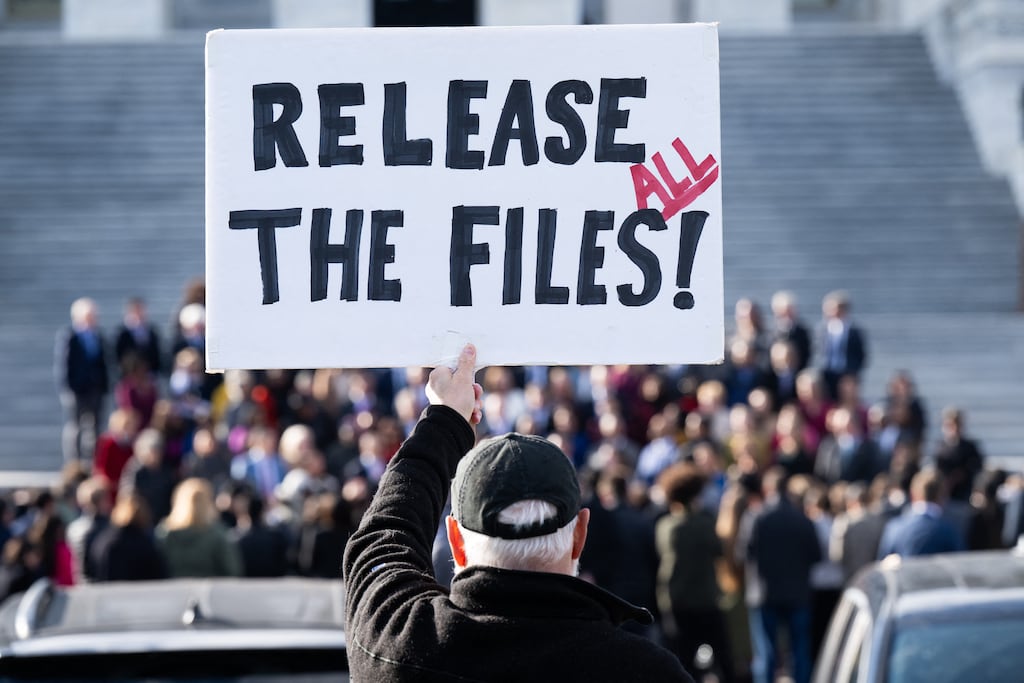
There is no evidence that Donald Trump preyed on underage girls. But faced with a Maga civil war over long-stalled promises to release the Epstein files, the master of distraction has shot into “look over there” overdrive. This includes a massive military build-up – including a $30 billion warship, the world’s largest – off the Venezuelan coast, with the Rambo threat of a land war. His justification that it’s all about destroying the narco-states that are ravaging Americans looks thin placed alongside his weekend pardon for former Honduran president Juan Orlando Hernandez, who once said he wanted to “shove the drugs right up the noses of the gringos” before getting 45 years for flooding the US with 400 tons of cocaine.
None of it makes sense, not even to Magaworld. The frantic conceal-and-distract tactics strongly imply that something a good deal more significant than an oil grab may be looming for all involved.
The only upside to it all is the rather dreamy notion that a shocked and chastened world is finally rising up in implacable rage against abusers and rapists who once felt untouchable.
READ MORE


Which is nonsense of course. Take Ireland for example. Just last year, of the 1,128 people who accessed Ruhama’s services, 216 were victims of human trafficking for sexual exploitation (though still low by comparison with, say, Germany, where an estimated 60 to 80 per cent of women in prostitution are there against their will). What would prospective male clients say if they were told upfront of this intolerable suffering?
We have a fair idea. Back in 2017, Ruhama, the NGO that works with women affected by prostitution, participated in a European campaign that featured posters of a silhouetted woman – “Andreea” – posing seductively alongside a name and number. This appeared in busy locations across Dublin, a few towns and online for 20 days. Callers to the number were greeted by a voicemail of a bubbly eastern European woman who promised a fun, “sensual” time but took a dark turn when Andreea revealed she had in fact been trafficked into Ireland’s sex trade and left no doubt about her fate if she tried to leave. She ended the voicemail by asking the caller to leave a message with their thoughts about what she should do.
She got 759 calls, 314 texts and 37 voicemails in 20 days. Nearly seven in 10 of the callers who heard her message about being trafficked were undeterred. Adult males with ordinary Irish accents, sounding efficient and practised, simply ignored it to seek details of allotted times, services and prices. “Saw your ad. Whatever the story is is okay.” “Hello, are you in Galway tonight?” “Hi baby, I would love to have a bit of fun with you.” More than eight in 10 of 209 contacts inquired what “services” – French kissing? Anal? – she provided; a quarter of them asked for prices. Some nicer types suggested that she leave and go back to her family. One said he was “shocked”, that he didn’t know such things happened because it was all so “glamorised”.
Last week, a cross-sector group led by financial services firm EY, An Garda Síochána, the Banking and Payments Federation, non-governmental organisations including Stop the Traffik, launched a new public awareness programme to highlight the issue of human trafficking in both sexual exploitation and labour. It will also work to prevent, detect and disrupt the financial ecosystem that reaps profits of at least $236 billion (€203 billion) a year, as calculated by the International Labour Organisation. That’s probably a massive understatement. Jenny Pattwell, EY’s lead in risk consulting and financial crime services, has seen estimates of $500 billion, but no one can be certain.
Awareness is a good place to start. Just 67 people in Ireland were officially identified as victims in 2024 by the Garda, who acknowledge that the true number is likely to be multiples of this. In an industry sustained by economics, criminality and hypocrisy, human trafficking will not get the public concern it deserves until people become fully aware of the scale of it.
Since much of the labour exploitation is concealed behind legitimate businesses such as cleaning companies, delivery companies, takeaways, nail bars and car washes, it’s difficult to track. The term “sex industry” camouflages the suffering of young women holed up in apartments and lonely houses, being transported in vans, being used and abused by Irish men and without the language to seek safety, in the words of Det Supt Derek Maguire from the Garda National Protective Services Bureau. The delicate investigative work carried out by the GNPSB in conjunction with the Work Relations Commission deserves more attention.
It serves too many interests to turn a blind eye.
If you have experienced or suspect you have witnessed human trafficking, contact An Garda Síochána at blueblindfold@gmail.com, or 1800 666 111.


