There is something in the air. After a few breathless years of AI boosterism, built upon the hype cycles of blockchains, NFTs, metaverses, Web 3, crypto and the tech industry generally, the world economy, especially the US, is seeing a gargantuan flood of investment. The scale of capital spending in data centres for large language models and other AI processing is so vertiginous that by some measures it accounted for virtually all GDP growth in the US economy in the first half of 2025. This is not growth generated by AI tools – of which there is so far little – but by the construction of enormous warehouses and the installation of tens of thousands of processors in them.
This investment is driven not by democratic decision, but by a small number of hyperwealthy corporations and investors, and sympathetic local and national politicians. The scale of spending and swollen market valuations of tech companies have understandably driven some to worries of an AI-driven bubble, with comparisons drawn to the 2008 financial crash and the dot-com bubble of the late 1990s.
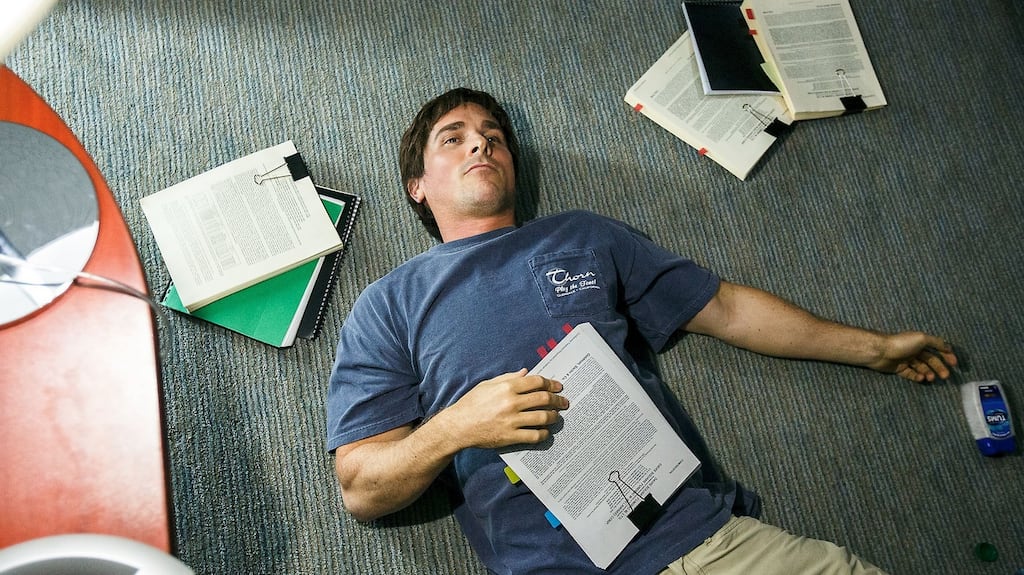
Journalist Ed Zitron has been warning for some time of the myriad warning signals in the tech economy, from astronomical share price to earnings ratios, to the lack of a coherent profit model, to the near-impossibility of constructing enough electrical capacity to power the promised centres. Michael Burry, the hedge fund manager who predicted the sub-prime mortgage crisis (played by Christian Bale in The Big Short), has made high-profile bets against top AI and AI-adjacent companies. Such talk has crept into mainstream discourse, even in Silicon Valley itself, not typically a centre of moderation or humility.
[ AI bubble? Big Short investor Michael Burry’s bold calls often miss the markOpens in new window ]
Nvidia, the GPU developer at the heart of the AI boom, took the unusual step recently of releasing an investor memo arguing that they are not like Enron, the fraudulent energy trading company that became a byword for corporate malfeasance after its collapse in 2001.
READ MORE


If we are indeed on the edge of an earthquake, what will be the political aftershocks? There have been no worldwide, long-lasting economic crashes since the Great Recession, discounting the temporary Covid-19 shock. The recession produced an initial backlash against the financial institutions (and pliant governments and central banks) that had caused it.
Occupy Wall Street was just the most visible in a decade of revolts against establishment power, corruption and sclerosis. It is easy to imagine a tech or AI crash producing a similar reaction against the personalities and corporations of Silicon Valley. In the last decade, the global mood towards tech has soured dramatically, driven by a number of interlinked factors. We have seen the immense deleterious societal effects of social media, from its impact on our mental health to political misinformation campaigns, now supercharged by AI-created content.
[ It’s time to ban the toxic teen popularity counterOpens in new window ]
At the same time, wealthy tech owners such as Elon Musk have taken open political power, spending billions to influence policy and even infiltrating governments themselves. Tech titans have also taken a sharp rightward turn, providing the backbone of surveillance and warmaking on a global scale. On a more personal level, James Walsh wrote in New York magazine last month of the apocalyptic conditions in the job market for Gen Z workers. AI is being used liberally as a justification for mass layoffs, and to obviate the necessity to hire in the first place. The result is an educated, motivated population teetering on total despair, unable to access even low-paid, entry-level work. AI imagery and text, widely derided as “slop”, is generating increasingly visceral revulsion among the average person.
It is difficult to predict the precise political form a possible techlash – a word first coined in 2018 by the Economist to describe what it identified as a rising hostility towards tech – could take, but one physical flashpoint could be the data centre itself. Unlike the financial crash, which left a housing overhang of at least theoretical use, this bubble would leave behind vast, specialised, energy-sucking data centres that can only perform AI-related processing. These edifices have already generated opposition as their immense power draw drives up the price of electricity, derails climate goals and disrupts lives. In a few years, could data centres be the new Wall Street or Tahrir Square?
A bigger question is whether any possible techlash would result in a fundamental power shift away from the tech ownership class. The Great Recession was a catastrophic wealth destruction event for tens of millions of people, and an enormous opportunity for others. In the US, the temporary gains of an upwardly mobile working class were erased virtually overnight. This crisis was used instrumentally as an enormous land grab by asset holders, who ate the carrion of distressed property by the billions. These assets, successfully seized, were then inflated in value through monetary policy, and both accidental and deliberate scarcity.
It is impossible to overstate how good the 2010s were for the wealthy. Those who began the decade vilified for their role in creating the crisis were the ones to profit most from it. There is no guarantee that widespread anger directed at Silicon Valley will be enough to rein in their excesses.
[ The Irish Times view on data centres: how many is too many?Opens in new window ]


