

Owen Cooper, who plays Jamie Miller in Adolescence, recently became the youngest ever male winner of the Best Supporting Actor award at the Golden Globes, following a similar history-making win at the Emmys.
Adolescence terrified parents, with its portrayal of a sweet boy from a flawed but loving, stable family being radicalised by incel ideology to the extent that he kills a schoolmate.
While the acting, direction and cinematography of Adolescence are first class, how does the premise of the series stand up at this remove?
Stephen Graham, who plays Jamie’s plumber Dad, Eddie, and who cowrote the series with Jack Thorne, initially conceived the idea after becoming alarmed by accounts of young boys stabbing girls.
READ MORE


The brutal murder of 14-year-old Ana Kriégel in Ireland in 2018 by two 13-year-olds, Boy A and Boy B, had already brought home to us the reality of such callous cruelty.
[ Ana Kriégel murder trial: The complete storyOpens in new window ]
The similarities are striking. Boy A and Boy B lied systematically and dodged responsibility for their extreme violence, despite coming from loving families.
Adolescence blames Jamie’s violence on what one detective sergeant calls “that Andrew Tate shite”, referring to the repellent and misogynistic so-called manosphere influencer. He is facing civil and criminal charges, including for rape and human trafficking, in the UK.

Jamie espouses the online rhetoric of incels (involuntary celibates), though, such as the false idea that 80 per cent of women are attracted to 20 per cent of men, leaving ordinary men unable to find partners. While incels and the manosphere overlap, they are not identical.
[ ‘Hey @Grok put a bikini on her’: what more could an incel want?Opens in new window ]
Incel ideology is taken seriously by anti-extremism organisations, but until recently, research focused mostly on analysis of online activity, which may over-represent a vocal minority.
In contrast, a study commissioned by the UK Commission for Countering Extremism and carried out by Swansea University engaged directly with 561 participants through detailed surveys.
It found that for the majority of incels, violence and hatred are more likely to be directed inwards rather than outwards.
About 30 per cent of the participants met the clinical cut-off for an autism referral, a rate far exceeding the general population. One in five had experienced suicidal ideation every day for the previous two weeks. And 86 per cent had experienced childhood bullying.
Some 42 per cent of participants identified as people of colour. Incels were more likely to be centre-left than right-wing. Crucially, only a small minority, 5 per cent, which was also far more likely to endorse violence, exhibited extreme right-wing views.
The UK Centre for Research and Evidence on Security Threats suggests that for many young boys, the ideology is a symptom of the anxieties faced during the transition to adulthood rather than a permanent disposition, and most will mature out of it.
Does that mean there is nothing to worry about? Far from it.
In the miniseries, Jamie’s parents, at a moment of extreme anguish, wonder how they made Jamie but also made his kind, sensitive sister, Lisa (Amélie Pease).
None of us truly makes our children. The best we can hope for is to soften their edges.
Parents are still vital, especially in an era where our children constantly see individuals achieving immense and unaccountable power, all while displaying what is called the dark triad: narcissism, Machiavellianism, and psychopathy.
Life is not easy for young men or young women, but chronically online culture pushes them further apart into ideological bubbles. Those bubbles generate immense profits for a tiny cadre who seem to care less about the collateral damage.
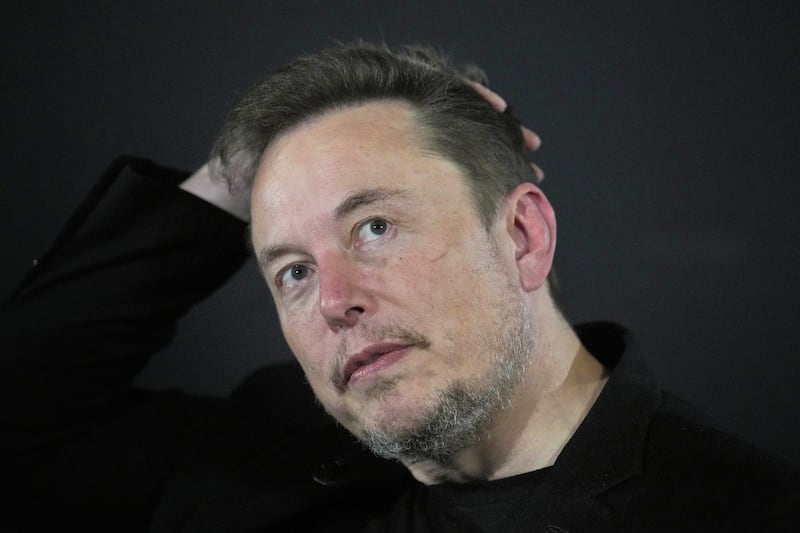
One only has to think of Elon Musk’s casual slashing of USAid, causing harm and death to millions, or his laughing emojis in response to complaints about his odious AI application Grok stripping women of their clothes and basic dignity.
It emerged after the trial of the young boys convicted of Ana Kriégel’s murder that Boy A possessed more than 12,000 images of violent, misogynistic porn.
In Adolescence, Jamie says casually that “everyone sees porn”. This is never explored, perhaps because adults are terrified of seeming like prudes.
But if in porn, sexual violence and dominance, including strangulation, are normalised, it is not prudery to believe that Boy A being immersed in it was a factor in his cruel crimes.
Individuals and families need to be more aware, for sure, and so do schools. The school portrayed in Adolescence is completely ineffectual, not just because of the absence of enforced smartphone or positive behaviour policies, but also of a critical incident policy to support students and staff. It was such a contrast to the sensitive, supportive ways Irish schools respond to tragedy.
[ Adolescence in teenagers’ own words: ‘Parents have absolutely no idea’Opens in new window ]
One thing is certain. Making boys and young men feel even worse about themselves is no solution. Constantly pairing the words “masculinity” and “toxic” while failing to provide places to explore better options is only likely to drive them into apparently sympathetic online spaces, which reinforce a black-pilled nihilism.
Adolescence makes for tense, riveting viewing, but ultimately, it falls into the same trap as some of the adults in the show: simplifying complex issues and failing to see that the problem is far wider than individuals and families.


