Failure was not an option. The difficult but welcome decision of EU leaders early on Friday morning that 24 states would borrow some €90 billion against the union’s budget to meet Ukraine’s needs for the next two years was not only a crucial lifeline to the embattled country, but a critical test of the EU’s own capacity to act. It was required to demonstrate its ability to use its economic heft and to eventually make a decision, following an unwieldy process which required its leaders to back away from the original plan at the last moment.
“The absence of a decision would have been a disaster,” French President Emmanuel Macron told journalists.
However, the means were not those proposed by the European Commission. Instead of a “reparations loan” raised against sanctions-frozen Russian assets in European banks, predominantly Belgian-based, the EU will collectively borrow the cash on the capital markets, secured against untapped spending in the EU budget.
Kyiv would only have to repay the cash after it received reparations from Russia – which of course may never happen. Should these not be forthcoming, the leaders agreed that the Russian assets would then be tapped.
READ MORE


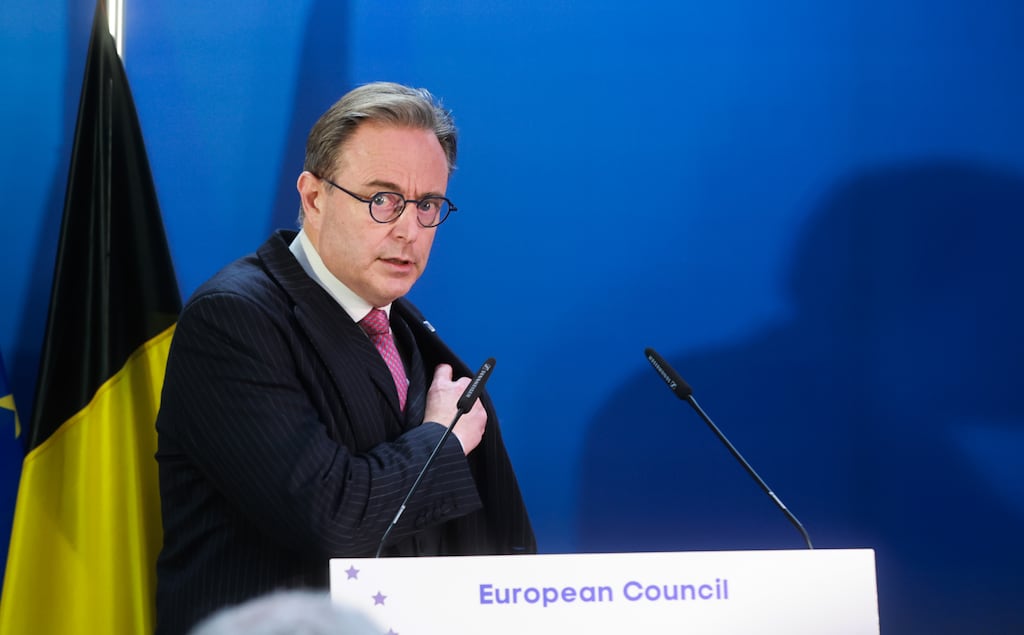
Belgium’s right-wing nationalist prime minister Bart De Wever strongly opposed the original plan. He made the case, over two months of difficult talks, that market confidence in European banks demanded that overseas deposits should be untouchable, and, ultimately, the leaders were unwilling to underwrite potential Belgian losses should Russia successfully sue.
De Wever was able to count on the backing of Hungary’s Putin-friendly Viktor Orban, and Eurosceptic leaders, Czech prime minister Andrej Babiš and Slovakia’s Robert Fico. They were only brought on side by the promise their countries would not be required to contribute financially to the loan. Orban yesterday boasted of having secured the exemption: “Hungary remains the voice of peace in Europe and will not let Hungarian taxpayers’ money be used to finance Ukraine.”
Despite continuing frustration and anger at Orban’s obstructiveness, the union’s leaders remained unwilling to push through decisions by qualified majority voting, breaking from consensus voting, even though this would have been legally permissible. To do so would have meant unacceptably isolating Belgium.
The solution they found in the early hours to the loan deadlock was also, nevertheless, deeply unpalatable to many member states. Hawks like Germany have long opposed the idea of collective EU debt, or “eurobonds”, fearing that borrowing by the less financially responsible would drive up interest rates. Post-Covid agreement to such borrowing for reconstruction was supposed to be a one-off. Not any more.