An uneasy calm has settled in Fianna Fáil in the wake of Tuesday’s showdown at the parliamentary party.
Taoiseach and party leader Micheál Martin may have faced down his critics and the rumoured motion of no confidence has failed to emerge, which is itself a statement of where matters stand. If the rebels had the numbers, they would have moved against the leader.
But it could hardly be said that the party has rallied around its leader to beat back a challenge decisively. The party is sticking with Martin because nobody has, as yet, offered it a viable alternative.
Rebels and loyalists alike watch potential successor Jim O’Callaghan, noting that before the Tuesday meeting he gave Martin steady, though hardly exuberant, support in an interview in The Irish Times. Still, for many in the party, the question seems to be: will Martin depart before the European presidency, which takes up the second half of next year, or after it?
READ MORE


Commentator and Irish Times contributor Gerard Howlin has previously remarked that conspiracy is not suited to remote working; it takes place in person around Leinster House and its environs.
It’s also true, though, that much of it takes place in the shadows; off-the-record briefings create the conditions for rebellion to fester, undermining the leader’s authority and spreading the expectation among TDs that a heave is under way. This is just how politics talks to itself sometimes.
But ultimately rebellion must show its face. Fianna Fáil rules dictate that while any no-confidence motion in the leader is conducted among TDs only (not the wider parliamentary party) by secret ballot, the 12 names required to trigger a motion would be public.
Martin’s popularity with the grassroots and the broader party apparatus has in the past served as a bulwark for his defence; whatever personal animus TDs might have against their leader, they didn’t want to be seen by their local organisation to be plotting to take down a Fianna Fáil Taoiseach.
His grassroots popularity has been dented by the presidential debacle, for sure. But it is unlikely to have been completely eliminated. TDs will be carefully sampling the views of their local supporters over the Christmas period.
It was noticeable this week that so few of Martin’s TDs were willing to come out and publicly declare their support for the leader. True, they weren’t coming out and saying he should go, either. Many are sitting on their hands. That has to be some sort of a warning for the party leader.
On Wednesday, in the wake of the parliamentary party meeting the previous night, The Irish Times contacted all of Fianna Fáil’s TDs, Senators and MEPs to ask if the presidential election should be put behind the party or if there are still questions to answer.
We also asked if they supported Martin staying on as leader of Fianna Fáil, including during Ireland’s presidency of the Council of the European Union next year and into the next general election.
Of the 71 parliamentary party members, excluding Mr Martin himself, just 13 offered on-the-record responses.
Eleven of these indicated their belief that the party should move on from the presidential election and confirmed their support for Mr Martin staying on as leader.
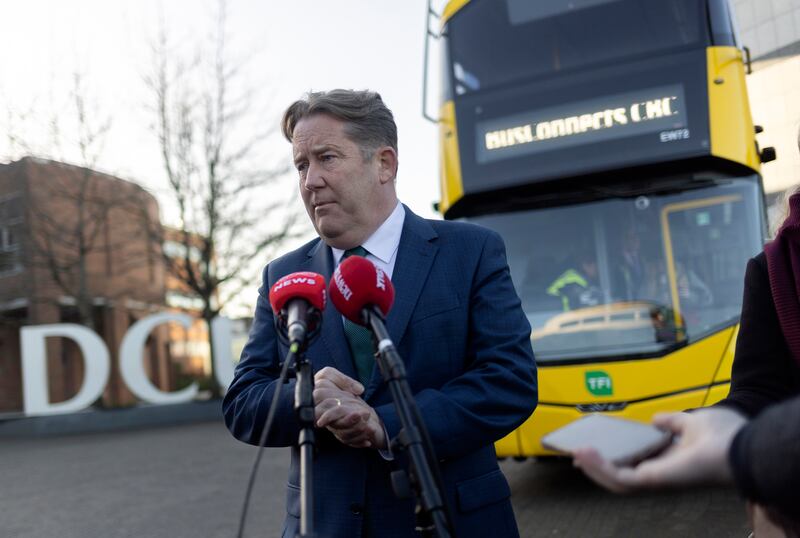
Those that backed Mr Martin were Cabinet members Darragh O’Brien, Norma Foley, James Browne, Dara Calleary; Ministers of State Mary Butler and Niall Collins; Seamus McGrath TD; MEPs Barry Andrews and Cynthia Ní Mhurchú; and Senators Joe Flaherty and Fiona O’Loughlin.
Just one TD, Carlow-Kilkenny TD Peter “Chap” Cleere, stated the view that Martin should not lead the party into the next general election.
He said there were “still lots of questions to be answered [about the presidential election]” and “without Jim Gavin’s version of events the report is flawed”.
Cleere said Martin should not continue as party leader “long-term”, adding: “It’s not about Micheál or about one person – it’s about the party.”
Other Fianna Fáil TDs who are viewed as being among the rebels in the party, including Cork East’s James O’Connor and another Carlow-Kilkenny TD, John McGuinness, both of whom have previously publicly questioned the future of Mr Martin’s leadership, did not respond to the survey.
Wicklow-Wexford TD Malcolm Byrne did not specifically respond to the questions on whether Martin should stay on as party leader.
He said the presidential election was “a disaster” and it is “critical” that the recommendations for party reform in the election report are “taken seriously”.
Byrne said he has “enormous respect” for the Taoiseach and his achievements, but claimed “there is a disconnect between some at the top table and the backbenches and the organisation. That really needs to be addressed.”
He said delivery in areas such as housing and disability services was a bigger issue for him, and “the Taoiseach has to lead from the front on this and we need to see real progress soon”.
Among Martin’s supporters, O’Brien, the Minister for Transport, said the presidential election “should be put behind us now” and Martin “should and will” lead the party into the next general election.
Fianna Fáil whip and Minister of State Mary Butler said the party should “absolutely” put the “whole saga” of the presidential election behind it and be “able to move on” as she expressed her support for Martin.
Ní Mhurchú, who had hoped to enter the presidential election race herself at one point during the summer, said “the focus now must be on learning from these errors and fully implementing the report’s recommendations” and the party “should move on”.
Browne, the Minister for Housing, welcomed the completion of the report on the presidential election and that it had been discussed at Wednesday’s parliamentary party meeting in “a robust and open way”.
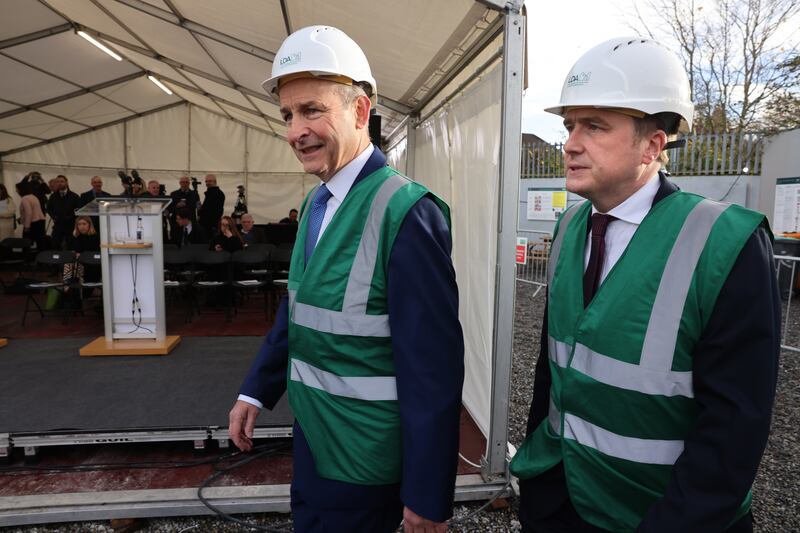
He added: “As far as I am concerned, there is no question whatsoever over his [Martin’s] leadership. It’s important to maintain perspective and balance.
“We have had four elections in the last 13 months and Fianna Fáil emerged as the largest party in three of those, led by Micheál Martin.”
Browne backed Martin to lead Fianna Fáil into the next general election and said there was “a laser focus on the real issues that genuinely matter for ordinary people” including responding to the housing crisis.
“I am being relentless in tackling the housing crisis, and I know that work has Micheál Martin’s full support – that’s what matters most right now.”
Most of Fianna Fáil’s parliamentary party members did not respond to attempts to contact them. Others were not prepared to speak on the record.
Three Fianna Fáil parliamentary party members who said off the record that they wanted to put the presidential election behind them and supported Martin as leader added that they did not believe he would or should lead the party into the next general election.
They explained that the election may be a number of years away and a change may be needed before then. One of them added that they believed this was a position that Martin himself would understand.
It seems certain that the question of Martin’s leadership will resurface in 2026.