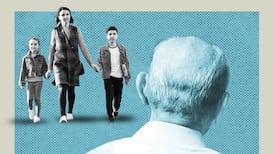
People who have sought international protection in Ireland are beginning to become a “significant factor in the growth of homelessness”, Taoiseach Micheál Martin has said.
Mr Martin said while Ireland has to understand how important migration has been to our economy and society, there is “no doubt” that over the last two years it has “played a part” in the issue of housing.
“I’m very conscious that migration has been central to economic growth in Ireland, and there’s been very good societal integration,” Mr Martin told The Irish Times, in an interview in his home constituency of Cork.
The Taoiseach had just returned from a trip to Lebanon, where he met a young person who was born in Syria who is now serving in the Irish army. He added that people of all nationalities also work in Ireland through multinational companies.
READ MORE


The Taoiseach said the Cabinet subcommittee on housing had been given a presentation two weeks ago from the The Local Government Management Agency, which explained the composition of those on homelessness lists.
“There’s no doubt in the figures for the last two years, migration has played a part in housing. It’s impacted on our housing. And when one says that, one gets accused of dogwhistling. I’m not, it’s just a fact,” Mr Martin said.
“If you look at the figures, maybe up to 50 per cent could be non-EU, non-EEA now and some of those could have been in the country for quite some time, working in many instances.
“People coming out of direct provision, particularly in the Dublin region, are beginning to be a significant factor in the growth in homelessness. So they come out of direct provision, they could be there three or four years, they could be legally assessed to be resident in the State and all of that. But when they come out of direct provision, there’s family reunification, and so therefore that is a factor.”
Mr Martin added that separation and relationship breakdown was also a factor, “so there’s a variety of factors that give rise to it, but if you stand back from it all, our population has increased very significantly. There are pressures, and our housing output is not at the level it was in the 2000s and it needs to get to 50,000 to 60,000 houses per annum.”
Mr Martin also said the Government still needs to “socialise” the case for dismantling the Triple Lock with the public. The Triple Lock refers to the permission that is required from the Government, the Dáil and the UN Security Council before more than 12 Irish soldiers can be sent on an overseas mission. The Government believes that countries such as China and Russia should not be allowed to veto Irish missions.
Mr Martin said a follow-up mission to Unifil in Lebanon, which could focus on training the Lebanese defence forces and demining, is one example of a mission that could be blocked. “We couldn’t do that now, because of the Triple Lock,” he said.
He also said that if there was a peace settlement in Ukraine without a UN Security Council resolution, Ireland “would like” to play a role in ceasefire monitoring. “Without a Security Council resolution, we couldn’t participate in that,” he said.
“If we defend the Security Council method, into the future the opportunities for peacekeeping will diminish. We do need to socialise that more with the Irish public.”
Asked if more work needed to be done on that before legislation to unravel the Triple Lock could be brought forward, Mr Martin said “yes”.
The Taoiseach was speaking one week after a review of his party’s disastrous presidential campaign was finally published. Mr Martin said he was “hurt” and “taken aback” by commentary that had suggested that members of his top team had known more about Jim Gavin’s issue with a former tenant then had been shared with the Fianna Fáil parliamentary party.
“I was taken aback by some of the commentary, very taken aback by the commentary the weekend before the release of the report, because the notion that somehow we had kept something back from the party in respect of Jim Gavin was just inconceivable to me. That hurt a bit,” Mr Martin said.