

The global giants with their outsized corporation tax contributions may command the headlines, but SMEs are still the backbone of the Irish economy. These companies – classified as businesses with fewer than 250 employees – make up 99.8 per cent of all enterprises, employ 67.9 per cent of the workforce, and generate more than 43 per cent of turnover in the economy.
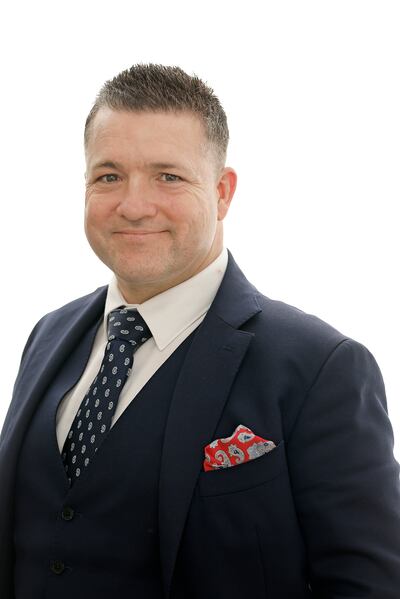
“These businesses together with family businesses drive employment, innovation, regional development and social inclusion in all our communities, making them critical for Ireland’s future sustainable economic growth,” says John Dillon, partner and leader, PwC Private.
PwC’s recent Irish family business survey revealed that 83 per cent of these businesses expect robust sales growth over the next two years, he adds. “They are not forced to give immediate return to shareholders on their investment. This patience or ‘patient capital’ shows up in subtle ways, often visible in reinvestment decisions, in owners deferring their own salaries, and in a commitment to employees and local communities.”
‘Businesses can’t grow if owners can’t take their heads out of the weeds to see where they are going’
— Neil McDonnell, ISME
That approach by owners is critically important, according to Niall Savage, head of private enterprise at KPMG in Ireland. “Entrepreneurs play a crucial role in building companies, creating jobs, and fostering innovation that strengthens communities. Despite ongoing tariff uncertainties and escalating costs, these businesses exhibit remarkable confidence and optimism – our recent Enterprise Barometer showed 79 per cent of entrepreneurs express confidence in growth prospects for the coming year.”
READ MORE


Despite their highly significant contribution to the economy and society, there is a sense that SMEs are taken for granted by policymakers and others. Small Firms Association (SFA) director David Broderick points to the disproportionate impact of new regulations on SMEs.

“If a change in regulation costs €1 per employee for a large business, it could be €10 for a small enterprise,” he says. “We have lobbied successfully on sick leave and other areas, but the regulatory avalanche of 2023 and 2024 is still with us. It’s very difficult for a small business to maintain any bit of margin. There is a feeling of exhaustion and weariness among small business owners. The drive and passion of small business owners is incredible, but everyone has their breaking point.”

Pointing to the fragile condition of many small businesses, ISME chief executive Neil McDonnell notes some interesting patterns in Revenue figures. “The figures for 2023 and 2024 show that more than half of the companies making a corporate tax return had nil or negative profits,” he says. “The number of businesses making nil or negative returns was up 6 per cent in 2024. We’ll be keen to look at that again this year. If that trend continues, the sector is in trouble.”

PwC’s Dillon believes the sector needs more support from Government. “Ireland has been highly successful at developing an economic strategy focused at attracting foreign direct investment,” he says. “The country benefits hugely from this. But we are arguably too reliant on this strategy. Equal weight or more focus is needed to nurture our domestic business base.”
McDonnell agrees. “We look after FDI very well, but we don’t really look after SMEs at all,” he says. “The Programme for Economic Expansion in 1958 reduced trade barriers, removed protectionism, and brought in FDI. We backed the right horse and kept backing it. But the world has changed. ISME has spent a lot of time talking about the need for Whitaker 2.0, which would focus more on SMEs.”
The SFA is also looking at a new strategy. “We are now thinking about small business owners,” he says. “The small business owner is the one who’s taking all the risk and begging, borrowing and stealing to ensure everyone gets paid. We are getting emails at 8pm on a Saturday because that’s when the business owner has a chance to do those things. The pressure on margins is so great, business owners have to get back to working in the business again, not on it. We won’t grow the economy if we are doing that. Businesses can’t grow if owners can’t take their heads out of the weeds to see where they are going. We have seen a touch of that with the SME test. Minister Burke brought in the ‘think small first’ policy. We suggest adding an extra step, think small business owners first.”
According to Dillon, to build a thriving domestic business sector, the Government should focus on three areas – access to investment capital, fostering multi-generation domestic ownership, and establishing an Accelerating Domestic Enterprise Taskforce.
“In terms of accessing investment capital, there’s a critical need to build a financial and advisory infrastructure that facilitates access to both seed and growth capital,” he says. “This is the life blood for start-ups, but critically for scaling enterprises, a radically different view on how such enterprises and owners could access major capital more easily is needed. Look at how the German government is building an investment fund to fuel their domestic economy that is co-funded through a combination of exchequer funding, alongside domestic and international private funds.”
He notes the number of strong Irish companies being acquired by private equity or international trade buyers before they reach their full potential. “At a practical level, one of the clearest solutions is reforming employee ownership schemes (ESOTs), which could allow founders without a successor to exit without selling to foreign buyers, keeping ownership in domestic hands. Beyond ESOTs, there should be more meaningful entrepreneur relief, mechanisms to allow founders to take money off the table mid-cycle as well as stronger strategic support from the State.”
He believes the same urgency, weight and focus exhibited by the Accelerating Infrastructure Taskforce should be applied to the creation, scaling and development of multi-generational family enterprises. “This taskforce could focus on identifying all the barriers that prevent domestically owned businesses from scaling at international levels, benchmarking the supports available in competitor countries, and identifying the enabling infrastructure needed to truly create a case for Ireland being the best location to start, grow and retain a business of scale. Why not take that opportunity now? Why wait?”


