

What if moving to a smaller home in later life was less about giving something up and more about deciding how you want to live?
The idea of rightsizing is gaining ground as people look beyond the traditional options for housing in retirement. Purpose-built communities for older adults are offering independent living in homes designed with later life in mind, alongside security, shared amenities and opportunities to stay active, and, for those who want it, a ready-made community.
It reflects a wider change in attitudes to retirement itself, according to Laura Farrell, chief executive of the Retirement Planning Council, the not-for-profit organisation that helps people to manage the transition from work into retirement. “One of the biggest changes we are seeing is that people are increasingly viewing retirement as a new phase of life rather than an end point. Retirement planning today extends far beyond financial preparation, with greater emphasis on lifestyle, purpose, wellbeing and social connection,” she notes.
Farrell says many people now envisage an active retirement that may include learning, volunteering, travelling, hobbies or continuing with some form of paid work. Where and how they live can therefore become an important part of planning for that next stage.
READ MORE


At Heritage Village, which describes its offering as luxury homes designed for senior living in Killenard, Co Laois, sales manager Maurice Harrington says the inspiration came from looking at alternative accommodation models in countries including Australia and New Zealand. For Harrington, rightsizing is about considerably more than square footage. “I prefer the term ‘rightsizing’ than ‘downsizing’ but I feel that the requirement extends far beyond the size of the house,” he says.


Heritage Village homes have been designed to accommodate reduced mobility, whether that is a consideration now or becomes one in the future. They are single storey, with oversized doors, wet rooms and no steps. Accommodation ranges from one-bedroom homes from 73sq m to two-bedroom homes ranging from 79 to 130sq m. The development is aimed at people who want to continue living independently but value security and the availability of support if required. Harrington says that while motivations differ, the most common reasons prospective residents give are “house suitability and manageability plus security and company”. An amenity building at the centre of the village is planned to include a gym and exercise room, administration area, coffee shop or restaurant and private function room. Residents will also have direct access to the 5km lit walking track bordering The Heritage Golf Resort.
Harrington says conversations he has with prospective buyers frequently centre on homes that have become difficult to manage, whether because of ongoing maintenance, gardens, heating or stairs. Security can also be a concern, while some prospective residents have children living overseas and are looking for greater opportunities for company and social interaction. The nearby Portarlington train station provides another connection for residents.
The decision to leave a family home is not necessarily being left until circumstances dictate it. Harrington says some couples are moving before an “event” occurs, while a fall, burglary or other incident can prompt others to reconsider their living arrangements.
Remaining independent
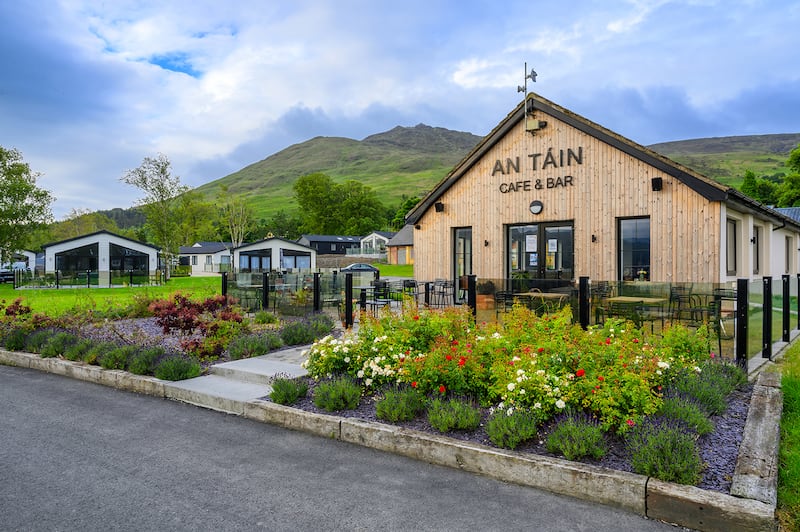
On the shores of Carlingford Lough, Baile Beag Coastal Retirement Community offers another model for over-50s. The family-run development opened its first lodges in 2022 and an on-site cafe followed in 2024. Its lodges are sold out, with a waiting list, while new apartments are being offered on long-term rental leases.

Director Caoimhe Fearon says Baile Beag began with her mother Rosaleen’s ambition to create something different from traditional retirement living, where people could remain independent while being part of a community.
For Fearon, the people considering a move are often thinking ahead. “It’s that idea of less maintenance, more security, and really the connection of being surrounded by like-minded people and choosing a lifestyle that allows them to live their life to the fullest,” she says.
The coastal location also lends itself to an active lifestyle, with the Carlingford to Omeath Greenway in front of the development and the Cooley Mountains behind it. Yet Fearon says that what residents value is not simply the property itself. “It’s nothing really to do with the lodges, whether it’s the lodge, whether it’s their apartment, whatever it is; it’s about the community and what it can provide here on site as opposed to the home itself.”
Events include summer barbecues, pub quizzes and organised trips, although residents can participate as much or as little as they choose. A wellness and day retreat is also planned, offering fitness and movement classes, social activities, meals and wellness experiences to people who may not want, or be in a position, to buy or rent a home at Baile Beag.

Fearon also rejects the idea that choosing an over-50s community necessarily means withdrawing from an active life. “Our site is very active. It’s for active adults,” she says. At the same time, she says people value knowing that support could be available in the future if their needs change.
How you want to live
That balance between independence and peace of mind sits at the heart of the rightsizing conversation. As Fearon puts it: “I love the term rightsizing because really it is so much more than downsizing your home. It’s about choosing where you want to spend time and how you want to live.”
For some people, of course, the right choice will be to remain exactly where they are. Farrell stresses that retirement villages will not suit everyone and that maintaining existing community ties or continuing to live independently may better support some people’s wellbeing.
Whatever the housing choice, she says planning for the social side of retirement matters. Leaving work can mean significant changes to routines, relationships and identity, and people may not always anticipate how those changes will affect them.
“What is important is that individuals consider how they will stay connected, engaged and purposeful in retirement,” says Farrell, “as social connection is a key element of a positive retirement experience.”


