Trace the trail of any Irish athletics success story of modern times and it’s clear that attitude can often matter as much as actual form. Sometimes it even feels like it’s all in the head.
So, whether or not things go exactly to plan at these World Indoor Championships, Kate O’Connor has clearly come to Torun with that perfectly positive mindset. The podium positions in Sunday’s pentathlon showdown are sure to be delicately balanced, as they always are in any multi-event discipline, but there’s no fear whatsoever O’Connor won’t be giving it her absolute best. Can’t ask for any more than that.
“There’s definitely not a medal guaranteed,” O’Connor said of her chances, where she once again faces off against world heptathlon champion Anna Hall from the US. “But I will be turning up fighting for the gold.”
Maybe it’s only natural for some athletes to weigh up each championship in different ways. With her perfect set of four medals from her four multi-event appearances last year, O’Connor’s ability to repeatedly go faster, higher, stronger – indoors and then outdoors – has fast become her trademark. As is her knack of peaking when it matters most.
READ MORE


O’Connor also came away from the World Championships in Tokyo last September, where she won the silver medal behind Hall, nursing a knee injury. That might well have taken some of the urgency or even need off this indoor season, although O’Connor also realises that championship medal prospects don’t always come around as quickly, or as often, as you would like.
It didn’t take long before Mark English also set the right tone in terms of attitude. After winning his 800m heat at lunchtime on Friday, English was asked if his approach to racing in Torun this weekend was somehow sharpened by his enduring quest, in the same week he turned 33, to make a first global final, indoors or outdoors.
“For me every championship I go to is the most important, it doesn’t matter what level it’s at,” he said. That’s particularly telling, because with his five European Championship medals over 800m – three indoors and two outdoors – English is already as well decorated as any other male Irish athlete. Still, this might well be his last chance to add a global medal.
Sometimes the most important thing in any successful sporting career is also knowing when to strike when the iron is hot. There is still no better evidence of that than Ireland’s medal return from the first World Indoor Championships, back in 1987, a glorious weekend which, in truth, may never be surpassed.
That Irish team consisted of Eamonn Coghlan and Marcus O’Sullivan, both in the 1,500m, and Frank O’Mara and Paul Donovan, both in the 3,000m. Four athletes, two events, and they came away with two gold medals and one silver – plus a still nagging question of what else might have been.
The 1987 World Indoors were staged in the old Hoosier Dome in downtown Indianapolis. All four Irish athletes had already made a name for themselves on the US indoor circuit, particularly Coghlan, already dubbed the Chairman of the Boards, and all four weren’t going to miss their chance to leave a mark on the global stage.
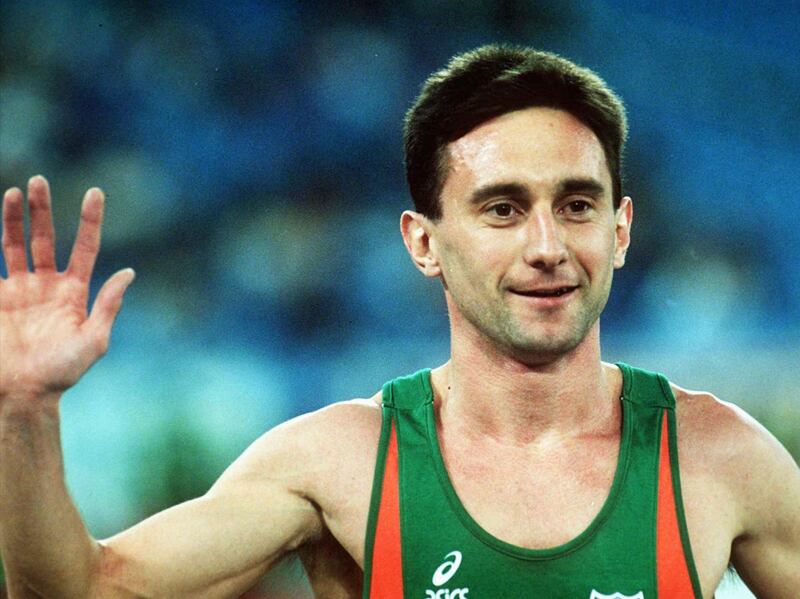
Making the 1,500m final should have been the least of Coghlan’s worries, only he tripped and fell in his heat. He recovered to finish fifth, one place outside qualifying. A subsequent appeal to have him included in the final was eventually rejected – and it turned out Coghlan never got to race again at the World Indoors.
In his absence, O’Sullivan won the gold medal, outkicking José Abascal from Spain, the Olympic bronze medallist. The following day, O’Mara and Donovan went better again to win gold and silver in the 3,000m, O’Mara unleashing an awesome kick down the backstretch, with Donovan making up three places in the last 100m.
Two years later, at the 1989 World Indoors in Budapest, O’Sullivan and O’Mara both returned to make the most of the next chance. They also discovered an unexpectedly large green army of Irish supporters inside the Budapest Sportcsarnok, most of whom had made the trip for the Republic of Ireland’s World Cup qualifier against Hungary that same week.
O’Sullivan won his second gold medal in the 1,500m, before O’Mara ended up fifth in the 3,000m, his title taken by Said Aouita from Morocco. As it turned out Ireland’s 0-0 draw against Hungary also kept alive their chances of making Italia 90, and the rest is Irish football history.
Another two years on, and O’Sullivan and O’Mara were back again at the 1991 World Indoors in Seville – with O’Mara taking all the glory this time when winning back his 3,000m title in 7:41.14, the then fourth-quickest time in history.
O’Sullivan then won a third World Indoor 1,500m gold in 1993, which means between them O’Sullivan, O’Mara and Donovan have won six of Ireland’s only 11 World Indoor medals.
Two years ago, O’Mara chronicled his long running battle with Parkinson’s disease with unflinching honesty in his book Bend Don’t Break, A Memoir of Endurance. “While a Parkinson’s diagnosis isn’t a death sentence,” he wrote, “it is a life sentence with no chance for parole.”
[ ‘A life sentence with no chance of parole’: Frank O’Mara’s unflinching memoirOpens in new window ]
Now aged 65, O’Mara can have few regrets about his running career, and even if his three Olympic appearances didn’t go to plan, his two World Indoor gold medals lit up Irish athletics at a time when global medals were rarely being won. O’Mara also retired as one of only three Irish men to win the American NCAA 1,500m title. The other two are Coghlan and Ronnie Delany. That’s how good he was.
By the time O’Sullivan retired from the international stage in 1998, he’d clocked up 101 sub four-minute miles, the third most in men’s distance running history. When asked what his secret behind that longevity was, he replied, “you just have to keep striking while the iron is hot”.