

It was one of Irish rugby’s great Twickenham days, the performance and the result equally satisfactory. Everyone has their favourite memory, Simon Geoghegan’s try in 1994, or Ireland beating Clive Woodward’s world champions in 2004, spring to mind.
The unexpected nature of the win for those outside the camp made it all the sweeter. England started promisingly but quickly ran out of ideas and composure and Ireland punished them with a superb display reminiscent of better days.
Commentating on a World Cup warm-up match in the Aviva in August 2023, one image stayed with me. A camera captured the energy in the Ireland dressingroom at half-time, small groups dotted around the place, coaches, players, analysts, heads together, talking and searching for solutions.
The cameras had a similar access to the English one at Twickenham last Saturday. It couldn’t have offered a greater contrast. Players sat in cubicles, quiet, passive. Steve Borthwick stood at the top of the room, talking at them. No communal solutions, just orders.
READ MORE


Two very different coaching styles. One that focuses on the person behind the player, trying to get the best out of them. The other on stats and outcomes and how to mitigate risks along the way. The player is secondary in that environment and when things don’t go well, they know it.
You can have all the analysis minutiae you want but if you can’t connect to the player in that moment, it’s nothing more than a jumble of numbers. Honesty is an integral part of a player-coach relationship, the healthy tension and respect as everyone pushes for the same goal.
Ireland played with clarity; decisions made on instinct rather than instruction. There wasn’t an overload of whiteboard rugby. You cannot script a quick tap and go. You cannot prepare the specific offload that unlocks a defence. What you can do is encourage players to trust one another and react.

Borthwick’s England played like a team drilled to within an inch of their lives. It was there to see in the victory over Wales, but when they needed plans B and C against Scotland and Ireland, they could not shake off that rigidity. That level of structure kills instinct. England, ponderous and predictable, waited for instruction that never came.
Ireland won so many of those zero talent moments. Rucking was one. There’s a technical aspect, but desire is the primary driver. Win the space early, be accurate and aggressive. Work rate was another area in which the visitors dominated their hosts.
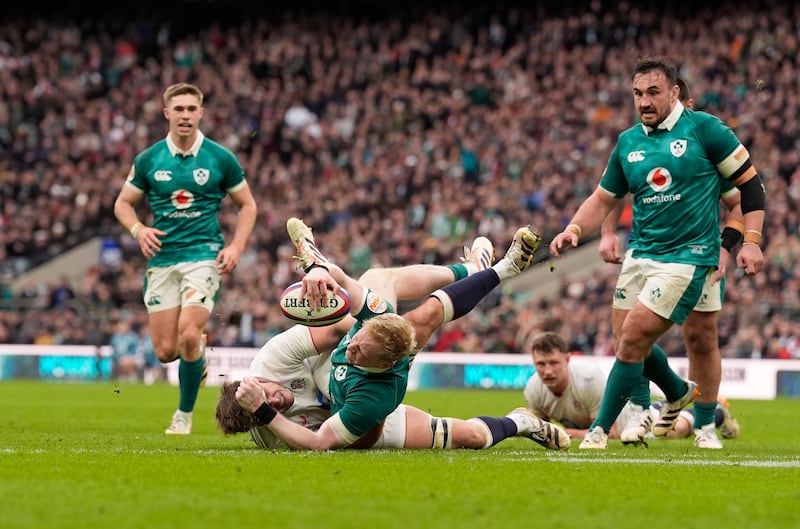
Rob Baloucoune and Tommy O’Brien combined to make a break in the build-up to Jamison Gibson-Park’s try but they also secured the ensuing ruck by clearing out efficiently. There are other examples. Dan Sheehan blitzed Ollie Lawrence at a ruck following Stu McCloskey’s break, a crucial moment in Baloucoune’s try.
Follow our rugby WhatsApp channel
Find the channel here.
Ireland’s dominance at the breakdown went much further than just securing possession, it ensured a high tempo and the knock-on effects were central to winning the physical and mental battles. Gibson-Park thrives on quick ball and everyone else benefits. Jack Crowley had the time and space to demonstrate his talent in running the game. Ruck speed is the foundation stone of performance.
England have some very good players. A dozen victories in a row before the Scotland game is a run not to be sniffed at. But last Saturday’s events got me wondering whether those wins came because of Borthwick, or despite him. Time will reveal the answer.
England’s production line produces players in far greater volumes. When something isn’t working, Borthwick can reach into the pool and pull out alternatives. Andy Farrell cannot. Ireland’s talent pool is more modest, one that can be decimated by injuries as we found to our cost at the 2015 World Cup.
So, what does Farrell do instead? He agitates, removes any sense of entitlement. Dropping Gibson-Park against Italy was not a punishment. It was a reminder. Nobody is indispensable. And crucially, when Gibson-Park was restored to the team at Twickenham he delivered one of his finest performances in green.
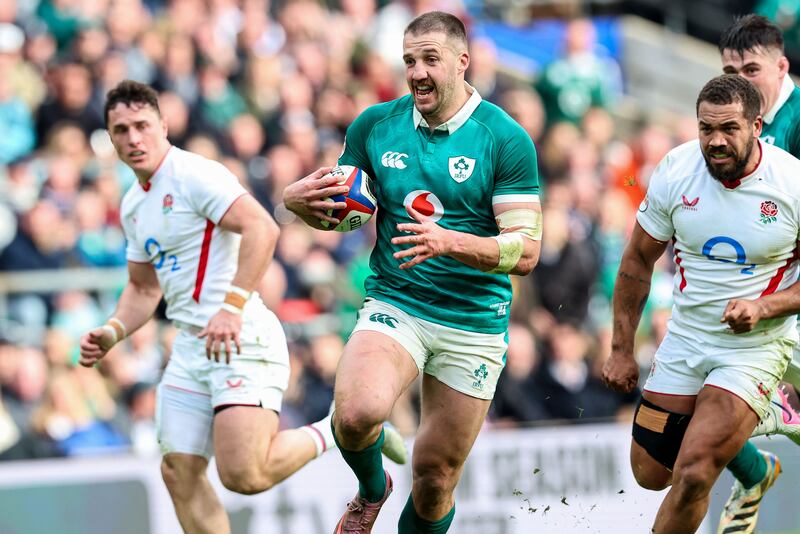
That is not a coincidence. That is a coach who knows his players well enough to push exactly the right buttons. The same with Caelan Doris, who produced his best performance of the season. Farrell invested trust in Jamie Osborne to discharge the fullback role and was repaid handsomely.
Stu McCloskey is a shining example of a player not willing to waste a minute of his international window. The players trust Farrell. There are no games being played outside of the matches. They know that if they go off the boil, they will sit. And they know that if they respond, they will play. That takes time to build, and you cannot manufacture that loyalty and respect with a dressingroom monologue.
I want to be careful not to overstate what Saturday’s result means. Ireland were excellent. England were poor. The gap in performance levels was reflected on the scoreboard. Wales come next, and they will bring something England did not: desperation. We know that feeling ourselves. It’s not about being wary, just treating Friday week’s visitors to Dublin with respect, taking nothing for granted.
Farrell’s soundbites post-Twickenham asked a question about whether the Irish public would get behind the team again. I half-smiled at that. It is a familiar trick, nurturing a siege mentality. It works up to a point. But you cannot run a championship campaign on manufactured adversity. At some stage, you must do it when your backs are not against the wall.
That is the question the Wales game will answer. Not whether Ireland are good, there is enough quality there to defend any notion of a collapse, but whether Saturday was a performance born of necessity, or the first glimpse of something more permanent?
Tactics go out the window eventually. The quick tap, the instinctive offload, the relentlessness at the ruck, those things come from somewhere coaches cannot reach directly. They come from players who know themselves, who trust each other, and who have been prepared as people first and players second.
That has always been the way this group of coaches has approached things. Work on the person/player first and the rugby will follow.