

When United States forces abducted Venezuela’s president Nicolás Maduro in a violent operation last Saturday, most European leaders met the moment with tortured and convoluted statements. They usually began by denouncing Maduro before endorsing a democratic path for Venezuela and nodding towards the need to respect international law while avoiding any criticism of Washington.
A week later, Donald Trump has made clear that he has no interest in a democratic transition and is happy to leave the regime in Caracas in place as long as it complies with his demands. Chief among these is access to Venezuela’s oil reserves and control over selling it. Trump announced on Tuesday that Venezuela’s new president had agreed to turn over between 30 and 50 million barrels to the US immediately.
“This oil will be sold at its market price and the money will be controlled by me, as president of the United States of America, to ensure it is used for the benefit of the people of Venezuela and the United States,” he posted on his Truth Social site.
In the days that followed Maduro’s abduction, the US Coast Guard seized two oil tankers, one registered in Russia, that were used to transport sanctioned Venezuelan oil. Britain said the Royal Navy had helped to pursue one of the vessels as it sailed across the Atlantic.
READ MORE


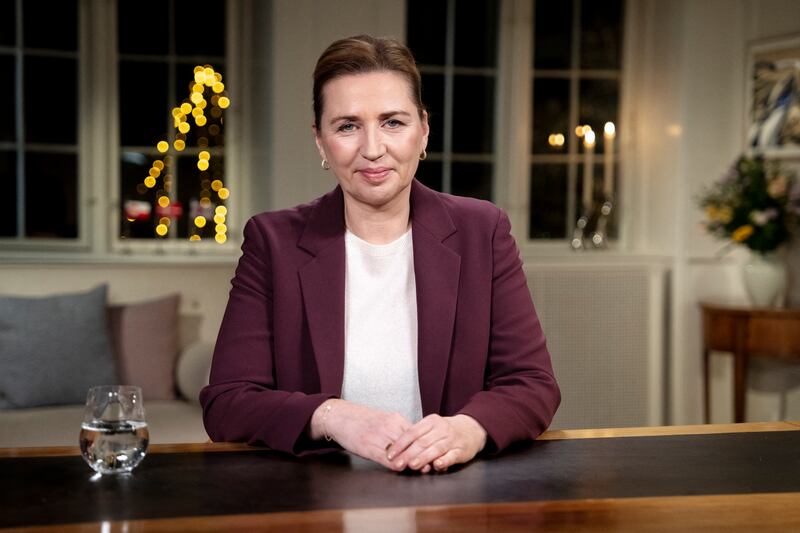
Meanwhile, Trump and his cabinet stepped up their rhetoric about annexing Greenland, a former Danish colony that is now a mostly self-governing part of Denmark. Denmark’s prime minister Mette Frederiksen said it was clear that the American president was serious about seizing part of the territory of a Nato ally and she warned of serious consequences.
“If the United States were to choose to attack another Nato country, then everything would come to an end,” she said. “The international community as we know it, democratic rules of the game, Nato, the world’s strongest defensive alliance – all of that would collapse if one Nato country chose to attack another.”
Over the course of a few days, Washington had struck at China’s interests by attempting to take control of Venezuela, one of Beijing’s strategic partners in Latin America, humiliated Russia by confiscating a tanker flying its flag and terrified Europe by threatening to seize part of its territory. By the end of the week, the US announced that it was withdrawing from 66 global organisations, the latest step in its abandonment of the international system.
China’s rhetoric in response to the abduction of Maduro was unusually strong, with the foreign ministry condemning Washington’s “blatant use of force”. The state-run China Daily warned that Venezuela might not be the last country in the region to fall victim to Trump’s colonial ambitions.

“From fabricated charges to military strikes and regime change, the operation follows a familiar and deeply troubling script – one that reflects the logic of state piracy," it said. “Sovereign governments are first delegitimised, then destroyed by force, after which foreign capital moves in to carve up natural resources. This behaviour drags the world back toward a barbaric colonial era of plunder, in open defiance of international law.
“What the world is witnessing is not a ‘rules-based’ order, but colonial pillaging. Upholding sovereignty, equality and non-interference is not optional. It is the foundation of global stability – and it must be defended.”
Despite the rhetoric, Beijing has taken no action against Washington in response to its action in Venezuela, either in terms of economic measures or the deployment of military forces. This is part of a pattern of inactivity when its friends are attacked, last seen when the US and Israel bombed Iran last year and China did nothing beyond condemning it.
It also reflects the fact that Beijing and Washington are engaged in a high-stakes negotiation on trade and technology that is likely to continue throughout much of 2026. Trump will visit China in April, when he is likely to receive a lavish reception, and Xi Jinping is expected to visit the US later in the year.
The talks could move beyond economic issues to strategic questions. Before the two leaders met in South Korea last October, Trump floated the idea of a “G2”, made up of the United States and China, to lead the world. Wu Xinbo, director of the Centre for American Studies at Shanghai’s Fudan University, took the idea further in an article in Foreign Affairs last week.
“Trump seeks a world order in which the major actors – namely China, Russia, and the United States – should respect one another’s national interests and seek to avoid conflict, which reflects China’s position, as well. In other words, leaders in Beijing and Washington agree that a concert of power (active coordination between China and the United States), not just a balance of power between the two countries, is necessary in today’s world,” he writes.
Wu envisages such a grand bargain as including reform of the current international system to make space for rising powers as both China and the US should recognise that a multipolar world will not threaten their position as the two biggest economic and military powers. He suggests that Washington and Beijing should work together to ease tensions on the Korean peninsula and that China should show greater flexibility over disputed territory in the South China Sea while the US should reduce its interventions there.
On Taiwan, Wu proposes de-escalation with the US encouraging Taipei to slow down its military build-up while Beijing reduces its military presence around the island.
“For Beijing, the best path to avoid conflict while maintaining its bottom line is to remain committed to its policy of ‘peaceful reunification’ – emphasising for both Taipei and Washington that while its first resort will not be force, it will also not accept any Taiwanese effort at independence,” he writes.
The EU is already suffering the consequences of being squeezed between the US and China, as it faces higher tariffs from Washington and export restrictions on rare earth minerals from Beijing. China weaponised its near-monopoly on the minerals needed for much advanced manufacturing in response to Trump’s tariffs, but after he negotiated an easing of the controls, European importers found they still applied to them.
As Chinese exports to the US have fallen due to the tariffs, the volume of goods bound for Europe has increased. At the same time, European exports to China have been falling, partly because of an appreciation in the euro but also because Chinese manufacturers are making products that can compete with high-end producers in Europe.
Trump’s renewed threat to annex Greenland this week has alarmed European leaders, not least because it is not immediately clear what they can do to prevent it. Former French prime minister Dominique De Villepin believes that Trump may be bluffing about Greenland but that only a strong, decisive response from Europe will reveal that.
“We can immediately create a vanguard, a European security council, with five, six, seven, or ten states meeting and deciding, with the British, to pool their forces and set strategic objectives. Within a timetable that must be extremely clear, we affirm that we will not accept a fait accompli, and here we have a number of advantages,” he told Liberation this week.

“Trade coercion tools, the ability to sanction digital platforms: all these tools must be mobilised. Recalling ambassadors, banning American officials from European territory.”
If European leaders are reluctant to follow Villepin’s advice, it is in large part because they fear the consequences for Ukraine of antagonising Trump. The US president last year suspended intelligence sharing with Ukrainian forces during a dispute with Kyiv and he could do so again, with devastating consequences on the battlefield.
Peace negotiations led by Trump’s special envoy Steve Witkoff and the president’s son-in-law Jared Kushner are at a crucial stage and this week saw a group of mostly European countries commit to a security guarantee for Ukraine after a ceasefire. The Europeans believe that for such a guarantee to be credible, the US must agree to provide a backstop in case Russia attacks Ukraine again.
The timing of Trump’s renewed threats over Greenland may be linked with the Ukraine talks, as he knows they offer a moment of great leverage for Washington over its Nato allies. It will require immense diplomatic skill for the Europeans to secure what they want from Trump for Ukraine without making any concession over Greenland and Danish sovereignty.
Most of the discussion in Europe about becoming more autonomous and escaping its dependence on the US has focused on increasing defence spending. But a military deterrent is most effective if it is part of a broader diplomatic strategy. There appears to be little imaginative thinking in European capitals about Europe’s diplomatic and strategic options after the Ukraine war ends.
Ending the war would remove one source of tension in the EU’s relationship with China, which has supported Russia economically and diplomatically throughout the war. But Europe also needs to improve its relationships across the Global South, where its hectoring demands for support on Ukraine were seen as hypocritical in light of the European response to Israel’s war in Gaza.

Resource-rich African states are vulnerable to Trump’s scramble for minerals and the EU has an opportunity to restore some relationships in Africa by offering fairer partnerships. This would see much of the processing of such resources remaining in Africa rather than, as is generally the case now, simply extracting raw minerals and shipping them out.
Europe faces difficult questions about its relationship with Russia after the war in Ukraine ends. Trump has made clear that any peace deal will include a phasing out of sanctions and Russia’s return to the international trading system.
Some European countries will be quick to go back to doing business with Russia but others will be reluctant to do so, regarding normal relations as impossible while Vladimir Putin remains in power. Much of the rhetoric coming out of Moscow suggests that Russia has no interest in re-engaging with Europe either, but that may be a misreading of the mood.
Alexander Lukin and Vladimir Lukin are both international relations experts at Moscow’s HSE University, while Vladimir is also a former Russian ambassador to the US. In the current issue of the Washington Quarterly, they argue that Russia needs a new foreign policy after the war. They suggest extreme political views that have taken hold in Moscow during the war will give way to a more pragmatic approach after the end of hostilities.
“Russia will be actively securing a more advantageous position within the de facto existing world order, instead of using excessive resources in order to make it ideologically ideal,” they write.
“Second, Russia will understand that while remaining a legitimate legal successor of the USSR, it is neither reasonable nor affordable for Russia to continue to associate itself with the confrontational elements of the Soviet foreign policy. Third, Russia will work toward normalising relations with the United States and Europe to a realistic extent while also continuing to develop relations with Asia, learning from how China has balanced its role in the US-Russia-China axis over the course of its development.”
They believe that Russia, which has seen its economy shrink dramatically since 1990 as a proportion of the global economy, must accept its position as a regional power. They say it is “a large and influential state in the world, but in terms of potential, it is far from the leading ranks”. They point to the economic success of Germany and Japan after the second World War, the rise of China and the emergence of Brazil, India, Indonesia and Malaysia as rising economies.
“In no instance was an economic breakthrough achieved under conditions of seclusion and isolation from the outside world – particularly from the most technologically advanced economies, which at present remain the United States and its principal European and Asian allies,” they write.
“The economic breakthrough must become the exclusive focus of all state resources and attention. This entails, in particular, the abandonment of expenditures on overseas military initiatives and other prestige projects.”


