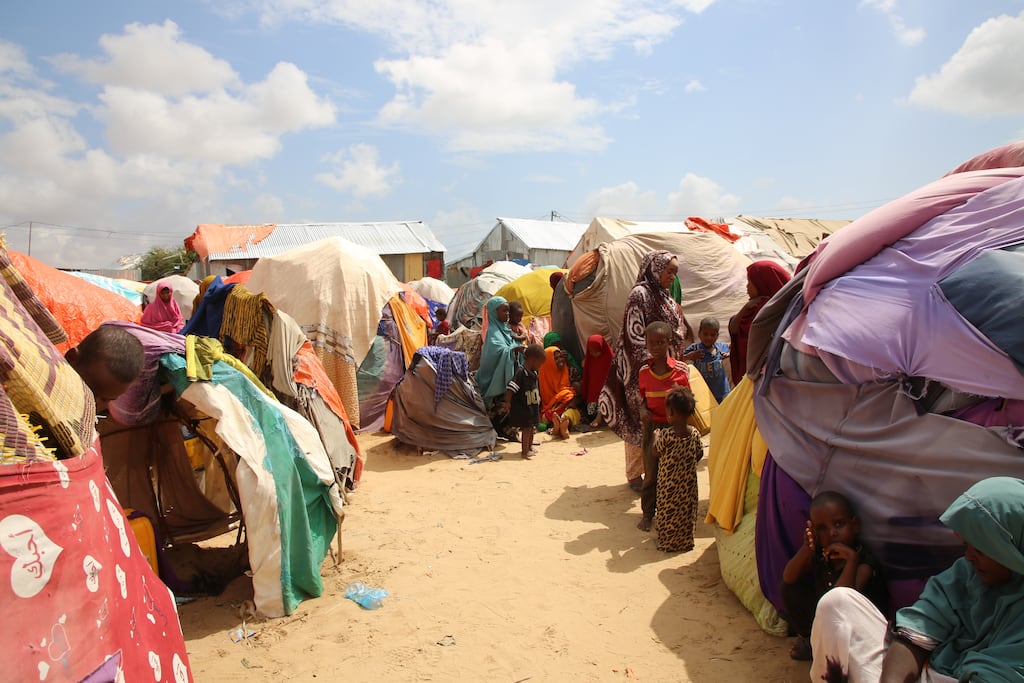


The international community has cut humanitarian aid to Somalia. But it is more interested than ever in the country’s minerals and military bases.
Somalia on the brink
The World Food Programme (WFP) warned last Friday that its emergency food aid to Somalia could grind to a halt within weeks because it is running out of money. Somalia declared a national drought emergency last November after successive seasons of poor rainfall and the country is facing similar conditions to those that brought it to the brink of famine in 2022.
Almost half of Somalia’s 19 million people are affected by drought, floods, disease outbreaks and displacement from their homes because of conflict. Cuts to international humanitarian assistance budgets as western powers divert funds from aid to military spending have forced groups such as WFP to scale back operations in Somalia.
The food assistance branch of the United Nations and the biggest humanitarian organisation in the world, the WFP has had to reduce the number of people receiving its emergency food aid in Somalia from 2.2 million to just over 600,000 in the past year. In the last two months of 2025, it cut the number of children and pregnant and breastfeeding women targeted by its nutrition programmes from 400,000 to 90,000.
READ MORE


“The situation is deteriorating at an alarming rate. Families have lost everything, and many are already being pushed to the brink. Without immediate emergency food support, conditions will worsen quickly,” Ross Smith, WFP’s director of emergency preparedness and response, said in a statement.
The United States restored humanitarian aid to Somalia late last month after suspending it for a few weeks in response to reports that the Somali authorities had destroyed a US-funded WFP food warehouse. But the $128 million (€109 million) the US spent on humanitarian aid to Somalia was less than a third of the average of $450 million it spent in previous years.
The European Union cut its humanitarian aid to Somalia to €67.33 million in 2025 from €82.16 million in 2024. Ireland, which spent almost €10 million on aid to Somalia in 2024, announced an increase in funding for development aid in the budget for 2026.
Somalia, which gained independence from Britain and Italy in 1960, fell into a state of collapse in the early 1990s as the central government disintegrated and the country became a patchwork of fiefdoms ruled by clan-based warlords. The Union of Islamic Courts (UIC) restored an element of peace and order in the early 2000s until the US backed a successful armed effort by Ethiopia to overthrow them.
Harakat al-Shabab al-Mujahideen, known as al-Shabab and an affiliate of al-Qaeda, survived as a remnant of the Islamist force and by the early 2010s it controlled about four-fifths of Somalia’s territory. Successive international interventions have helped Somali forces to drive back al-Shabab so that the group now only controls about a quarter of the country, mostly in the south.
A federal system introduced in 2012 has produced tensions between the central government and federal states over everything from security to mineral resources. Al-Shabab has taken advantage of the internal instability of the state and has been regaining strength.
Meanwhile, foreign powers including Turkey, Egypt and Saudi Arabia have been deepening military co-operation with Somalia, which occupies a strategic position at the gateway to the Red Sea. Somalia this week offered to renew a deal that allows the US military to use its ports and airports and a senior official floated the idea of giving Washington access to its minerals and military bases.
Please let me know what you think and send your comments, thoughts or suggestions for topics you would like to see covered to denis.globalbriefing@irishtimes.com