Stefan* was not the only victim. The 48-year-old Austrian resident gambler lost €70,000 on two casinos linked to an international gambling giant that skirts regulations by concealing its links to a network of black-market websites.
Ireland is just one of a number of countries used to funnel profits from these websites to their owners.
A one-year investigation – led by journalism consortium Investigate Europe and involving The Irish Times and media outlets across 15 other countries – has found that international gambling company Soft2Bet received hundreds of millions of euro from the profits of unlicensed gambling platforms.
The proceeds came from gamblers – including Stefan – who lost large sums of money on black-market sites operating without the restrictions or safeguards that regulated gambling sites must adhere to in order to prevent problem gambling.
One of those is Rebecca*, who lives in the UK. She lost £145,000 (€169,000) after customer agents ignored her requests to self-exclude from an unlicensed casino linked to Soft2Bet.
“I was so desperate and I felt so full of panic,” the English woman said. “It’s abuse of vulnerable people.”
As early as 2017, several European regulators had added Soft2Bet websites to their blacklists of illegal casinos.
Such websites, including those registered in small offshore jurisdictions such as the Caribbean island of Curaçao, are criticised for not sufficiently preventing money laundering, for failing to pay out winnings and for fuelling gambling addiction.
Although many European states have blacklists to block offshore sites that target their countries, a new Irish regulator has only had these powers since February. Since July 1st, the Gambling Regulatory Authority of Ireland (GRAI) has taken over licensing of remote betting previously overseen by the Department of Justice and the Revenue Commissioners.
It is illegal for offshore sites to offer bookmaking services in Ireland without a licence to be a remote bookmaking operation (RBO). In 2025 there were 91 RBO licences and 10 remote betting intermediary licences issued by Revenue, up from 21 and four respectively in 2016.
The GRAI warned that providing betting activity in Ireland without a licence was “a serious offence”. It would not comment on individual operators but said it was “cognisant of the risk of black-market operators and is committed to addressing them in a robust and proportionate manner”.
Ireland has granted RBO licences to six companies associated with Soft2Bet since 2022.
The Irish connection
One of those companies granted an RBO licence was Zentoria. According to the RBO register, Zentoria has an address on the upmarket Waterloo Road in Ballsbridge, south Dublin.
This is the location of the office of Cafico International, a company services provider. Two other Soft2Bet-related entities with Irish RBO licences, Salvia and Sky Rain, have their addresses located there too.
Although Zentoria’s licence said its online brand was the website Spinspotamia, that website is not currently accessible in Ireland.
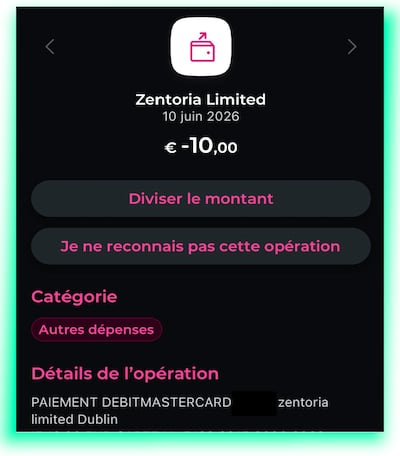
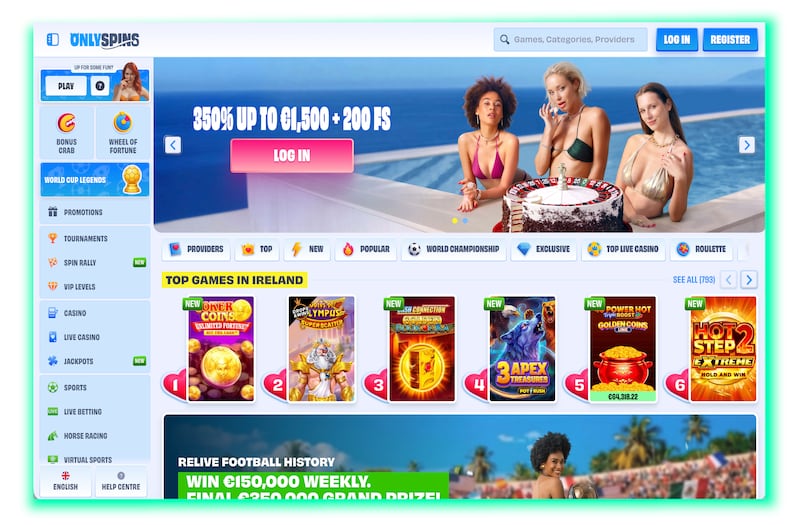
Zentoria’s name has shown up as the recipient of customer payments from non-Irish licensed gambling sites, according to the investigation by The Irish Times, Investigate Europe and other media outlets. This includes OnlySpins, a pornographic gambling site that incentivises users to make more wagers in exchange for AI-generated and real female models taking their clothes off on virtual “dates”.
“It’s two addictions at the same time and it’s the easiest way to reach out to the youth,” said a former customer agent who spoke about their time working for Soft2Bet.
The investigation found no age or identity verification was required to sign up for the website.
OnlySpins appears to hold no gambling licence in Europe. It has a licence in Tobique, a small First-Nation reserve in New Brunswick, Canada. The regulator there did not respond to requests for comment.
The sexualised betting site received more than one million visits from EU countries between February and April 2026, according to online website traffic data.
When paying by card in Belgium, the investigation found that users were asked to send money to Zentoria in Ireland.
OnlySpins says on its website that its payment management services are provided by Morada Horizon Services Ltd (MHS), another Irish company.
The registered address for MHS is based at the same address on Lower Baggot Street in Dublin city centre as Kinore, a well-known accountancy firm. Kinore is the company secretary for MHS.
Larissa Feeney, chief executive of Kinore who won “CEO of the Year” at this year Image PwC Awards, organised by Image magazine and sponsored by the accountancy giant, told The Irish Times her company had no knowledge of MHS being involved in providing payroll services for OnlySpins.
She said MHS engaged with Kinore “solely in respect of company secretarial and registered office services we offer as a service” for a fee of €798, plus VAT.
Feeney said the information provided to Kinore stated that the company’s business was “gambling and betting activities”.
Under anti-money laundering legislation, this required Kinore to perform enhanced due diligence checks. Feeney said it carried out such checks on all clients, but that the checks showed up no issues of concern. She said Kinore had no “visibility” of the company’s commercial activities.
She said the information uncovered by The Irish Times about MHS’s operations were “both surprising and deeply concerning”. Kinore would not have acted for the company if it had been aware of such activities, she said.
Feeney said Kinore would immediately disengage from acting as MHS’s company secretary and registered office provider.
The Irish Times-Investigate Europe investigation is able to link all these Irish companies to Soft2Bet.
Internal leaks from Soft2Bet show company executives planning to set up “Morada Horizon” in Ireland. According to internal company chats, executives discussed how the “finance team is co-ordinating with local providers on tax registration and related support”.
Company records show Lornioco Ltd, a company based on the Marshall Islands in the central Pacific Ocean, owns MHS and Naale Ltd. Records show it also owns Zentoria.
Naale, which holds an Irish RBO licence, has been used by Soft2Bet for its Rabona and Wazamba betting sites. Neither of those two sites carried out age verification checks when The Irish Times signed up to gamble on them this week.

The ‘Steve Jobs’ of online gaming
Ukrainian-Israeli businessman Uri Poliavich created Soft2Bet in 2016, eager to capitalise on the exploding popularity of online gambling. Over the following years, Soft2Bet established itself as a major supplier of back-end technology to the industry. Today, it claims its software is used by 10 million users globally.
The company owns casino and sports betting brands from Greece and Sweden to Mexico and Canada. Betting sites linked to Soft2Bet have struck several notable sponsorship deals, including with Italian football giants Napoli.
Two of its brands count Diego Simeone, manager of Spanish football giants Atlético Madrid, as an ambassador, while another is partnered with the Canadian Football League. Simeone’s representative said he “has only authorised the use of his image in countries where the company holds the necessary licence”.

Together, these business strands have propelled Soft2Bet into the upper echelons of the online gambling world, with the company making €152 million profit in 2024 and receiving dozens of high-profile awards.
For years, Soft2Bet and its partners discreetly operated unlicensed websites through two shell companies: Araxio Development and Rabidi. Registered in Curaçao, a Caribbean tax haven granting cheap and light-touch gambling licences, the offshore entities laid the foundations for a highly lucrative business.
Months after Soft2Bet launched in 2016, Poliavich set up Araxio and a few years later Rabidi was formed, this time through a Soft2Bet employee.
These vehicles provided Curaçao licences for dozens of websites, away from the prying eyes of western regulators. None of the websites had approval to operate in Europe, where much stricter player protections exist, but all reeled in players from across the Continent.
To process deposits the two subsidiaries of the casinos were set up in Cyprus. The name Soft2Bet did not appear anywhere.
“Players were like... ‘my rent is due. I can’t feed my kid’”
A former customer service agent told The Irish Times-Investigate Europe investigation that players regularly complained about how payouts for their winnings were delayed from Soft2Bet sites.
“I’ve seen instances where players were like, ‘I’ve been trying to withdraw for two weeks, my rent is due, I can’t feed my kid,” said the agent.
Two more former employees described similar patterns.
The Irish Times has seen internal conversations where managers confirmed these practices and said the reopening of accounts of problem gamblers was a commercial decision.
For gamblers such as Stefan*, the 48-year-old Austrian resident, the lack of player protection was life-changing. Stefan, who runs an air-conditioning business, said he stole from his own firm to fund his habit.
“Nobody asked me if I could afford it or where the money was from, even though I was using my company’s bank accounts,” said Stefan, who bankrupted himself and his business after losing €70,000 on two Soft2Bet-linked casinos.
“I was gambling eight hours or more until the morning. I wouldn’t think about work the next day; the only thing that mattered was rolling the slots,” he said.
“Gambling addiction affects your whole life; you become a pathological liar.”
Desperate players such as Stefan took Araxio and Rabidi to court, unaware that Soft2Bet was in fact behind them.
Judges in Austria and Germany sided with the plaintiffs and concluded – as regulators had before them – that the casinos were not allowed to target customers in their countries.
The four shell companies were declared bankrupt in 2023 and 2024. Before the rulings arrived, however, Rabidi transferred its 34 casinos to another Curaçao entity, held by a Soft2Bet proxy, and business continued as usual.
The investigation by The Irish Times, Investigate Europe and its media partners have obtained thousands of pages of account statements from the two Cypriot entities that show direct ties between Soft2Bet and the network of unlicensed casinos.
The documents reveal that between May 2020 and May 2024 the Cypriot firms – Tranello and Tilaros – channelled €600 million to Soft2Bet and its related entities.
Transfers were often labelled as “marketing services” or “licence agreement” with more than €330 million going to companies owned by Poliavich. These included Outono, Soft2Bet’s main holding company at the time, and Brainrocket, the group’s online casino development arm.
Millions more went to marketing and customer service businesses owned by Poliavich’s associates. Tilaros was even used to pay Soft2Bet’s then chief commercial officer and head of compliance, as well as its current chief legal counsel.
Leaked internal files and interviews with former staff carried out by the investigation suggest that the companies were all managed under the Soft2Bet umbrella.
“Soft2Bet has all these entities in the group but we are the same team”
“Soft2Bet has all these entities in the group but we are the same team,” said a former employee from the marketing department.
“Everyone is part of the same Slack [online chat] for internal communications.”
The corporate separation “seems to be decorative”, said Chris Kronow Rasmussen, adjunct professor of investigations at the University of New Haven who researches money laundering in the betting industry.
“The defining feature of these structures is the braiding of legal and illegal activity.”

Duping prospective employees
Soft2Bet’s two main offices are now in Malta and Cyprus where teams work for a number of companies in the Soft2Bet ecosystem creating new gambling websites.
One IT worker explained how he felt he was “duped” into working for Soft2Bet.
On LinkedIn he saw a post for a position in Brainrocket, which he said looked like a software as a service “tech-bro” company online.
“I thought I was joining an IT company,” he said. “And in the interview there was no mention about how it was connected to a gambling company.”
He got the job through a remote interview and decided to relocate to Malta from northern Europe.
“On the first day, there is Soft2Bet branding everywhere,” he said. “And then it was quite apparent what actually the organisation did and what they were all about. They had the actual parent company branding all over the windows, so Soft2Bet was everywhere. And then obviously, I Googled Soft2Bet when I sat down with a cup of tea.”
“It was common practice to reopen the accounts of players who closed them due to addiction”
Former Soft2Bet staff allege some of the online casinos’ practices were “predatory”, saying that customer agents regularly delayed vulnerable users’ attempts to close their accounts and reactivated them after they had been shut.
“It was common practice to reopen the accounts of players who closed them due to addiction and to start sending them SMS, emails, bonuses so they’d gamble again,” said a former marketing employee.
“There were also no age verifications to make sure players were not children. I raised this topic with management several times, but they just don’t care.”
Similarly, players’ winnings were delayed so that they would gamble more, claims a former customer service agent, who would call more than 200 new players a day from Soft2Bet’s Cyprus office.
“Uri Poliavich is a man of contradictions because on the one hand he shows himself like the Steve Jobs of i-gaming [online gaming] and a religious philanthropist, but then on the other, they are putting out brands that blend gambling and porn,” said one former employee.
Blacklisted gambling sites across Europe
Internal messages exchanged between Soft2Bet staff and shared with The Irish Times-Investigate Europe investigation reveal that the company and its partners now operate about 160 casinos.
Analysis of national databases found that 145 are blacklisted in at least one European country, with many registered in offshore jurisdictions such as Anjouan, an island in the southwestern Indian Ocean.
“Every couple of weeks they created a new casino”
Many of the brands are marked as “internal” in the documents, which date from late 2025, implying they belong to Soft2Bet. Others appear to be managed on behalf of customers that use the company’s software. The list denotes which staff members are responsible for each brand.
“Every couple of weeks they create a new casino,” said the former marketing employee.
“Even if a player thinks they’ve been scammed and leaves a Soft2Bet casino, chances are they’ll end up on another Soft2Bet website without realising.”
In response to a series of questions, Soft2Bet said in a statement: “We take compliance, governance and responsible business practices extremely seriously. Information within your request reflects an incorrect and misleading interpretation of our business and corporate structure.
“Our focus is on operating responsibly and in accordance with applicable legal and regulatory requirements. We maintain robust compliance and governance processes and engage constructively with the relevant authorities where appropriate.”

Targeting vulnerable gamblers
Rebecca, a single mother working for the prison service in the east of England, was another victim. After a period of depression and alcohol abuse, she barred herself from all legal casinos in the UK in 2020, using the national self-exclusion scheme Gamstop that blocks registrants from opening or using online gambling companies licensed in Britain.
In October 2024, while on maternity leave and struggling with mental health issues, she searched again for online casinos. She came across Fatpirate, a website advertised as a “non-Gamstop” option and listed as an “internal” brand in the leaked list of casinos connected to Soft2Bet.
Rebecca says she deposited £11,000 in a single day and quickly reached the highest VIP level, a loyalty programme where high spenders get a personal manager.
“VIP managers would send me emails all the time with rewards and bonuses,” she said. “If I ran out of money, I could ask them and they’d give me more funds.”
“Responsible gamblers don’t make great customers, do they?”
She stopped using Fatpirate over Christmas that year, but soon began gambling on another Soft2Bet-linked site called Magius, unaware they were connected. Over nine months, Rebecca lost £145,000 on the two casinos, wiping out her savings, a loan and her grandmother’s inheritance.
She tried to close her Fatpirate account four times without success: “One time they came back and asked what the issue was. I told them and they ignored it. Another time they didn’t respond at all.”
Minutes after speaking to a reporter working on The Irish Times-Investigate Europe investigation, Rebecca received another promotional email from Fatpirate offering 110 free spins.
Such aggressive marketing techniques were widespread in the company, former Soft2Bet employees claim.
“If a player were to approach me to say that they have gambling problem, I would just tell them to send an email to explain their situation,” said the former customer agent.
“If they still wanted to close their account, I would offer them a bonus. The goal is to try and get them to stay on the platform and not shut down their account. That’s something really predatory.”

The web developer who moved to Malta to work for Brainrocket said he witnessed customer agents being pressured by managers to retain customers who tried to opt out.
“It’s the devil’s business, isn’t it?” he said. “Responsible gamblers don’t make great customers, do they?”
With such a vast network of websites in Soft2Bet’s orbit, the company’s 45-year-old founder has become incredibly wealthy in the process. From 2019 to 2024, Soft2Bet handed its chief executive Uri Poliavich almost €200 million in dividends.
Corporate filings show he moved to an 18-room mansion near New York and placed part of his fortune in several Bahamian trusts, a corporate structure favoured by those looking to protect their assets from legal claims.
Like many wealthy individuals, Poliavich has moved into philanthropy. In 2020, he started the Yael Foundation, an organisation funding religious schools around the world.
“It’s the Yael Foundation that drives the business, not the business that drives the Yael Foundation,” he said in a self-produced documentary about his life last year.
There is no evidence that proceeds from black-market sites are funding the Yael Foundation.
In a recent interview with Israeli media station i24 News, Poliavich explained the aims of the Yael Foundation.
“Build this network of schools that will provide very strong education first and then create good Jews that will support Israel”
“You start from kindergarten and bring them to the point when, by the end of high school, they choose to go to Israel, they choose to become part of Tsahal [Israel Defense Forces], they will become part of Israeli community.”
He said the aim was to “build this network of schools that will provide very strong education first and then create good Jews that will support Israel, that will support the future of Israel. That’s something that will be our legacy.”
The Yael Foundation website lists the Stratford National School in Rathgar, south Dublin, as a recipient of funding. The school said that it directed queries to its patron body, which did not respond to comment.
The school’s logo was removed from the Yael website in recent weeks. Stratford College, the secondary school based on the same grounds, said it had never received any funds from Yael.
In response to queries, the Yael Foundation said it does “not discuss its corporate structure, its finances, its funders or particular details of its activities in the media”.
The foundation said it filed all disclosures required in jurisdictions where it was active.
“The foundation is proud of the strong ties it maintains with Jewish movements and institutions throughout the world, including in the State of Israel and with the Chabad movement, and it will continue its mission of advancing Jewish and general education,” it said.
Poliavich grew up between Ukraine and Israel, where he served three years in the Israeli army. A lawyer by training, he worked for several gambling companies before founding Soft2Bet in 2016 back in Kyiv.
In 2020, Ukraine police stormed Soft2Bet’s headquarters, as part of a national gambling ban. During the raid, officers found the company was operating 20 casinos with 500,000 players.
The case seems to have gone nowhere since. Due to procedural defects with the warrant, judges ordered seized computers to be returned and Soft2Bet left Kyiv for Cyprus.
Poliavich’s public appearances are usually limited to gambling summits or events with the Yael Foundation. He always wears a cap adorned with a lucky shamrock, Soft2Bet’s logo. Previous employees describe him as a discreet boss who trusts only his inner circle.
“He surrounds himself with people who will only say good things to him, people who will never cross the line,” said a website developer who worked at the company.
“It’s based on perception of loyalty and delivery above ethics, above all else.”
Former employees said that in some cases managers asked staff to take a polygraph test when they became concerned about leaks to media. It was also referenced on one recruitment page for Soft2Bet company Brainrocket.
“Management was very paranoid,” said the former web developer whose colleagues underwent polygraph testing.
“People said it was a literal police-style interrogation, hooked up to a machine, with questions about personal habits like alcohol or drug use.”
Regulators playing catch-up
European regulators have so far failed to clamp down on Soft2Bet’s blacklisted casinos. The EU has no common legislation on gambling, leaving member states to regulate and police the sector independently.
Illegal online gambling generated more than €80 billion in revenue in 2024, representing 71 per cent of the EU market, according to marketplace intelligence firm Yield Sec.
In Italy and Greece, Soft2Bet obtained a licence to operate its Elabet brand legally, even though well over 100 other websites connected to Soft2Bet feature on the blacklists of both the Italian and Greek regulators.
In Ireland, the regulator, the Gambling Regulatory Authority of Ireland (GRAI), said it cannot comment on licences issued by Revenue. It has begun issuing business-to-customer licences to remote betting companies under a new regime that involves applicants having to provide business and legal structures for assessment by the regulator.
“The GRAI licensing regime is substantial and robust,” said the regulator.
“Any licensee that is granted a GRAI licence will have undergone rigorous checks and will be subject to continued oversight and compliance checks in order to retain their licence.”
Three Soft2Bet-related entities, including Zentoria, have applied for GRAI licences.
Applicants are required to disclose details of convictions, criminal proceedings or any regulatory action against the applicant, its relevant officers or beneficial owners.
“Providing a betting activity in Ireland without a licence is a serious offence,” it said.
“In general, this would include the provision of remote betting services in Ireland by an entity based outside of Ireland. It can attract up to eight years’ imprisonment on conviction on indictment.”
The GRAI said it has not begun to regulate online casinos yet, just bookmakers, so operators do not yet need a GRAI licence if they are only offering casino services.
Soft2Bet’s public ascent shows no signs of slowing down. In 2024, the group inaugurated new offices in Malta and threw anniversary parties in Dubai and Budapest.
“You’re dealing with a company that can shut down and reopen entities all around the world at such a pace that by the time regulators open an investigation, Soft2Bet would be three steps ahead,” the former website developer said.
* Names have been changed to protect their identities
The Irish Times Investigations Unit
- This project was produced by The Irish Times Investigations Unit.
- Graphics by Rachel Lavin and Paul Scott
- If you have a story tip, contact us here.