
In October, Amir Khan Muttaqi, the Afghan Taliban’s foreign minister, visited the Islamic seminary of Darul Uloom in the north Indian city of Deoband.
When he stepped out of his car, Muttaqi was mobbed by a sea of bearded young men in white robes and skullcaps who were straining to get a glance of their visitor.
“The future of India-Afghanistan relations seems very bright,” said Muttaqi, who required a waiver to visit India due to UN Security Council sanctions on him.
The rapturous reception that Muttaqi received in India, the first visit by a senior Taliban official since the group returned to power in 2021, is one of the most striking signs of how the world is warming up to the Taliban.
READ MORE


Although groups linked to the Taliban have been accused of a string of suicide bombings on India’s missions in Afghanistan more than a decade ago, during his visit the Hindu-nationalist government in New Delhi promised to reopen its diplomatic outpost in Kabul.
New Delhi is not alone. When the Taliban returned to power in 2021, many governments severed all ties with the new government, in part because of revulsion over its draconian restrictions on girls’ education and alleged abuses against minorities and political opponents. But over the past few months, Afghanistan’s Islamist regime has begun to emerge from diplomatic isolation.
The Taliban is now recognised by Russia, sends diplomats to Europe to help process deportations and has even enjoyed occasional praise from the US for its operations against militant organisation Isis-Khorasan, an Afghanistan-based offshoot of the Islamic State in Iraq and Syria. In August, Chinese foreign minister Wang Yi visited Kabul offering promises of Belt and Road investments in mining and transportation sectors.
The Taliban, whose senior leadership remains under UN and western sanctions, hopes these moves will translate into much-needed economic aid and investments for one of the poorest countries in the world – even though there is little sign of this taking place yet.
“Taliban 2.0 is neither ideologically nor programmatically different from Taliban 1.0 ... But Afghanistan’s domestic and regional realities have changed,” says Stanly Johny, the India-based co-author of The Comrades and the Mullahs: China, Afghanistan and the New Asian Geopolitics.
[ India-Pakistan relations carry new edge following recent deadly attacksOpens in new window ]
Unlike in the 1990s, when forces backed by India, Iran and Russia opposed the Taliban, “this time, there is no organised armed opposition in Afghanistan”, he adds. “The Taliban controls almost the entire country. Regional powers are not interested in backing up an opposition that’s non-existent.”
The irony is that the Taliban is rebuilding ties with much of the rest of the world at the very moment it is locked in a fierce dispute with the one country that has been its patron – Pakistan.
Islamabad accuses its former proxy of sponsoring militants in its restive west who have killed more than 1,700 people this year. It has struck as far as Kabul and is now threatening a ground invasion of a country ravaged by a century of wars.
Speaking to reporters in New Delhi, Muttaqi, the foreign minister, said the country would not accept another military intervention or the “presence of anyone” on its soil, referring to Pakistan and the US.
But he stressed that the country was looking to mend ties wherever it could. “We want good relations; we keep our doors open for talks – for all!”

The first two major countries to re-establish ties with the Taliban were China, which accredited an ambassador from the regime in Kabul in January 2024, and Russia, which formally recognised the Taliban in July.
For many years, Russia remained divided over the Taliban, especially since the Soviet Union’s humiliating withdrawal from Afghanistan in 1989. Moscow labelled the Taliban a “terrorist organisation” in 2003 after the group declared jihad against Russia over the war in Chechnya.
But Russia’s ambassador, Dmitry Zhirnov, became the first foreign diplomat in Kabul to meet the group after the collapse of the US-backed government in 2021.
For president Vladimir Putin the catalysts for deepening Russia’s ties with the Taliban were his war in Ukraine, and the need for counterterrorism co-operation in the aftermath of a deadly attack on Moscow’s Crocus City Hall concert venue that killed more than 140 people in March 2024. Afghanistan is also of economic interest as a trade route to south Asia.
“The start of the full-scale war with Ukraine was the main driver behind the rapid strengthening of their ties, as well as Russia’s broader foreign policy pivot,” says Nikita Smagin, a leading Russian expert on the region.
Moscow is also eager to recruit as many allies as possible and to reclaim its lost status as a power broker among Islamic powers. Soon after the Crocus City massacre, Russia removed the Taliban from its list of terrorist organisations, and Putin hailed them as an “ally in the fight against terrorism”.
Moscow and Kabul have “joint interests in the region”, Dmitry Peskov, the Kremlin spokesperson, told reporters on Tuesday, adding that his country has guards on the Tajikistan-Afghanistan border.
Unlike Russia, China has stopped short of de jure recognition of the Taliban-led government. However, according to Nan Hao, a foreign policy expert affiliated with the Charhar Institute, a non-state think-tank in Beijing, there is a “durable de facto recognition”.
A small number of Chinese mining companies have explored Afghanistan’s gold, gemstones and coal reserves, while Beijing has also called for the Taliban to be given access to billions of dollars in frozen foreign exchange reserves and support from the World Bank and the IMF.
[ Inside Afghanistan: What is life really like under Taliban rule?Opens in new window ]
China’s foreign minister has framed engagement between the two countries as an exchange of “deeper ties in return for credible suppression of cross-border militant activity and firm commitments not to allow any forces to threaten China”, Hao says, given China’s concerns over the East Turkestan Islamic Movement, a designated terrorist organisation in the Xinjiang Uyghur region.

In the West, opposition to the Taliban remains widespread. In July, the International Criminal Court issued arrest warrants for its leader, Haibatullah Akhundzada, over alleged gender-based persecution.
However, several countries have tentatively reopened contact. In the years after the Taliban retook control of the country, Germany was among the most vocal countries criticising the group’s treatment of women and girls.
But in recent months, Germany has sent delegations to Afghanistan or welcomed Taliban officials at home to facilitate repatriations. Norway, Switzerland and Austria have begun similar forms of engagement. Western governments are also aware that continued isolation runs the risk of further entrenching the country’s stark poverty.
The Taliban has drawn particular praise from some foreign capitals for its ferocious crackdown against Isis-K, which has emerged as one of the regime’s deadliest opponents, and the destruction of fields of poppy, a key ingredient in heroin destined for Europe.
The Taliban has even opened channels with the Trump administration in the US – although there is also open hostility towards the regime in Washington.
Sebastian Gorka, a counter-terrorism adviser to US president Donald Trump who has for decades branded political Islam the single greatest threat to the West, disclosed in August that Washington and the Taliban were “working together” to stamp out other Afghan militant groups that Washington and Kabul deemed a common threat.
“This sounds strange coming out of my mouth, but the Taliban have been moderately co-operative counter-terrorism partners,” he said. Weeks later, he and Trump’s hostage envoy, Adam Boehler, were in Kabul to retrieve the fifth American freed from Taliban custody since the US president took office in January.
But Trump has given no signs that he wants closer ties to the Islamist group with which his first term administration negotiated the eventual US withdrawal from Afghanistan.
Trump, who has called the US withdrawal from Afghanistan the “most embarrassing moment in the history of our country”, said in September that his administration was “talking now to Afghanistan” about retaking control of Bagram airbase, and threatened unspecified action if the Taliban did not relinquish it. The group strongly denied any such talks were going on.
Then last week, Trump described Afghanistan as “a hellhole on earth”, halted visa issuance to all Afghan passport-holders, and vowed to “re-examine every single alien who has entered our country from Afghanistan” since 2021, after an Afghan man whom officials said had worked with the CIA fatally shot a member of the US national guard in Washington.
Perhaps the most surprising diplomatic outreach has come from India. New Delhi has historically had an antagonistic relationship with the Taliban given that its arch-enemy Pakistan backed the group and its allies for decades, in part, to prevent an Indian strategic foothold on its western flank.
India has not formally recognised the Taliban, but amid the new hostility between Pakistan and Afghanistan, it now senses an opportunity to grow closer to the group.
India has also welcomed the Taliban’s offer to allow Indian companies to enter the mining sector. “The amount of critical minerals in Afghanistan is very tempting,” says a senior Indian businessman with links to the government in New Delhi. India, which had invested roughly $3 billion in Afghanistan’s infrastructure and healthcare before the return of the Taliban, has vowed to look into developing several new projects.
The madrassa in India that Muttaqi, the foreign minister, visited is in the Hindu heartland, but it is also seen as the cradle for several Muslim jihadis in Pakistan and Afghanistan. Muttaqi and other senior Taliban leaders had spent their youths training in an offshoot of the madrassa in northwest Pakistan. He came “looking for his roots” in India, said the school’s principal, Arshad Madani.
“Afghanistan’s relationship with the world is based on its relationship with Pakistan,” says a senior Pakistani diplomat. “The Indians are being very pragmatic, having realised that the Taliban is the only game in Kabul and that they are not going anywhere, and they now see it as a sort of ‘the enemy of my enemy could be my friend’ and the Taliban is clearly taking advantage of that.”
Four years ago, Pakistani officials publicly celebrated the Taliban’s return to power. But after a dramatic deterioration in relations, it is Pakistan that is now weighing whether to topple the group.
Suicide bombings and raids by the Tehreek-e-Taliban Pakistan (TTP), an offshoot and ideological ally of the Afghan Taliban, and other groups hiding out in Afghanistan has made 2025 the deadliest year for Pakistani security personnel in more than two decades, and poisoned relations between Islamabad and Kabul. Pakistan has shut its 2,600km border – known as “Durand Line” and drawn by a British diplomat in 1893 – and Pakistan has pushed out one million Afghan refugees and demanded another million follow suit.
After a week of fighting in October that featured cross-border raids, audacious Pakistani air strikes over the Afghan capital of Kabul and Kandahar – where the Taliban supreme leader sits – and dozens of deaths on both sides, the two parties agreed a ceasefire.
But four rounds of subsequent talks in Doha, Istanbul and Riyadh, as well as earlier efforts by China, have failed to produce a sustainable peace. Amid the negotiations, Pakistan’s defence minister, Khawaja Asif, threatened in late October to “obliterate” the Taliban and “push them back to the caves for hiding”.
Islamabad’s foreign minister, Ishaq Dar, in late November revealed that Pakistani forces in October were prepared to invade Afghanistan to clear out alleged training camps for TTP near the border until Qatar’s prime minister intervened to stop the assault. He claimed that Pakistan had lost 4,000 lives since the Taliban retook Kabul more than four years ago.
“The Pakistani bombings in the heart of Kandahar and Kabul really shook the foundation of the Taliban’s hold on power and sent out the message they can no longer claim to be security guarantors of the country,” says Ibraheem Bahiss, the Kabul-based a senior analyst with the Crisis Group.
The pause in fighting appeared to end last week after the Taliban accused Pakistan of killing 10 civilians in an air strike in Khost, a border province. Although Pakistani officials have denied involvement in the alleged bombing, they blame Afghanistan for a suicide attack in Islamabad last month that killed at least 12, the worst attack on the capital in more than a decade.
A UN Security Council report this year estimated that at least 6,000 TTP fighters operated out of Afghanistan and received “substantial logistical and organisational support from the de facto authorities”.
In late September, the foreign ministers of China, Russia, Iran and Pakistan warned in a statement that militants in Afghanistan “pose a serious threat to regional and global security”. Those groups have become ever more deadly thanks to billions of dollars of weapons and high-tech equipment left over by Nato forces.
The Taliban denies that it allows Afghanistan to be used for terrorism against other countries, but Pakistan has repeatedly countered such claims.
“The biggest casualty of these last years of diplomacy is the Afghan Taliban’s credibility,” says Asif Durrani, a Pakistani diplomat who served as special envoy to Afghanistan. “The Taliban are scared of the opposition dubbing them Pakistani puppets. So they bury their heads in the sand like ostriches, and think these issues with TTP will just disappear. They won’t.”
Despite the border closure halting up to $4 billion in formal and informal trade with Pakistan, the Taliban has remained defiant. Mullah Abdul Ghani Baradar, the group’s deputy prime minister for economic affairs who previously spent eight years in a Pakistani prison, warned businesses last month to find trade routes that bypass its eastern neighbour.
The Taliban’s commerce minister then went to New Delhi in late November to develop a plan to turn an Indian-run terminal at Iran’s Chabahar port into an alternative to Pakistan’s Karachi port. “Our trade, investment and transit will be enhanced,” Al-Haj Nooruddin Azizi, told reporters in India’s capital.
Following the falling out with Pakistan, “the Taliban has to recalibrate their international relations and be much more strategic and prudent. The idea that you can just have good relations with everyone, that you can please everyone equally, they now know it was probably naive to begin with,” says Bahiss.
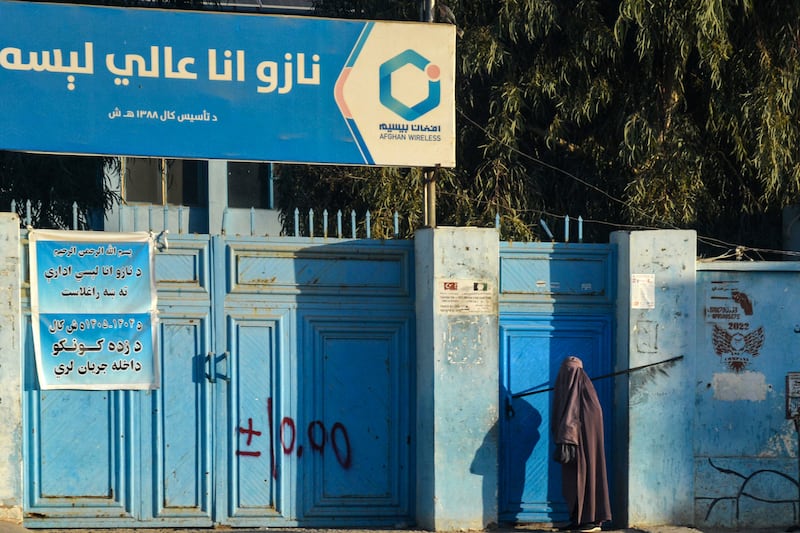
Amid the threat of a broader conflict with Pakistan, the harsh reality for the Taliban is that its emergence from the diplomatic cold has done little to fix a devastating economic crisis, born from financial isolation and the exclusion of girls and women from the formal economy and full education.
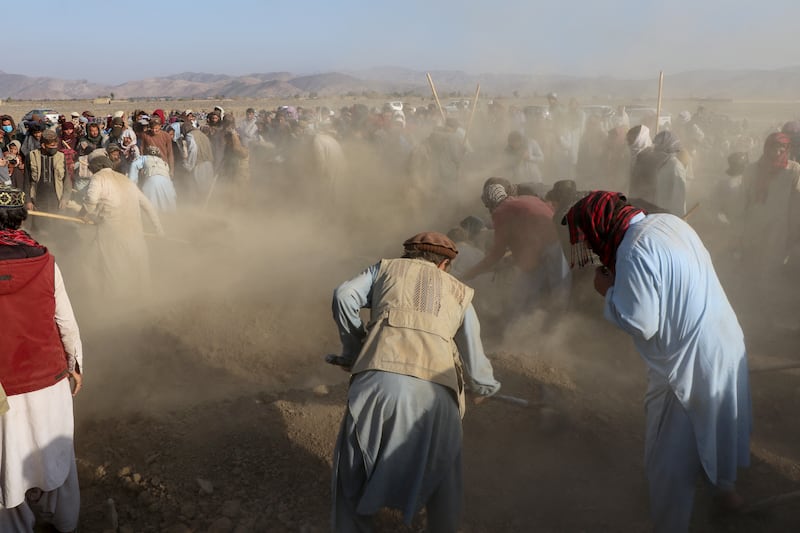
Almost two-thirds of Afghanistan’s 44 million people are in poverty, according to the UN Development Programme, while natural disasters – such as an earthquake in August that killed more than 1,000 – and western aid cuts threaten to plunge the nation into an economic disaster. Its population has swelled by an additional 4 million in just two years as Pakistan and Iran have forced Afghan refugees to return.
Central bank reserves totalling $10 billion, mostly frozen by the US and Europe in 2021, still remain outside Afghanistan. In 2022, the US sent $3.5 billion – now worth more than $4 billion due to interest – of that sum to a Switzerland-based “Afghan Fund” to support financial stability without benefiting the Taliban. None has been disbursed yet. Another $3.5 billion remains under US control pending lawsuits by families of survivors of the September 11th attacks, who want to seize the money.
The situation is severe enough that some critics of the Taliban are calling on countries to re-engage. Rangina Hamidi, who served as Afghanistan’s education minister until the Taliban’s takeover, says: “The very first and potentially easy step is to open up the embassies on the ground, from all nations, whether you recognise the Taliban or not.”
She adds: “Get there, go see for yourself, go hear for yourself, and make the people of Afghanistan see that the world hasn’t forgotten them.”
But most nations are still wary of a regime responsible for what rights groups say is one of the most extreme erosions of women and girls’ rights of any country in modern history.
“Sanctions, asset freezes, isolation, nothing has moved the needle on what I would say is the primary issue facing Afghanistan’s economic future: the basic rights of women and girls,” says UN assistant secretary-general Kanni Wignaraja. “That is the issue that will kill the country, economically, socially, politically.” – Copyright The Financial Times Limited 2025


