Ukraine said the US had proposed the creation of a demilitarised “free economic zone” in areas of the eastern Donetsk region still held by Kyiv, as Nato warned that tension with Russia could spiral into a conflict on the scale of the two world wars.
Ukrainian president Volodymyr Zelenskiy gave some insight on Thursday into the substance of talks between Ukrainian, European and US envoys about a potential plan to end the Russia-Ukraine war. Separately, US envoys are also in talks with Russian negotiators over how to end Europe’s deadliest fighting since 1945.
One of the key points in any set of proposals will be the fate of the 20 per cent of so of the Donetsk region that Ukraine still controls, amid Russian pledges to seize the entire province through force or negotiations.
“They see Ukrainian troops withdrawing from Donetsk region, and the compromise seems to be that Russian troops won’t enter this territory. They don’t know who will govern this territory, which they’re already calling a ‘free economic zone’ or a ‘demilitarised zone’. That’s roughly how the United States’ current compromise vision looks,” Mr Zelenskiy said.
READ MORE


Mr Zelenskiy said he had asked Ukrainian deputies to draft legislation to make a ballot possible under martial law
“It is fair to ask: if one side withdraws – as expected from the Ukrainians – why wouldn’t the other warring side withdraw the same distance in the opposite direction?” he told reporters in Kyiv.
“If some troops are supposed to withdraw while others remain where they are, what will prevent these other troops – that is, Russian troops – from advancing? Or from infiltrating the ‘free economic zone’ disguised as civilians and taking control of it?” he added. “This is all very serious. It is not certain that we, as Ukraine, would accept this. When you talk to us about a compromise, you have to offer a fair compromise.”
[ Donbas: the 'fortress belt' Trump wants Kyiv to surrender for peaceOpens in new window ]
Ukraine says any agreement with Russia must include powerful security guarantees from the West, and Kyiv wants European-led peacekeepers on the ground – something the Kremlin rejects.
US president Donald Trump on Thursday said the United States will send a representative to participate in talks in Europe on Ukraine this weekend if there’s a good chance of making progress on a ceasefire deal.
“We’ll see whether or not we attend the meeting,” he told reporters in the Oval Office. “We’ll be attending the meeting on Saturday in Europe if we think there’s a good chance. And we don’t want to waste a lot of time if we think it’s negative.”
Mr Zelenskiy also reiterated that, according to Ukraine’s constitution, all questions of territory must be decided by a national referendum.
“The Russians want the whole of Donbas – we don’t accept that,” he said, referring to an area that comprises Donetsk and neighbouring Luhansk regions. “I believe that the Ukrainian people will answer this question. Whether in the form of elections or a referendum, the Ukrainian people must have a say.”
After Mr Trump called on Ukraine this week to hold elections, Mr Zelenskiy said he had asked Ukrainian deputies to draft legislation to make a ballot possible under martial law, and he asked western states again to guarantee the security of a national vote amid daily Russian missile and drone strikes.
Separately, Mr Zelenskiy said he spoke by video to the US secretaries of state and defence, White House envoys and senior US generals about potential security guarantees for Ukraine, which he said were part of one of three documents that were currently being developed.
“Security guarantees are among the most critical elements for all subsequent steps,” he said, adding that Ukrainians need “concrete answers” on “what actions partners will take if Russia decides to launch its aggression again.”
Mr Zelenskiy also joined a video meeting of leaders from dozens of states that help Ukraine with military aid as part of a so-called coalition of the willing.
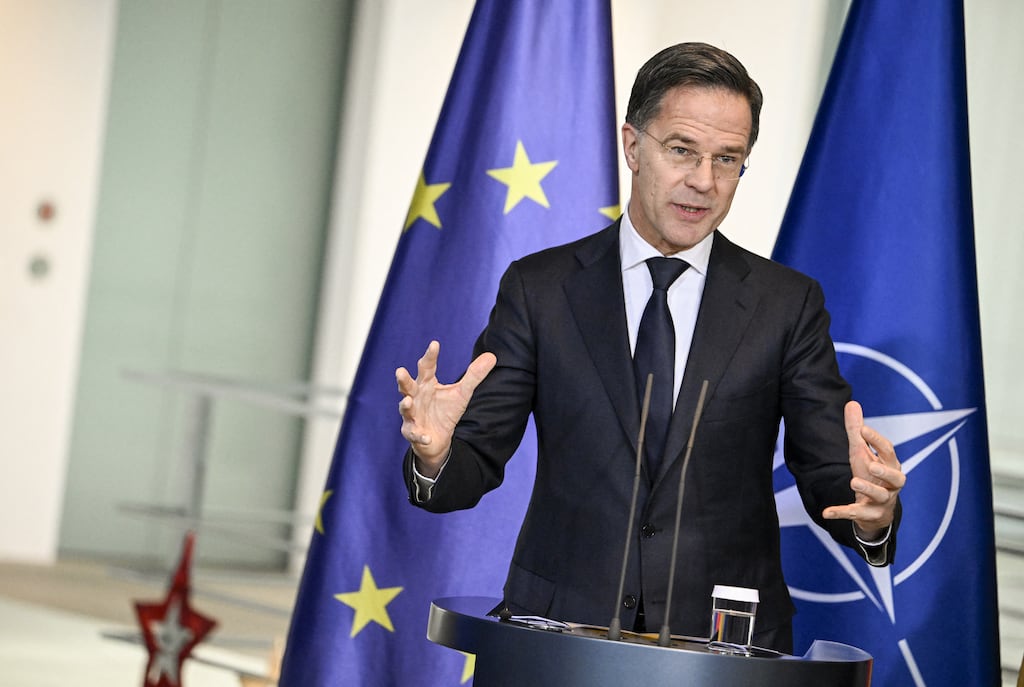
Meanwhile in Germany, visiting Nato secretary general Mark Rutte warned that Europe “must be prepared for the scale of war our grandparents or great-grandparents endured.”
“We are Russia’s next target,” he added. “Conflict is at our door. Russia has brought war back to Europe.”