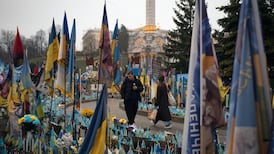
The EU froze indefinitely €210 billion of Russian sovereign assets held in the bloc on Friday as Kyiv and its European allies sought to strengthen their hand at a critical phase in US-orchestrated peace talks.
The freezing paves the way for a loan to be raised against the assets to prop up Ukraine’s defence. EU leaders still have to overcome strong objections from Belgium, where the assets are mostly held, at a summit next week.
Italy has also sided with Belgium. In a statement on Friday evening, the two countries – along with Bulgaria and Malta – urged the EU to “continue exploring and discussing alternative options” to meet Ukraine’s financial needs, potentially through an EU loan facility, which they argued would present “significantly less risk”.
Moscow also fired back, filing a lawsuit against Euroclear, the Brussels-based depository holding most of the assets, which may allow Russia to seize the company’s assets held inside the country.
READ MORE


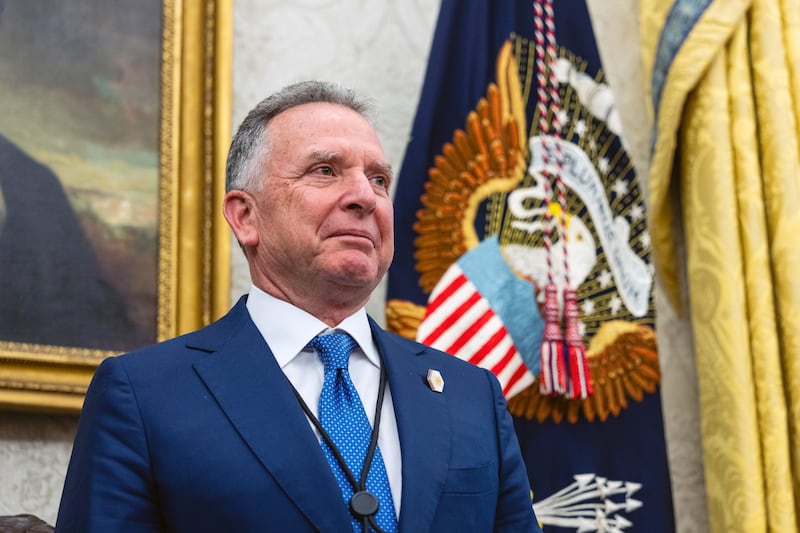
The White House confirmed that US envoy Steve Witkoff would meet Ukrainian president Volodymyr Zelenskiy and other European leaders this weekend in Berlin to discuss the security guarantees that European capitals would provide Ukraine as part of a peace settlement.
The Trump administration has ratcheted up the pressure on Kyiv to sign a peace deal with Russia by Christmas on largely unfavourable terms first drawn up between Washington and Moscow.
European leaders have closed ranks with Ukraine as it seeks to avoid being forced into what many Ukrainians and Europeans regard as capitulation.
Ukrainian negotiators, supported by European officials, have sought to improve the terms of the US-brokered peace proposal, grasping for points of leverage while also considering once unthinkable concessions.
A revised peace proposal drawn up by Ukrainian and European officials and sent to Washington this week envisages Ukraine joining the EU as soon as 2027, an accelerated timetable that would rip up the bloc’s established accession procedure.
Intensive diplomacy was under way to establish “common ground” between Ukrainians, Europeans and Americans on a new version of the deal that could then be presented to Russia, said a French official.
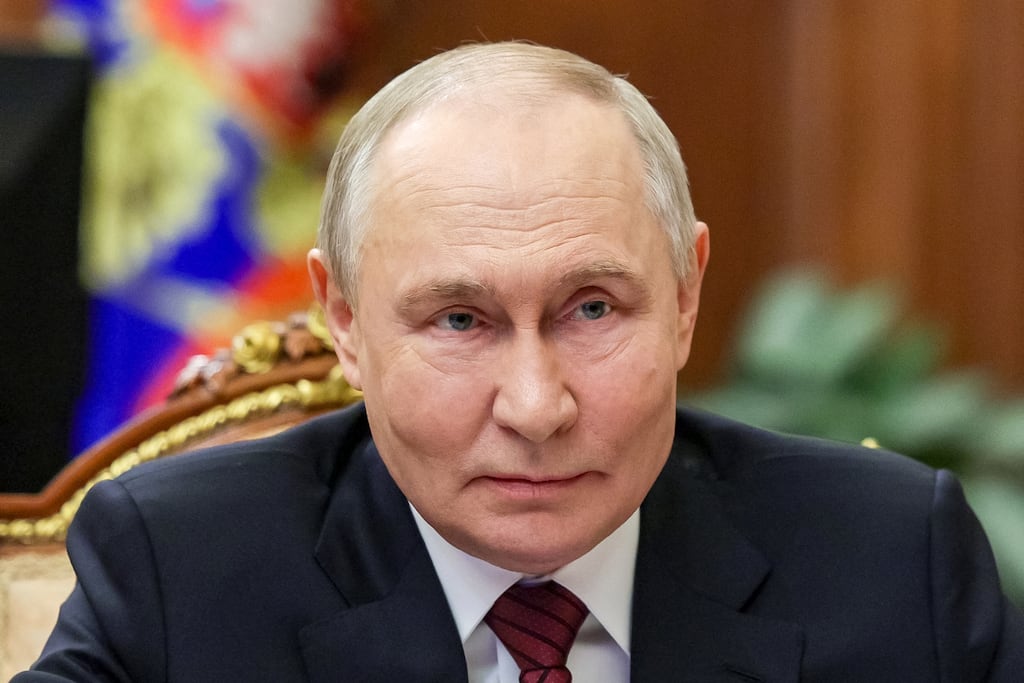
Yuri Ushakov, foreign policy adviser to President Vladimir Putin, said: “When we do see it, I sense that we’re not going to like a lot of it.”
While the EU made its move on Russian assets, Mr Zelenskiy made a surprise visit on Friday to the frontline city of Kupiansk, in eastern Ukraine, which Moscow claimed to have captured weeks ago. The Ukrainian army was pushing Russian forces back, Mr Zelenskiy said, claiming its resistance there would strengthen Ukraine’s hand in talks.
“This is exactly how it works: all our strong positions inside the country become strong positions in discussions about ending the war,” he said.
Still, Russian forces continue to advance along other axes across the 1,200km frontline, heaping pressure on Ukraine’s war-weary army.
European officials remain highly sceptical that Russia will agree to anything that falls short of their maximalist objectives, which include subjugation of Ukraine.
Mr Zelenskiy has said Ukraine is discussing with US officials the details of a possible “free economic” or “demilitarised” zone in Donetsk province, which Moscow is insisting Ukraine surrender as the price of any deal. He has ruled out handing over territory, but suggested that Ukrainian forces could pull back from the contact line in the area if Russian forces did the same and Ukraine received strong security guarantees.
French foreign minister Jean-Noël Barrot said Mr Zelenskiy “has shown for the last nine months his willingness to create the conditions for a peace deal that is both fair and lasting, which is not a capitulation. It is now up to Vladimir Putin to take the last step and put an end to this imperialist and colonial war.”
Meanwhile, two people were killed overnight in a Ukrainian drone strike on the Russian city of Saratov, regional governor Roman Busargin said on Saturday.
In a statement on Telegram, Mr Busargin said the two people had been killed, along with an unspecified number of injured, in an attack on a residential building in the city.
Saratov, which is located on the Volga river about 625km from the Ukrainian border, has come under repeated attack in recent years by drones targeting its local oil refinery and a major nearby airbase.
Separately, Russia’s defence ministry said it downed 41 drones overnight, 28 of which were over the Saratov region. – Copyright The Financial Times Limited 2025/Reuters