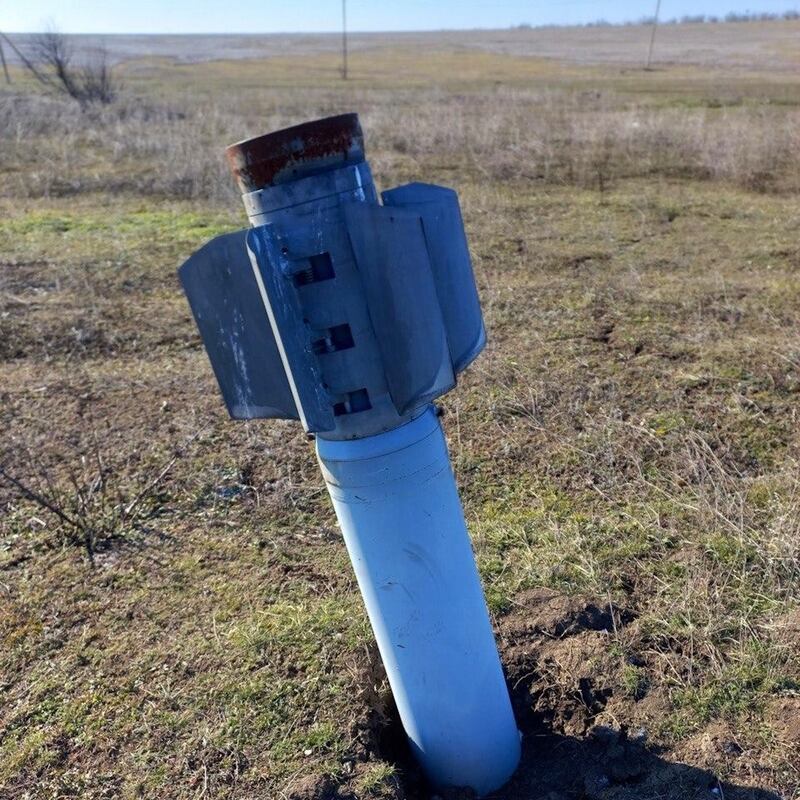
“If farmers in Ireland saw what we find in our fields, I think it would give them a shock,” says Dmytro, who with his father works several hundred hectares of arable land in Snihurivka, less than 50km from the front line in southeastern Ukraine.
Three years after returning to Snihurivka following eight months of Russian occupation, they still have much work ahead to ensure that all their land is free from the mines and other exploded ordnance that now litter an estimated 139,000 square kilometres of Ukraine – an area almost twice the size of Ireland.
Various types of landmines and pieces of missiles, mortars and other shells have been found on the farm, and one tractor was blown up – without serious injury to the driver – since Dmytro and his father got back to work after the liberation of Snihurivka.
When Russian troops seized the area in March 2022, Dmytro and his wife moved 70km west to the port city of Mykolaiv and his parents went 120km north to the industrial city of Kryvyi Rih.
READ MORE


“The farmers who stayed in Snihurivka during occupation had their harvest stolen by the Russians. We left what we were growing in the ground. When we came back, our machinery has been damaged, our fertiliser and fuel stolen. Basically nothing that was left there survived intact,” Dmytro says.
“But we didn’t go far. Where would we go? This is where I was born and grew up. In 2022 we helped our military however we could, and we were waiting for the moment we could return. When my father went back that November, nothing was working – there was no power or water supply, and we had to get a generator in to warm the house up a bit.”
Hundreds of buildings had been destroyed or damaged by fighting in and around Snihurivka, and the Russians had placed tripwires and other boobytraps in houses and around infrastructure, and covered larger areas of farmland with anti-tank and anti-personnel mines.
Borderlands
The picture is similar across swathes of Ukraine’s borderlands with Russia, epicentre of Europe’s heaviest fighting since the second World War – an estimated two million mines have been laid in Ukraine, making it probably the most mined country in the world, and most of the affected land was used for farming before the war.
“Farmers want to come back, but they are worried – many lost machinery during the occupation, and to replace it they’ve had to take out loans or leases. It’s expensive, and they fear that their new tractor or combine harvester will hit a mine,” says Andrii Lavrynenko, a sub unit commander for the Halo Trust, during a demining mission in Snihurivka.
“There are also so-called black deminers going around offering their services. They’re basically people with metal detectors who tell a farmer that they can clear, say, 24 hectares of land in five days for a certain fee. It’s impossible to do it properly so quickly,” says Lavrynenko, a former policeman whose hometown in Luhansk region is now occupied.
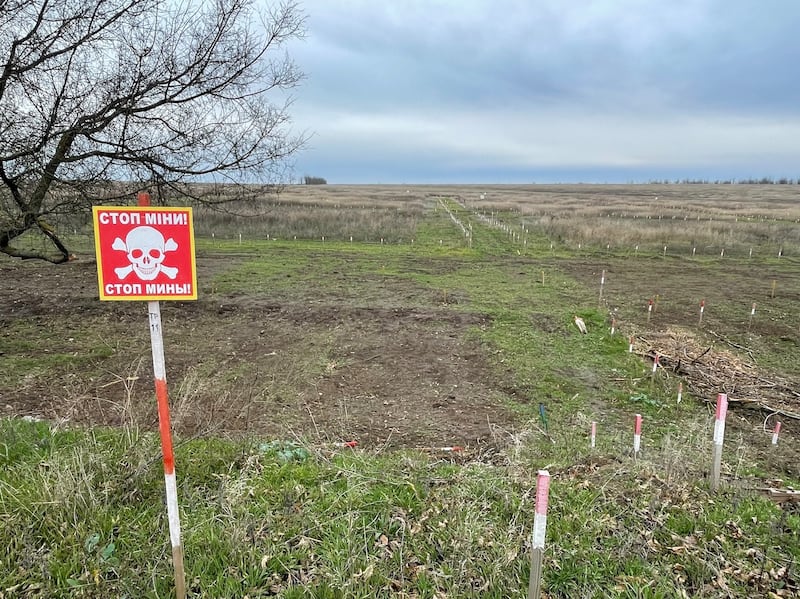
“They claim to be professionals and they get paid, and then the farmer goes back out into the field and something blows up. Our methods take time, we go slowly, but we guarantee that when we are done, it is safe.”
Halo, which is based in Scotland, has been working in Ukraine since 2015, the year after Russia annexed Crimea and created armed militia groups that seized areas of the Donetsk and Luhansk regions. Its operations have grown rapidly since Russia’s full-scale invasion in 2022, and the group now employs around 1,500 people here, all but about 30 of them Ukrainians and nearly a third of them women.
Tetiana Tymofyeyeva evacuated with her children from Mykolaiv to western Ukraine in 2022, and her husband joined the army.
“When things calmed down a bit, friends started telling me to come home, saying it was better now in Mykolaiv, and I really missed my hometown,” she recalls.
“I needed work to help support the children, and I was surprised to see that Halo was recruiting – I thought demining was just for specialists or ex-military people,” says Tymofyeyeva, who worked in a Mykolaiv alumina factory before the war.
“My husband supported me and I applied for a job, but other relatives were shocked. They thought I’d be picking up mines with my hands and defusing them or something, and they said I should just sit at home and ‘demine the sofa’. Now, I think they’re proud of me.”
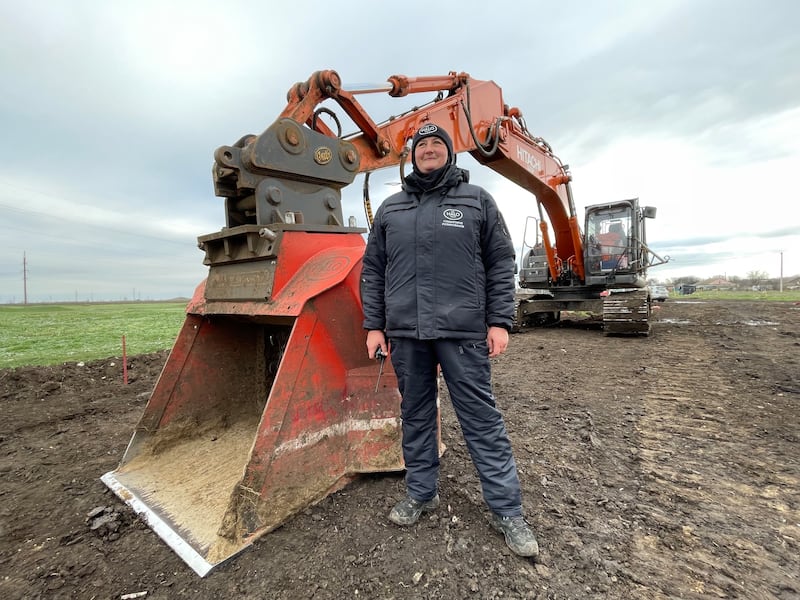
Tymofyeyeva operates an excavator that digs up the top layer of soil and sifts through it to find any unexploded ordnance. She controls it using a joystick and goggles that show her a video feed from the machine, while standing behind a protective armoured shield at least 50 metres from the digger.
“I love my work and adore my excavator,” she says. “I always liked big machines and when I was a girl I wanted to be a long-distance lorry driver. Now I’m really happy to be doing this – and I’m the first woman in Mykolaiv region to be trained on an excavator.
“It gives me huge satisfaction to be doing this work, to help clear our land, and the quicker we can do it the safer it will be for our people. But it’s a big task – probably so big that our children will have to do it too.”
Drone operator
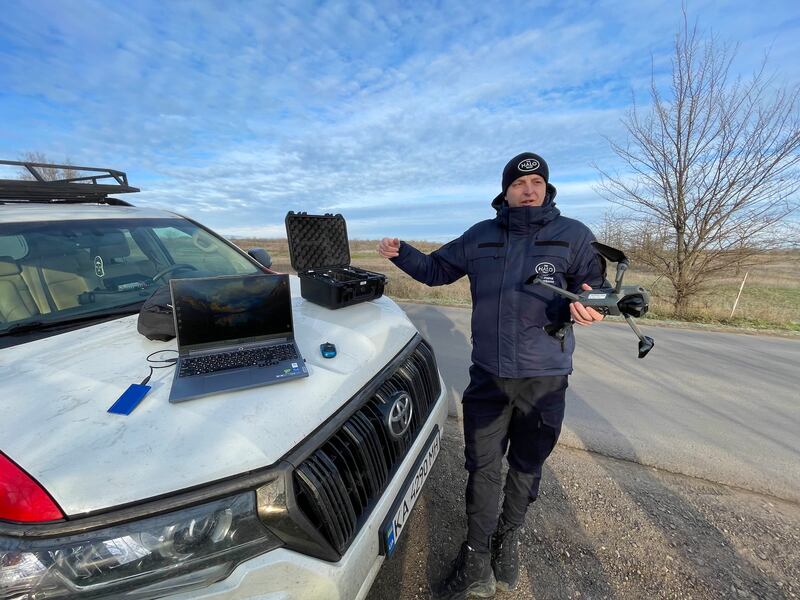
In various fields around Snihurivka, Tymofyeyeva is operating her digger, lines of Halo deminers are scanning the frosty soil with metal detectors, and drone operator Rostyslav Tsykalenko is encountering the now common problem of electronic interference as he tries to fly over farmland to spot mines and other explosives.
Both warring armies use powerful electronic warfare technology to confuse the guidance systems of the enemy’s bombs, missiles and drones, and Halo’s drones are “collateral damage” – the group has lost several due to jamming or spoofing, and Tsykalenko abandons his flight when the live map on his control console shows him not a map of southeastern Ukraine but of Lima, Peru.
The crack of an explosion races across the flat fields and brings all work to a halt. A Russian surveillance drone has been shot down nearby, and the demining teams must clear the area in case it is a prelude to an air strike – emergency workers, civilian volunteers and aid workers in Ukraine have been killed by Russian attacks.
Farm buildings have also been repeatedly targeted, and farmers have been killed and injured by drone strikes while working in their fields.
“We live with danger − we’re not very far from the front line,” says Dmytro, who does not want his surname published. “There can be no certainty of safety … but we keep working.”
Farmers and deminers are working in the fields of Snihurivka, as Ukraine’s fate is discussed by presidents and prime ministers in Washington, Berlin, Paris, London, Kyiv, Moscow and elsewhere.
It is unclear whether all the talk will result in any deal to pause or end the war, but it will take more than documents and declarations to make people here – and across Ukraine – believe that Russia is really ready for peace with its stubbornly independent neighbour.
“Naturally, we feel no trust towards the Russians,” says Dmytro. “It is pointless to believe their promises.”