

This is Odesa’s fourth winter of war and while the Ukrainian port city has grown used to Russian drone and missile strikes, air-raid sirens and long blackouts, there will be something markedly different about this Christmas and New Year.
For the first time since 2014, Odesa’s festivities will not be presided over by Hennadiy Trukhanov, whose long and controversial time as mayor ended abruptly in October, when he was placed under house arrest and stripped of his Ukrainian citizenship.
Instead of turning on the lights on the main Christmas tree in the Black Sea port and delivering a New Year speech to its people, Trukhanov is expected to spend a quiet December in the Odesa house where he grew up, with an electronic ankle tag for constant company.
Many Ukrainians welcomed the downfall of a man who for them embodies what they see as the worst of Odesa – pro-Russian, corrupt and criminal – but he rejects such labels and vows to clear his name, even if it means taking on Ukraine’s president Volodymyr Zelenskiy, and its security services and other state agencies in the process.
READ MORE


I’ve been called lots of things – a crook and a gangster
— Hennadiy Trukhanov
“The people of Odesa have seen me standing with them in all the tough situations we’ve faced during the war. You can see videos of how I was out in the city every night – I’ve barely slept for the last four years,” Trukhanov (60) says.
“I get lots of expressions of support from people in Odesa. It’s as if the authorities have spat in their face. The mayor that they elected democratically has been removed on false grounds, so their right to choose the mayor they want has been taken away.
“I’ve been called lots of things – a crook and a gangster. But regardless, the people of Odesa elected me three times.”
Trukhanov was a Soviet military captain and then worked in the security industry in the 1990s before entering politics and becoming a parliamentary deputy for the pro-Moscow Party of Regions in 2012.
He was first elected mayor of Odesa in 2014 and his time in city hall was dogged by allegations involving shady property deals and money laundering; of having links to the city’s storied underworld; and of secretly being a Russian citizen.
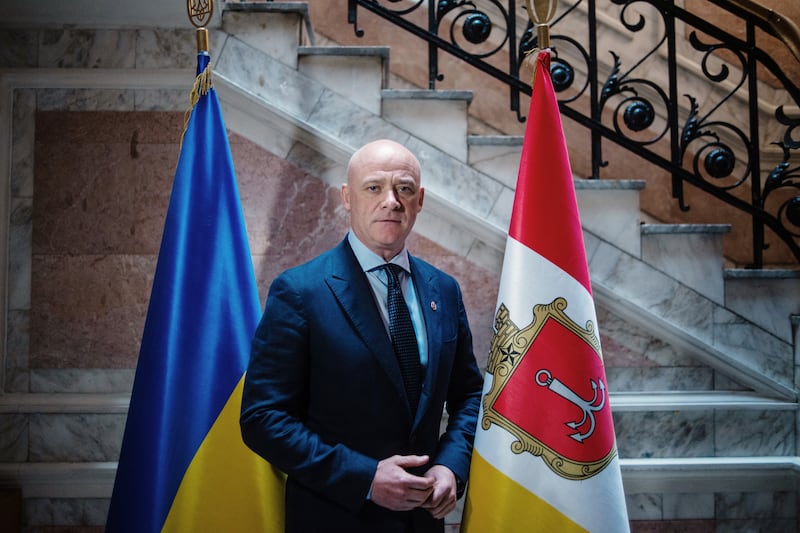
Trukhanov always denied the accusations and was never convicted, but on October 14th Zelenskiy signed a decree annulling his Ukrainian citizenship based on claims by the country’s SBU security service that he held a Russian passport.
Officials in Ukraine must be citizens of the country and cannot have dual citizenship, so the move ended Trukhanov’s time as Odesa mayor.
Two weeks later, Odesa prosecutors formally accused him of negligence leading to the death of nine people in flash floods that had brought chaos to the city on September 30th. He was placed under pre-trial house arrest and fitted with an ankle tag.
Sitting in a black tracksuit on a deep red and gold couch in the living room of the family home he now shares again with his mother, Trukhanov vows to clear his name.
“We had a natural disaster. Over about eight hours, we had more than two months’ worth of normal rainfall. I was working all the time and did what I had to do, from first to last,” he says, rejecting claims that he failed to prepare Odesa’s ageing drainage system for such a crisis and did not properly inform the public of the danger.
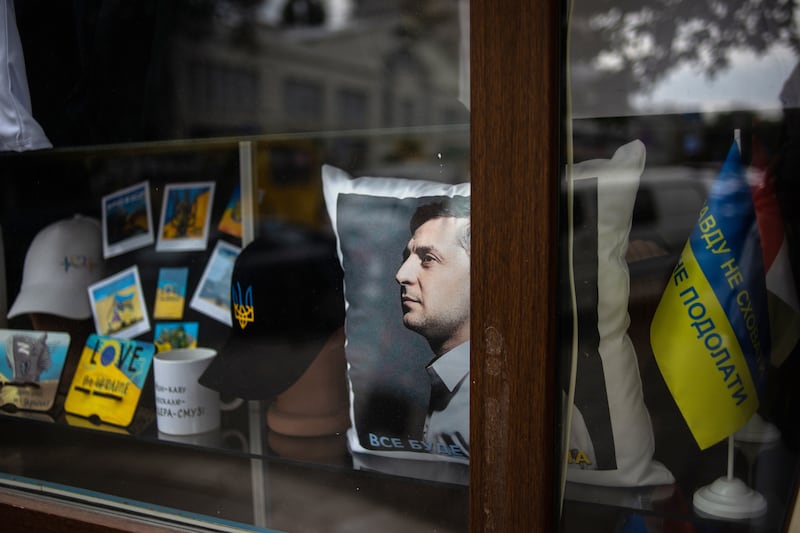
Photographs of several Russian passports allegedly belonging to Trukhanov have been published, but he claims they are fakes and that he was never a citizen of Russia.
“It wasn’t enough for them to take away my position, because if I still had my citizenship then I could run for office again in future,” he says. “So their main idea was to take that away and stop me standing in elections.”
Zelenskiy used his wartime powers to quickly replace Trukhanov with a military administration run by a loyalist, in what some analysts saw as the latest move by the president to exert tighter control over Ukraine’s biggest cities – possibly with an eye to elections that could follow quickly on the heels of any peace deal with Moscow.
“Just like the seizure of power in Chernihiv several years ago by removing the mayor, the events in Odesa are a tool for Zelenskiy to take sole control of the city outside the electoral system,” wrote the respected Ukrainska Pravda news outlet.
“It’s clear that these are regions crucial to the country’s defence. It’s clear that the previous leaders of these cities were just archetypically controversial figures from the criminal-political elite. But it’s equally clear that the president’s team would lose to them in a competitive election.
“Therefore, the tragic events of the deadly inundation in Odesa . . . were used by [the presidential administration] as a trigger to remove Trukhanov.”
The now ex-mayor – who switched to speaking mostly Ukrainian in public rather than Russian after the all-out invasion began – also defends his opposition to calls for all traces of the Russian and Soviet empires to be purged from Odesa, as Ukraine breaks free from centuries of domination by its huge neighbour.
He objected to the removal in 2022 of a landmark statue to Empress Catherine the Great, under whom Odesa was founded in 1794, and resisted pressure to knock down a large bust of 19th-century Russian poet Alexander Pushkin, which since Trukhanov’s dismissal has been hidden from view behind wooden boards.
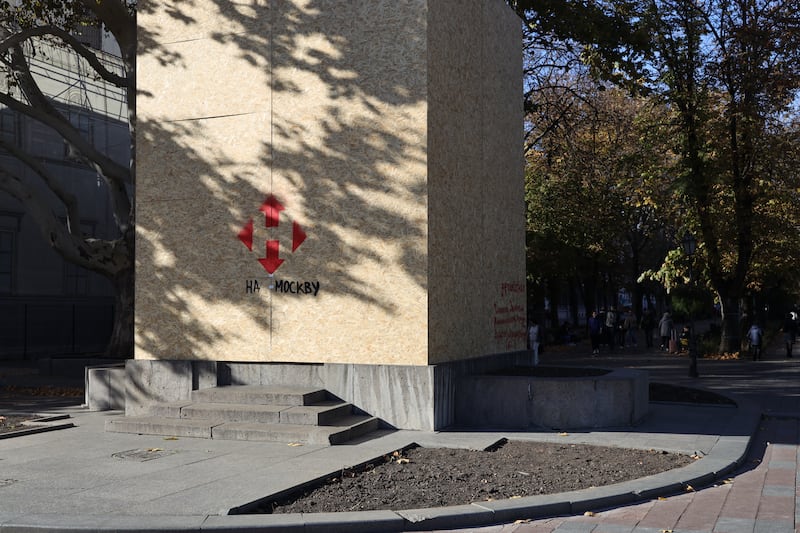
“I have never been a pro-Russian politician, but I am absolutely pro-Odesa. I love my city,” he says.
“Pushkin lived in Odesa and wrote in Odesa, and the people of Odesa – not the government or Catherine, not the Russian empire, but Odesa residents – collected money to build a monument to him. It is part of the history of the city. And luckily for Pushkin, he had no idea that in 2025 some Putin would be running Russia. Pushkin is not Putin."
People who have closely followed Trukhanov’s career, and the alleged secret dealings revealed in the so-called Panama and Paradise Papers and elsewhere, describe him as a politician who can adapt to survive.
“I think in the past he really had strong contacts with Russia,” says Valerii Bolgan, editor-in-chief of Odesa’s Intent media outlet and its Centre for Public Investigations.
“But Russian missiles can fix anyone’s thinking and if he had those contacts before, I think now he could really be ‘pro-Odesa’. He speaks Russian with his friends and he doesn’t want to remove the Pushkin monument, but he is a real politician – and if the majority want to remove it, I think he could change his public opinion.
“Speaking to people who know him well, they say he is a fighter. And he is not ready to lose.”
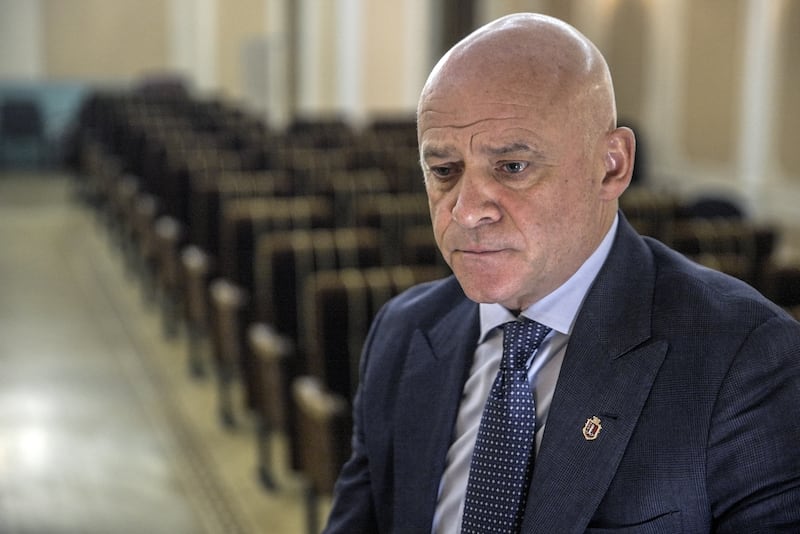
Trukhanov says he is proud that Unesco added the historic centre of Odesa to its world heritage list in 2023, during wartime and while he was mayor. He asks his critics – whom he calls “sofa patriots” – what they ever did for the “pearl of the Black Sea”.
“Odesa’s history has many layers,” he says. “The Russian empire played a part in the development of our city. That’s a fact. But I was born in Ukrainian Odesa and I am Ukrainian.”


