Demyan Hanul knew he had enemies among those who did not share his fierce patriotism for Ukraine.
He had been beaten up in Odesa, where he was a prominent campaigner for nationalist causes, a Moscow court had called for his arrest, and a financial reward for attacking him had been offered on Russian social media.
But the two shots that killed Hanul (31) in the middle of Odesa in March were fired by a Ukrainian soldier, in what investigators see as part of a sprawling campaign by the Russian security services to use Ukrainians to destabilise their own country.
Serhiy Shalaiev was arrested hours after Hanul was gunned down, and pleaded guilty to the murder. His army unit said he had been transferred to its reserve in summer 2024, had undergone frequent medical treatment and had been absent without leave for several weeks before the killing.
READ MORE


Prosecutors believe Shalaiev was contacted in December 2024 by a man calling himself Klymenko, who claimed to be from Ukraine’s SBU security service. He said Shalaiev could secure a job with the agency if he killed Hanul, and sent him photographs of the target and his car.
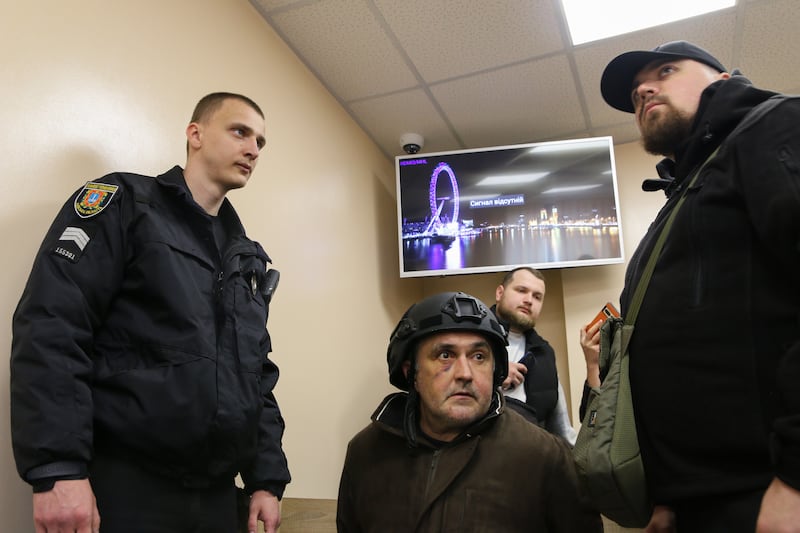
On Klymenko’s instructions, Shalaiev (46) allegedly rented two flats in the same apartment block as Hanul to monitor his movements, and arranged to meet a woman who handed him a Makarov pistol and two grenades when he gave her a password.
Shalaiev’s lawyer told an Odesa court in October that he admitted his guilt, but that his “psychological state, exacerbated by war and trauma, made him vulnerable to manipulation. This was exploited by others, who are the real initiators of this crime.”
[ How Russia’s hybrid war is inflaming divisions and spreading fear across EuropeOpens in new window ]
Investigators have not identified Klymenko but are sure he was working for Russia’s FSB security service, having seen the same method used in several cases: contact is made via social media or a messaging app by someone claiming to be from the SBU; trust is established, and then instructions are given, along with promises of payment or another reward and assurances that the perpetrator will not be caught or face serious repercussions.
The SBU has arrested more than 800 Ukrainians over the last two years for committing crimes on the orders of the Russian security services, from setting fire to military cars, conscription offices and rail and power infrastructure, to identifying the locations of army units and equipment, to shooting or blowing up soldiers and activists.
Many of the perpetrators claim not to have known they were working for Russia, and only wanted to make quick money in a country where the economy has been devastated by nearly four years of all-out war.
More than a quarter of those arrested in such cases since 2024 were minors – some as young as 11 years.
They often do not even realise that they are embroiled in a potential murder plot, and might agree to move a package for a fee or as a favour to someone who has befriended them online, not knowing that the bag or box they carry contains a bomb.
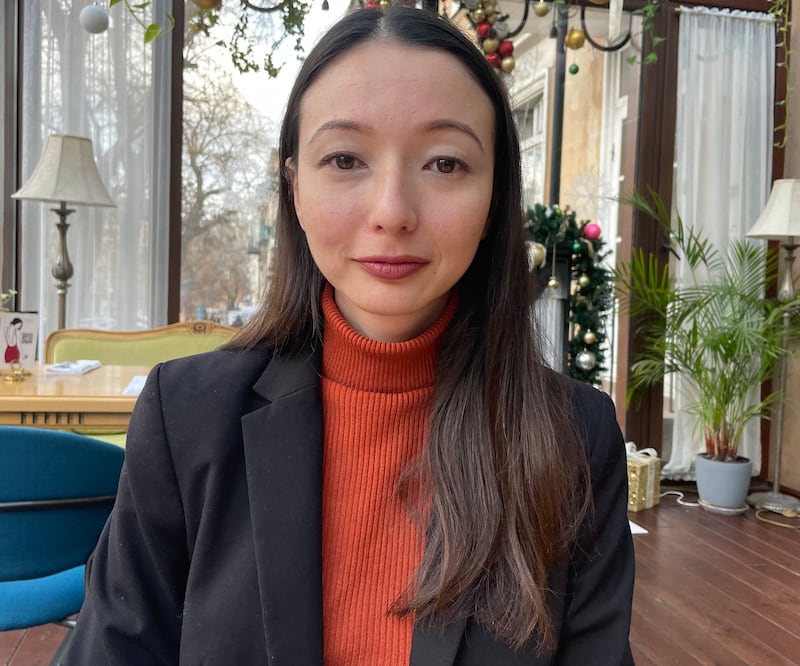
“In one case earlier this year in Odesa region, a woman was approached online by someone who claimed to be a Ukrainian soldier,” says Yuliia Khymeryk, an award-winning investigative journalist based in Odesa.
“They developed a relationship online and he said he wanted to marry her.
“She was asked to take a package to a certain building as a gift for the grandmother of this ‘soldier’. It was a box that had held a kettle, but inside it was a home-made bomb built by a man in Odesa who had also been recruited by the Russians,” Khymeryk explains.
The woman took the box to the address given to her by the “soldier”, and it turned out to be a police station.
As she went inside, she was speaking to someone on the phone, presumably her Russian recruiter. “When a policeman approached, the bomb exploded, killing the woman and injuring three police officers,” Khymeryk says.
Several young Ukrainians have been killed or badly injured by bombs that exploded while they were delivering them to designated places while filming their movements on live video calls to handlers who then detonated the bombs remotely.
“The FSB has ‘call centres’ looking for people to recruit in Ukraine. They look for kids and people who are vulnerable due to poverty, debts or alcohol issues,” says Khymeryk, who has received threatening messages because of her work.
[ Italy arrests Ukrainian over Nord Stream pipeline attacks, German prosecutors sayOpens in new window ]
“Now they are also recruiting via dating apps and Telegram groups – often groups for people who are looking for work. They also look for people who comment on pro-Russian posts. But most people who are recruited don’t realise they are talking to FSB officers.”
The targets for such attacks are often army conscription offices and vehicles that look like they belong to the military. The videos and photographs of the attacks are then shared on Russian-run social media accounts that claim to show the work of a Ukrainian underground that opposes the war and the government in Kyiv.
“I had an SUV with a camouflage paint job that was set on fire four months ago,” says Serhiy Komarenko, a civilian who runs a car rental business in Odesa.
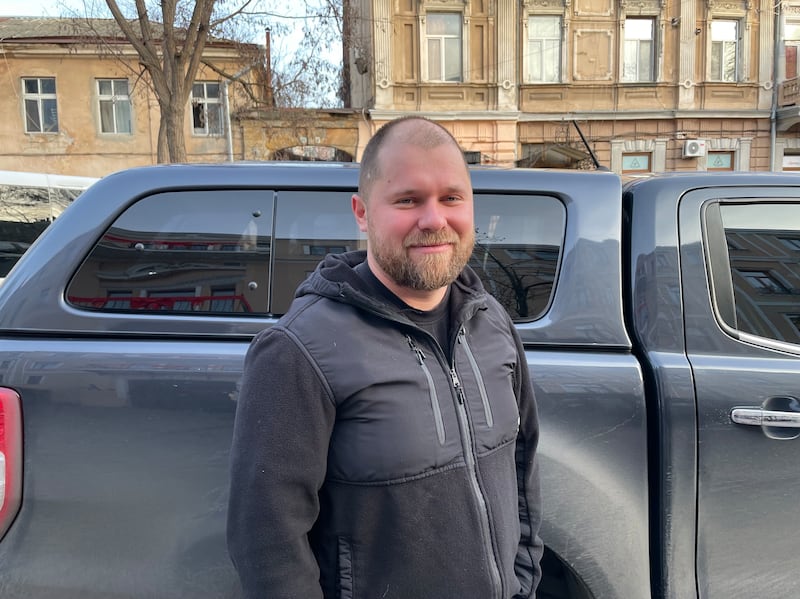
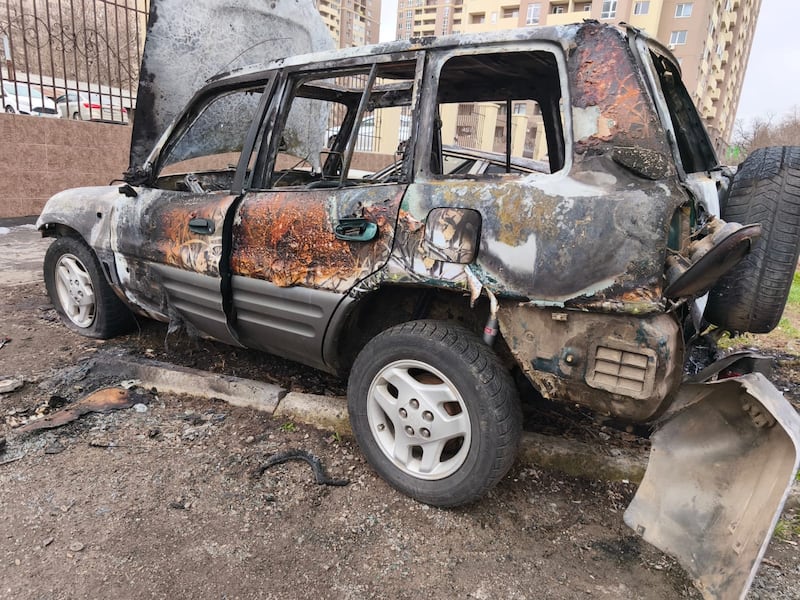
“We saw on CCTV how a guy in a blue hoodie came and squirted some gasoline between the bonnet and the windscreen and set the car on fire. Then he made photos and went away. The car was destroyed, and he clearly did it to order,” says Komarenko.
“The police caught him. He is a 17-year-old who had been offered something like $200 (€170) to burn a military vehicle, but he didn’t even get paid in the end. The law has been tightened for cases like this, so this idiot will be in prison for a long time.”
The SBU has launched a scheme called “Burn an FSB agent” to inform young Ukrainians about the risk of being recruited online and encourage them to report any such approach.
“Cases of child recruitment began to appear in April of last year ... But if at first they were for what you could call somewhat simple tasks, such as setting fire to rail relay boxes and cars, now we see that teenagers are also recruited to perform various sabotage and terrorist tasks,” Ukraine police chief Vasyl Bohdan said earlier this year.
The Ukrainian authorities say cases of child recruitment are falling slightly as awareness of the risk grows and more young people report suspicious approaches online.
[ Lithuania says Russia responsible for exploding parcels in EuropeOpens in new window ]
But Khymeryk says the police still struggle to connect with many children who are vulnerable to recruitment, particularly those from deprived backgrounds.
“They give lectures in schools, but it feels like a formality. If these children had an adult who they could talk to, a teacher that they trusted, many of these incidents could be prevented.”
In an Odesa park overlooking the Black Sea, Hanul’s widow Zhanna Voznyuk walks with their daughter Sara, who was born just four months before he was killed.
She believes it is mostly vulnerable members of Ukrainian society who are susceptible to Russian recruitment, but rejects claims from Shalaiev’s lawyer that his combat experience and psychological problems are grounds for leniency.
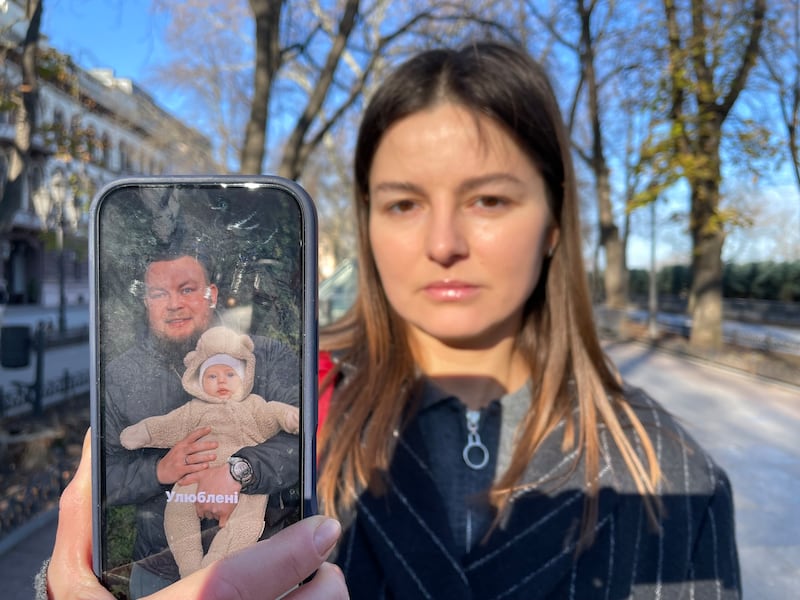
“He should be jailed for life,” Voznyuk says. “He is an adult who murdered someone in broad daylight, after planning it for several months. I don’t think this war will end anytime soon, and if he is freed in 10 or 15 years he could be a danger to other pro-Ukrainian people.”