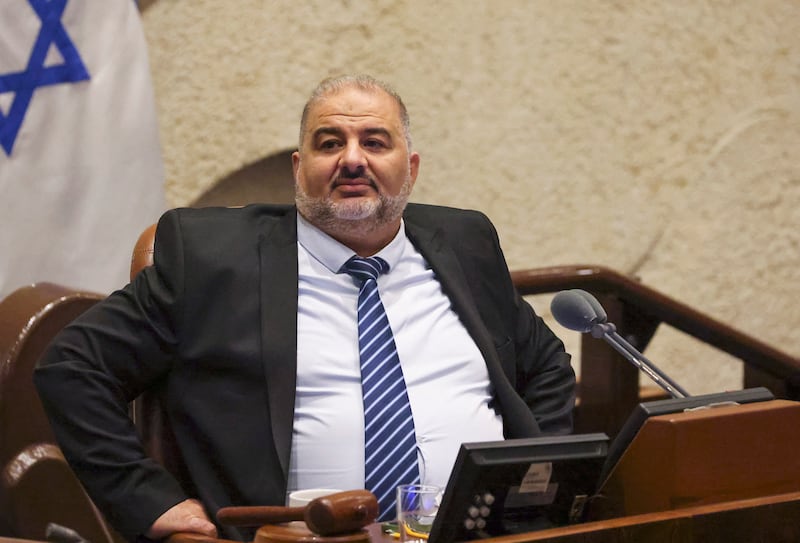
Four years ago, Mansour Abbas, a softly spoken Arab dentist and unlikely political kingmaker, made history in Israel.
His Ra’am party became the first Arab grouping to formally join an Israeli government – and, in doing so, it helped to finally break Binyamin Netanyahu’s more than decade-long grip on power.
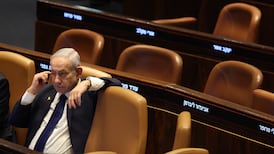
Though the coalition lasted just a year, Abbas hopes history will repeat itself in 2026. As Israelis gear up for fresh polls, he is positioning himself once more as a key figure in dispatching the Israeli prime minister to the opposition benches in a political system dependent on coalition building.
“The Arab vote will be very important in the election,” Abbas said in an interview with the Financial Times. “It will tip the scales.”
READ MORE


Yet any path back to Government will face hostility on multiple fronts, as Jewish attitudes have hardened towards the two million Palestinians with Israeli citizenship since Hamas’s October 7th, 2023 attack, which triggered a wave of fear and hatred.
Abbas said he expects Netanyahu’s far-right Government to try to tap into the mood to delegitimise Arab parties or, in a worst-case scenario, attempt to ban them.
The prime minister sparked speculation that he could pursue the latter course last month after praising US president Donald Trump’s push to designate some chapters of the pan-regional Muslim Brotherhood movement as terrorist organisations. Netanyahu’s promise to “complete the process” of banning the Muslim Brotherhood in Israel was interpreted as a thinly veiled threat to Ra’am, an Islamist party.
The statement has been accompanied by a whispering campaign in Israel’s right-wing media that has suggested – without providing evidence – that charities linked to Ra’am support Hamas.
The attacks, analysts say, are a sign the election campaign has kicked off – and that it will be bitterly fought. By law, the vote must be held by October, but it is expected to take place before that.
Abbas insisted Ra’am has no ties to the Muslim Brotherhood but said he was taking the perceived threat seriously, saying “you can’t underestimate their acts to win the election”.
“We don’t have the privilege to ignore this threat because we see the Government is able to do anything – they feel the state of Israel is their own,” Abbas said. “Netanyahu’s Government is trying to delegitimise us ... they don’t want us to have a political role.”
Some experts believe Netanyahu wouldn’t go that far. If he did, he would have to try to use either terrorism laws or the election committee that approves candidates. Any ban could be appealed at the supreme court.
Others say the threat shouldn’t be dismissed, citing increased right-wing hostility towards Palestinians with Israeli citizenship – who make up about a fifth of the population – and the fact that the supreme court includes more conservative judges than in the past.
“It’s different from the legal and political situation before,” said Hassan Jabareen, of Adalah, a legal rights group. “Netanyahu knows the main obstacle to him is the Arab vote.”
A western official said: “I wouldn’t rule anything out. It’s a bare-knuckle fight.”
Abbas also has to fret about his former coalition partners. In the post-October 7th era, the six opposition parties expected to form an alliance to oust Netanyahu will be wary about – if not outright opposed to – working with an Arab party.
Avigdor Lieberman, the conservative leader of one of the six parties, has already said he would not sit in another coalition with Abbas.
A diverse mix of right-wing, centrist and left-of-centre parties, the 2021 coalition was led by right-winger Naftali Bennett and centrist Yair Lapid. It had a wafer-thin majority and faced constant attack by Netanyahu and his allies, who accused it of partnering with “anti-Zionist Palestinians” whom they tarred as “Muslim Brotherhood”.
Its collapse after a year opened the door for Netanyahu’s return with the most far-right Government in Israel’s history. Analysts say Bennett – whose new party is running second to Netanyahu’s Likud in the polls – subsequently lost some right-wing support, and he will be concerned about shedding more.
Abbas, however, remains sanguine.
“In politics you say what you want before an election and you do what you want after the election,” he said, noting that in 2021 it was Netanyahu who first reached out to him when he was struggling to secure a majority.
“Netanyahu gave me legitimacy in politics, but then turned on me,” Abbas said.
Under Israel’s system of proportional representation, small parties often emerge as kingmakers during post-election coalition building. Polls give the six opposition parties about 58 seats, versus roughly 52 seats for Netanyahu’s coalition.
It remains unclear whether either side will be able to muster the 61 seats needed for a majority, meaning Netanyahu could remain as caretaker prime minister as the country heads to another election – unless Ra’am intervenes. Polls show the Islamist party winning about five seats, potentially enough to swing the balance.
“Maybe he will be the winning card, but it will be much harder because October 7th caused huge harm to the trust between Arabs and Israelis, mainly on the Jewish side,” said Khader Sawead, of the Israel Democracy Institute think-tank. “It needs a lot of work to rebuild the trust.”
Abbas (51) has repeatedly condemned Hamas’s October 7th attack and urged reconciliation between Jews and Palestinian Israelis. He is directing his message to Jewish voters, not leaders such as Bennett and Lieberman, he said.
“I can convince them because I have a vision for the future, and give them hope ... I’m not only looking at my group, but trying to reflect the feelings of the other side,” he said. “After October 7th, we need this partnership between Jews and Arabs.”
Both communities have suffered trauma, he argues: first, Jewish Israelis in the October 7th attack. Then, Arab Israelis, who watched aghast as Israel’s retaliatory war devastated Gaza, while enduring heightened racism and harassment in Israel.
Yet Israel avoided the eruption of intercommunal violence that some feared. “The relationship between Arabs and Jews showed it was stronger than all the incitement,” Abbas said.
But, he says, the stakes have rarely been higher, with Arab parties fearing they may not be allowed to compete in future elections if Netanyahu’s far-right coalition wins another term in office.
“They believe in a Jewish state – they don’t believe in a Jewish democratic state,” Abbas said. – The Financial Times Limited 2025