Iranian authorities have intensified a crackdown on dissent in the wake of mass protests, launching arrests, seizing property and closing businesses connected to a range of prominent figures they have accused of fomenting the unrest.
The office of Tehran’s prosecutor-general on said cases had been opened against 15 sports figures and actors, as well as 10 signatories of a statement issued by Cinema House, the country’s leading film industry association.
It implied they were involved in instigating the protests and said their properties would be used to compensate for damage to private and public assets if convicted.
The properties of some of those individuals have been confiscated, and state television reported about 60 cafes were identified in “direct or indirect” support of “terrorist acts”.
READ MORE


The judiciary on Monday also shut down Ham-Mihan, a leading reformist newspaper, following its reporting on the state of hospitals during the protests and for allegedly ignoring a previous judicial warning over an earlier report.
State media said separately that one news agency and one news website were facing charges of “publishing fake news”.

Iranian authorities say thousands were killed in the protests, which started last month over economic distress before spiralling into the most violent domestic unrest since the 1979 Islamic revolution.
The US-based Human Rights Activist News Agency said it has so far verified 4,519 unrest-linked deaths, including 4,251 protesters, 197 security personnel and 38 bystanders who it says were neither protesters nor security personnel. The group has more than 9,000 additional deaths under review.
Chants quickly escalated from being about economic grievances to calling for the overthrow of the Islamic republic and the removal of supreme leader Ayatollah Ali Khamenei before a brutal crackdown brought the demonstrations to an end.
An internet blackout put in place during the demonstrations earlier this month largely remains in force, while state media reported thousands of arrests have been carried out nationwide.
Tasnim news agency said an entrepreneur it identified as Mohammad Saedinia – who owns a well-known coffee shop chain, a big shopping mall and several other businesses – was arrested and all his properties were confiscated.
Tasnim reported that the value of assets seized from Saedinia was almost equal to the damage caused in Tehran during the protests, which the municipality has estimated at €20 million.
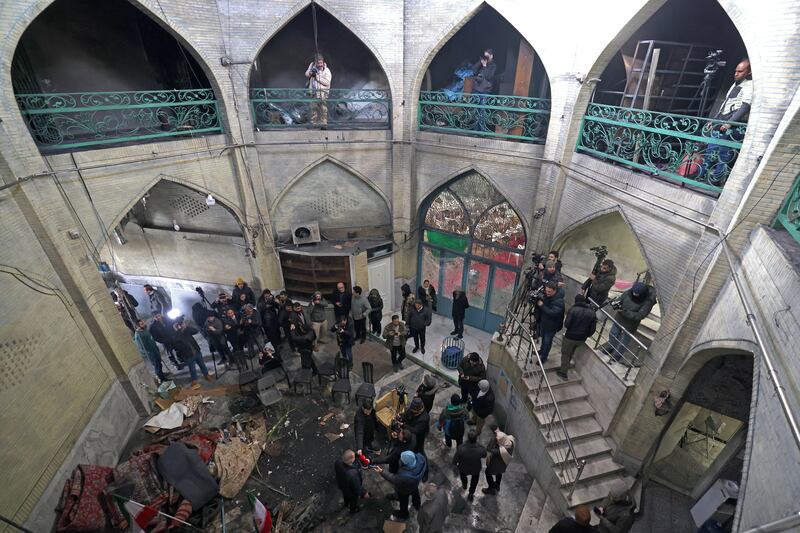
Officials say well-armed agitators killed hundreds of members of the security forces and set fire to state buildings, shops and mosques. Authorities claim the demonstrations were hijacked by “terrorists” armed and paid by Israel and the US.
Iran’s police chief, Ahmad-Reza Radan, on Monday said young people who had joined the “riots” may have been “deceived”.
“Those who were leaders and rioters will face severe punishment,” he said. However, anyone who had been “fooled by [foreign] intelligence services” and acted as “foot soldiers” had three days to surrender in exchange for reduced sentences, he said.
Authorities have also targeted alleged collusion with opposition-aligned satellite television channels, which largely remained accessible in Iran despite the internet blackout and circulated videos of violence.
The prosecutor-general’s office on Tuesday announced “any co-operation, interaction, contact or dissemination of information” with London-based Iran International television – which officials describe as operating “under the command of the Zionist regime” – would be considered a “crime”.
Mizan news agency, which is affiliated with the judiciary, said sending images to Iran International or Manoto, another London-based channel, was “tantamount to co-operating with terrorist groups”.
The government of President Masoud Pezeshkian has promised to restore internet in the coming days.
It also announced more than two-thirds of those killed during the protests would be classified as “martyrs”, making their families eligible for financial benefits and advantages in education and employment.
A family in Tehran contacted by the FT said authorities had approached them and offered “martyr” status for their son, who was killed and had no previous history of protest participation.
The Islamic republic has also sought to ease tensions with other economic incentives. The ministry of housing announced 120,000 new homes would soon be handed over to low-income families.
The education minister said teachers would receive bonuses, with additional payments planned for the next Iranian year, which begins in March.
– Copyright The Financial Times Limited 2026