
As Israelis were still reeling from the horrors of Hamas’s October 7th attack two years ago, hundreds of tech experts mobilised in a makeshift command centre in an abandoned Tel Aviv building.
Tapping into volunteer and funding networks established in early 2023 to protest against judicial reforms spearheaded by Israeli prime minister Benjamin Netanyahu’s far-right government, they moved swiftly to identify people missing in the first days of the attack.
Using face recognition technology and other artificial intelligence tools, they tracked down hundreds of people, before shifting their attention to efforts to free the 250 hostages seized by Hamas in the attack.
Now the hostages are home, but many of the same volunteers are establishing another “war room” – this time with Netanyahu firmly in their sights.
READ MORE


They are hoping that 2026 will finally be the year of reckoning for the prime minister as his government’s term nears its end and Israel prepares to go to the polls. It is a vote that critics of the veteran leader frame as a battle for the soul of the nation.
“It’s a very existential kind of election,” says Karine Nahon, head of Reichman University’s Sammy Ofer School of Communication, and one of the lead organisers. “The message is very simple, ‘Do you want to maintain Israel as a Jewish and democratic country?’ [Or] it’s, ‘Are you ready to have Israel as an authoritarian regime?’”
Now that the US has brokered a tenuous ceasefire to halt the two-year war between Israel and Hamas in Gaza, attention in Israel is shifting again to domestic politics. If the trauma wrought by October 7th brought a fleeting sense of unity to a polarised nation, then the election is poised to expose its deep faultlines.
For those in the opposition’s corner, a victory for Netanyahu’s coalition – the most far-right in Israel’s history – would lead to the further erosion of the country’s democratic values.
It is a process they say began with that contentious push for judicial reforms in 2023, decried by critics as a “judicial coup”. Critics point to a string of proposed legislation to make their point, including bills that would exert more control over the media and restrict foreign funding to non-governmental organisations and moves that would weaken checks on government power.
It is an agenda that members of Netanyahu’s alliance promise to push ahead with if they get a second term, arguing that the judiciary has expanded its powers and is using them to push a liberal agenda.
But even as the opposition insists the stakes have rarely been higher, no one is under any illusion about just how challenging it will be to dislodge Netanyahu.
His Likud party’s polling numbers, which had slumped in the months after October 7th, have recovered to their pre-war levels. Although his far-right alliance remains short of a majority in the 120-member Knesset, Likud is forecast to garner more seats than any opposition party.
And the main six parties that are expected to co-ordinate against Netanyahu could also struggle to garner a majority in a political system dependent on coalition building.
Not only that, but Bibi, as he is known, is a once-in-a-generation figure who has dominated Israeli politics for more than two decades, ruthlessly outmanoeuvring opponents and defying sceptics who prematurely penned his political obituary.
“We are going into a very hard battle,” says Meirav Ben-Ari, a senior official with Yesh Atid, the party headed by Yair Lapid, the official leader of the opposition. “We feel that this is the most crucial election and we will see which Israel we’re going to have. You have to understand that there are people here in Israel that still believe in Netanyahu. That [think] he is the only leader that can bring peace ... They see him and adore him.”
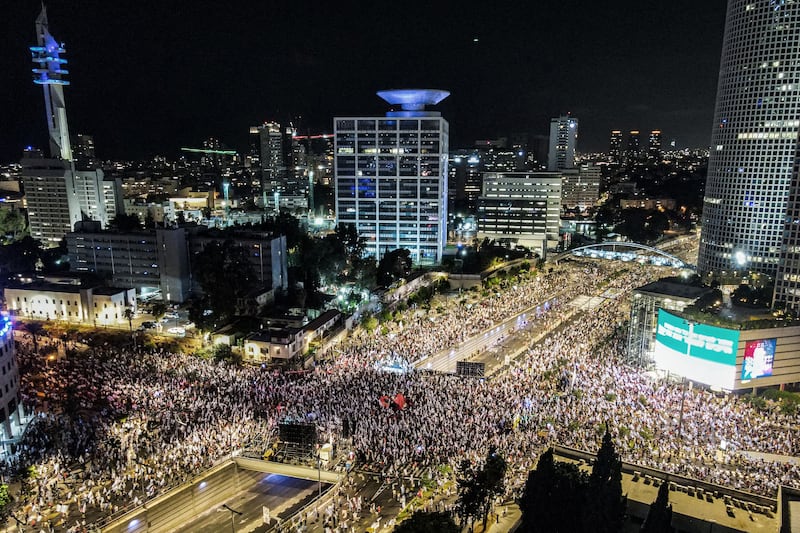
Even before October 7th, 2023, Netanyahu and his far-right coalition were under heavy pressure.
His far-right government, which includes hardline nationalist and ultra-Orthodox parties, was rocked by mass protests against an overhaul of the courts that critics described as a judicial coup. Charges of bribery, fraud and breach of trust – which Netanyahu denies – hung over him.
Then came the attack by Hamas, in which 1,200 people were killed according to Israeli officials. It was Israel’s biggest intelligence failure in decades, and it happened on the watch of the self-proclaimed “Mr Security”. Even some of his supporters doubted he could survive it.
But the crisis brought Netanyahu’s survival instincts to the fore. He shifted blame on to the security establishment, and launched a ferocious retaliatory offensive in Gaza with the backing of a traumatised Jewish population. It devastated the strip and killed more than 71,000 Gazans, according to Palestinian officials.
He dismissed international criticism – and an International Criminal Court arrest warrant for war crimes – as the humanitarian catastrophe caused by Israel’s offensive in Gaza worsened, using the criticism to champion himself as the leader standing up to a hostile world to fight for his nation.
He resisted domestic and global pressure to agree to a ceasefire and hostage deal with Hamas, his mantra being “total victory” even as Israeli critics and the families of hostages began accusing him of putting his political interests above those of the nation.
Emboldened and with few restraints, he escalated a simmering war with Hizbullah in September 2024 that battered the Lebanese militant group, forcing it into a ceasefire on Israel’s terms. In June, he gambled with a 12-day assault on Iran, killing many of its top commanders and briefly drawing in the US as it joined Israel in bombing the Islamic republic’s nuclear sites.
The dramatic offensives are viewed across Israel’s political divide as huge military achievements that, in Netanyahu’s words, changed the balance of power in the Middle East. Now they are set to be vital tools in his election armoury in a nation that has veered further to the right.
As the incumbent, Netanyahu only has to ensure he doesn’t lose. If there is no clear winner – as happened in a string of elections before a 2022 vote – he could remain as caretaker prime minister. Or Netanyahu, as he has done before, could attempt to peel off opponents to form a government.
That means only an outright opposition victory, achieved just once in the past 17 years of Netanyahu’s dominance, would dethrone “King Bibi”.
“Politics-wise, Netanyahu pretty much yet again dug himself out of a political grave,” says Yohanan Plesner, a former member of the Knesset for the centrist Kadima party, now at the Israel Democracy Institute. “The least wise thing you can do is predict Netanyahu’s end in politics.”
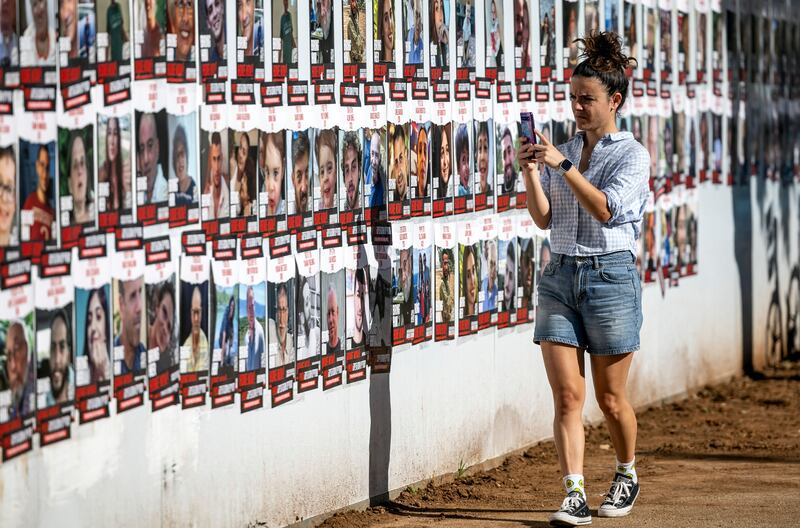
No date has been set for the election. The government’s four-year term is due to end in October and Israel’s longest-serving prime minister is expected to try to delay holding it until closer to that date.
Analysts are betting on a June or September vote as the most likely outcome. But it could come earlier if his coalition fails to pass a budget by the end of March, or splits over a spat related to the exemption of young ultra-Orthodox religious students from military service.
The anti-Netanyahu activists are taking no chances. They have already registered more than 25,000 people to support the election “war room”, says Reichman University’s Nahon, hoping the number will double in the coming months.
They plan to monitor social media to tackle disinformation and “slander” to counter Netanyahu loyalists and bots, with the promise of legal suits against offenders. They will run campaigns to get voters to the polling stations and work on encouraging Israelis in the diaspora – who cannot vote abroad – to return for election day.
The key, opposition figures say, is to ensure the integrity of the vote and avoid the mistakes of the 2022 election when Netanyahu returned to power by aligning with extremists, with ultranationalists Itamar Ben-Gvir and Bezalel Smotrich taking senior cabinet posts.
Back then, the opposition was fractured and there was a surge in turnout in Likud strongholds, while it was stagnant or lower in centre-left areas such as Tel Aviv and in the communal villages known as kibbutzim.
Netanyahu’s alliance won just 30,000 more votes than the opposition bloc, but under Israel’s proportional representation system, secured a clear victory with 64 seats.
“It’s not going to be like before; we are preparing infrastructure to mitigate the option of Netanyahu winning again,” says Nahon. “We want to reach the liberal right, people who really believe in a democratic Jewish state.”
The activists insist they represent a broad spectrum of Israelis, not just the left or peaceniks who have become increasingly peripheral in the almost two decades Netanyahu has steered the country to the right. The campaign has also received support from businesses and philanthropists not just in Israel but also the US and the UK, as liberal-minded Jews around the globe share a deep sense of angst about Israel’s future.
But the problem for the opposition so-called “change” bloc is that several of the parties have little in common except their desire to unseat Netanyahu.

On the right, there are Naftali Bennett and Avigdor Lieberman, both erstwhile allies of Netanyahu. In the centre is Benny Gantz, who previously got lured into a coalition with Netanyahu only to be outmanoeuvred and dumped just as he was to take over a rotating premiership; Gadi Eisenkot, who like Gantz is a former army chief who joined and then left a “unity” government Netanyahu formed after October 7th; and Lapid.
On the left is Yair Golan, leader of the Democrats, which was formed after uniting the traditional Labour Party and a smaller leftist group that were divided in 2022.
Ben-Ari, the official in Lapid’s party, insists it “won’t be like 2022, adding “we don’t have the opportunity ... we cannot lose any votes”.
“If we all sit together in one government, we’ll agree on 80-90 per cent of the issues,” she says. “The [opposition parties] understand the most important thing they need to do is to change this government because it’s doing everything [to tear] apart this nation.”
But while she says Bennett and Lapid, who led an opposition coalition in 2021 that delivered Netanyahu his first election defeat since 2009, are “very good” friends, she acknowledges a gap between Golan and Lieberman.
Those fissures were on display when the opposition leaders made their first joint public appearance at a protest in Tel Aviv. Lieberman did not turn up; Gantz spent the event standing off to the side next to the stage; and Golan flitted around doing his own thing.
“They have to stay together and I hope that they will understand that this is the only scenario that we can win,” Ben-Ari says. “It’s a lot of men with a lot of ego.”
When opposition parties successfully united to defeat Netanyahu in 2021, a crucial factor was Bennett and Lapid’s historic decision to include Mansour Abbas, leader of Ra’am, an Islamist party, in the governing coalition. It was the first time an Arab party had formally been part of an Israeli government as Abbas’s four seats tipped the balance in the opposition’s favour.
But the government collapsed within a year as the fragile coalition with a wafer-thin majority faced constant attack by Netanyahu and his allies.
Abbas could again prove decisive. But in the wake of the backlash against the 2mn Palestinians of Israeli citizenship after October 7, the main parties are wary of partnering with an Arab party. Lieberman has ruled it out, while Ben-Ari says it could happen only if the Zionist parties secured 61 seats.
The outlier is the Democrats’ Golan, a former deputy army chief seen as a hero of October 7th, who believes that to heal Israel’s divisions there needs to be a “national unity government”, including the right, the left and an Arab party – but no groups from Netanyahu’s coalition.
“What is needed right now more than anything else is political imagination ... a different political story,” Golan says. “It’s not about left and right anymore. It’s about democratic people against authoritarians.”
But Nadav Shtrauchler, a political strategist who previously worked with Netanyahu, warns that if the opposition cannot unite under a clear message that goes beyond deriding the prime minister, it will not succeed.
“They need to talk about ideas, values, things that matter to both sides,” Shtrauchler says. The more they target Netanyahu, he adds, the more it mobilises his base. “When they attack Bibi, they are cursing me as a voter.”
The prime minister himself is not likely to shy away from a fight.
A former adviser to the prime minister says his campaign can be expected to attack his opponents for backing the 2023 protests against judicial reform, claiming the decision by groups of military reservists to refuse to report for duty before October 7th was a precipitating cause for Hamas’s attack.
He will also seek to deride them as weak defeatists for pushing for a ceasefire and hostage deal with Hamas months before he finally caved to pressure from US president Donald Trump in September, the former adviser predicts.
“October 7th was inexcusable and the opposition will make the election about October 7th. But he’s got a very strong fight back strategy that will resonate with his base,” the former adviser says. “He’ll have pictures of opposition figures saying, ‘Get the hostages out, get a deal on Hamas’s terms’, and pictures of him and Trump, and Trump calling him a ‘great leader’.”
The Trump factor is another issue the opposition is wary of.
Shtrauchler says Netanyahu began his campaign the day Trump gave a speech to the Knesset and described him as “one of the greatest wartime” leaders.
Trump, lauded in Israel for pushing the deal that finally got the remaining living hostages home, even urged President Isaac Herzog to pardon Netanyahu over his long-running corruption trial – something the prime minister formally requested weeks later.
“It’s an issue in Israel. [Trump] is very unpredictable and maybe he will interfere and will speak to the people of Israel,” says Ben-Ari.
Yet she is betting that Netanyahu will not be able to outrun the legacy of October 7th and the pall it casts over his rule.
“I’m travelling from the north to the south and I meet many people ... people who lost their child in the October 7th attack, people who lost their families. October 7th is still burning in Israel. And you can’t speak about ... the ‘absolute triumph’, like he says,” she says.
“No one believes me, but I think this will be his last term – it will be the day after Netanyahu.” – Copyright The Financial Times Limited 2026


