Gulf states are anxiously waiting for the US military to deliver supplies of interceptors for air-defence systems as they try to fend off volleys of Iranian missiles and swarms of drones, regional officials said.
Missiles for those interceptors, part of aerial defence systems sold to Gulf states by major US manufacturers for billions of dollars, have been in short supply since the start of the war in Ukraine after decades of underinvestment in their procurement.
Iran’s relentless barrages are testing alliances, further exposing holes in western production capacity and underscoring the benefits – at least for now – of asymmetrical warfare, in which the West spends millions of dollars taking down projectiles made for a few thousand.
“We’re concerned – we don’t have enough,” said one senior Gulf official. “All of us in the Gulf don’t have enough. We have asked for more interceptors, but our friends are not yet giving [them to] us.”
READ MORE


Officials from two other Gulf states, which are dependent on US-supplied Patriot and Thaad missile-defence systems, said they too were trying to source interceptors to resupply their missile defences since the war started on Saturday.
The US had committed to supply them but had not yet delivered, officials said. Another person briefed on the matter said the resupply of the interceptors was complicated because all Gulf states, as well as Israel, are burning through their stockpiles and need replenishing.
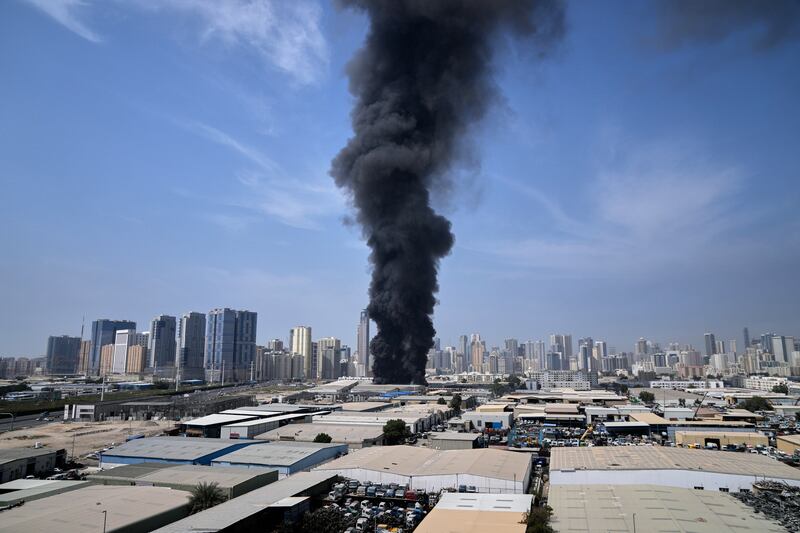
Most of Iran’s missiles and drones have been intercepted by air defence systems. But they have struck hotels, airports, energy facilities and American bases in Gulf states that were sucked into the war after the US and Israel launched their attack on the Islamic republic.
The United Arab Emirates (UAE) and Qatar have both denied reports their stocks were depleted.
The UAE is in talks with allies for replenishments, including laser-based interception systems, according to people familiar with the situation. The US was processing the request but had told the country that all Gulf states needed more, one of the people said.
“They are out in the market right now,” said one of the people. “The coffers are completely open – whatever it takes.” The foreign ministry did not immediately respond to a request for comment.
How quickly the US acts to defend its allies is being closely watched from Ukraine to China. There has also been resentment in the region at the perception that the US has prioritised Israel’s security over their own.

Gulf capitals have watched as Israel has swatted away dense clusters of missiles not just with its home-grown aerial defences but with the support of the USS Gerald Ford carrier group, which is equipped with its own sophisticated interceptors and fighter jets.
Israel’s military said it had received its first airlift of American munitions on Monday.
“US defence is focused on Israel and not the Gulf states where many of the American military bases are located,” Saudi analyst Sulaiman al-Oqaily told Al Jazeera this week.
US defence secretary Pete Hegseth said on Wednesday that “air defence capabilities of [Gulf states] are significant”. Combined with US defences, “we make sure we’re using less munitions but being more effective with what we shoot at”, he said.
[ In maps: War across the Middle EastOpens in new window ]
[ Spain says 'no to war' in response to Trump threatsOpens in new window ]
[ How Israel and the US are co-ordinating their attackOpens in new window ]
[ Who is Mojtaba Khamenei, the possible next leader of Iran?Opens in new window ]
Determining whether Iran will run out of missiles and drones before its targets run out of interceptors is a crucial factor in determining how long this war can continue.
Central to the US and Israeli efforts to stop Iran’s barrages is a tactic known as “shooting the archer”: every time Iran fires a missile, exposing the location of hidden launchers, Israeli or US jets pounce.
In essence, the Americans and the Israelis are betting they can destroy Iran’s launchers and missile stockpiles, in addition to its tens of thousands of Shahed drones, before Washington and its allies run out of interceptors.
The tempo of operations is so intense that the US and Israel have already hit nearly as many targets – almost 4,000 by their public accounts – in four days of combat than Israel struck during the entire 12-day war last June.
A Pentagon briefing to congressional staff on Monday confirmed the US was expending “an enormous amount of munitions”, according to a person familiar with the briefing.
In a post on Truth Social on Monday, US president Donald Trump said parts of US munition stockpiles had “never been higher or better”. But he acknowledged the US’s stocks of precision munitions were “not where [we] want to be”.
The White House did not address a query about resupplying Gulf states. Instead, press secretary Karoline Leavitt said: “The US military has more than enough munitions, ammo and weapons stockpiles to achieve the goals of Operation Epic Fury laid out by president Trump – and beyond.” The Pentagon did not reply to a request for comment.
The drain on interceptors is being noticed by US allies and adversaries alike, with Ukraine’s president Volodymyr Zelenskiy on Monday calling it a “matter of life” for his country.
“We understand ourselves that a long war – if it is long – and the intensity of the military actions will affect the amount of air defence we receive,” he told reporters.
The challenge isn’t new. Iran has for years been preparing for just this scenario by producing vast numbers of missiles and cheap drones. The former chief of the US’s central command, Frank McKenzie, said he “spent a large part of my professional life thinking about” the Iranian missile arsenal.
The solution, albeit a messy one, is what the US and Israel are attempting now, McKenzie said at a webinar on Sunday for Washington-based think-tank Jinsa: “To strike missile storage facilities, transporters, launch sites and command and control centres.”
If successful, that forces Iran into shooting smaller and fewer volleys as time passes. The US chairman of the joint chiefs of staff, Gen Dan Caine, said on Wednesday that the rate at which Iran had fired ballistic missiles had fallen since the war started.
National interceptor stockpiles tend to be closely held secrets, but US budget documents provide some clues.
The US army last year estimated it had fewer than 4,000 interceptors of all varieties, from the cheapest – designed to take out short-range rockets – to the most complex, which take months to manufacture and are designed to take out ballistic missiles above the earth’s atmosphere.

That number does not include other branches of the US military, and does not break down the number Washington considers essential for its own defence.
Even before the war, the greatest shortage was at the most sophisticated end: Thaad anti-missile systems. Last year the US had fired as many as 150 out of 650 it had ordered since 2010, according to people familiar with the issue.
Gen James Mingus, the US army’s vice-chief of staff, also said last year that supplies of Patriot missiles, hundreds of which have been given to Ukraine, were “stressed”. Caine said on Wednesday the US stockpile of Patriots “remains extremely strong”.
But Tom Karako at the Center for Strategic and International Studies said time was not on the side of the US and its allies.
“Whatever can be done to stop those missiles launching needs to be done fast because we cannot afford to keep intercepting them at these numbers,” he said.
“While the capability of our intercept ability is exquisite, we don’t have enough air defences to intercept everything.” – Copyright The Financial Times Limited 2026