Main Points
- Iranian regime releases first statement from new supreme leader who says the closure of the Strait of Hormuz should be continued and US bases will be attacked
- US was responsible for missile strike on elementary school, investigation finds
- More than three million displaced since Iran conflict began, says UN agency
- Oil markets are now facing the “largest supply disruption in history” as the war in Iran continues to block tankers from producing and shipping millions of barrels of crude each day, the world energy watchdog has warned
Key Reads
- Beirut’s new reality: Sudden air strikes, shattered homes and a surge in the displaced
- Vincent Durac: Trump’s ‘little excursion’ could leave Iran even more fragmented, unstable and violent
- Keith Duggan: A vintage Trump performance in America’s heartland: Electoral fraud, Obama-bashing, ‘Newscum’
That is all for this evening.
Follow along tomorrow for more coverage.
Good night.
Protests take place outside US embassy in Dublin

Outside the United States Embassy in Ballsbridge, Dublin, on Thursday evening, anti-war protesters prepared for a rally, reports Jack White.
Then a handful of Iranian counter-protesters, carrying US and Iranian flags, alongside a large placard showing the late supreme leader of Iran, ayatollah Ali Khamenei, surrounded by flames, suddenly arrived.
Others carried large signs showcasing Reza Pahlavi, the exiled son of the last shah of Iran. An Irish anti-war protester could be heard labelling them “monarchists”.
For the full story, read here.
At least six French soldiers were wounded in a drone attack targeting a joint Peshmerga-French base in the Makhmour area of Iraq, Erbil Governor Omed Koshnaw said in a statement and a security source informed of the incident said on Thursday. - Reuters
Ships must coordinate with Iran’s navy to pass through the Strait of Hormuz, says Iran’s foreign ministry
“The security of the Strait of Hormuz is of vital importance to Iran, because the country’s security is tied to the security of the region. With the longest coastlines on the Persian Gulf and the Sea of Oman, Iran has always borne costs to protect this strategic waterway,” said Esmaeil Baghaei, the foreign ministry spokesperson.
“The insecurity created in the region by the United States and the Zionist regime can affect the movement of ships. However, Iran does not want this strait to become insecure, and ships must coordinate with the Iranian navy when passing through so that maritime security is maintained,” Baghaei added. - Reuters
Trump says war on Iran is ‘moving along very rapidly’ and Tehran ‘paying a big price’

President Donald Trump was speaking at a White House event with his wife, Melania, to mark Women’s History Month.
He said, the situation with Iran is “moving along very rapidly.”
“It’s doing very well. Our military is unsurpassed. There’s never been anything like it, nobody’s ever seen anything like it,” he said.
“And we’re doing what has to be done, should have been done during a 47 year period. Could have been done by a lot of different people. They chose not to do it, but they really are a a nation of terror and hate. And they’re paying a big price right now.”
Saudi Arabia intercepts drones over its eastern region
Saudi Arabia’s defence forces said it intercepted a drone heading towards the Shaybah oil field, as well as a ballistic missile and three drones launched towards the country’s eastern region. - Guardian
Netanyahu threatens new supreme leader and says Israeli strikes have killed top Iranian nuclear scientists
Israel’s prime minister Binyamin Netanyahu has issued a threat to kill Iran’s new supreme leader, as he used his first press conference since the start of the war to defend his joint military assault with the US against Iran.
Netanyahu said that Iran was “no longer the same” after nearly two weeks of US-Israeli bombardment and that Tehran had suffered blows to its elite Revolutionary Guards Corps and Basij paramilitary force.
Netanyahu also said that Israel aims to stop Iran from moving its nuclear and ballistic projects underground, and that some Israeli strikes have killed top Iranian nuclear scientists.
The Israeli leader also vowed to keep hitting Hizbullah after the Iran-backed group opened fire on March 2nd to avenge the US-Israeli assassination of Iran’s supreme leader at the start of the war.
Asked about what actions Israel might take against Iran’s new ayatollah Mojtaba Khamenei and Hizbullah chief Naim Qassem, Netanyahu issued a threat: I wouldn’t issue life insurance policies on any of the leaders of the terrorist organization.
He said that Tehran and Hizbullah no longer pose the same threats that they once did.
Netanyahu also said that they can create conditions for a regime change, but that it was up to the Iranian people to take to the streets. “At the end of the day, it depends on you. It is in your hands,” he said. - Guardian
Australian government orders non-essential staff to leave Israel and UAE
The Australian government has told non-essential Australian officials in Israel and the United Arab Emirates to leave due to the deteriorating security situation amid the ongoing war in the Middle East.
Penny Wong, foreign affairs minister, announced the decision on Thursday night in which she said “essential” Australian officials would remain in the countries to help Australians who needed support.
She added that registrations for the department of foreign affairs crisis portal were open for Australians in Bahrain, Kuwait, Lebanon, Iran, Israel, Qatar and the UAE. - Guardian
It would be ‘unconscionable’ for Taoiseach Micheál Martin to ‘hand a bowl of shamrock to Donald Trump,’ says People Before Profit TD Richard Boyd Barrett

Speaking at an anti-war protest outside the US embassy in Ballsbridge, Dublin 4, on Thursday evening, Boyd Barrett said the tradition should not proceed on St Patrick’s Day amid the US and Israel’s “bombing campaign” in the Middle East, reports Jack White.
“I think it’s actually unconscionable that Micheál Martin would hand a bowl of shamrock to Donald Trump and celebrate Ireland’s national day with a man who has armed the genocidal assault by Israel on Palestinians, that is now involved in a war which involves bombing schoolchildren, bombing Lebanon and setting the entire Middle East on fire,” he said.
He added that the conflict is causing an economic crisis, “which is affecting ordinary people here with energy price hikes and further exacerbating a cost-of-living crisis for people in this country and across the world”.
Qatar intercepts more missiles and drones from Iran
Qatar’s defence ministry has said that it intercepted two ballistic missiles, one cruise missile and multiple drones launched from Iran on Thursday.
Israel launches ‘extensive’ strikes on Tehran

The Israel Defense Forces has announced it has launched an “extensive wave” of strikes across Tehran.
It claims it is targeting the infrastructure of the regime. - Guardian
Netanyahu says Iran no longer the same after US-Israeli attacks
Israeli prime minister Binyamin Netanyahu said on Thursday that Iran was no longer the same after nearly two weeks of joint US-Israeli attacks and had suffered blows to its elite forces, as he appeared in his first press conference since the start of the war.
Netanyahu also said he spoke with US president Donald Trump nearly every day and that the two men spoke “openly”.
Pentagon tells US lawmakers that war on Iran cost over $11.3bn in the first week
US defense officials told senators on the armed services committee that the cost of the war on Iran totaled more than $11.3 billion in the first six days alone, according to multiple reports.
The New York Times was first to break the news about the conflict’s price tag, citing three people familiar with the closed-door briefing on Tuesday.
According to the New York Times, the figure did not include many of the costs associated with the operation, such as the buildup of military hardware and personnel ahead of the first strikes.
For that reason, lawmakers expect the number to grow considerably as the Pentagon continues to calculate the costs that accumulated during the first week of military action on Iran.
The administration has not provided a public estimate of the cost of the conflict. Trump said on Wednesday that “we won” the war but that the US will stay in the fight to “finish the job”. - Guardian
The Israeli military struck checkpoints in Iran operated by the Basij
The Israeli military said on Thursday, it struck checkpoints in Tehran operated by the Basij as part of an effort to weaken the rule of Iran’s clerical leaders.
The Basij militia is a part-time paramilitary force under the control of the Islamic Revolutionary Guard Corps (IRGC) that is often used to quell protests inside Iran.
The Israeli military said in a written statement that it had recently identified new Basij roadblocks in Tehran.
“After identifying the deployment, over the past day, the Israeli Air Force, acting on IDF (Israel Defense Forces) intelligence, has targeted the Basij roadblocks and operatives,” the military said.
“These forces led the regime’s primary efforts to suppress internal protests, particularly in recent months, employing severe violence, mass arrests, and the use of force against civilian demonstrators,” the military said. - Reuters
Israel issues a displacement order for southern Lebanon

Israel issued a sweeping new displacement order for southern Lebanon, instructing residents up to 25 miles (over 40 kilometres) away from their border to head north, and striking the centre of Beirut in a sharp escalation of its fight with Hizbullah.
A spokesperson for the Israeli military on Thursday ordered all residents to head north of the Zahrani River “for their safety”, before it began a bombing campaign against what it said were Hizbullah targets.
The order covers major Lebanese cities, including Nabatieh, and dozens of villages.
The Israel Defense Forces also issued an evacuation order for a neighbourhood in central Beirut near a row of restaurants, saying the Israeli military would strike a building there.
The latest orders come just days after Israel issued instructions for people south of the Litani River and Beirut’s southern suburbs.
Nearly a million people have already been internally displaced in 10 days of fighting. - Guardian
Iran security chief says will not relent until US ‘sorry for grave miscalculation’
Iranian security chief Ali Larijani said on Thursday that his country would not give up fighting until the United States came to regret the “grave miscalculation” of launching its war against the Islamic republic.
“Trump says he is looking for a speedy victory. While starting a war is easy, it cannot be won with a few tweets. We will not relent until making you sorry for this grave miscalculation,” Larijani said on X. - Guardian
Israel said it’s preparing to expand an incursion into southern Lebanon to fight Hizbullah militants


Lebanese authorities have called for a ceasefire and offered to directly negotiate with Israel, but have acknowledged their failure to disarm the militant group since a November 2024 truce.
Israel said on Thursday that given Beirut’s failure, it would expand the campaign, which has so far killed hundreds and displaced nearly one million people, following a night of intense attacks by both sides.
“I warned the Lebanese president that if the Lebanese government does not know how to control the territory and prevent Hizbullah from threatening the northern communities and firing at Israel — we will take the territory and do it ourselves,” Israeli defence minister Israel Katz said in a statement on Thursday. - Bloomberg
Many ships can still pass through the Strait of Hormuz if they coordinate with the Iranian navy, Iran’s foreign ministry spokesperson Esmaeil Baghaei said in comments carried by Mehr news agency.
“After the current events, generally we cannot return to conditions before February 28th (start of current Iran war)... as we have understood how important the safety of the Strait of Hormuz is, and so did the others,” the spokesperson added. - Reuters
Middle East war creating ‘largest supply disruption in the history of oil markets’

Oil markets are now facing the “largest supply disruption in history” as the war in Iran continues to block tankers from producing and shipping millions of barrels of crude each day, the world energy watchdog has warned.
The International Energy Agency (IEA) said the supply shock ignited by Iran’s effective blockade of the Strait of Hormuz meant the world faced a deeper crisis than after the Yom Kippur war of 1973 and the 2022 outbreak of war in Ukraine.
The warning came as Iran issued a statement that was said to be the first from its new supreme leader, Mojtaba Khamenei, to call for the Strait of Hormuz to “remain closed”, in a blow to hopes of a resolution to the crisis.
In response, global oil prices again passed $100 (£75) (€87) a barrel on Thursday as widespread Iranian attacks on energy facilities in the Middle East overshadowed a vast release of government reserves.
In an attempt to calm concerns over oil supplies, the IEA ordered the largest release of government reserves in its history on Wednesday, when its 32 members unanimously agreed to release 400 million barrels of emergency crude.
In addition, the US agreed to release 172 million barrels of crude oil from its strategic petroleum reserve, in the boldest attempt yet by the White House to bring down oil prices. - Guardian
The Trump administration has organized nearly 50 flights to return US citizens from the Middle East since the US-Israeli war with Iran began, a state department official said on Thursday, and officials said demand for the flights has declined. - Reuters
British troops under attack at Iraqi base
British troops came under attack at a military base in Erbil, Iraq, on Wednesday night, defence chiefs have said.
Defence secretary John Healey was briefed on the latest updates on British action in the conflict in the Middle East during a visit to the Northwood military headquarters in Hertfordshire on Thursday.
There have been “no British casualties” and the US sustained “some” casualties overnight but “nothing too serious”, the UK’s chief of joint operations, lieutenant general Nick Perry, said. - Press Association
Israel begins wave of strikes across Beirut

The Israeli military said it had begun a wave of strikes across Beirut on Thursday, after it warned residents of a central neighbourhood of the Lebanese capital it would target a building there.
“The IDF has begun a wave of strikes targeting Hizbullah terrorist infrastructure across Beirut,” a military statement said, as AFPTV footage showed a strike hitting a central Beirut building. - Guardian
What’s happening at the Strait of Hormuz - and why it matters
Michael Jansen explains the situation at the maritime chokepoint between much of the world’s oil and gas and its global markets.
Smart and sensible ideas to help consumers ease pain of rising energy bills
The war in the Middle East is having a concerning effect on consumer bills, from heating to appliance use to car costs.
Conor Pope outlines some sensible tactics to mitigate the hit we’re likely to take to our budgets.
The US Navy has revealed a fire on the USS Gerald Ford, which it says was not combat-related.
The aircraft carrier, the largest in the world, is currently positioned in the Red Sea, to the west of the Arabian Peninsula, having arrived recently to the Middle East. It is there “in support of Operation Epic Fury”.

Strikes on Lebanon
In the war’s other front, a wave of Israeli strikes against Lebanon is ongoing. An air strike recently hit a building in central Beirut - not in the southern suburbs, where Hizbullah holds sway - according to Reuters.
The death toll in Lebanon has risen to 687 since March 2nd, the Lebanese health ministry said.
France said yesterday that it would triple its humanitarian aid to the Mediterranean nation. There is widespread displacement from the south of the country amid waves of Israeli and Hizbullah strikes, as well as skirmishes in the border area.
Putin behind Iran military methods - UK
UK defence secretary John Healey has said Vladimir Putin’s “hidden hand” lies behind Iranian military methods, after a night in which Tehran’s drones struck a British camp in Erbil, northern Iraq.
Healey was speaking after British officers at the UK’s military headquarters in north-west London had told him that Iranian and Iranian proxy drone pilots were increasingly adopting tactics “from the Russians”. Iran has already fired more than 2,000 Shahed drones – long-range weapons developed by Tehran and heavily used by Russia against Ukraine – across the Middle East in response to the US-Israeli attack launched on February 28th.
Lt Gen Nick Perry, the chief of joint operations, told Healey it appeared that Russia had since passed back tactical advice to Iran and its proxies on how to fly them. Iranian drone pilots were now “flying them much lower, and therefore they are more effective” in hitting targets, Perry said.
That had “proven problematic”, he said, because Shahed drones were becoming one of Tehran’s more effective weapons as the conflict heads towards a third week. –Guardian
Oil price rising
The price of Brent crude, a key indicator for oil markets, has ticked above $100 a barrel again this afternoon. It’s a sign that the largest ever release of oil reserves announced by the International Energy Agency yesterday has not had much of a dampening effect on prices.
The current price is over a third higher than it was at the onset of strikes almost two weeks ago.
The situation at oil production facilities has been worsening in recent days. Bahrain told residents to stay indoors after fuel tanks were struck, while Iraq suspended oil port operations after an attack on tankers.
Traffic remains stilled on the Strait of Hormuz.
Elsewhere, US president Donald Trump has said the Iranian national soccer team was welcome to participate in the World Cup but that he believed it was not appropriate that they be there “for their own life and safety.”
British prime minister says he will work to de-escalate war in Middle East
British prime minister Keir Starmer has said he will work to de-escalate the war in the Middle East.
Starmer told reporters in Northern Ireland on Thursday that his role was to “work with other international leaders to try to de-escalate the situation”.
He also pledged to co-ordinate with other leaders on the supply of oil, adding: “That’s what we’re doing 24/7…talking to allies, talking to those in the region, which I have been doing continually.”

Iran’s newly-appointed supreme leader ‘lightly’ injured
Iran’s newly-appointed supreme leader Mojtaba Khamenei first public comments came by way of a statement on Iranian state television.
He did not appear on camera for his first public remarks as the newly appointed supreme leader of Iran. Instead, a news anchor read his statement.
Tehran’s ambassador to Cyprus confirmed on Wednesday that he had been injured and was lucky to survive a strike on the first day of the conflict which levelled the late ayatollah’s residence.
“He was also there and he was injured in that bombardment but I haven’t seen that reflected in the foreign news,” he told the Guardian. “I have heard that he was injured in his legs and hand and arm … I think he is in the hospital because he is injured.”
Khamenei’s wife, Zahra, was among those killed in the attack. He referenced her and his father in his first public remarks.
“Apart from my father... I have lost my dear and loyal wife, my devoted sister... as well as her young child and the husband of my other sister,” he said.

Leverage of closing Strait of Hormuz should be used as leverage, says Iran’s supreme leader
Iran’s supreme leader Ayatollah Mojtaba Khamenei has said that the leverage of closing the Strait of Hormuz should be used and that Iran’s attacks on Gulf Arab neighbours will continue.
His first statement since his appointment was read on state television by a news anchor.
Khamenei did not appear on camera, and an Israeli assessment indicates he was wounded in the war’s opening salvo.
Iran’s unrelenting attacks on shipping traffic and energy infrastructure in the Persian Gulf pushed oil back above $100 a barrel on Thursday, as American and Israeli strikes pounded the Islamic Republic.
Iran’s president said its attacks would continue until Iran gets security guarantees against another assault.
US President Donald Trump has promised to “finish the job”, even though he claimed Iran is “virtually destroyed”.
Iran-backed Hezbollah militants, meanwhile, launched some 200 rockets from Lebanon at northern Israel while sirens rang out and loud booms from the interception of Iranian missiles could be heard in other areas.
Israel launched another wave of attacks on Tehran and in Lebanon, where 11 people were killed.

Iranian regime releases first statement from new supreme leader
Iran’s ruling regime is broadcasting a statement on state television which it says is from Mojtaba Khamenei, the country’s new supreme leader.
Khamenei says the closure of the Strait of Hormuz should be continued as a tool to pressure the enemy.
He said all US bases should immediately be closed in the region and says those bases will be attacked.
“We send a message to the leaders of the region and emphasise that we are going to have good relations with the countries around us,” the statement said.
“But the existence of the US bases in some of these countries and usage of those bases to attack Iran is not benefiting the region and they must be closed.
“As we said, we are not an enemy of the countries around us, and we are only targeting the bases of those Americans.”
The statement also thanks “the people of Iran from all walks of life who stood against the enemy”.
The supreme leader sent condolences to the people who have “lost their loved ones during the war”, saying damages would be compensated for.
“The crime against humanity and against the children... will not be ignored,” it added.
There were also calls for unity among the Iranian people.
“We have to protect this unity and this is only possible when we are together and we find common ground.”
The statement called for compensation for damages during the war.
“The damages and the personal properties of the people that were damaged during the war must be compensated,” it said.
“We are going to demand compensation. And if they do not accept, we are going to take their assets. And if they do not accept, we are going to destroy their assets.”

Taoiseach due to give St Patrick’s Day shamrock to ‘monstrous war monger’, says PBP TD
The Irish Anti-War Movement has called a protest against the US war on Iran at 5pm at the US Embassy in Ballsbridge.
People Before Profit TD Richard Boyd Barrett, who is due to address the protest, said: “We are witnessing barbaric, imperialist violence by the United States and its client state, Israel.
“This is happening while the Taoiseach Micheál Martin is preparing to go to the White House to give shamrock to the monstrous war monger that is Donald Trump.
“This comes as Israel, armed to the teeth by the United States, continues its genocidal onslaught against the people of Palestine and Gaza.
“Our national day must not be used to greenwash Trump and his wars of aggression and arming of genocide. It will be a travesty and a national embarrassment. Trump is a war criminal, and I repeat our call for the St Patrick’s Day engagement to be cancelled.”
The first message from Iran’s new supreme leader, Mojtaba Khamenei, will be released shortly, Iranian state media is reporting this afternoon.
UNIFIL ‘deeply concerned’ by serious escalation of hostilities across Blue Line
UNIFIL has said it is deeply concerned about the serious escalation of hostilities across the Blue Line on Wednesday night.
Peacekeepers detected over 120 projectiles launched from Lebanese territory towards Israel, and seven Israeli air attacks and over 120 incidents of artillery fire in response.
“All of these acts are serious violations of resolution 1701,” it said.
“The recent escalation along the Blue Line is again causing the displacement of hundreds of thousands of residents and extensive destruction of neighbourhoods and villages. Hundreds of people have reportedly been killed, and more injured. As always in conflict, it is civilians who suffer most.”
Peacekeepers remain on the ground, impartially monitoring and reporting developments, liaising between the parties and - where possible - facilitating humanitarian support and the protection of civilians, it said. .
“We continue to urge the parties to end hostilities and recommit to the full implementation of resolution 1701, for the safety and security of civilians on both sides of the Blue Line,” it added.
“UNIFIL is in close contact with Lebanese and Israeli officials and we are prepared to support them in this, in any way we can.”

Thailand’s foreign ministry has demanded an apology from Iran over damage caused to a Thai vessel that was hit by a projectile in the Strait of Hormuz on Wednesday, which led to a fire and forced the crew to abandon ship.
The ministry said it was seeking clarity from Iran’s ambassador on Thursday on the facts surrounding the incident.
Iran’s Revolutionary Guards said in a statement carried by the Tasnim news agency that the ship was “fired upon by Iranian fighters”.
More than three million displaced since Iran conflict began, says UN agency
Up to 3.2 million people have been displaced inside Iran since the conflict began on February 28th, the United Nations refugee agency has said.
“This figure is likely to continue rising as hostilities persist, marking a worrying escalation in humanitarian needs,” UNHCR said in a statement, citing preliminary assessments based on the number of uprooted households.

Russia calls on Israel and US to end their attacks on Iran
Russia has called on Israel and the United States to end their attacks on Iran and come to the negotiating table.
Russian foreign ministry spokeswoman Maria Zakharova said the humanitarian situation in the region was extremely difficult and the escalation of the conflict was cause for deep concern.
Israel to expand operations in Lebanon, defence minister says
The Israeli military has been instructed to expand its operations in Lebanon, defence minister Israel Katz said, after Hezbollah fired rockets at Israel overnight.
Katz warned Lebanese president Joseph Aoun that if the Lebanese government could not prevent Hezbollah from attacking Israel, it would “do it ourselves”, according to a statement released by his office.

Australia has told “non-essential” diplomats to leave Israel and the United Arab Emirates, its foreign minister Penny Wong said on Thursday.
Essential officials would remain in both Israel and the UAE to support Australian citizens who need it, Wong said on X.
US was responsible for missile strike on elementary school, investigation finds
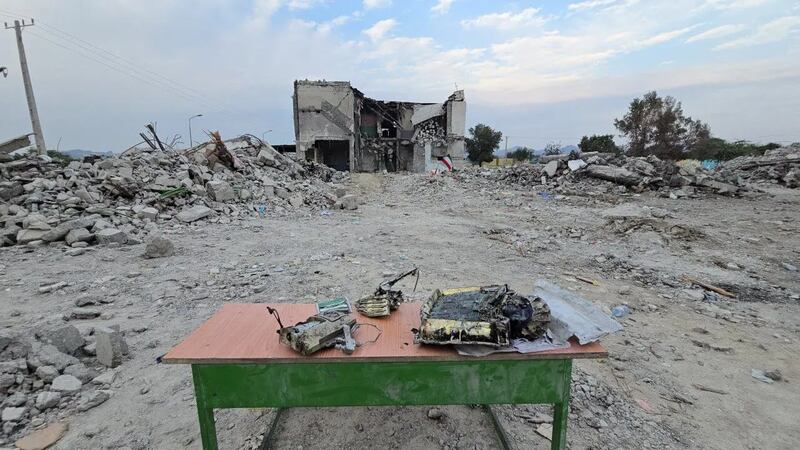
An ongoing military investigation has determined that the United States is responsible for a deadly Tomahawk missile strike on an Iranian elementary school, according to US officials and others familiar with the preliminary findings.
The February 28th strike on the Shajarah Tayyebeh primary school building was the result of a targeting mistake by the US military, which was conducting strikes on an adjacent Iranian base of which the school building was formerly a part, the preliminary investigation found.
Officers at US Central Command created the target co-ordinates for the strike using outdated data provided by the Defense Intelligence Agency, people briefed on the investigation said.
Officials emphasised that the findings are preliminary and that there are important unanswered questions about why the outdated information had not been double checked.
Iranian officials have said the death toll was at least 175 people, most of them children.
Middle East conflict creating largest supply disruption in history of global oil market
The Iran war is causing unprecedented turmoil in oil markets, hitting 7.5 per cent of global supply and an even bigger swath of exports, the International Energy Agency has said.
“The war in the Middle East is creating the largest supply disruption in the history of the global oil market,” the IEA said in its monthly report on Thursday.
The previous day, its members agreed to release an unprecedented 400 million barrels from emergency reserves in a bid to calm the market.

US and Israeli officials have said their aim is to end Iran’s ability to project force beyond its borders and destroy its nuclear programme.
Trump and other officials have sent mixed messages about whether regime change was another goal after supreme leader ayatollah Ali Khamenei was killed in initial strikes and replaced by his son Mojtaba Khamenei, who an Iranian official said was lightly wounded.
US intelligence indicates that Iran’s leadership is still largely intact and is not at risk of collapse any time soon, according to sources familiar with the matter.
ABC News said the Federal Bureau of Investigation had warned of Iranian drones potentially striking the US west coast, although Trump said he was not worried that Iran might launch strikes on US soil.
The US state department also warned that Iran and aligned militias may be planning to target US-owned oil and energy infrastructure in Iraq and warned that militias had in the past targeted hotels frequented by Americans.
The US military told Iranians to stay clear of ports with Iranian navy facilities, drawing a warning from Iran’s military that if the ports were threatened, economic and trade centres in the region would be “legitimate targets”.

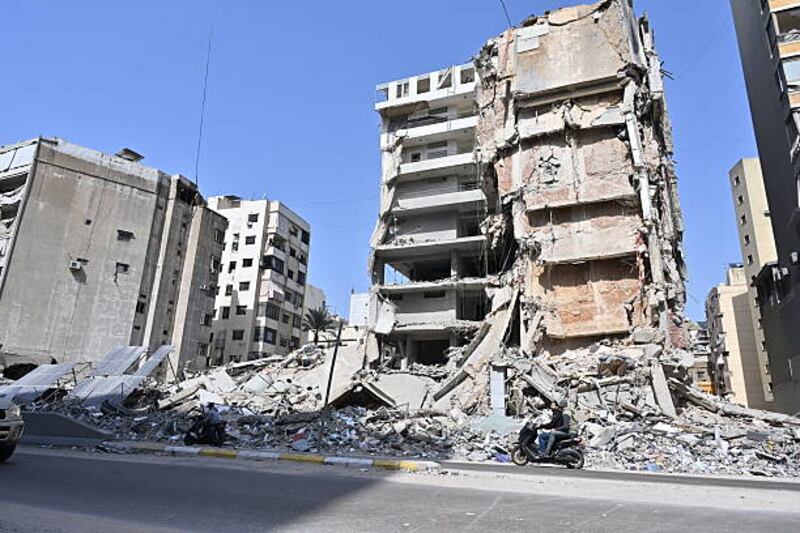
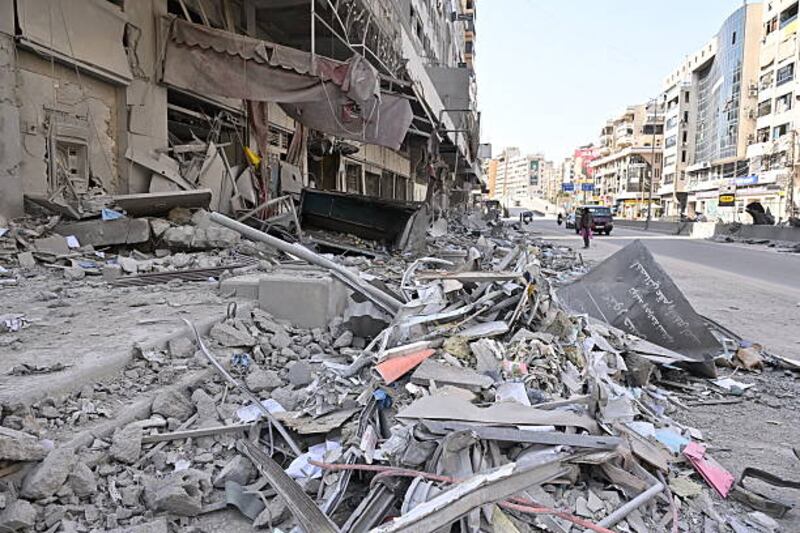
Hours after an Israeli air strike hit central Beirut without warning, shards of glass were still raining on to the street below, settling on a line of mangled, dust‑coated cars, writes Sally Hayden.
Locals stared upwards at the damage, some still in shock that their neighbourhood had been hit. This area, Aisha Bakkar, is outside of the evacuation zones which now cover huge swathes of greater Beirut.
The attack on Wednesday seemingly targeted one or two apartments in a residential building in a strike which injured four people, said Lebanon’s health ministry. Locals said they did not know who was targeted.
Read her full piece from Beirut here.

Iran also targeted fuel tanks at a facility in Bahrain’s Muharraq, the interior ministry said, while drones struck oil storage facilities at Salalah port on Wednesday, Oman’s state news agency reported. Saudi Arabia said it had also intercepted several drones heading towards its Shaybah oilfield on Thursday.
So far there has been no sign that ships can safely sail through the Strait of Hormuz, the now-blockaded channel along the Iranian coast that serves as a conduit for around a fifth of the world’s oil.
On Wednesday, an Iranian military spokesperson said the Strait was “undoubtedly” under Iran’s control and the G7 group of nations - the United States, Canada, Japan, Italy, Britain, Germany and France - agreed to examine the option of providing escort for ships so they can navigate freely in the Gulf.
Trump said US forces had knocked out 58 Iranian naval ships and that Iran was “pretty much at the end of the line.”
He said the US would now “look very strongly” at the Strait of Hormuz, adding: “The straits are in great shape. We’ve knocked out all of their boats. They have some missiles, but not very many.” Trump said earlier ships “should” transit through the strait but sources said Iran had deployed about a dozen mines in the channel, further complicating the blockade.
Iranian weapons also struck elsewhere in the Gulf, with Kuwait reporting a drone hit a building in the south injuring two, while Dubai authorities responded to a drone that fell on a building near the vicinity of Dubai Creek Harbour.
Another container vessel reported being struck by an unknown projectile near the United Arab Emirates on Thursday, a maritime security authority said.
‘Get ready for oil to be $200 a barrel’, says Iran
At a campaign-style rally in Kentucky ahead of November midterm elections in which his Republican party is trailing badly, US president Donald Trump said the United States had won the war but didn’t want to have to go back every two years.
“We don’t want to leave early do we?” he said on Wednesday. “We got to finish the job.”
Iran has made clear it intends to impose a prolonged economic shock, with the spokesperson for Iran’s military command saying in remarks directed at the US on Wednesday: “Get ready for oil to be $200 a barrel, because the oil price depends on regional security, which you have destabilised.”
Oil prices, which shot up earlier in the week to nearly $120 a barrel before retreating, jumped almost 10 per cent back above $100 a barrel in Asian trade on Thursday amid renewed fears about supply disruption. Wall Street’s main share indexes fell and stocks in Asia followed suit.
Iranian explosive-laden boats appear to have attacked two fuel tankers in Iraqi waters setting them ablaze and killing one crew member after projectiles struck three merchant vessels in Gulf waters, port officials, maritime security and risk firms said.
“This appears to mark a direct and forceful Iranian response to the IEA’s overnight announcement of a massive strategic reserve release aimed at cooling runaway prices,” said Tony Sycamore, analyst at IG.
The International Energy Agency, made up of major oil consuming nations, on Wednesday recommended releasing 400 million barrels from global strategic reserves to dampen one of the worst oil shocks since the 1970s, the biggest such intervention in history.
Trump said the IEA decision “will substantially reduce oil prices as we end this threat to America and the world.”
US energy secretary Chris Wright said Trump had authorised the release of 172 million barrels from the US Strategic Petroleum Reserve from next week.
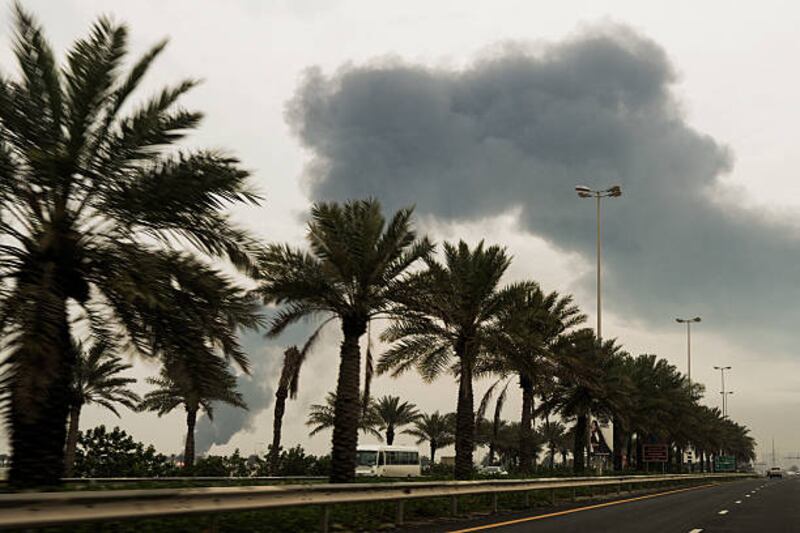
Two tankers ablaze in Iraqi waters
Two tankers were ablaze in Iraqi waters on Thursday after what appeared to be Iranian strikes, the latest wave of attacks on oil and transport facilities across the Middle East, as Iran warned the world should be ready for oil to hit $200 a barrel.
Unleashed with joint US and Israeli air strikes on Iran almost two weeks ago, the war has so far killed about 2,000 people and thrown global energy markets and transport into chaos.
The conflict has spread across the Middle East and prompted plans for a record release of strategic oil reserves to dampen one of the worst fuel shocks since the 1970s.
The United Nations Children’s Fund (Unicef) said more than 1,100 children had been killed or injured.

In the US, more than 40 Democratic senators have urged defence secretary Pete Hegseth to provide answers on the air strike on a girls’ primary school on the opening day of the war and hold those responsible to account. Iran has blamed the US for the attack, in which at least 175 people, mainly schoolgirls, were reportedly killed, saying video and satellite images show a US Tomahawk missile hit the structure.
A preliminary investigation by US authorities has found that the strike was the result of outdated target co-ordinates used by the US military, according to a New York Times report. US president Donald Trump, however, has said it was “done by Iran”, without offering evidence.
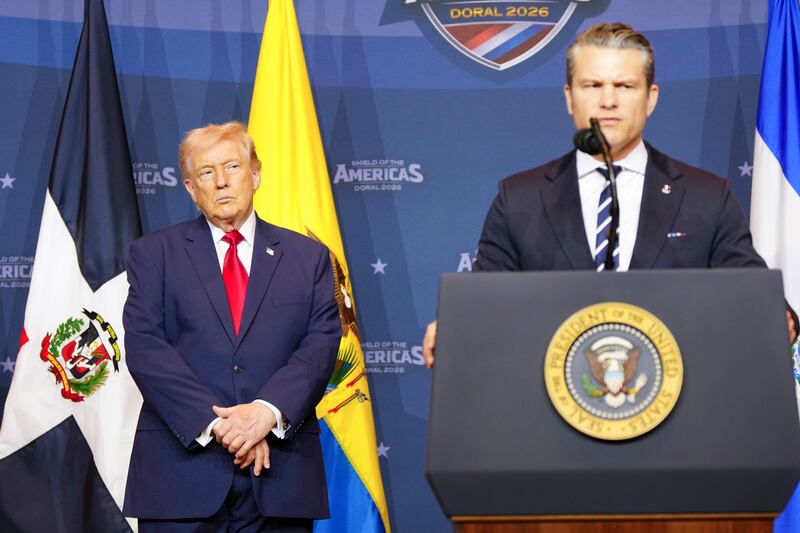
The US and Israel kept up their pounding of targets across Iran on Wednesday. US forces say they have struck more than 5,500 targets inside Iran, including over 60 naval ships. Iran says more than 1,200 people have been killed.
A large funeral ceremony took place in Tehran’s Revolution Square for senior Iranian officials killed in the opening strike of the war, including the armed forces chief and head of the Revolutionary Guard. Thousands attended, waving the national flag and shouting “Death to America” in a show of support for the regime.
Meanwhile, Iran confirmed that Mojtaba Khamenei, the country’s new supreme leader, had been “lightly injured” in an air strike but was still active, even though he hasn’t made a public statement since his appointment earlier this week.

Elsewhere, there were scenes of joy and relief at Dublin Airport on Wednesday night as passengers travelling on a second Government-chartered flight from the Gulf region arrived safe and sound.
The flight, which took off from Abu Dhabi in the United Arab Emirates (UAE), helped to bring back some of the Irish citizens who became stranded as a result of the regional conflict sparked by US-Israeli strikes on Iran.
Many of those who disembarked had praise for the Irish Embassy in the UAE for keeping them informed and also for the efforts of Emirati authorities in terms of providing safety updates and intercepting Iranian drones.

Iran said the world should prepare for soaring energy prices as its forces hit merchant ships and the International Energy Agency recommends a large release of strategic reserves to dampen one of the worst oil shocks since the 1970s.
Three commercial ships were hit by projectiles in the Strait of Hormuz and Iran launched fresh strikes against its oil-exporting neighbours, warning that crude oil prices could rise to $200 a barrel.
“Any vessel whose oil cargo or the vessel itself belongs to the United States, the Zionist regime or their hostile allies will be considered legitimate targets,” the Iranian military said.
Read the full piece here.
US forces say they have struck more than 5,500 targets inside Iran, including over 60 naval ships