
Friday: 10 things that happened today
- The US-Israel war on Iran entered its 14th day, with air strikes continuing across the Gulf
- The US state department is offering rewards of up to $10 million to anyone with information on Iran’s new supreme leader and other senior officials
- US military has elevated its investigation into the strike on an Iranian girls’ school that killed 168 schoolchildren
- The US military has confirmed that all six crew members on board a refuelling plane that went down in western Iraq have died
- US president Donald Trump threatened Iran with further attacks after the Islamic Republic’s new leader signaled defiance
- Oil ends above $100 a barrel for the second day in a row
- The United States has issued a 30-day waiver for countries to buy sanctioned Russian oil and petroleum products currently stranded at sea
- Canada will release millions of oil barrels in effort to stabilise energy markets
- Tehran will keep Strait of Hormuz closed and continue attacks on US assets, a speech read out on state TV said
- Government has ‘no immediate concerns’ about disruption to oil supplies
Key Reads
- What we know about Mojtaba Khamenei, Iran’s new supreme leader
- Bellicose, vengeful, unapologetic: Why Pete Hegseth sees moral purpose in war as weakness
- Sally Hayden: ‘The children are afraid’: Beirut’s southern suburbs reel under relentless air strikes
- What is happening at the Strait of Hormuz and why could it trigger a cost-of-living crisis?
- Mark Weiss in Israel: Race for Iran’s enriched uranium: US and Israel want to end Tehran’s nuclear bomb ambitions
That is all for this evening.
Follow along tomorrow for more coverage.
Good night.
Further explosions in Tehran as US confirms major ship movements towards Iran
A large explosion rocked a central square of the Iranian capital Tehran on Friday, where thousands were gathered for an annual state-organised rally. Israel had warned that it would target the area in central Tehran.
Meanwhile, the US military has ordered 2,500 marines and an amphibious assault ship to the Middle East, an official said in confirmation of previous reports of the movement of forces towards the region.
As first reported by The Wall Street Journal, Japan-based USS Tripoli and the 31st marine expeditionary unit are en route. Images released by the US military suggest they have been at sea in the Pacific Ocean for several days.
The deployment does not necessarily indicate that a ground operation is imminent or will take place at all.
Trump clears way for oil production of California coast
The Trump administration on Friday took action to clear the way for oil production off the California coast in a bid to ease the global fuel pressures created by the war with Iran.
The announcement by energy secretary Chris Wright follows an executive order signed by president Donald Trump on Friday and directs Sable Offshore to begin restoring operations for the Santa Ynez Unit and Santa Ynez Pipeline System in California.
“Today’s order will strengthen America’s oil supply and restore a pipeline system vital to our national security and defense, ensuring that West Coast military installations have the reliable energy critical to military readiness,” Wright said in a statement. - Bloomberg
Canada to release millions of oil barrels in effort to stabilise energy markets
Canadian will release with 23.6 million barrels of oil from domestic producers as part of a “coordinated release” by the 32 members of the International Energy Agency (IEA), the state’s energy minister Tim Hodgson said on Friday.
Hodgson said the IEA release is the “largest ever” in the organisation’s history, some 400 million barrels, and is aiming to help to stabilise energy markets and supply.
Canada will expand its natural gas exports in the coming months “providing additional fuel to allies around the world, Hodgson said on X.
Please see my statement below. pic.twitter.com/696h0VJzbZ
— Tim Hodgson (@timhodgsonmt) March 13, 2026
US-owned tanker attacked in Iraq hit by unmanned boats, owners say
Two explosive-laden, unmanned boats rammed the Safesea Vishnu tanker in an Iraqi seaport on Wednesday, an early assessment suggests.
The analysis of the incident suggests these collisions sparked a fiery blast that engulfed the vessel’s port side in flames, according to an early assessment conducted by the vessel’s US owner and operator.
“After speaking to the surviving crew members, the attack appears to have been deliberate and calculated,” New Jersey-based Safesea Group said in a statement.
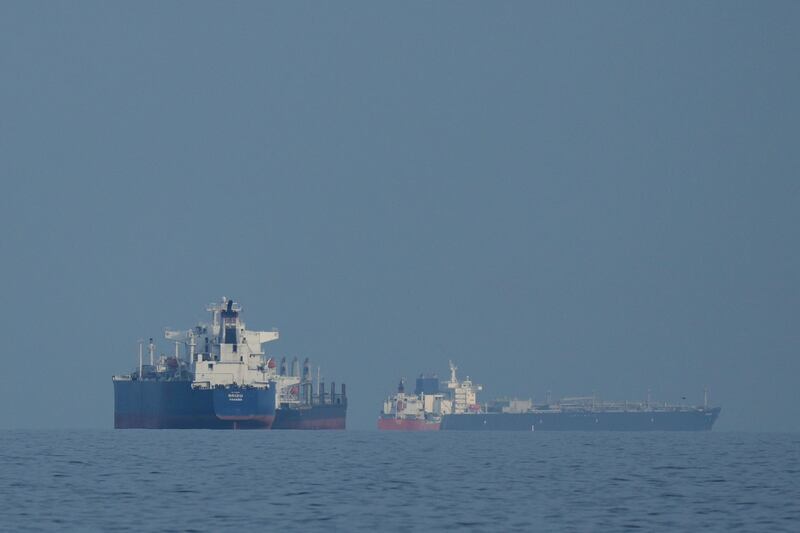
At least 16 tankers and other vessels have come under attack in the Gulf during the US-Israeli war with Iran. Hundreds more have dropped anchor due to Tehran’s threat to attack vessels in or near the Strait of Hormuz, which is used to transport roughly one-fifth of the world’s oil. - Reuters
Video suggests US-made launcher fired missiles from Bahrain towards Iran
A video verified by The New York Times shows ballistic missiles being launched from Bahrain in the direction of Iran, in what appears to be the first confirmed instance of an attack on the Islamic Republic originating from a Persian Gulf country since the war began.
It is unclear from the video whether the US or Bahraini military fired the missiles. Defense experts who have reviewed the footage say that at least one of the missiles was fired from US-made equipment.
Iran attacked and accused Gulf states of allowing their countries to be used as a launchpad for US attacks, but most Gulf countries have denied that and have publicly ruled out allowing their land or airspace to be used for military operations against Iran.
The government of Bahrain said in a statement to the New York Times that its military “has not participated in any offensive operations.”
The kingdom has so far remained silent on whether it would allow the United States to conduct attacks on Iran from its territory. The government did not answer an emailed question about whether the video showed US operations in Bahrain.
Asked Thursday about the launching of short-range ballistic missiles at Iran from Bahrain, a Pentagon spokesperson declined to comment. - Reuters.`
Closure of Strait of Hormuz could impact humanitarian operations, UN official warns
A top United Nations humanitarian official warned on Friday that closure of the Strait of Hormuz could have “immense impact” on humanitarian operations amid the US-Israeli war on Iran.
“When ships stop moving through that Strait, the consequences travel fast. Food, medicine, fertilizer and other supplies become harder to move and more expensive to deliver,” Tom Fletcher, the UN under-secretary-general for humanitarian affairs and emergency relief coordinator, said in a statement. - Reuters
While Trump calls Iranian regime leaders ‘deranged scumbags’, death tolls rise
US president Donald Trump has said the US will strike Iran “very hard over the next week”, while calling Iranian regime leaders “deranged scumbags” whom it was a “great honour” to kill.
However, inside Iran, the US-based Human Rights Activists News Agency said it had recorded 1,286 civilian deaths since February 28th, including 200 children. The UN Refugee Agency has said up to 3.2 million people could be displaced within Iran.
Read the full article by Sally Hayden in Beirut:
Oil ends above $100 a barrel for the second day in a row
The price of Brent Crude closed above $100 a barrel for the second straight day.
It ended trading on Friday at the highest level in more than three years as the conflict in the Middle East drags on and world leaders struggle to resolve the biggest disruption to the oil market in history.
The global benchmark rose to settle at $103.14 a barrel while US crude futures ended the session near $99 a barrel, the highest since July 2022.
Analysts and traders say that if Brent remains above the key psychological level of $100 a barrel, it could add to mounting pressure on President Donald Trump to end the war with Iran as energy costs soar.
Already, the higher cost of oil has begun to trickle down to consumers around the world with prices of everything from road fuel to cooking gas surging. - Bloomberg

US offering $10 million for information on Iran’s supreme leader and other senior officials
The US state department is offering rewards of up to $10 million to anyone with information on Iran’s new supreme leader Mojtaba Khamenei as well as nine “key leaders” of the Iranian Revolutionary Guard Corps (IRGC).
Among the six figures named are new secretary of the Supreme National Security Council Ali Larijani and Esmail Khatib, the minister of intelligence. The others are listed only by their positions.
In a post on X, the US state department said: “Your information could make you eligible for relocation and a reward.” - The Guardian
More than 50,000 Americans have evacuated from Middle East
The US State Department says that more than 50,000 American citizens have returned to the US from the Middle East since the conflict began.
US State Department spokesman Tommy Pigott said at least 48 chartered flights have helped to evacuate their citizens. Of which, around 34,000 people have availed of assistance from a task force the department has been operating.
IDF launched new wave of attacks against Iran
The Israel Defence Forces (IDF) said on Friday evening it had begun a broad wave of attacks against the “Iranian terrorist regime’s infrastructure” throughout the Iranian capital, Tehran.
US moving more warships and Marine expeditionary unit to Middle East
The Pentagon is moving a marine expeditionary unit and more warships, including Japan-based USS Tripoli, to the Middle East, the Wall Street Journal has reported.
War secretary Pete Hegseth has approved a request from US Central Command for an element of an amphibious ready group and attached marine expeditionary unit, the Journal has reported citing unnamed US officials.
These expeditionary units typically consist of several warships and as many as 5,000 marines and sailors.
Irish stock market rattled by Iran, sees bigger drop than European peers
Rattled by rising oil prices, the Irish stock market saw a bigger drop than its European peers.
The single largest component of the Irish index, Ryanair lost under 1 per cent by the end of the day, slipping further after Thursday’s 2.9 per cent decline. Airline stocks have been among those most heavily hit in recent days and weeks.
In London, the blue-chip FTSE 100 was down 0.4 per cent with losses trimmed by a strong performance from the UK energy index.
Similarly, the continent wide Stoxx Europe 600 index closed 0.5 per cent lower, the index’s first back-to-back weekly declines this year. The index would have fallen further were it not for gains in the European energy and utilities sectors.
Read the full markets report by Technology Correspondent Ciara O’Brien here:
[ European markets end week lower as Iran strikes continueOpens in new window ]
US military elevates investigation into strike that killed 168 school children
The US military has elevated its investigation into the strike on an Iranian girls’ school that killed 168 school children after media reports revealed the probe shows US forces were probably responsible.
Iran has said the strike on the Shajareh Tayyebeh School killed 168 children. The investigation’s initial finding was first reported by Reuters.
US war secretary Pete Hegseth declined to comment on the preliminary findings of the investigation, but said a higher-level investigation will be led by an unnamed general officer from outside of Central Command.
This move is typically taken by the US military to ensure greater independence for investigators.
The investigation “will take as long as necessary to address all the matters surrounding this incident”, Hegseth said. - Reuters
What we know about Mojtaba Khamenei, Iran’s new supreme leader
Iran issued its first message in the name of its new supreme leader, Mojtaba Khamenei, on Thursday, saying it would keep the strait of Hormuz closed and continue to attack US bases in the region.
He has yet to make a public appearance, but what do we know of Khamenei, son of the late ayatollah Ali Khamenei?
Read a profile of Mojtaba Khamenei by Patrick Wintour here:

Even a limited hit to growth from oil crisis could tip major economies into mild recession, writes Cliff Taylor
The Irish Times’s Cliff Taylor sends this analysis on events:
“Tensions are rising on the oil issue as the Strait of Hormuz remains a no-go area and Brent oil prices go back over $100 a barrel. German chancellor Friedrich Merz has criticised the US for loosening sanctions on Russian oil to keep prices down, saying pressure needs to be maintained on Russian president Vladimir Putin over Ukraine. However France has stopped short of doing so.”
“Meanwhile, the Financial Times is reporting that France and possibly some other EU countries have made contact with Tehran, to see if some arrangement can be made to keep oil tankers moving. The economic fall-out of the war is now one of the most dominant international issues.
“With lower than expected growth in the US and the UK - as well as slow growth in the EU - the concern here is that even a limited hit to growth could tip at least some of these economies into even slower growth or even mild recession.”
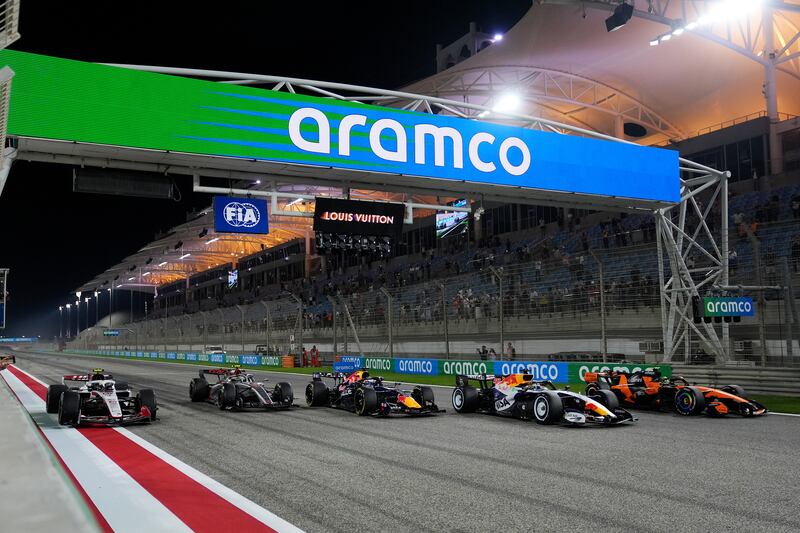
Formula One races in Bahrain and Saudi Arabia expected to be cancelled
Bahrain and Saudi Arabian Formula One Grands Prix are expected to be cancelled over the weekend due to the conflict in the Middle East.
In advance of a March 20th deadline for freight needing to be transported to Bahrain for logistical reasons, Reuters is reporting based on sources that a cancellation of the races is a matter of time.
Strikes on Middle Eastern countries have included Bahrain’s Manama, where many team personnel would be likely to stay. Bahrain was scheduled for April 12th with the Saudi race in Jeddah on April 19th.
Neither race is likely to be replaced or rescheduled, which would leave April as an empty month for the series and the championship reduced to 22 rounds.
The Formula One teams are currently in China for Sunday’s race at the Shanghai International Circuit. The Japanese Grand Prix, round three, is on March 29th with the next race then in Miami on May 3rd.
Air freight rates to Europe 70 per cent higher amid disruption to international trade routes
Some air freight rates for the shipment of goods to Europe are as much as 70 per cent higher than they were before the first US-Israeli strikes on Iran.
Increases to transportation costs could have knock-on effects on inflation and the prices paid by Irish consumers.
An air freight index from freight booking and payments platform Freightos, found that off-contract spot rates from South Asia to Europe have risen to $4.37 per kg (€3.82) from $2.57 per kg just before the war began.
A significant share of air cargo exports from South Asia usually travels through Gulf hubs and some have had to reroute through East Asia, said Judah Levine, Freightos’s head of research. - Additional reporting, Reuters
Senior Iranian official accuses US leaders of being ‘on Epstein’s island’
The secretary of the Supreme National Security Council of Iran, Ali Larijani, has accused US leaders of being “on Epstein’s island” in response to comments from US secretary of war Pete Hegseth.
Hegseth had claimed Iranian leadership was “desperate and hiding”.
“They’ve gone underground, cowering. That’s what rats do,” he said in a press conference.
In a post to X, Larijani responded saying; “Mr. Hegseth! Our leaders have been, and still are, among the people. But your leaders? On Epstein’s island!”
Mr. Hegseth! Our leaders have been, and still are, among the people. But your leaders? On Epstein's island! https://t.co/iywavTegyv pic.twitter.com/rxFhzsWoq5
— Ali Larijani | علی لاریجانی (@alilarijani_ir) March 13, 2026
Two Indian-flagged tankers allowed to sail through Strait of Hormuz, reports Reuters
Iran has allowed two Indian-flagged liquefied petroleum gas (LPG) carriers to sail through the Strait of Hormuz, according to reports by Reuters.
The strait has been shut on a de-facto basis since Iran declared it would “not allow even a single litre of oil” bound for the US, Israel and their allies to cross the strait.
India has seen a crisis around the reduction in the supply of cooking gas to the country.
Separately, a crude tanker is expected to arrive in India on Saturday carrying Saudi Arabian oil after sailing through the Strait around March 1st, Reuters has said, citing sources.
Want to know more about the strait? Read this explainer by Michael Jansen on why it has become a flashpoint as well as a regional chokepoint.
Trump asked when the war will end
Donald Trump has been asked on Fox News as to when he thinks the war in Iran will end.
“When I feel it, okay? I feel it in my bones,” he answered succinctly but cryptically.
France and Italy open talks with Iran over Strait of Hormuz safe passage
European countries including France have opened talks with Tehran seeking to negotiate a deal to guarantee safe passage for their ships through the Strait of Hormuz, according to a report in the Financial Times.
The newspaper is quoting people briefed on the efforts, in a bid to restart energy shipments from the Gulf.
Shipments through the narrow chokepoint at the entrance to the Gulf, through which about a fifth of the world’s oil and liquefied natural gas normally flows, are negligible after Iranian attacks on tankers and a vow from the country’s new supreme leader to keep it closed.
European capitals have opened the tentative discussions in an attempt to restart oil and gas exports without expanding the conflict, three officials briefed on the talks told the FT, as shipping companies look to western navies to provide potential escorts for their tankers.
France is one of the countries involved in the talks, two of the officials said. The first official said Italy had also made attempts to open discussions with Tehran on the issue.
Iran and Hizbullah combine for attacks on Israel
Iran’s Islamic Revolutionary Guard Corps (IRGC) says it has launched missile attacks on Israel jointly with Hezbollah, reports Iranian state-linked news agency Tasmin.
The Iranian military wing says the IRGC navy and drone unit were involved alongside the Lebanese armed group, with which it is allied.
Air alerts have been triggered in Tel Aviv, central Israel and parts of the occupied West Bank.
There have been no reports of casualties or damage from this latest wave of strikes so far.
The Taoiseach would not be drawn earlier today on precisely what message he would convey to US president Donald Trump on the war in Iran when he visits the Oval Office next week, writes political correspondent Jack Horgan-Jones from Cork.
“We’ve been very clear in articulating the need for de-escalation, to get diplomacy back on the table, and to get people around the table to engage in dialogue.”
He said emphasised the importance of dialogue, adding: “It’s fair to say that for all concerned, the war in the Middle East is a significant issue, a lot of concern in terms of its impact, both on the people, innocent civilians in Iran, in terms of the wider region… in terms of the Gulf, the attacks in the Gulf, the ongoing situation in Lebanon and Gaza.”
Asked if he would personally ask Trump to de-escalate, he said: “I’m not going to go through everything… I’m going to have an engagement, but that is our position and there obviously will be discussions about it and so on, but it’s having impacts obviously and it’s very serious.”
Tánaiste growing ‘more concerned’ about inflationary impact of war on Iran
Tánaiste Simon Harris has said he is becoming more concerned about the inflationary impact of the war in Iran and the Gulf region on the wider economy, with no signs of de-escalation, reports Jack Horgan-Jones.
Speaking on Friday after a UK-Ireland summit at Fota House in Co Cork, the Minister for Finance said officials in his department had repeated that the impact of the war would depend on the “length and depth of the conflict”.
“Now two weeks in, with no signs of de-escalation, I am becoming more concerned around the inflationary impact of this war on the global economy, on the Eurozone economy and on the Irish economy as well,” he said.

US confirms all six members of refuelling aircraft crashed over Iraq have died
US Central Command has confirmed that all members of the K-135 refuelling aircraft that crashed over Iraq have died.
USCENTCOM previously said only four of the six crew had died following the crash of a KC-135 military aerial refuelling plane in western Iraq on Thursday.
US Central Command ruled out hostile fire and friendly fire as causes of the crash, in an update on X.
The identities of the members who died are being withheld until their families can be notified, it said.
Putin may be helping Iran ‘a little bit’, says Trump
US president Donald Trump said he thinks Russian president Vladimir Putin may be helping Iran a “little bit”, in an interview with Fox News Radio on Friday.
“I think he might be helping [Iran] a little bit, yeah, I guess. And he probably thinks we’re helping Ukraine, right?,” Trump said calling in to The Brian Kilmeade Show.
Ukrainian president Volodymyr Zelenskiy has said his country would provide assistance to the US in response to its request for help in dealing with Iranian drones in the Middle East.
But asked whether Ukraine was providing such assistance, Trump said the United States did not need help with drone defence. – Reuters
Brent crude traded near $100 a barrel following one of the most volatile weeks for the oil market, with investors bracing for more upheaval as Iran pledged to keep the vital Strait of Hormuz effectively shut.
The global oil benchmark pared gains on Friday after jumping 9.2 per cent in the previous session, with price fluctuations this week covering the widest range on record.
US president Donald Trump cast a fresh warning to Iran, while the country’s new supreme leader said Hormuz should remain closed.
In a further effort to try to tame surging prices, the US issued its second temporary waiver for the purchase of Russian oil. The latest measure, which is for oil that was loaded onto vessels before March 12th, is broader than a directive earlier this month that only cleared India to boost its buying.
The near-halt to shipping through the narrow Strait of Hormuz between Iran and the Arabian Peninsula has choked off shipments of crude, natural gas and products such as diesel to global customers, driving up energy prices.
Several ships have been attacked this week, adding to the odds that owners won’t pass Hormuz anytime soon. That has raised fears of an inflation crisis and is starting to hit some economies - Bloomberg
Who is telling the truth about Iran’s military capabilities?
“There is obviously a lot of bluster and rhetorical propaganda going on both sides,” says Arash Azizi, a lecturer at Yale University and author of The Shadow Commander: Soleimani, the US, and Iran’s Global Ambitions.
You can read the analysis here.

UAE still under attack from Iranian projectiles
The United Arab Emirates air defences have “engaged” seven missiles and 27 drones coming from Iran today, its defence ministry says.
“Since the start of Iran’s brazen attacks, UAE air defences have dealt with 285 ballistic missiles, 15 cruise missiles and 1,567 drones.”
All six members confirmed dead after US aircraft crashes in Iraq
US Central Command has confirmed that all six members of the K-135 refuelling aircraft that crashed over Iraq have now died. More to follow.
Area the size of Limerick city evacuated in Lebanon, says charity
Christian Aid in Ireland says Israel has ordered an area the size of Limerick city to be evacuated.
Christian Aid Ireland chief executive Rosamond Bennett said 400,000 people living in south Beirut have been forced to evacuate.
Some 125,000 of them have nowhere else to go, she added, and have no choice but to sleep rough on the street or in tents along the coast of Beirut.
“A year ago, I saw for myself the damage in Beirut caused by the destruction of entire apartment blocks following Israel’s last war on Lebanon at the end of 2024.
“I saw the toll two months of constant bombing took on people’s mental health as well as the financial strain of displacement,” she said.
“For a second time in as many years, our local partner’s drop-in centre in Beirut has opened its doors to families in need of a hot meal and a shower after having to flee their homes.
“We need an immediate ceasefire to end this violence so that we can keep civilians safe and prevent any more needless loss of life.”
Israeli military warns Beirut residents to evacuate
The Israeli military has been dropping leaflets over Beirut, calling for people to rise up and help ensure Hizbullah is disarmed.
It’s a blunt attempt by Israel to capitalise on the clear divisions and tensions in Lebanese society over the damage being done by the war and Hizbullah’s decision to continue firing rockets against Israel in support of Iran.
Israel says it has been expanding the scale and scope of its bombing campaign, hitting targets across Lebanon in a wave of air strikes against Hizbullah’s weapons stores, control centres and financial institutions.
It has bombed targets in southern Beirut, the Bekaa Valley and an expanded exclusion zone in south Lebanon – forcing hundreds of thousands of people to leave their homes.
The Norwegian Refugee Council says at least 800,000 (or one in seven) people in Lebanon have been displaced by the war – a number set to rise further and create severe humanitarian challenges as Israel bombs more towns and villages in its attempt to destroy Hizbullah as a military force.
Donald Trump refers to Iranian leaders as ‘deranged scumbags’
US president Donald Trump threatened Iran with further attacks after the Islamic Republic’s new leader signalled defiance, suggesting there will be no let-up in a war that’s upending energy flows and global markets.
“We have unparalleled firepower, unlimited ammunition, and plenty of time,” Trump said on Truth Social. “Watch what happens to these deranged scumbags” on Friday, he said, referring to Iran’s leaders.
US defence secretary Pete Hegseth said Friday marks the largest attacks against the Islamic Republic, putting the total number of targets hit by the US-Israeli alliance since the beginning of the war at about 15,000.
Yet pressure is building in the US for Trump to end the fighting given the chaos enveloping the Middle East and the surge in oil prices. They have climbed to about $100 a barrel because of Iran’s effective closure of the Strait of Hormuz, a key waterway.
Trump’s warning came after Iran’s new supreme leader Mojtaba Khamenei said the Islamic Republic would seek to ensure the strait remains effectively closed. In his first public comments since succeeding his father, he also said Tehran would look to open other fronts in the war, now in its 14th day, if the US and Israel persist with their attacks.
Almost 2,600 people have died in the war, most of them in Iran, the latest tolls from officials and non-government agencies show. The Hormuz waterway – through which around one-fifth of the world’s oil and natural-gas exports flows – has been bought to a near standstill. The mass cancellation of flights has left thousands of passengers stranded in the Middle East.
American casualties are mounting. A US refuelling aircraft crashed in western Iraq and four of the six crew members aboard were killed, the American military said, adding that the loss of the plane wasn’t due to enemy or friendly fire. That bought to 11 the number of US service members who have been killed so far.
“We are really in a moment of flux where we don’t know yet precisely in which direction this is going to go,” Kim Ghattas, an author on the Middle East, told Bloomberg TV on Friday.
“This Iranian regime and its axis have definitely been weakened over the last two years, but they’re still able to fight back and impose and inflict tremendous economic damage to the region, to the world economy.”
The dollar, perceived as a haven in times of turmoil, has gained against all the other 16 major currencies since the war began. Most stocks and government bonds have sold off, with emerging markets particularly hard hit - Bloomberg
Russian president Vladimir Putin discussed measures to protect Russia’s critical infrastructure with his security council, the Kremlin said on Friday, after intensified Ukrainian attacks that hit a major military plant among other targets.
Putin asked his deputy prime minister Alexander Novak, transport minister Vitaly Savelyev and construction minister Irek Faizullin to report on the proposed measures in his opening remarks, with the rest of the meeting not made public.
Ukraine said on March 10th that it had used British Storm Shadow missiles to hit a factory that produced semiconductor devices and integrated micro chips for missiles in the city of Bryansk, just over 100km (60 miles) from Ukraine’s border.
After the attack, which killed six people, some Russian war bloggers expressed bewilderment that such a crucial site for meeting Russia’s battlefield needs had not been evacuated during four years of war and was operating within reach of Ukrainian missiles.
On February 25th, Ukrainian drones hit a chemical plant owned by fertiliser producer Akron in the town of Dorogobuzh, knocking off about 5 per cent of Russia’s fertiliser output just before the supply crunch caused by US-Israeli attacks on Iran.
Russia’s defence ministry said on Thursday that Ukraine had attempted to attack a pumping station operated by gas giant Gazprom that exports natural gas via the TurkStream subsea pipeline to European customers, but that the attack was foiled.
On March 2nd, Sheskharis, a major oil terminal on Russia’s Black Sea coast, suspended loadings following a Ukrainian drone attack that injured five, damaged 20 buildings and set a fuel terminal on fire.
Amid the stepped-up attacks, Russia has slowed down or turned off mobile internet in Moscow and some other major cities as part of what the Kremlin described as security measures.
Although such outages have become common across Russia during the war in Ukraine, Moscow has not previously experienced them on such a scale since the war started, with millions of people losing access to popular services such as maps or taxi hailing applications – Reuters
A fire broke out aboard aircraft carrier USS Gerald R Ford on Thursday.
The initial fire has been extinguished, but the crew is still doing damage control, according to a US official.
“On March 12, USS Gerald R Ford (CVN 78) experienced a fire that originated in the ship’s main laundry spaces,” reads a US Centcom statement posted to social media website X.
“The cause of the fire was not combat-related and is contained. There is no damage to the ship’s propulsion plant, and the aircraft carrier remains fully operational.
“Two sailors are currently receiving medical treatment for non-life-threatening injuries and are in stable condition. Additional information will be provided when available.”
The USS Gerald R Ford has been at sea for 253 days now.
Hegseth dodges question again for strike on girls school
US secretary of defence Pete Hegseth has been asked again if the 160 schoolgirls killed in an air strike on the first day of the war were killed by a US missile.
He once again dodged the question by stating that it is still under investigation.
“We’re not gonna let reporting lead us or force our hand into indicating what happened in a particular situation, because the truth matters,” he told reporters in a Pentagon briefing.
“So I can report that Centcom has designated an investigating officer to complete a command investigation. “The command investigation will take as long as necessary to address all the matters surrounding this incident, and the investigating officer is from outside Centcom and is a general officer.
“But I will note to this group and to the world, there’s only one entity in this conflict between us and Iran that never targets civilians. Literally, never target civilians.
“I look at the process that’s used on dynamic strikes or on boat strikes and others. We have a very high fidelity process in that case. So we don’t target civilians, Iran does.
“We will investigate, we will get to the truth, and we’ll share it when we have it.”
Pete Hegseth has been asked what he is going to do to keep open the Strait of Hormuz.
He says the US primary goal has been to destroy the Iranian navy.
He does not give a straight answer as to how he is going to achieve the full reopening of the strait except to say, “it is not a strait we will allowed to go uncontested”.
Hegseth says Iranian military is ‘combat ineffective’
US secretary of defence Pete Hegseth has given an upbeat assessment of the military operation in Iran.
In a press conference at the Pentagon, Hegseth said Friday will be the heaviest day of attacks on the country.
To date the US and Israel has conducted 15,000 bombing runs.
He said missile launches from Iran are down by 90 per cent and drone attacks are down by 95 per cent.
“Their navy is at the bottom of the Persian Gulf,” he said. Their military is “combat ineffective” and “functionally defeated and destroyed”.
Hegseth added that the US and Israel bombing is not only attacking Iran’s stockpile of weapons, but its ability to make more.
“We are ensuring that they have no ability to make more, their production lines and their defence innovation centres are defeated.
“We will keep pressing, keep pushing, there will no quarter and no mercy for our enemies.”
He believed the Iranian’s new supreme leader Mojtaba Khamenei has been wounded and likely disfigured, hence a written statement rather than a broadcast.
Hegseth went on to state that ‘bad things can happen in war" and that included the crash of the K-135 refuelling plane with the loss of four American lives.
He dismissed the Iranian blockade of the Strait of Hormuz as an act of “sheer desperation”.
US president Donald Trump said the United States would escort vessels through the Strait of Hormuz if needed, adding in a Fox News interview that aired on Friday that the US would strike Iran “very hard over the next week.”
Asked about helping oil tankers pass through the key shipping strait, Trump said: “We would do it if we needed to. But, you know, hopefully things are going to go very well. We’re going to see what happens.” He gave no other details.
“We’re going to be hitting them very hard over the next week,” he added in the interview with Fox’s Brian Kilmeade that aired in part on its “Fox & Friends” programme.
His comments come as the United States and other countries face spiking oil and gas prices with the US-Israel war entering its 14th day, with oil prices hovering near $100 a barrel on Friday - Reuters
Another Iranian missile shot down over Turkey
The North Atlantic Treaty Organisation (Nato) intercepted an Iranian missile that entered Turkish airspace on Friday, Turkey’s Defense Ministry said in a statement.
“A ballistic munition launched from Iran and entering Turkish airspace was neutralised by Nato air and missile defence assets deployed in the eastern Mediterranean,” the ministry said, without disclosing the location of the incident.
Turkish media reported earlier a purported interception appearing in the southern province of Adana near the Incirlik air base, a key Nato facility where the US is believed to host nuclear weapons and maintain military personnel. State-run Anadolu Agency said sirens were heard at the base in the early hours of the morning.
Turkey’s taking all necessary measures while consultations with Iran are taking place to clarify the issue, the defence ministry said.
Unlike the previous two missiles – which were intercepted over relatively sparsely populated areas – the third missile was closer to a major urban center and closer to a Nato base.
Nato has strengthened its air defences in Turkey amid projectiles from Iran, while Ankara cautioned Tehran against targeting its soil and expanding the scope of the conflict in the region. The alliance deployed a Patriot system in Turkey’s Malatya province where another key Nato facility, the Kurecik radar base, is located to bolster defences on the alliance’s southeastern flank earlier this week.
Turkey has so far sought to avoid escalating tensions with Iran. Earlier this week, Turkish president Recep Tayyip Erdogan warned the nation of “wrong and provocative steps” that could damage ties between the two countries. Turkey is coordinating further steps with its Nato allies to ensure its security.
Dubai residents warned not to post bomb damage on social media
British nationals in the United Arab Emirates have been warned about the consequences of sharing pictures or videos documenting war-related incidents amid the ongoing conflict in the Middle East.
The warning comes after a British tourist was charged under cyber-crime laws in Dubai over alleged video footage showing missile strikes.
The man (60) is accused of “broadcasting, publishing, republishing or circulating rumours or provocative propaganda that could disturb public security”, campaign group Detained in Dubai said.
Radha Stirling, the group’s chief executive, said the man had said that he deleted the video from his phone when asked and had no intention of doing anything wrong.
Dubai, which is in the UAE, has been hit with missiles amid the conflict between Iran and the US and Israel.
On Friday the British embassy in the UAE posted on X: “UAE authorities warn against photographing, posting, or sharing images of incident sites or projectile damage as well as government buildings and diplomatic missions.
“British nationals are subject to UAE laws, violations may lead to fines, imprisonment, or deportation.”

Europe not facing the same economic threat as Ukraine war
The European Central Bank is confronting the threat of another bout of war-induced inflation in the knowledge that this time is probably different, and it’s better positioned to respond.
With the escalation in Iran and a corresponding surge in energy costs stoking renewed bets on interest-rate hikes, officials are acutely aware of the echoes with 2022, when Russia’s invasion of Ukraine ultimately sent consumer-price growth soaring out of control.
But ECB president Christine Lagarde and her colleagues are facing a set of circumstances that are largely distinct. The contrasts range from the constellation of monetary and fiscal policy settings now in force, to the state of the economy and the sources of energy supply.
While market bets inspired by the need to avoid a repeat of the Ukraine aftermath are indeed forcing the ECB to consider the parallels and stress its readiness to act, officials are signalling that nothing will happen at next week’s decision.
“There are some similarities with 2022, but there are probably even more and major differences,” said Jari Stehn, chief European economist at Goldman Sachs. “So recent developments definitely call for close monitoring, but there’s also no need to exaggerate the comparison for now - Bloomberg
Macron describes death of French soldier in Iraq as ‘unacceptable’
French president Emmanuel Macron has confirmed that chief warrant officer Arnaud Frion of the 7th Battalion of Chasseurs Alpins from Varces was killed by an Iranian missile strike in the Ebril region of Iraq.
Posting on X, Macron said: “To his family, to his brothers in arms, I want to express all the affection and solidarity of the Nation. Several of our soldiers have been wounded.
“France stands by their side and with their loved ones. This attack against our forces engaged in the fight against Daesh since 2015 is unacceptable.
“Their presence in Iraq is part of the strict framework of the fight against terrorism. The war in Iran cannot justify such attacks.”
Four killed in US military plane crash
The US military has just confirmed that four of the six US crew members on board a refuelling plane that went down in western Iraq have died.
US Central Command (Centcom) said the accident was not as a result of enemy fire.
Centcom said on Thursday evening that the KC-135 refuelling plane had gone down in “friendly airspace” and a second aircraft involved in the incident landed safely.
The names of the deceased have been withheld so their families can be contacted.
The other two crew of the aircraft are still missing.
Russia and Iran accused of attempting to ‘hijack’ global economy
British foreign secretary Yvette Cooper has accused Russia and Iran of attempting to “hijack the global economy” as Tehran continued to blockade a key oil shipping route.
Iran’s new supreme leader has vowed to continue attacking shipping in the Strait of Hormuz in retaliation for ongoing US-Israeli strikes on his country.
The blockade has seen oil prices jump to around $100 per barrel, threatening higher inflation across the globe.
Speaking to the Press Association during a visit to Saudi Arabia, the foreign secretary linked the threat from Iran to that from Russia, a key ally of Tehran.
She said: “We have seen these links between Russia and Iran over an extended period of time.
“We’re seeing it in terms of technology, we see it in terms of the approach, we see it in terms of these kinds of tactics, and we see it in terms of the way these two states try to support each other and try to benefit together from attempting to hijack the global economy.”
She added: “We are very clear about the threat from both Russia and from Iran to the global economy and to all of our wellbeing.”
But Cooper declined to criticise the easing of American sanctions on some Russian oil in the face of rising prices, saying it was a “specific, targeted issue”.
Donald Trump threatens Iran after new wave of attacks on Gulf states and Israel
Iran has launched multiple attacks on Gulf Arab states, including dozens of drones at Saudi Arabia, following warnings from its new supreme leader about hosting American bases.
The strikes were launched early Friday after US president Donald Trump threatened a major new retaliation.
“Watch what happens to these deranged scumbags today,” Trump wrote in a social media post. “Iran’s Navy is gone, their Air Force is no longer, missiles, drones and everything else are being decimated, and their leaders have been wiped from the face of the earth.”
The comments came the day after Iran’s supreme leader, Ayatollah Mojtaba Khamenei, vowed to “not refrain from avenging the blood” of Iranians killed, and warned Gulf Arab nations to shut US bases, saying the notion of American protection was “nothing more than a lie”.
Intense air strikes landed around Iran’s capital, Tehran, early Friday, just before rallies were due to begin for the annual Quds Day event in support of Palestinians. Despite the attacks, thousands of people took to the streets chanting “death to Israel” and “death to America”.
Six crew members feared dead following US military aircraft crash
A US military refuelling aircraft crashed in western Iraq on Thursday in an incident US Central Command said involved another aircraft but was not the result of hostile or friendly fire.
The United States has sent a large number of aircraft into the Middle East to take part in operations against Iran.
In a statement, US Central Command said it was carrying out rescue efforts after the US KC-135 refuelling aeroplane went down. The second aircraft landed safely.
“The incident occurred in friendly airspace during Operation Epic Fury, and rescue efforts are ongoing,” the statement said, using the name of the US operation against Iran.
The United States has issued a 30-day waiver for countries to buy sanctioned Russian oil and petroleum products currently stranded at sea.
US treasury secretary Scott Bessent said the move, announced on Thursday, was a step to stabilise global energy markets roiled by the Iran war.
Bessent said it was “unfortunate” the move could benefit Russia but maintained it was only for the short term.
Moscow claimed on Friday it was “increasingly inevitable” that Washington would lift sanctions. The US is “effectively acknowledging the obvious: without Russian oil, the global energy market cannot remain stable”, Russia’s economic envoy Kirill Dmitriev wrote on Telegram.
European Commission president Ursula von der Leyen, after participating in a call with G7 leaders on Wednesday to discuss the impact of the Iran war on oil and gas markets, said now was not the time to relax sanctions against Russia.
The paralysis of the strait of Hormuz “in no way” justifies lifting sanctions on Russia, French president Emmanuel Macron said after the call with other G7 leaders about the economic ramifications of the war in Iran.
The story is here.

The Government has signed an updated defence agreement with Britain designed to bolster maritime co-operation in tackling activity by the Russian “shadow fleet”.
The defence memorandum of understanding us due to be announced on the fringes of the United Kingdom-Ireland summit being held in Cork on Friday.
British prime minister Keir Starmer flew to Cork on Thursday where he was met by Taoiseach Micheál Martin, after first visiting Northern Ireland where he met the First and Deputy First Ministers.
It is understood that Minister for Defence Helen McEntee and UK defence secretary John Healey signed the defence memorandum earlier this week, which is an update to a 2015 agreement between the two countries.
You can read more here.
Small and medium sized businesses (SMEs) have called on the Government to introduce contingency plans to alleviate the impact of fuel price increases as a result of the war in the Middle East.
The Irish Small and Medium Enterprises (Isme) said many SMEs are being “disproportionately affected” by the spike in fuel prices, with businesses across the retail and hospitality sectors facing particularly heavy energy bills.
The group warned that if the current fuel cost crisis persists, many businesses will have “little choice” but to pass these rising costs on to their customers or consumers.
“Essential service providers, including nursing homes and childcare facilities, are under significant strain as they cannot reduce energy consumption without compromising the care provided to vulnerable people and young children,” Isme said.
“Therefore, Isme is calling on the Government to give serious consideration to measures that will mitigate the impact of rising fuel costs and to ensure a contingency plan is in place to support SMEs if the crisis continues or escalates further.”
Isme chief executive Neil McDonnell said SMEs are being “hit hardest” by rising fuel costs, particularly those in energy-intensive sectors such as retail and hospitality.
“For many SMEs in Ireland, energy is not a discretionary expense, it is fundamental to keeping their doors open and serving their customers,” he said.


